
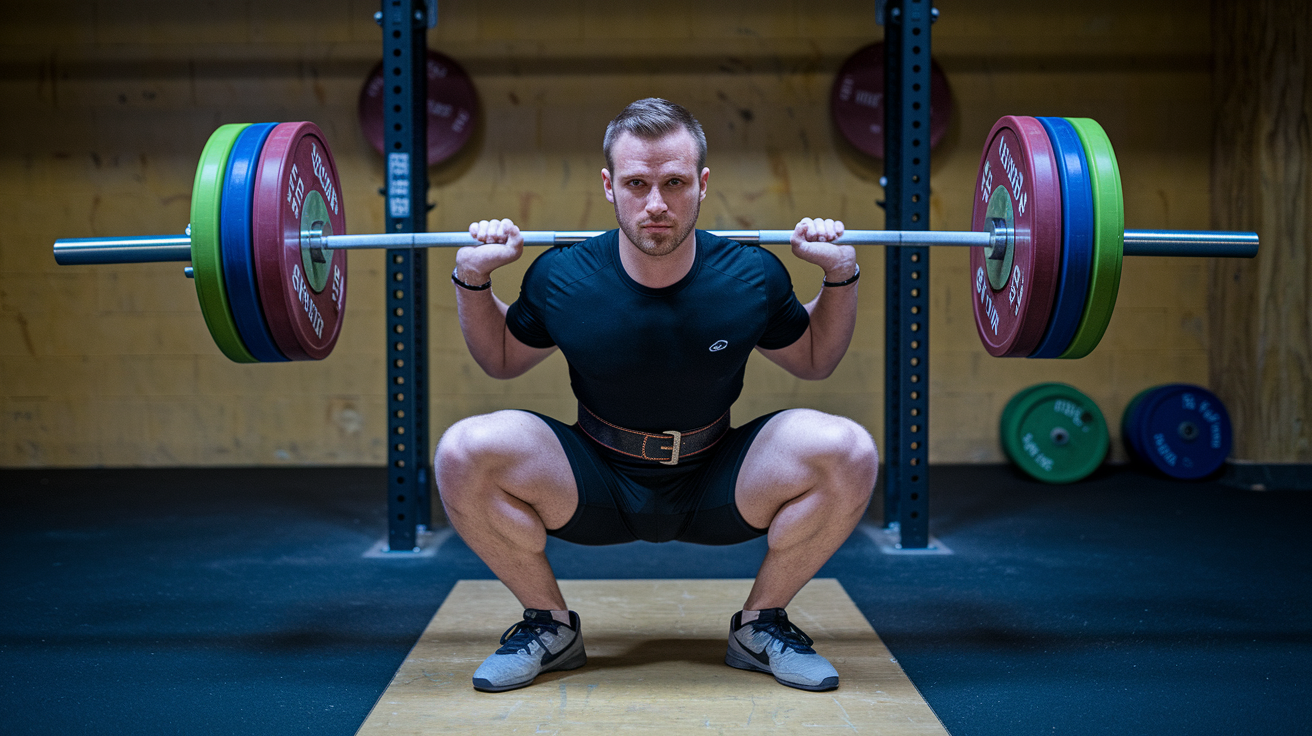

Think you can’t squat and deadlift on the same day?
You can, and many powerlifters do it, but only if you plan the session smartly.
Start with your priority lift when you’re fresh, cut load or sets for the second movement, and use longer rests so technique stays tight.
This post shows simple rules you can follow: how to order lifts, how much to reduce volume, how long to rest, and when to split the days.
Do it right and you’ll save time without sacrificing progress.
Key Guidance for Training Squat and Deadlift in the Same Day Session
You can do squats and deadlifts on the same day. Powerlifters do it all the time during meet prep, and plenty of intermediate and advanced lifters program both in one session. The trick is knowing how to adjust volume, load, and rest so you keep your technique safe and still make progress.
Do your priority lift first. Whichever movement matters most to you goes when you’re fresh. If you’re a powerlifter, training in competition order (squat first, deadlift second) builds familiarity with the sequence you’ll face at a meet.
Both exercises hammer the same lower body and core muscles. The second lift you perform will almost always be weaker than it would be on its own. You’ll produce less force, your bar path might drift, and your bracing might feel softer. That’s normal. You account for it through smart programming.
Here are five simple rules for combining both lifts safely:
- Reduce load or volume on your second lift by 30 to 50 percent if both lifts are programmed as heavy sets.
- Rest 2 to 5 minutes between heavy compound sets, and allow 3 to 8 minutes between finishing one lift and starting the other.
- Separate the lifts across different days if you need maximal volume for both, have a history of back or knee issues, or you’re a beginner.
- Keep rep ranges moderate (1 to 5 reps for strength priority, 4 to 12 reps for hypertrophy or athletic work) and use autoregulation to cap each set before form breaks.
- Monitor technique closely throughout the session and stop if bar speed slows significantly or positions shift even slightly.
Benefits of Pairing Squats and Deadlifts Within One Training Session
Combining both movements in one workout saves 15 to 20 minutes of duplicated warm up work. Both exercises target overlapping muscle groups: quads, hamstrings, glutes, and lower back. Once you’ve warmed up for squats, you’re already primed for deadlifts.
Pairing squats and deadlifts can increase total muscle recruitment and raise anabolic hormones like testosterone and growth hormone. That combination creates a larger hypertrophy stimulus when volume and recovery are managed correctly. Training both in the same session also forces your body to coordinate two technically demanding patterns under fatigue, exposing weak points and stabilizer gaps you might miss in isolated sessions.
The main benefits include:
- Time efficiency. Fewer separate training days and less total warm up time.
- Sport specificity. Powerlifting meets require you to squat and deadlift in the same competition, often separated by just a few hours.
- Increased hypertrophy stimulus. Combining both movements recruits more total muscle mass and can amplify hormonal responses.
- Weakness identification. Fatigue reveals technique breakdowns, imbalances, and coordination limits that help you target assistance work more effectively.
Fatigue, Injury Risk, and Performance Limitations When Training Both Lifts Same Day
Squats and deadlifts both load the posterior chain heavily. When you perform them back to back, you accumulate spinal compression, hip flexor tension, and knee stress across two high demand movements. If form starts to break down on the second lift, the lower back, hips, and knees bear the brunt. Technique failure under load multiplies injury risk, especially when bracing softens or your hips shift out of position mid rep.
Central nervous system fatigue degrades coordination and motor control. After a heavy squat session, your CNS is already taxed. Starting deadlifts in that state reduces your ability to maintain tight positioning, consistent bar path, and full body tension. You might lose your brace partway through a pull, round your upper back earlier than usual, or fail to lock out a weight you’d handle easily when fresh. CNS fatigue is invisible but real, and it shows up as sloppy reps.
Performance and volume both take a hit when you combine the lifts. The second movement will see reduced top end load, fewer quality reps, or both. If you can normally deadlift 405 pounds for five solid reps, you might only manage three clean reps after heavy squats. Or you might need to drop to 365 pounds to keep technique intact. Lower effective training volume per lift means slower progress unless you offset it with additional frequency or smarter programming.
Optimal Order and Session Structure for Squat–Deadlift Same Day Training
Put your priority lift first. If you’re chasing a bigger squat, squat first and reduce deadlift volume or load. If your deadlift is lagging, deadlift first and treat squats as lighter technical work or accessory volume. Powerlifters preparing for a meet should train in competition order (squat, then deadlift) to rehearse the mental and physical demands of the actual event. If you’re training for general strength or hypertrophy and have no specific competition goal, prioritize whichever movement needs the most attention or progress right now.
Rest between heavy sets should be 2 to 5 minutes to preserve force output and technique quality. Between finishing one lift and starting the other, rest 3 to 8 minutes. Longer rest intervals allow your CNS and working muscles to partially recover, reducing the performance drop on your second lift. For the secondary lift, reduce load by 10 to 20 percent or cut volume by 30 to 50 percent. A common structure is to perform your primary lift at full intensity and volume, then scale back the second lift to 2 to 4 sets instead of your usual 4 to 6.
| Protocol | Primary Lift Rep/Set Guideline | Secondary Lift Adjustment |
|---|---|---|
| Strength Focus | 3 to 5 sets of 1 to 5 reps at high intensity (RPE 8 to 9) | Reduce volume 30 to 50%; use 2 to 4 sets of 3 to 6 reps at moderate load |
| Hypertrophy Focus | 3 to 5 sets of 4 to 8 reps at moderate heavy load | 3 to 4 sets of 6 to 12 reps at lighter load or with tempo/pause variations |
| Athletic/Power Focus | 3 to 4 sets of 3 to 8 reps at submaximal load (RPE 6 to 8) | 3 sets of 3 to 6 reps focusing on bar speed and movement quality |
Programming Strategies for Strength, Hypertrophy, and Athletic Training Goals
Strength focused programs prioritize one heavy lift per session and use the second lift at reduced intensity or volume. A typical strength session might feature 5 sets of 3 reps at 85 percent of your max on squats, followed by 3 sets of 5 reps at 70 percent on deadlifts. The goal is to accumulate high quality heavy reps on your priority movement without destroying your ability to perform the second lift safely. Powerlifters often follow this structure during offseason or early prep phases, shifting to separated sessions as they approach a meet and need maximal volume on both lifts.
Hypertrophy programs can handle moderate loads on both lifts in the same session as long as you manage total fatigue. You might squat 4 sets of 6 reps at 75 percent, then deadlift 4 sets of 8 reps at 65 percent. Because hypertrophy tolerates slightly lighter loads and higher reps, the CNS drain is less severe than back to back near maximal attempts. You can also use tempo variations, pauses, or partial ranges on the secondary lift to increase time under tension without adding more absolute load.
Athletic and power programs use submaximal loads with an emphasis on bar speed and technical precision. A sample session might include 4 sets of 5 reps at 70 percent on squats with a focus on explosive concentric drive, followed by 3 sets of 4 reps at 65 percent on deadlifts with controlled eccentric phases. The goal is movement quality and speed, not maximal load, so CNS fatigue stays manageable and technique remains sharp.
Weekly Distribution Options
Smart weekly splits help you decide when to combine lifts and when to separate them:
- Combine both on one day if your training week is short (3 days or fewer) and you need full body stimulus each session.
- Separate squats and deadlifts on different days if your program includes 4 or more training days per week and you want maximal volume for each lift.
- Use light before heavy pairings (light squats before heavy deadlifts, or vice versa) if you want to maintain movement practice on both lifts without compromising performance on your priority.
- Split heavy sessions across the day (morning squats, afternoon deadlifts) if you’re simulating meet conditions or have the time to train twice in one day with several hours between sessions.
Practical Fatigue Management, Recovery, and Readiness Monitoring for Dual Lift Days
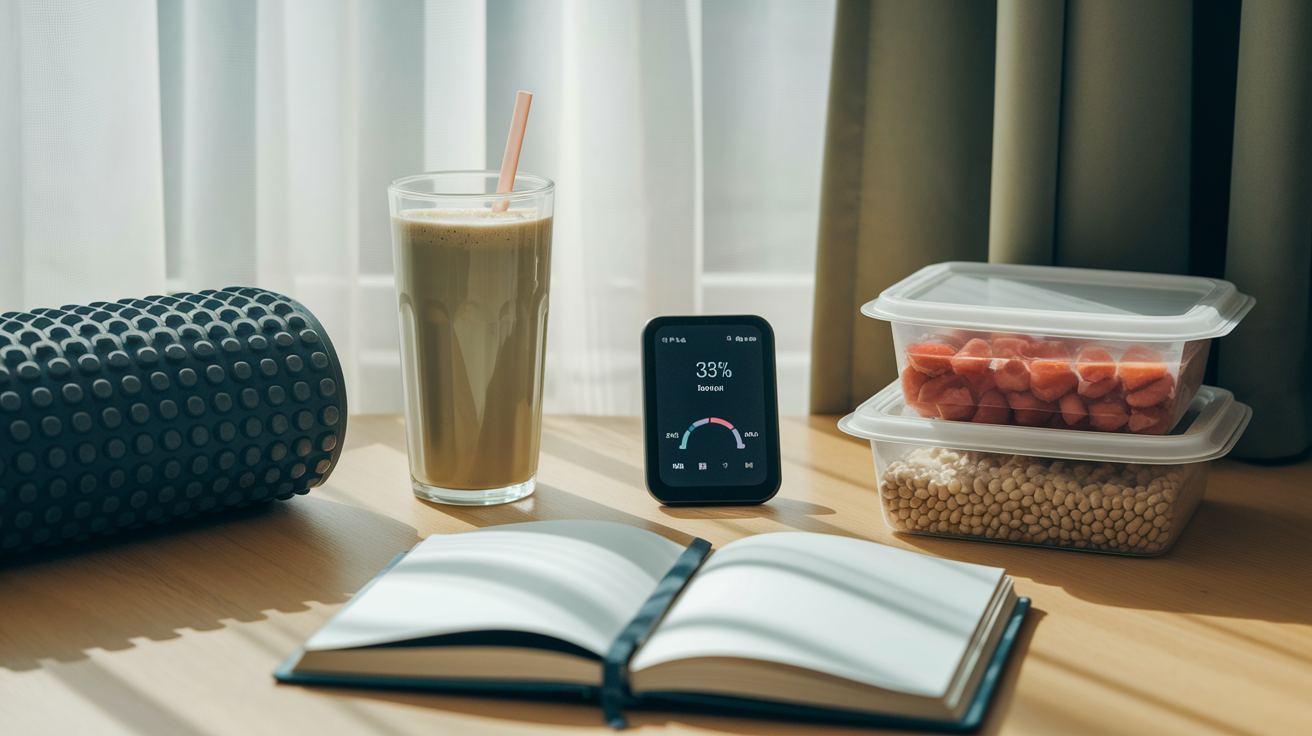
Recovery starts immediately after your session. Consume a post workout meal or shake with protein and carbohydrates within 60 to 90 minutes. Your muscles need amino acids to repair tissue and glycogen to refuel. For the rest of the day and the next 48 hours, prioritize total caloric intake and sleep quality. Aim for 7 to 9 hours of sleep per night and avoid large calorie deficits if you’re training both lifts on the same day regularly.
Wait at least 72 hours before training the same muscle groups again at high intensity. If you squat and deadlift on Monday, your next heavy lower body session should be Thursday or later. Light technique work, accessory movements, or upper body training can fill the days in between. Monitoring fatigue in real time is just as important as planning recovery days. If bar speed slows noticeably mid set, your brace softens, or positions shift even slightly, that set is done.
Key fatigue management strategies:
- Track your reps in reserve (RIR) or rate of perceived exertion (RPE) on every working set and stop before technique breaks.
- Use active recovery techniques like light stretching, walking, or foam rolling on off days to increase blood flow without adding training stress.
- Adjust volume week to week based on soreness, sleep quality, and performance metrics. If your second lift consistently underperforms, reduce its volume or separate the sessions.
- Prioritize post workout nutrition with at least 20 to 40 grams of protein and 40 to 80 grams of carbohydrates, scaled to your body weight and training intensity.
- Monitor delayed onset muscle soreness (DOMS) in your lower back, glutes, and hamstrings as a secondary signal. Persistent or sharp soreness means you need more recovery time.
Sample Training Templates for Same Day Squat and Deadlift Sessions
A light before heavy template uses low intensity squats as a technical warm up before heavy deadlifts. You might perform 5 sets of 2 reps at 60 percent of your squat max, focusing on bar path and bracing, then move into 4 sets of 3 reps at 85 percent on deadlifts. This structure keeps squat practice frequent without compromising deadlift performance. It works well for lifters who want to maintain squat technique while prioritizing deadlift strength.
A heavy before light template flips the script. You squat heavy first (maybe 4 sets of 4 reps at 80 percent), then follow with lighter deadlift variations like Romanian deadlifts or stiff legged deadlifts for 3 sets of 8 reps at 60 percent. This approach prioritizes squat strength while using deadlift assistance to build posterior chain hypertrophy and reinforce hip hinge mechanics.
Meet style split sessions separate heavy squats and heavy deadlifts by several hours within the same day. Squat in the morning (3 sets of 2 reps at 90 percent), rest and eat for 4 to 6 hours, then deadlift in the afternoon (3 sets of 2 reps at 90 percent). This mimics the structure of a powerlifting meet and trains your body to perform under cumulative fatigue without the immediate CNS drain of back to back lifts.
Three ready to use session templates:
- Strength Priority (Squat). Back squat: 5 × 3 @ 85%, Romanian deadlift: 3 × 8 @ 65%, glute ham raise: 3 × 10 bodyweight.
- Strength Priority (Deadlift). Conventional deadlift: 4 × 3 @ 87%, pause squat: 3 × 5 @ 70%, leg curl: 3 × 12 light.
- Hypertrophy Balance. Front squat: 4 × 6 @ 75%, sumo deadlift: 4 × 8 @ 70%, Bulgarian split squat: 3 × 10 per leg moderate.
When You Should NOT Squat and Deadlift on the Same Day
Beginners should keep heavy squats and deadlifts on separate days. Novice lifters need 48 to 72 hours between heavy compound sessions to allow full recovery and technique adaptation. Combining both movements early in your training career increases injury risk because you haven’t built the movement competency, work capacity, or positional awareness to handle cumulative fatigue safely.
Separate the lifts if you’re in a peaking phase for a powerlifting meet or strength test. When you need maximal volume and intensity on both lifts to drive final adaptations, splitting them across different days preserves performance quality. Similarly, if your weekly program already includes high total volume (more than 15 to 20 working sets per lift per week), combining sessions will likely degrade technique and limit your ability to complete prescribed volume.
You should avoid same day programming if:
- You have a history of lower back, hip, or knee injuries that flare up under cumulative loading.
- Your technique consistently breaks down on the second lift even after reducing load or volume.
- You’re unable to recover adequately between sessions due to poor sleep, high life stress, or inadequate nutrition.
- Your training goal requires maximal strength development on both lifts simultaneously, such as preparing for a tested max or competition in both movements within a short timeframe.
Final Words
You can pair squats and deadlifts in the same session—strength athletes and coaches do it. This post showed when it works, what order to pick, and how to structure sets and rests so both lifts stay effective.
We covered the main rules: prioritize the lift that matters most, cut secondary lift volume, use longer rests, and watch form as fatigue builds. We also shared templates and recovery tips you can use right away.
Try a deadlift and squat same day with the simple rules here, and keep building.
FAQ
Q: Is it good to do deadlifts and squats on the same day?
A: Doing deadlifts and squats on the same day can work well and is common in strength sports if you prioritize the main lift, lower volume on the secondary (30–50%), and watch technique and recovery to limit fatigue.
Q: Do squats regulate blood sugar?
A: Squats can help regulate blood sugar by increasing muscle glucose uptake and improving insulin sensitivity; regular resistance training lowers post-meal glucose and supports long-term glycemic control when paired with diet and consistency.
Q: Is it safe to deadlift with scoliosis?
A: Deadlifting with scoliosis can be safe when cleared by a clinician, using lighter loads, strict technique, gradual progression, and pain-free movement; stop if pain or shifting posture occurs and follow tailored coaching or rehab cues.
Q: What is the king of all exercises?
A: The squat is often called the king of all exercises because it builds whole-body strength, recruits hips, legs, core and back, and transfers well to daily tasks and athletic movement when done with solid technique.