


You don’t need an hour in the gym to hit every muscle.
This 20‑minute full-body workout for beginners does exactly that in one efficient round.
Three parts: a quick warm-up, a main circuit that trains squat, hinge, push, pull, lunge and core on the clock, and a short cool-down.
No counting reps, no fancy gear—just a timer, your body, and a few common objects if you want extra load.
Show up, move with control, and you’ll get a full, practical session that builds strength without taking over your day.
Complete 20‑Minute Full‑Body Beginner Workout

You can start this workout right now. Wherever you are.
The routine breaks into three blocks: a warm-up to wake everything up, a main circuit that works every muscle group once, and a cool-down to settle your heart rate. Each exercise runs on the clock, so you won’t count reps. Just move with control and let the timer do its thing.
Warm-Up (3 minutes)
30 seconds each:
- Arm circles (forward, then back)
- Hip hinges (bodyweight good mornings)
- Bodyweight squats
- Walking lunges in place
- Shoulder taps in plank position
- Light marching with arm swings
Main Circuit (14 minutes, one round)
Work through these in order. Rest 15 to 20 seconds between moves:
- Bodyweight squat, 45 seconds
- Incline or knee push-up, 45 seconds
- Reverse lunge (alternating legs), 60 seconds total
- Plank hold (knees or toes), 30 seconds
- Glute bridge, 45 seconds
- Bent-over row (dumbbells, water bottles, or bodyweight hinge), 45 seconds
- Standing knee raises (alternating), 45 seconds
- Wall push-up, 45 seconds
- Side lunge (alternating), 60 seconds total
- Deadbug (slow alternating arms and legs), 45 seconds
- Standing oblique crunch (30 seconds per side)
Cool-Down (3 minutes)
30 seconds per side or position:
- Hamstring stretch (standing or seated)
- Quad stretch (standing, grab a wall if you need it)
- Chest opener (hands clasped behind your back)
- Shoulder stretch (pull one arm across)
- Child’s pose
- Neck rolls (slow circles each way)
This adds up to exactly 20 minutes. You’ll hit squat, hinge, push, pull, lunge, and core stabilization. Your heart rate will climb during the main circuit, but nothing gets chaotic. No experience required. Just show up and follow the clock.
Exercise Form Tips for a Safe and Effective Workout
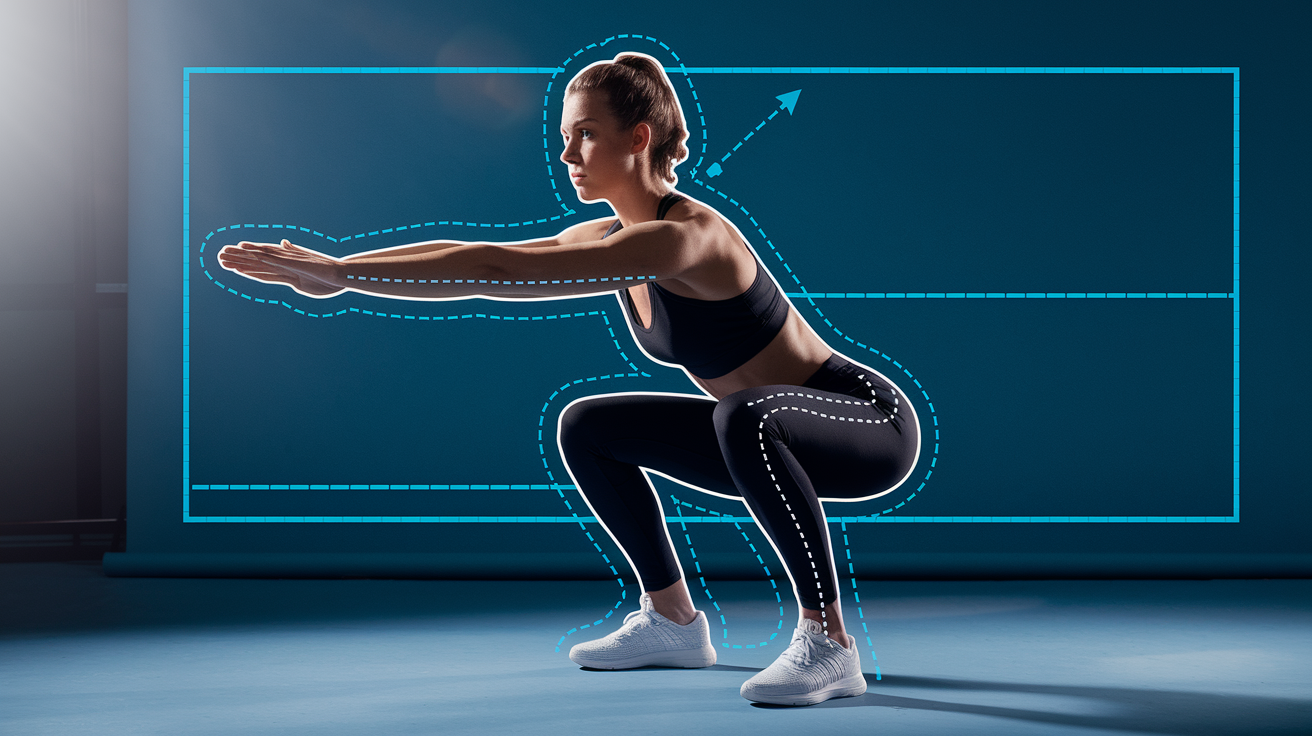
Good form keeps your joints safe and makes every rep count.
When you squat, keep your chest up and your knees tracking over your toes. Think about sitting back into a chair, not letting your knees cave in. For hinges like bent-over rows or good mornings, push your hips back while keeping your spine long. Not rounded. Brace your core like you’re about to take a light punch to the stomach. Firm, not stiff.
Breathing matters more than you’d think. Exhale on the hard part (pushing up from a squat, pressing through a push-up). Inhale on the way back down. This keeps oxygen moving and stops you from holding your breath and getting lightheaded. Move at a steady pace. You’re not racing the clock, you’re using it to stay consistent.
Common mistakes and how to fix them:
- Rushing through reps. Slow down. You’ve got 30 to 45 seconds per move. Aim for smooth, controlled motion instead of fast and sloppy.
- Lower back sagging in plank. Tuck your pelvis a little and squeeze your glutes. If your hips dip, drop to your knees.
- Knees caving inward during squats or lunges. Press your knees outward gently as you lower. Imagine spreading the floor with your feet.
- Shrugging shoulders during push-ups or rows. Pull your shoulder blades down and back. Keep your neck long.
- Holding your breath. Set a rhythm. Breathe out on effort, breathe in on return. If you forget, pause and reset.
Beginner Modifications and Low‑Impact Alternatives

Modifications help you match the workout to your body today. Not someone else’s idea of what beginner should look like.
If full push-ups feel too hard, try wall push-ups or put your hands on a sturdy bench or countertop. The higher your hands, the easier it gets. For lunges, try a stationary split squat. Keep your feet in place and just bend your knees. That removes the balance challenge. If jumping or fast movements bug your knees, swap knee raises for a slow march in place. Replace any quick squat pulses with a controlled sit-to-stand from a chair.
Six practical modifications:
- Squat. Use a chair behind you and lightly tap the seat with your glutes on each rep (sit-to-stand squat).
- Push-up. Do them against a wall, a countertop, or on your knees with hands slightly wider than shoulders.
- Reverse lunge. Step back just a few inches and keep both feet on the ground. Reduce depth as needed.
- Plank. Drop to your knees or place your hands on an elevated surface like a bench.
- Glute bridge. Lift your hips halfway instead of full extension if your lower back feels strained.
- Bent-over row. Use one hand on a chair or bench for support and row with the other arm. Go bodyweight if you don’t have dumbbells.
Safety Guidelines for New Exercisers
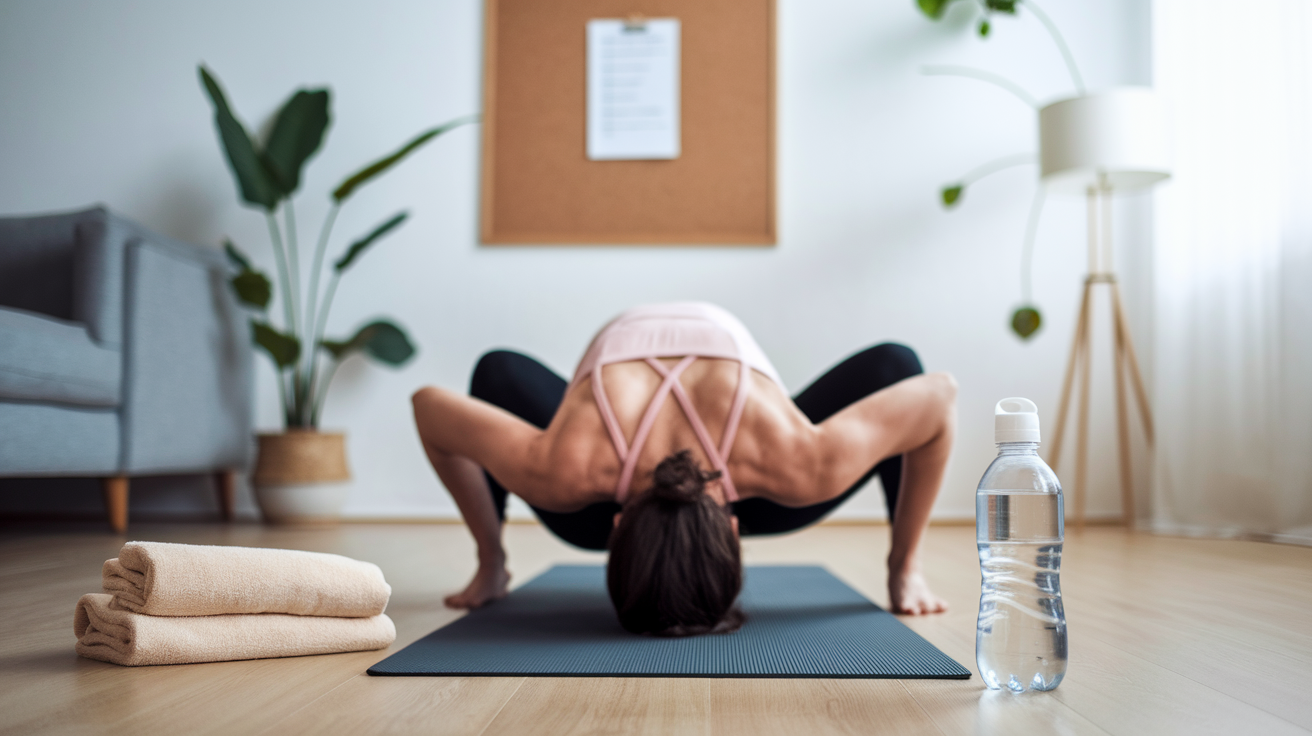
Always warm up before the main circuit. Cold muscles are more prone to strain. A few minutes of light movement raises your core temperature and gets your joints moving smoothly. Keep water nearby and sip between exercises. Dehydration sneaks up fast, especially if you’re sweating in a warm room.
Set up your space so you won’t trip or slip. Clear a small area, use a mat if you’ve got one, and make sure your shoes (or bare feet) have good grip. If you’re new to exercise or dealing with any medical stuff, check with your doctor first. That’s not fear-mongering. It’s smart planning.
Stop immediately if you feel sharp pain, dizziness, or chest tightness. Muscle fatigue is normal. Your quads should burn a little during squats. But joint pain, shooting sensations, or feeling lightheaded are signals to stop, rest, and reassess. You can always restart when you feel steady. Progress happens over weeks, not in one session.
How to Progress Beyond the 20‑Minute Beginner Workout
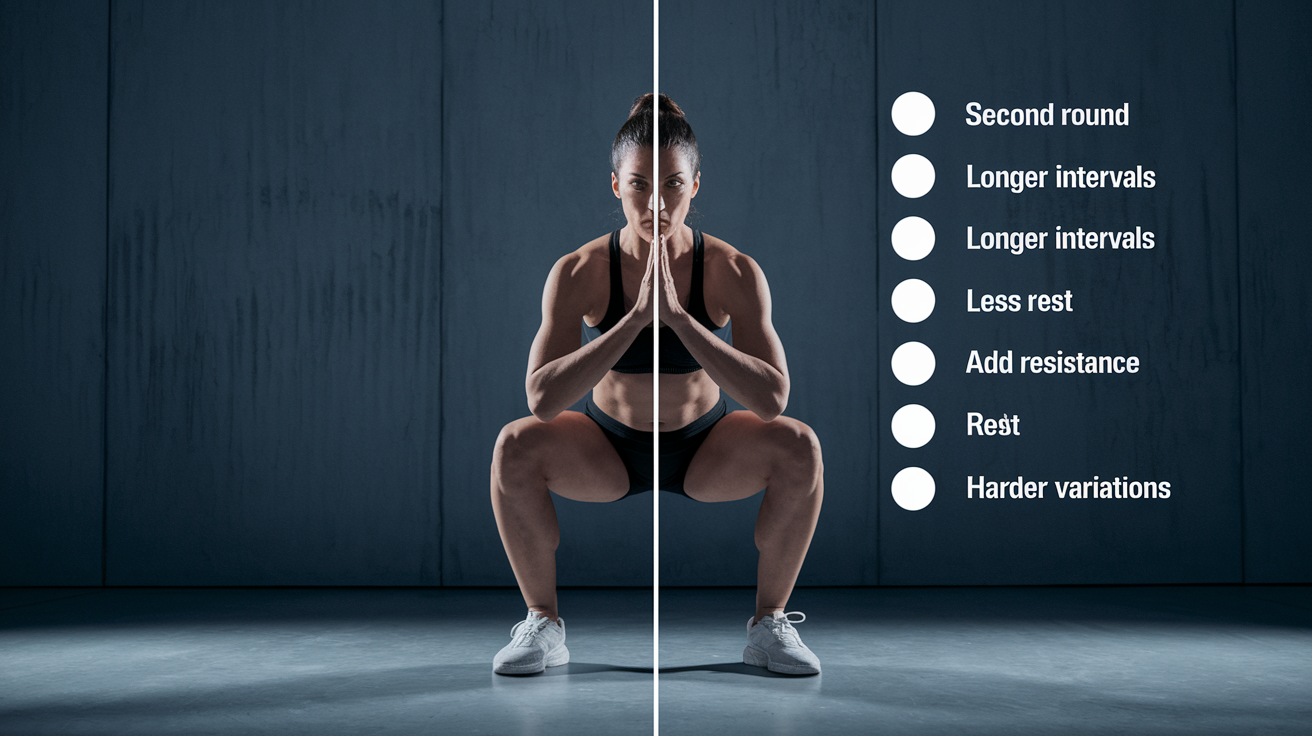
You’re ready to progress when you can complete the full 20 minutes with good form and you’re not completely wiped out afterward.
Five ways to level up safely:
- Add a second round. Run through the main circuit twice instead of once. That bumps your workout to about 30 minutes.
- Increase work intervals. Shift from 45 seconds to 60 seconds per exercise once 45 feels manageable.
- Reduce rest between exercises. Cut rest from 20 seconds down to 10 or 15 to keep your heart rate elevated.
- Add light resistance. Hold a pair of 5 to 10 lb dumbbells during squats, lunges, and rows. Increase weight by 2.5 to 5 lb once you can complete all reps with control.
- Choose harder variations. Swap knee push-ups for full push-ups. Try single-leg glute bridges instead of two-leg bridges.
Track your progress by writing down how many reps you complete in each timed interval or how the workout feels on a scale of 1 to 10. If your rating drops from an 8 to a 6 over two weeks, that’s measurable progress. Aim to add one small change every two to four weeks. More time, more weight, or less rest. Don’t pile on changes all at once or you’ll risk soreness that derails your routine. Steady wins.
Final Words
Get started now: a 3-4 minute warm-up, a 12-14 minute main circuit of low-impact, time-based moves, and a 2-3 minute cool-down. The post gives the exact timings so you can jump in immediately.
We also covered form cues, beginner modifications, safety signs to stop, and simple ways to progress when it feels easy. Use the common mistakes list to keep your technique clean.
Treat this 20 min full body workout for beginners as a repeatable habit. Do it 2-3 times weekly, track small wins, and you’ll get stronger without wasting time.
FAQ
Q: Do 20-minute full body workouts work?
A: 20-minute full-body workouts work when you train consistently and push at a steady intensity. They build strength, burn calories, and improve fitness—especially for beginners—if done about 3–5 times weekly.
Q: What’s the best exercise for type 2 diabetes?
A: The best exercise for type 2 diabetes is a mix of aerobic activity (brisk walking, cycling) and resistance training. This combo helps lower blood sugar, improve insulin sensitivity, and build muscle when done regularly.
Q: What is the 3-3-3 rule for workout?
A: The 3-3-3 rule for workouts is a simple progression: if you complete three sets of three reps for the same exercise across three workouts, increase the weight or difficulty on the next session.
Q: What exercise is best for high blood pressure?
A: The best exercise for high blood pressure is regular moderate aerobic activity—brisk walking, cycling, or swimming—paired with light strength work. Aim for most days and check with your clinician before starting.