
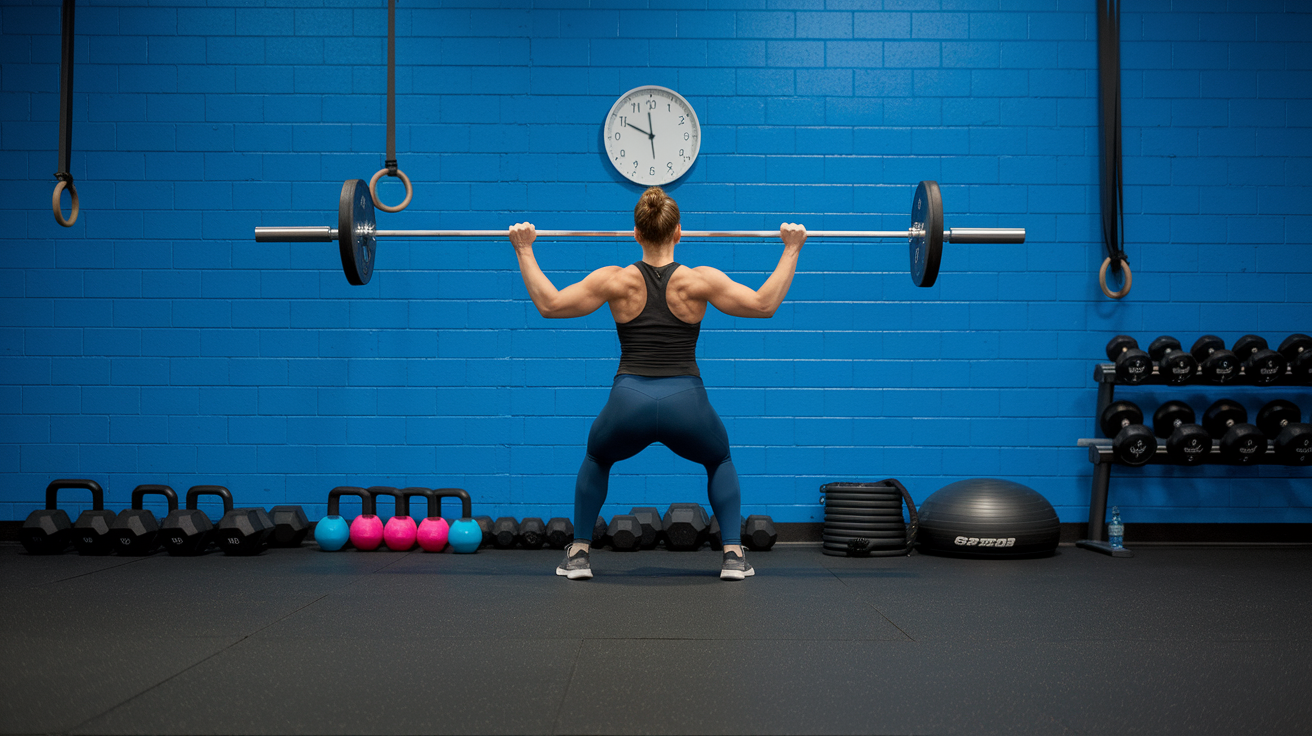

You don’t need an hour at the gym to get stronger.
This 30-minute full-body strength routine fits a busy schedule and hits every major muscle with six compound moves stacked into a fast circuit.
Do three rounds of 40 seconds on, 20 seconds off, with short rests between rounds.
It keeps your heart rate up, builds strength, and stays doable on workdays.
If you want a practical plan that finishes before your coffee cools and gives measurable progress, this is the one to try.
Fast 30‑Minute Full‑Body Strength Routine

This routine stacks six compound exercises into a circuit that hits every major muscle group in one session. You’ll run through the circuit three times with minimal rest, keeping your heart rate up and your total training time under 30 minutes. The goal is simple: work hard, move quickly, and finish before your coffee gets cold.
Each round takes about 7 minutes. You’ll perform 40 seconds of work on each exercise, rest for 20 seconds, then move immediately to the next movement. After you complete all six exercises, rest 90 seconds before starting the next round. By round three, you’ll feel the burn, but you’ll also be done.
The 30‑Minute Circuit (3 rounds)
-
Goblet Squat – 40 seconds work / 20 seconds rest
Hold one dumbbell at chest height. Squat until your hip crease drops below your knee. Chest stays up, knees track over your toes. You should feel this in your quads and glutes, not your low back. -
Push‑Up (or Incline Push‑Up) – 40 seconds work / 20 seconds rest
Hands slightly wider than shoulders, body in a straight line from head to heels. Lower your chest to the floor, then press back up. Core stays tight. Don’t let your hips sag. -
Single‑Arm Dumbbell Row – 40 seconds work per side / 20 seconds rest
Hinge at your hips, support yourself on a bench or chair with one hand, and row the dumbbell to your ribs. Pull your shoulder blade back and lead with your elbow, not your hand. -
Reverse Lunge – 40 seconds work (alternating legs) / 20 seconds rest
Step one foot back, lower until both knees form 90‑degree angles, then drive through your front heel to stand. Front knee should stay behind your toes. -
Dumbbell Shoulder Press (Standing) – 40 seconds work / 20 seconds rest
Press dumbbells overhead from shoulder height. Brace your core to avoid arching your low back. Lower the weights with control. -
Plank Hold – 40 seconds hold / 20 seconds rest
Elbows under shoulders, body in a straight line. Pull your ribcage down toward your hips and squeeze your glutes. Keep your neck neutral, don’t let your head drop.
Rest 90 seconds, then repeat for rounds 2 and 3.
If you’re finishing each exercise with 10 or more seconds left on the clock, increase your weight by 2.5 to 5 pounds next session. If you can’t hit 30 seconds of quality work, drop the load or switch to a bodyweight variation. The sweet spot is finishing each interval tired but in control, not collapsed on the floor.
Quick Warm‑Up to Prep Your Muscles

You need about 4 minutes to get your joints moving and your muscles ready. This isn’t a cardio session, it’s a checklist to reduce stiffness and wake up the patterns you’re about to load. Start with some light movement to raise your body temperature, then cycle through dynamic stretches that mirror the workout ahead.
Don’t skip this. Cold muscles under load invite pulled hamstrings and cranky shoulders. A short warm‑up helps you move better during the first round and keeps small injuries from sneaking in.
Dynamic Warm‑Up (30–45 seconds each)
- Jumping jacks or march in place – Get your heart rate up and loosen your hips and shoulders.
- Leg swings (forward and side to side) – 10 swings per leg. Hold onto a wall for balance and swing through your full hip range.
- Arm circles – 15 forward, 15 backward. Keep the movement controlled and gradually widen the circles.
- Bodyweight squats – 10 reps. Drop into a full squat, pause at the bottom, then stand. Focus on keeping your chest up.
- Inchworms – 5 reps. Walk your hands out to a plank, hold for one breath, then walk your feet up to your hands.
Cool‑Down for Recovery and Mobility

After your last round, spend 3 to 5 minutes stretching the muscles you just hammered. Static stretching now helps reduce post-workout tightness and keeps your joints moving well for the next session. Hold each stretch without bouncing, breathe normally, and let the tension slowly release.
Static Stretches (hold 30–60 seconds each)
- Hamstring stretch – Sit on the floor, extend one leg, fold forward from your hips. Switch legs.
- Quad stretch – Stand on one leg, pull your opposite heel toward your glutes. Keep your knees together.
- Chest opener – Clasp your hands behind your back, straighten your arms, and lift your chest.
- Child’s pose – Kneel, sit back on your heels, reach your arms forward on the floor, and relax your shoulders.
- Hip flexor stretch – Step into a lunge position, drop your back knee to the floor, and gently press your hips forward.
Form Tips to Avoid Injury

Most strength-training injuries happen when fatigue breaks down your technique, not because the weight is heavy. Watch your form on every rep, especially in rounds two and three when your muscles start to burn. If you feel a sharp pain or your joints start grinding, stop the set and reset your position.
Keep your spine neutral on every lift. That means your low back isn’t arched into hyperextension and your upper back isn’t rounded like a turtle shell. Brace your core like you’re about to take a light punch to the stomach, firm but not rigid. This creates a stable platform for your arms and legs to push against.
On squats and lunges, make sure your knees track in the same direction as your toes. If your knees cave inward, you’re loading your joint in a way it doesn’t like. Push your knees slightly out as you descend, and drive through your whole foot when you stand. You should feel tension in your glutes and quads, not the inside of your knee or the front of your shin.
Modifications for Beginners and Advanced Lifters

If you’re new to strength work or coming back after a break, start with two rounds instead of three. Use bodyweight only or a light dumbbell (5 to 10 pounds), and extend your rest intervals to 30 seconds between exercises and 2 minutes between rounds. Finishing two clean rounds beats grinding through three rounds with bad form.
Advanced lifters can add a fourth round, increase the dumbbell weight by 5 to 10 pounds, or flip the work-rest ratio to 45 seconds on and 15 seconds off. You can also slow down the lowering phase of each rep (take 3 seconds to descend on squats or push-ups) to increase time under tension without adding external load.
Quick Modification List
- Beginner goblet squat – Use a light dumbbell or just bodyweight; reduce depth if mobility is limited.
- Beginner push‑up – Perform on your knees or elevate your hands on a bench or sturdy chair.
- Advanced single‑arm row – Use a heavier dumbbell or add a 2‑second pause at the top of each rep.
- Advanced reverse lunge – Hold a dumbbell in each hand or perform as a deficit lunge with your front foot on a low step.
- Advanced plank – Lift one foot off the floor for 20 seconds, then switch, or wear a weighted vest.
Equipment Options and Minimal‑Gear Alternatives
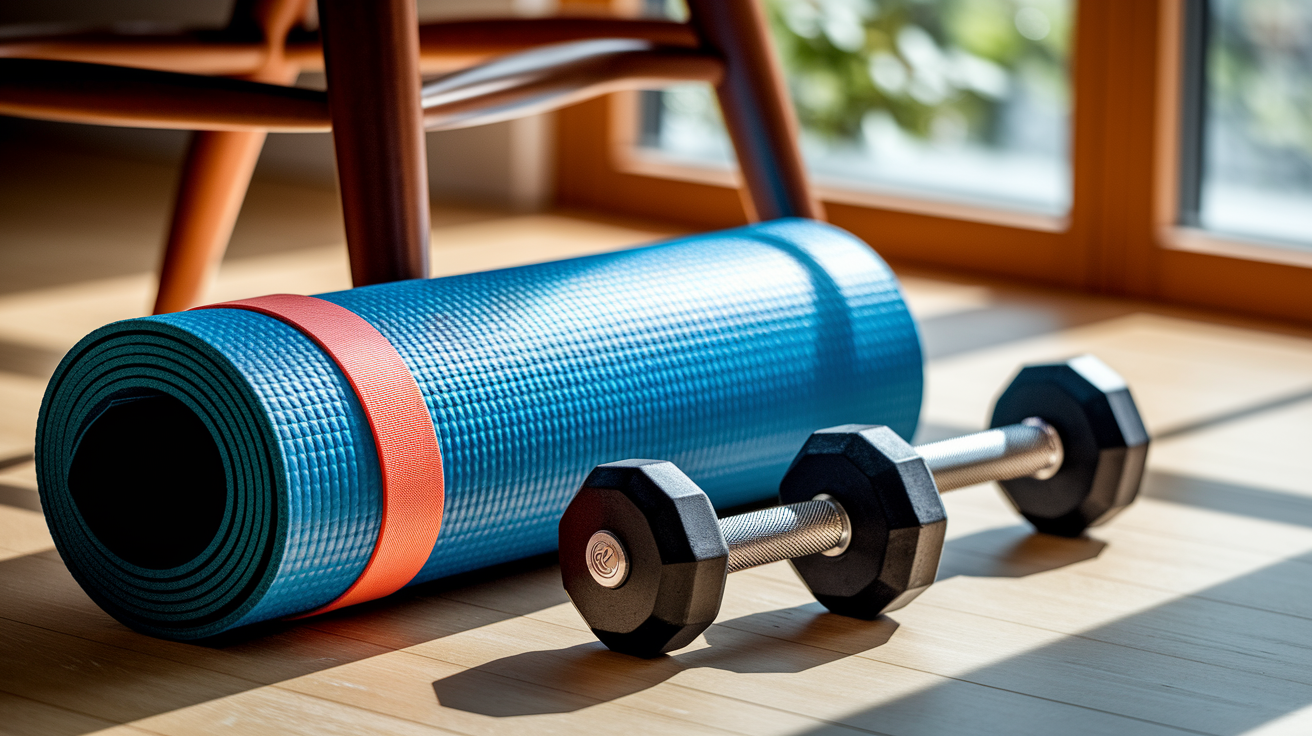
You can run this entire routine with one pair of dumbbells and a mat. If you have two pairs (one light, one moderate), you’ll have more flexibility to match load to each exercise. A sturdy chair or bench opens up variations like incline push-ups and step-ups, but neither is required.
If you don’t own dumbbells, a resistance band and your bodyweight will cover most of the same movement patterns. You’ll lose some absolute load, but you’ll still build strength and muscle if you push close to fatigue on each set. Adjust your reps up to keep the challenge high.
| Equipment | Benefits | Substitutes |
|---|---|---|
| Pair of dumbbells (10–25 lb) | Allows progressive overload and unilateral work | Resistance bands, water jugs, backpack loaded with books |
| Yoga mat | Cushions knees and elbows during floor work | Folded towel, carpeted floor |
| Sturdy chair or bench | Supports incline push‑ups, step‑ups, and single‑arm rows | Couch arm, coffee table, stairs |
Scheduling Strength Sessions for Busy Adults

Three full-body sessions per week is the sweet spot for most adults juggling work, kids, and life. Schedule them on non-consecutive days (Monday, Wednesday, Friday works well) so your muscles get 48 hours to recover between sessions. Consistency beats intensity here. Two sessions every week for six months will build more strength than four sessions one week followed by two weeks off.
If three sessions feels like too much, start with two and add a third when your schedule opens up. If you want to train four days, split your week into two upper-body sessions and two lower-body sessions, keeping each under 30 minutes. That gives each muscle group more recovery time while keeping your total weekly volume high.
Weekly Scheduling Suggestions
- Primary option – Three full-body strength sessions (Monday/Wednesday/Friday, for example) with active recovery or rest on other days.
- Minimal time option – Two full-body sessions (Tuesday/Saturday works) plus one 20-minute walk or light cardio day.
- High-frequency option – Four sessions per week, alternating upper-body and lower-body focus, with at least one full rest day.
Final Words
In the action: you’ve got a fast, 30-minute plan that includes a quick warm-up, a focused set of compound moves, and a short cool-down. The post also gave clear form cues and easy modifications so you can stay safe and efficient.
Pick the equipment that fits your life, adjust load or pace, and track small wins—add a rep or a little weight each week.
Make this 30-minute full-body strength routine for busy adults your reliable habit. Keep showing up, and you’ll get stronger.
FAQ
Q: What is the structure of the 30-minute full-body routine?
A: The 30-minute full-body routine is built around compound moves, alternating upper and lower body, with short rests and 3–4 sets per exercise to hit all major muscles efficiently in one session.
Q: Which exercises, sets, reps, and rest periods are in the routine?
A: The routine includes squats 3×8–10, push-ups 3×8–12, bent-over rows 3×8–10, reverse lunges 2×10 each, RDLs 3×8–10, plank 3×30–45s, with 30–60s rest between sets.
Q: How should I warm up quickly before this 30-minute session?
A: A quick warm-up uses dynamic moves for 3–5 minutes: leg swings, arm circles, hip hinges, walking lunges, and light band pull-aparts to raise heart rate and prime joints.
Q: What cool-down and stretches should I do after the workout?
A: A cool-down includes light walking then static stretches: hamstring 30s, chest 30s, quad 30s, hip-flexor 30s, and a gentle spinal twist 20–30s each to reduce tightness and aid recovery.
Q: How do I adjust pace or load to fit my fitness level?
A: To adjust pace or load, change weight, reps, or rest: go lighter and slower for technique, add weight or reps to progress, or shorten rests to increase intensity.
Q: What form tips help prevent injury during these exercises?
A: Key form tips are brace your core, keep a neutral spine, drive knees in line with toes, retract shoulder blades on pulls, and control the lowering phase—don’t rush the eccentric portion.
Q: What are simple modifications for beginners and advanced lifters?
A: Beginners use bodyweight, reduced range, or elevated hands; advanced lifters add weight, slower tempo, paused reps, unilateral holds, or supersets to increase load and challenge.
Q: What equipment works best and what are minimal-gear substitutes?
A: Dumbbells, kettlebells, and bands work well; minimal-gear substitutes are bodyweight squats for squats, bands for rows, and single-leg Romanian deadlifts for kettlebell RDLs.
Q: How often should busy adults do this 30-minute strength routine each week?
A: Busy adults should do this routine 2–4 times weekly, aiming for consistent sessions spread across the week—start at twice, progress to three or four as recovery allows.
Q: How long should rests be between sets in this workout?
A: Rest 30–60 seconds for a time-efficient, slightly aerobic feel; extend to 90 seconds when using heavier loads or focusing on maximal strength and cleaner technique.
Q: Will a 30-minute full-body routine build strength or just maintain it?
A: A 30-minute full-body routine will build strength if you progressively increase weight, reps, or reduce rest over weeks—consistency and gradual overload are the keys to real progress.