


Two-hour gym sessions are overrated.
This 45-minute strength workout gives you a full-body, no-fuss plan built around three tight circuits and eight compound lifts that hit every major muscle group.
Rest stays short so your heart rate stays up and you burn more in less time.
Follow the sequence with 8–15 reps per lift, a quick warm-up and cool-down, and you’ll leave stronger, leaner, and actually able to keep this on your weekly schedule.
Complete 45-Minute Strength Workout Breakdown for Fast, Effective Full-Body Training
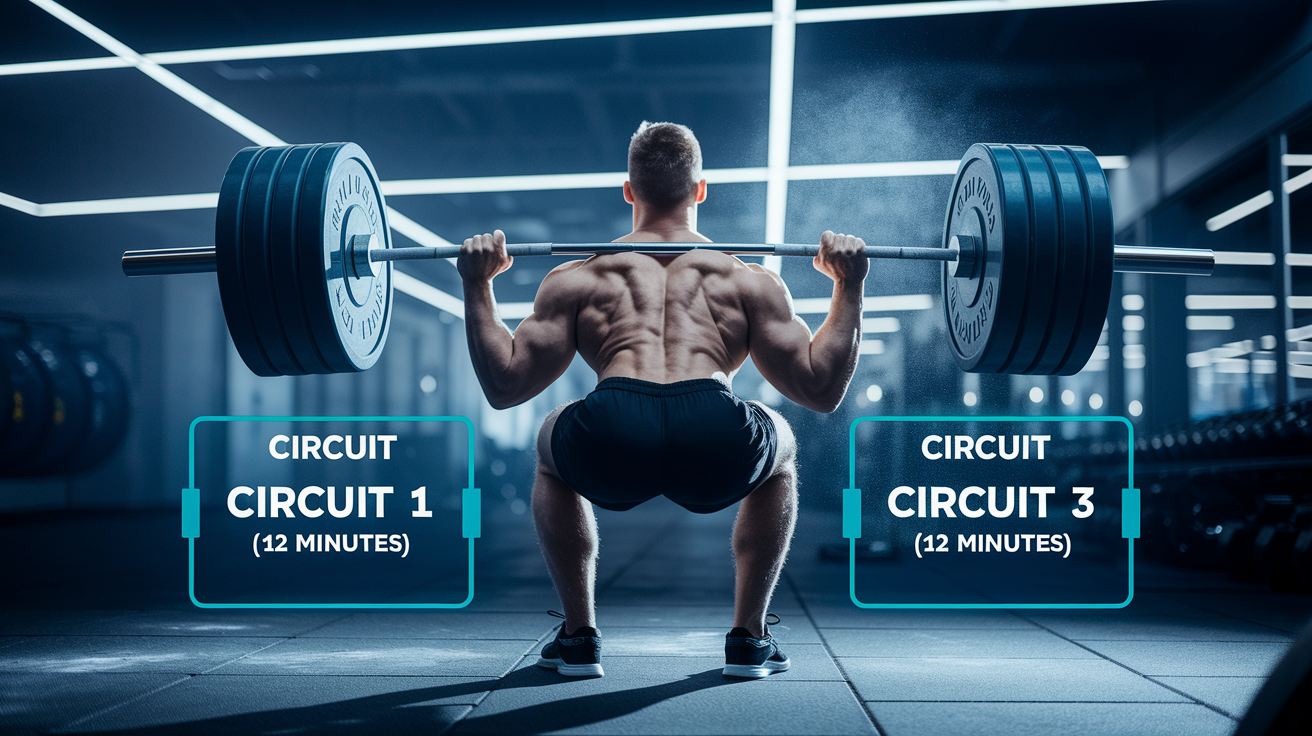
This program gives you a full-body session built around three circuits you’ll finish in exactly 45 minutes. You’re working through eight compound lifts that hit every major muscle group: upper back, shoulders, chest, legs, and posterior chain. Rest stays minimal between exercises so you keep your heart rate up and maximize calorie burn. Each circuit takes about 12 minutes, putting you at 36 minutes of continuous strength work with a quick warm-up and cool-down on either end.
The rep range sits between 8 and 15 per exercise. Go lower (8 to 10 reps) with heavier weight when you’re chasing absolute strength. Push higher (12 to 15 reps) with lighter loads when you want muscle endurance and metabolic stress. You’ll knock out all eight exercises in order, then loop back to the beginning for round two and finish with round three. Move from one exercise to the next taking as little rest as you can. That’s what keeps the session tight and gets you out the door on time.
The exercise list includes compound movements that recruit multiple joints and large muscle groups at once:
- Lat Pulldown
- Shoulder Press
- Squat
- Romanian Deadlift
- Bench Press
- Bentover Row
- Leg Press
- Glute-ham raise
Timing fits neatly into your 45-minute window. Start with 5 minutes of dynamic warm-up to raise your core temperature and prep your joints for loaded movement. Spend 36 minutes working through the three circuits. Each circuit takes about 12 minutes, giving you roughly 90 seconds per exercise when you include the actual lift and the transition to the next station. Finish with 4 minutes of cool-down that includes light stretching and controlled breathing to bring your heart rate back down and kickstart recovery. This gives you 24 total working sets per session, and running the plan twice per week lands you at a full 90-minute weekly training volume.
Warm-Up Mobility Flow to Prepare for a 45-Minute Strength Workout

Your warm-up should take exactly 5 minutes and accomplish two things: raise your heart rate just enough to break a light sweat, and mobilize the joints you’re about to load under tension. Skip static stretching here. Use dynamic movement that mirrors the patterns you’ll perform during the main session. Hip hinges, squats, pressing motions, and spinal rotation all belong in this block.
This isn’t about exhausting yourself before the real work starts. You’re priming the nervous system, lubricating the joints, and creating a smooth ramp into heavier loads. Keep every movement controlled and deliberate. Notice how your range of motion opens up as blood flow increases.
- Arm circles forward and backward, 20 total circles, 10 each direction
- Bodyweight squats with overhead reach, 10 reps
- Walking hip openers (knee to chest, then rotate open), 8 reps per leg
- Bodyweight Romanian deadlift with active hamstring reach, 10 reps
- Push-up to downward dog flow, 6 reps
Exercise Technique Essentials for a Safe 45-Minute Strength Workout

Good form starts with stable contact points. Position your feet at hip width or slightly wider across every squat, press, and hinge variation in this routine. That stable base lets you generate force from the floor and keeps your knees tracking safely over your toes. During bent-over movements like the Romanian deadlift and bentover row, hinge at the hips until your torso reaches somewhere between 45 and 90 degrees relative to the floor. Closer to horizontal when you need more posterior chain tension, closer to upright when you want to spare your lower back. Both knees should hit 90-degree angles during any lunge or split-stance pattern, with your front thigh parallel to the ground and your back knee hovering just above the floor.
Core engagement isn’t optional. Before you descend into a squat, press a barbell overhead, or hinge into a deadlift, actively pull your abs toward your spine without holding your breath. This intra-abdominal tension stabilizes your lumbar spine and transfers force cleanly from your lower body to your upper body (or vice versa). Inhale before the eccentric (lowering) phase, hold a firm brace through the hardest part of the lift, then exhale as you complete the concentric (lifting) phase. Brace like you’re about to take a light punch to the stomach. Firm, not stiff.
Common mistakes include letting your knees collapse inward during squats and leg presses, rounding your lower back during hinges, and shrugging your shoulders up toward your ears during rows and presses. You should feel tension in the target muscle (glutes and quads in a squat, lats and mid-back in a row, chest and triceps in a press), not in your joints or your neck. If a weight causes your form to break down after rep 8, it’s too heavy. If you can cruise past rep 15 with perfect technique and zero fatigue, it’s too light.
Core Bracing for Strength
Proper bracing transforms your torso into a rigid cylinder that protects your spine and lets you move bigger loads safely. Take a deep breath into your belly, expand your ribcage 360 degrees (front, sides, and back), then tighten everything like you’re about to get punched. Hold that pressure throughout the rep, release at the top, reset, and repeat. This isn’t sucking in your stomach or puffing out your chest. It’s creating internal pressure that keeps your lower back neutral and your pelvis stable under load.
Sets, Reps, and Rest Guidance for a Structured 45-Minute Strength Workout

You’ll perform three total circuits, which means every exercise gets three working sets. That adds up to 24 working sets across the full session. High enough volume to stimulate growth and strength adaptation without burying you in fatigue. The 8 to 15 rep range offers flexibility: stay closer to 8 reps with a load that challenges you by the sixth or seventh rep when your goal is maximal strength, or push toward 12 to 15 reps with a moderate weight when you want to build work capacity and muscle endurance. Both approaches work. Your choice depends on where you are in your training cycle and how your body feels that day.
Rest as little as possible between exercises to keep the circuit moving. In practice, that means 10 to 20 seconds of transition time. Just long enough to walk to the next station, adjust a pin, or grab a different implement. If you’re emphasizing strength and using heavier loads, you can extend rest up to 60 or even 90 seconds between exercises without blowing past the 45-minute mark, but you’ll need to tighten up your transitions and skip any extra chatter or phone checks. The tighter you keep rest intervals, the higher your average heart rate stays, and the more cardiovascular benefit you extract from the session.
Here are the five training variables you can manipulate within this framework:
- Rep range: Lower reps (8 to 10) build strength; higher reps (12 to 15) build endurance and hypertrophy
- Load: Increase weight by the smallest available increment once you hit the top of your rep range with clean form
- Rest: Minimize rest (10 to 20 seconds) for conditioning; extend rest (60 to 90 seconds) for pure strength
- Tempo: Slow down the eccentric (lowering) phase to 3 seconds for more time under tension
- RPE (Rate of Perceived Exertion): Aim for RPE 7 to 8 out of 10 on your hardest sets; you should have 2 to 3 reps left in the tank
Modifications and Progressions to Personalize Your 45-Minute Strength Workout

Beginners should start with two circuits instead of three, giving you 16 total working sets and a session that wraps up in roughly 30 minutes. Substitute machine versions wherever possible. Use a chest press machine instead of the barbell bench press, a seated leg curl instead of the glute-ham raise, and an assisted pull-up machine or lat pulldown with a very light load instead of heavy pulling. Take 30 to 45 seconds of rest between exercises if you need it, and don’t rush the transitions. Your first goal is to learn the movement patterns and finish each circuit without your form falling apart.
Intermediate lifters follow the plan as written: complete all three circuits, stick to the 8 to 15 rep range, and keep rest intervals short. Add weight in small jumps (2.5 to 5 pounds on upper-body lifts, 5 to 10 pounds on lower-body lifts) once you can complete all three circuits at the top of your rep range with solid technique. Track your numbers in a simple notebook or app so you know exactly what you lifted last session. Progress you can prove.
| Level | Circuits | Modifications |
|---|---|---|
| Beginner | 2 circuits (16 sets) | Use machines; 30 to 45 sec rest; lighter loads at 12 to 15 reps |
| Intermediate | 3 circuits (24 sets) | Follow plan as written; 8 to 15 reps; minimal rest; progressive overload |
| Advanced | 3 to 4 circuits (24 to 32 sets) | Heavier loads at 6 to 10 reps; add fourth circuit or tempo work; rest under 15 sec |
Equipment Options for a Flexible 45-Minute Strength Workout at Home or Gym
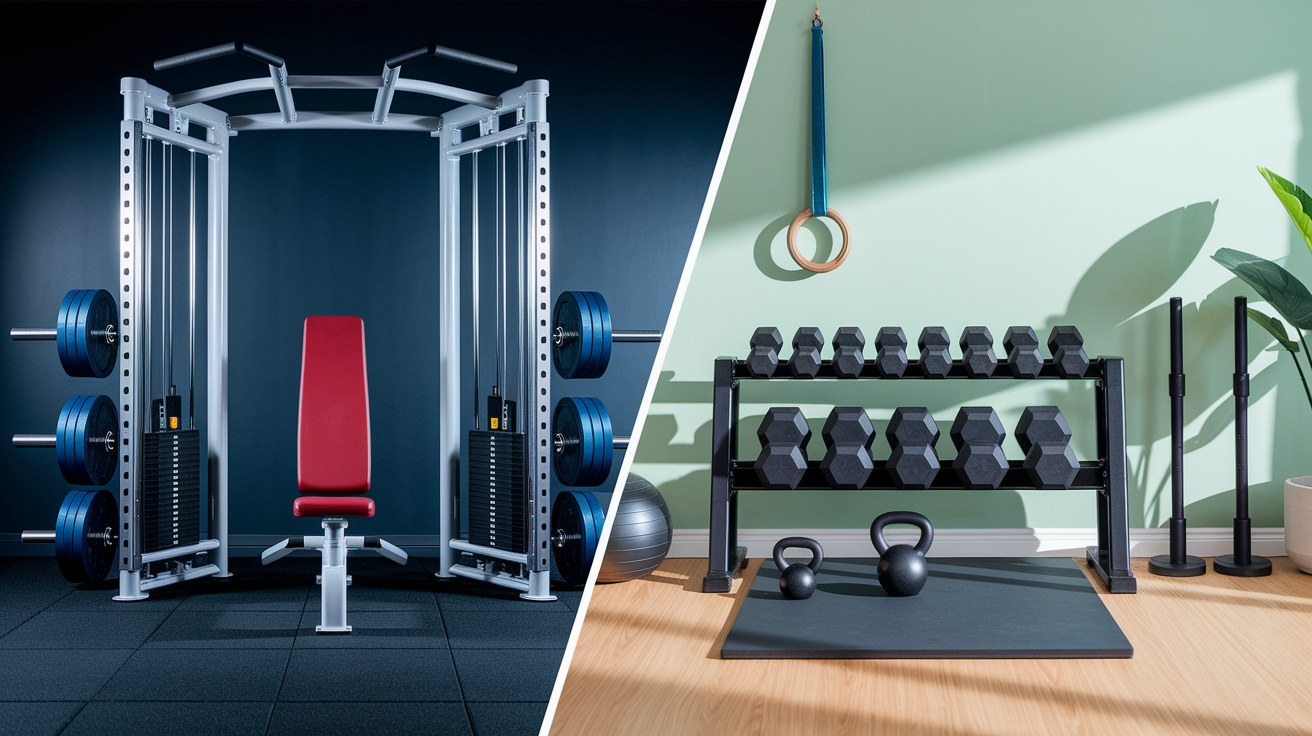
The original plan assumes access to a commercial gym with cable machines, barbells, a leg press, and a glute-ham developer. If you’re training at home or in a minimal setup, you can swap nearly every exercise for a dumbbell, kettlebell, or resistance-band alternative without losing training effect. A lat pulldown becomes a dumbbell single-arm row or a resistance-band pulldown anchored to a sturdy overhead point. The leg press converts into a goblet squat, front squat, or Bulgarian split squat. A glute-ham raise translates to a Nordic curl using a partner or furniture to anchor your ankles, or a dumbbell Romanian deadlift with an added isometric glute squeeze at the top.
Barbell lifts offer the highest absolute loading potential, but dumbbells force each side of your body to work independently, which can expose and correct strength imbalances. Kettlebells add a slight offset load that challenges your core stability, especially during squats and presses. Resistance bands provide accommodating resistance (tension increases as you stretch the band), which can be joint-friendly if you’re managing any aches. Machines lock you into a fixed path, which is safer for beginners but removes some of the stabilization demand that builds coordination and real-world strength.
- Lat Pulldown becomes resistance band pulldown or dumbbell single-arm row
- Shoulder Press becomes dumbbell or kettlebell overhead press
- Squat becomes goblet squat, front squat, or barbell back squat
- Romanian Deadlift becomes dumbbell RDL or kettlebell RDL
- Bench Press becomes dumbbell chest press or push-up variation
- Bentover Row becomes dumbbell row, kettlebell row, or inverted row on rings
- Leg Press becomes barbell back squat, goblet squat, or Bulgarian split squat
- Glute-ham raise becomes Nordic curl, stability-ball leg curl, or dumbbell RDL with pause
Cooldown Routine to Finish Your 45-Minute Strength Workout

Your 4-minute cool-down serves one simple purpose: bring your heart rate back toward baseline and give your muscles a gentle stretch while they’re still warm. This isn’t about gaining flexibility or hitting new range-of-motion records. It’s about signaling to your nervous system that the hard work is done and recovery can begin. Focus on the muscle groups you just loaded: hips, hamstrings, quads, chest, and upper back. Hold each stretch for 30 to 45 seconds without bouncing, and breathe slowly in through your nose and out through your mouth.
- Standing quad stretch: grab your ankle behind you and gently pull your heel toward your glute; 30 seconds per leg
- Standing hamstring stretch: hinge at the hips and reach toward your toes with a flat back; 45 seconds
- Doorway chest stretch: place your forearm on a wall or doorframe and rotate your torso away; 30 seconds per side
- Seated spinal twist: sit on the floor, cross one leg over the other, and rotate your torso toward the bent knee; 30 seconds per side
Final Words
You finish a compact, practical session: a 5-minute warm-up, three circuits (8 exercises each), and a 4-minute cooldown. Sets range 8-15 reps, minimal rest, and 24 working sets total. It’s designed to hit squats, presses, pulls, and hamstrings efficiently.
Technique cues, rep/rest guidance, and simple progressions give you a clear way to get better without guessing. Equipment swaps make this doable at home or the gym.
Use this 45 minute strength workout twice a week, track one small win each session, and you’ll build real strength over time. Keep going. Consistency wins.
FAQ
Q: Is 45 minutes of strength training a day enough? Can you build muscle in a 45 minute workout?
A: Forty-five minutes of strength training can be enough to build muscle when sessions use compound lifts, progressive overload, short rests, and enough weekly volume—two focused 45-minute sessions per week is a solid start.
Q: What is the 3 3 3 rule for working out?
A: The 3 3 3 rule for working out is a simple template: three exercises, three sets each, completed across three circuits or rounds to keep workouts time-efficient and hit multiple muscle groups.
Q: What is the 2 2 2 rule in gym?
A: The 2 2 2 rule in the gym is a minimal plan: two compound movements per session, two working sets per movement, performed twice per week—useful for beginners or busy schedules.