


You don’t need an hour at the gym to get real results.
In fact, a focused 30-minute session can build strength, raise your heart rate, and leave you with energy to spare.
Here’s the plan that actually works for beginners: 5 minutes to warm up, 20 minutes of simple compound machine work mixed with short low-impact cardio, and 5 minutes to cool down.
Follow it two to three times a week, track one small progression each session, and you’ll see steady gains without extra hours.
30‑Minute Beginner Gym Session Overview

A complete 30‑minute beginner gym session breaks into three phases: 5 minutes to warm up, 20 minutes of main work mixing strength and cardio, and 5 minutes to cool down. Your body gets time to wake up, you train multiple muscle groups without wasting movement, and you recover without feeling rushed. The whole thing fits a lunch break or that window before dinner. You’ll finish with energy left over.
The main 20‑minute block uses simple compound movements that light up your chest, back, legs, and core at the same time. You’ll rotate between machines like the leg press and chest press, throw in short bursts of low‑impact cardio, and keep rest periods brief so your heart rate stays slightly elevated. That combo delivers strength gains and cardiovascular benefits in one go.
Beginners see the best results when they stick to full‑body routines two or three times per week. Hitting every major muscle group in one session builds balanced strength. Makes it easier to track your progress week to week.
Minute by minute breakdown:
• 0:00–5:00 — Dynamic warm up: light marching, arm circles, hip openers, gentle mobility drills.
• 5:00–8:00 — Lat pulldown: two sets of 12 reps with 10 seconds rest between sets.
• 8:00–11:00 — Leg press: two sets of 12 reps, 10 seconds rest.
• 11:00–14:00 — Chest press: two sets of 12 reps, 10 seconds rest.
• 14:00–19:00 — Low intensity cardio: treadmill incline walk or elliptical at moderate resistance.
• 19:00–24:00 — Core work (plank or ab machine): two sets of 12 reps or 30–60 seconds hold, plus 1 minute transition.
• 24:00–30:00 — Cool down: static stretches for legs, hips, chest, controlled breathing.
Warm Up Foundations for New Gym Goers

A proper warm up raises your core temperature, increases blood flow to your muscles, and signals your nervous system that work is coming. Five minutes of dynamic movement prepares joints and connective tissue without tiring you out before the real training starts. You’re not stretching cold muscles here. You’re gently rehearsing the patterns you’ll use in the main session.
Dynamic warm ups lower your injury risk more than static stretching before exercise. Movements like leg swings and arm circles take each joint through a full range of motion, lubricate the joint capsule, and activate stabilizer muscles that keep you balanced during heavier lifts.
Four warm up movements to use (perform each for 60–90 seconds):
• Marching in place — Lift knees to hip height, swing arms naturally, focus on upright posture.
• Arm circles — Extend arms to the sides, make small circles forward for 30 seconds, then reverse for 30 seconds.
• Leg swings — Hold a wall or rack, swing one leg forward and back 10 times, then side to side 10 times, switch legs.
• Hip openers — Step to the side and sink into a shallow lunge, hold 2 seconds, return to center, repeat 8 times each side.
Beginner Friendly Strength Exercises
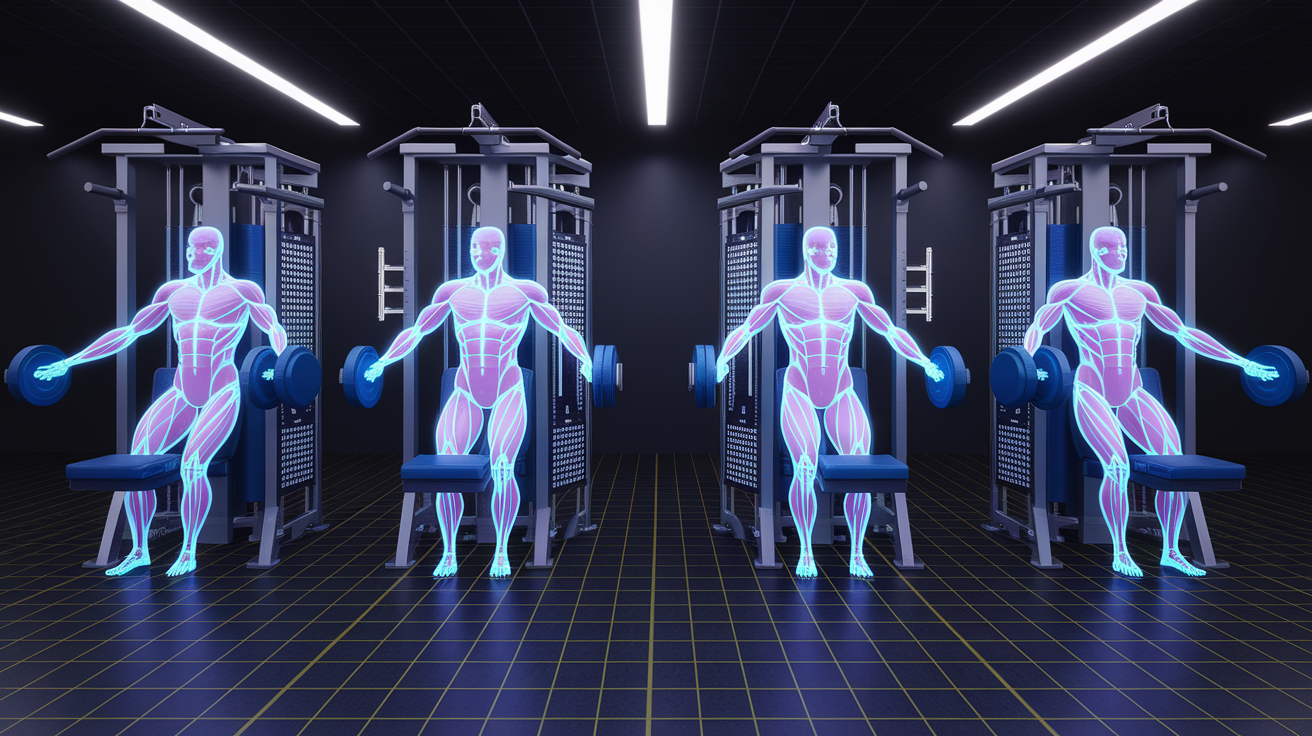
Machines are your best friend when you’re new. They guide your movement along a fixed path, so you can focus on pushing or pulling with control instead of worrying about balance or coordination. Lat pulldowns train your upper back. Leg presses build your quads and glutes. Chest presses develop your chest and triceps. Ab machines target your core without straining your neck.
Choose a weight that lets you complete 12 repetitions with solid form. The last two reps should feel challenging but not impossible. Rest about 10 seconds between your two sets on each machine, just long enough to shake out your arms or take three deep breaths. That brief pause keeps your heart rate up and teaches your muscles to recover quickly under light fatigue.
Compound movements engage multiple muscle groups at once, so you build overall strength faster than if you isolated one tiny muscle per exercise. In a 30‑minute session, you don’t have time for single‑joint moves like biceps curls. And you don’t need them yet. Multi‑joint exercises deliver more results in less time.
| Exercise | Primary Muscles | Suggested Reps |
|---|---|---|
| Lat Pulldown | Upper back, biceps | 2 sets × 12 reps |
| Leg Press | Quads, glutes, hamstrings | 2 sets × 12 reps |
| Chest Press | Chest, triceps, shoulders | 2 sets × 12 reps |
| Ab Machine | Core (rectus abdominis) | 2 sets × 12 reps |
Low Intensity Cardio Options for Beginners
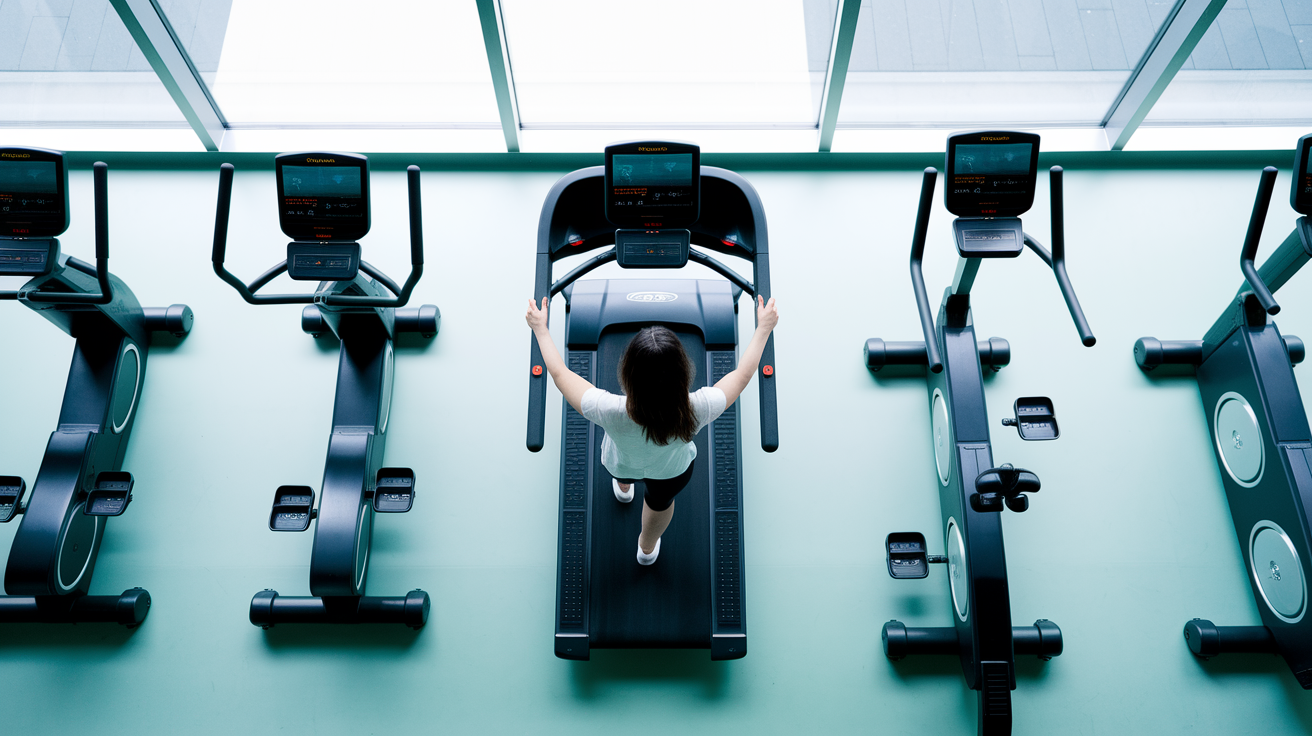
After three strength machines, spend five to seven minutes on a cardio machine to keep your heart rate elevated and burn extra calories. Low impact options like the elliptical, stationary bike, or a treadmill incline walk let you raise intensity without pounding your knees or ankles. You’re aiming for a pace where you can still hold a short conversation but feel your breathing deepen.
Set the treadmill to a brisk walk at a 3–5% incline, or choose resistance level 4–6 on the elliptical. Your heart rate should climb to about 60–70% of your estimated maximum (rough target is 220 minus your age, then multiply by 0.65). You don’t need a heart rate monitor. Just notice that you’re working but not gasping. If you feel dizzy or your legs start to burn sharply, dial the resistance back one notch and keep moving at a sustainable pace.
Cool Down and Stretching Basics
The final five minutes bring your heart rate down gradually and help your muscles release tension. Walk slowly on the treadmill or pedal lightly on the bike for about one minute, then step onto a mat for static stretches.
Four stretches to include (hold each for 30–45 seconds per side):
• Standing quad stretch — Pull one heel toward your glutes, keep knees together, feel the stretch along the front of your thigh.
• Seated hamstring stretch — Sit with one leg extended, reach toward your toes without rounding your back, feel it behind your knee.
• Figure four glute stretch — Lie on your back, cross one ankle over the opposite knee, pull the bottom thigh toward your chest.
• Doorway chest stretch — Place your forearm on a wall or doorframe, step forward until you feel a gentle pull across your chest and shoulder.
Breathe slowly and deeply during each stretch. Inhale through your nose for a count of four, then exhale through your mouth for a count of six. That rhythm signals your nervous system to relax and helps your muscles lengthen without resistance. Never bounce or force a stretch. Just ease into a position where you feel mild tension and hold it steady.
Safety Tips and Form Essentials
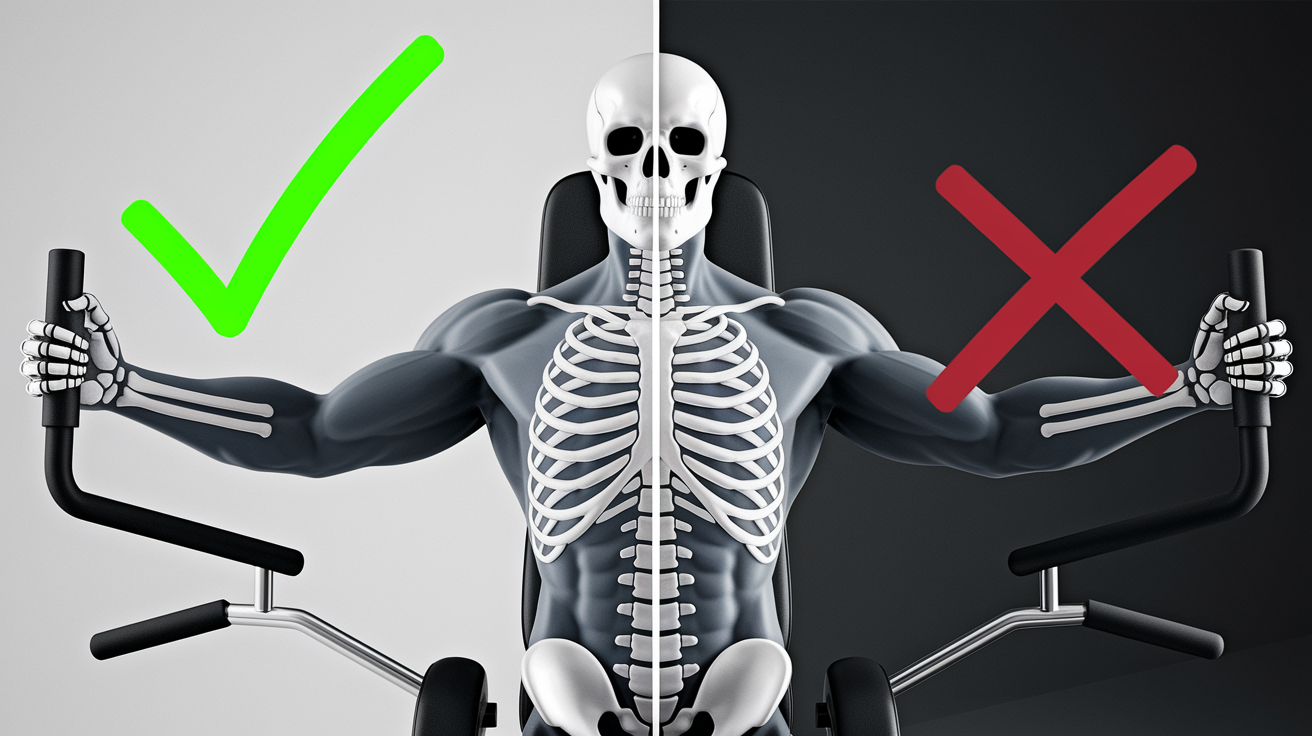
Good form beats heavy weight every single time. Start with a load that feels almost too light, then add resistance only when you can complete every rep with a neutral spine, controlled speed, and no joint pain. On the leg press, adjust the seat so your knees sit slightly less than 90 degrees at the bottom. On the chest press, keep your back flat against the pad and fully extend your arms without locking your elbows.
Breathe with the movement instead of holding your breath. Exhale when you push or pull (the hard part), and inhale when you return to the start. That pattern stabilizes your core and keeps oxygen flowing to your muscles. Count to two on the way down or back, pause for one count, then count to two on the way up. Slow, deliberate reps teach your nervous system the right pattern and reduce your risk of tweaking something.
Rest intervals matter. Short rests keep your heart rate elevated, but if you feel lightheaded or your form starts to crumble, take an extra 15 seconds. Listen to your body. Stop immediately if you feel sharp pain, dizziness, or nausea, and ask a gym staff member or trainer for help.
Common Beginner Mistakes and How to Avoid Them

Most beginners either do too much too soon or skip the small details that prevent injury. Overtraining happens when you add extra sets, extra weight, or extra sessions before your body adapts. Your muscles grow during recovery, not during the workout, so resist the urge to train the same muscle groups on back to back days.
Five mistakes to watch for and fix:
• Skipping the warm up — Jumping straight into heavy machines increases injury risk. Always take the full five minutes to prepare.
• Using weights that are too heavy — If you can’t complete 12 reps with good posture, lower the weight by one or two plates.
• Locking joints at full extension — On the leg press and chest press, keep a slight bend in your knees and elbows at the top of each rep.
• Holding your breath — Breathing steadily delivers oxygen and keeps blood pressure stable. Exhale on exertion, inhale on the return.
• Rushing through reps — Slow, controlled movement builds strength and teaches your brain the correct pattern. Speed comes later.
Write down the weight or resistance you used for each exercise in a notebook or phone app. Next session, aim to add one rep, one small plate, or one resistance level. That tiny progression adds up over weeks and keeps you motivated. If your form breaks down, stay at the same weight until it feels smooth again. Consistency and control are the real markers of progress, not the number on the stack.
Final Words
You’ve now got a ready-to-go 30-minute plan: a 5-minute warm-up, 20 minutes of simple strength and light cardio, and a 5-minute cool-down.
We went over beginner-friendly strength moves, low-impact cardio options, safety cues, and common mistakes, plus the minute-by-minute sequence to follow.
Use this guide to practice how to structure a 30-minute beginner gym session: pick the default sequence, start light, track one small win each workout, and repeat. Small, steady steps add up.
FAQ
Q: What are the 3 3 3, 3/2/1, and 2 2 2 rules at the gym?
A: The 3‑3‑3, 3/2/1, and 2‑2‑2 rules at the gym are shorthand that vary, but commonly: 3‑3‑3 = three sets of three reps (strength); 3/2/1 = interval timing (e.g., 3/2/1 minutes); 2‑2‑2 = simple two‑by‑two circuit formats.
Q: What is a good gym schedule for a beginner?
A: A good gym schedule for a beginner is three full‑body sessions a week, 30–45 minutes each (for example Mon/Wed/Fri), plus light cardio or mobility on rest days and at least one full rest day.