


Think more rest, not more workouts, is the secret to early gains.
Beginners often burn out by training again before they’ve fully recovered.
Rest days are when your body actually builds strength, so schedule them like a session.
In this post you’ll get a clear, simple plan: how many rest days to take, when to pick active versus full rest, and the sleep and food habits that speed repair.
Do this and your progress stays steady, not stalled.
Core Rest and Recovery Structure for Beginners

Beginners need 2–3 rest days weekly, including at least one fully passive rest day.
Rest days are when your body actually builds the strength you’re working for. Muscle fibers don’t grow during the workout. They grow when you step away from the weights and let repair happen. For someone new to training, this repair window is both faster and more fragile than it is for experienced lifters. Your body adapts quickly at first, but it also fatigues quickly if you don’t give it time to catch up. Two to three rest days each week give your muscles, joints, tendons, and central nervous system the time they need to recover and prepare for the next session.
Not all rest days look the same. A full rest day means no structured training at all. Just normal daily movement, hydration, clean meals, and ideally some extra sleep. An active recovery day includes light, low stress movement like a 20 to 30 minute walk, gentle yoga, or easy stretching. Active recovery helps move blood through sore tissue and keeps you from feeling stiff without adding new training stress. Both types of rest count toward your weekly recovery total.
A sustainable beginner schedule includes:
- At least one fully passive rest day per week with no structured activity
- One to two additional rest or active recovery days, depending on training frequency
- Recovery days spread across the week, not all stacked at the end
- Consistent sleep and meal timing on rest days, not just training days
- Light movement or mobility work if soreness is present, but no loaded exercises
Rest and Recovery Programming Principles for Muscle Repair and Growth

Recovery is the period when muscle protein synthesis outpaces breakdown and your body rebuilds tissue stronger than before. During a hard training session, you create microscopic damage in muscle fibers. Once the session ends, your body begins repair. For beginners, this process moves quickly because the stimulus is new and the adaptive response is strong. But that doesn’t mean you can train hard every day. Beginners recover faster than advanced lifters in some ways, but they still need 48 to 72 hours before training the same muscle group at high intensity again.
Sleep plays a central role in this repair cycle. Growth hormone is released during deep sleep, and that hormone directly supports tissue rebuilding. If you’re consistently sleeping fewer than seven hours, you’re cutting into the time your body has to complete repair work. Muscle recovery also depends on having enough raw materials on hand when the rebuilding process starts. Protein, carbohydrates, water, and micronutrients. Skipping meals or under eating on rest days slows progress just as much as skipping sleep does.
Spacing your training correctly helps avoid overlap fatigue. If you train legs hard on Monday, your quads, glutes, and hamstrings need until Wednesday or Thursday to fully recover before another high intensity lower body session. You can still train upper body on Tuesday or Wednesday without interfering with leg recovery. This muscle group rotation rule is simple: don’t load the same muscle intensely on back to back days. Forty eight to seventy two hours between sessions targeting the same muscle group gives tissue time to rebuild and adapt without chronic soreness or performance drop offs.
Weekly Training and Recovery Scheduling for Beginners

A beginner’s weekly training schedule should balance frequency, recovery, and consistency. Most beginners do well with three to four strength training days per week, leaving two to three days for rest or light activity. Training more than four days per week as a beginner often leads to accumulated fatigue, declining performance, and higher injury risk. Training fewer than three days per week makes it harder to build momentum and lock in technique. Three or four sessions hit the sweet spot where you’re training often enough to improve but recovering enough to sustain progress.
The most common beginner friendly training splits are full body routines and upper/lower splits. A full body routine trains all major muscle groups in one session, repeated three times per week with at least one rest day between sessions. This approach is efficient, builds coordination across movements, and allows each muscle group to recover fully between workouts. An upper/lower split divides the week into upper body and lower body days, typically running four days per week with alternating focus. Both structures work well as long as rest days are scheduled and muscle groups aren’t trained intensely on consecutive days.
Here are three sample weekly schedules that follow beginner recovery principles:
-
3 Day Full Body Plan
Monday: Full body strength (30 to 45 minutes)
Tuesday: Active recovery walk or easy stretching (20 to 30 minutes)
Wednesday: Full body strength (30 to 45 minutes)
Thursday: Rest day
Friday: Full body strength (30 to 45 minutes)
Saturday: Light cardio or mobility (20 to 40 minutes)
Sunday: Rest day -
4 Day Upper/Lower Split
Monday: Upper body (40 to 60 minutes)
Tuesday: Lower body (40 to 60 minutes)
Wednesday: Rest or active recovery (20 to 30 minutes)
Thursday: Upper body (40 to 60 minutes)
Friday: Lower body (40 to 60 minutes)
Saturday: Easy cardio or yoga (20 to 45 minutes)
Sunday: Rest day -
Mixed 4 Day Plan with Cardio
Monday: Full body strength (30 to 45 minutes)
Tuesday: Easy cardio (20 to 30 minutes)
Wednesday: Rest day
Thursday: Full body strength (30 to 45 minutes)
Friday: Active recovery or mobility (20 to 30 minutes)
Saturday: Full body strength (30 to 45 minutes)
Sunday: Rest day
Sleep Guidelines to Enhance Beginner Recovery

Aim for seven to nine hours of sleep each night. Sleep isn’t optional recovery. It’s where the majority of tissue repair, hormone regulation, and central nervous system restoration happens. If you’re consistently getting fewer than seven hours, your body doesn’t have enough time to complete the recovery work started after training. One or two short nights won’t wreck your progress, but a pattern of poor sleep will stall strength gains, increase soreness, and make every workout feel harder than it should.
Improving sleep quality starts with simple, repeatable habits. Going to bed and waking up at the same time every day helps regulate your internal clock. Avoiding caffeine after 2 p.m. keeps stimulants from interfering with deep sleep later. Reducing screen time and blue light exposure in the hour before bed makes it easier to fall asleep. Your bedroom should be cool, dark, and quiet. These aren’t complicated changes, but they make a measurable difference in how well you recover.
Practical sleep habits for better recovery:
- Set a consistent bedtime and wake time, even on weekends
- Avoid caffeine in the afternoon and evening
- Reduce screen use and dim lights 60 minutes before bed
- Keep your bedroom cool, dark, and free of distractions
Nutrition, Hydration, and Post Workout Recovery Fueling

What you eat and drink directly affects how well you recover. Protein provides the amino acids your body uses to rebuild muscle tissue. Carbohydrates refill glycogen stores in your muscles and liver, which fuel your next workout. Healthy fats support hormone production and reduce inflammation. Electrolytes and water keep cells hydrated and help transport nutrients where they’re needed. If any of these pieces are missing, recovery slows down.
For beginners, a simple protein target is 1.2 to 2.0 grams per kilogram of body weight per day. That works out to about 20 to 40 grams of protein per meal if you’re eating three to four meals daily. Chicken, eggs, Greek yogurt, lean beef, and plant based proteins like lentils or tofu all count. Hydration should reach around 30 to 35 milliliters per kilogram of body weight daily. Roughly 2 to 3.5 liters for most people. Plain water works, but you can also count herbal tea, milk, or water rich fruits. Post workout meals are especially important. Eating within one to two hours after training gives your body the fuel it needs when the recovery window is most active.
Carbohydrate intake matters on training days. Aim for 0.3 to 0.6 grams per kilogram of body weight within one to two hours after moderate or hard sessions. Sweet potatoes, rice, oats, and fruit are all solid choices. Electrolytes (sodium, potassium, and magnesium) can come from bananas, leafy greens, nuts, and a small pinch of salt in meals. If you’re sweating heavily or training in heat, you may need slightly more.
| Nutrient | Role in Recovery |
|---|---|
| Protein | Repairs and rebuilds muscle tissue damaged during training |
| Carbohydrates | Refills glycogen stores in muscles and liver for energy |
| Healthy Fats | Supports hormone production and reduces inflammation |
| Hydration & Electrolytes | Maintains cell function, nutrient transport, and fluid balance |
Active Recovery Methods for Beginners

Active recovery means low intensity movement that promotes blood flow without adding new training stress. It’s not another workout. It’s a way to stay mobile, reduce stiffness, and help sore muscles clear out waste products while staying well below the intensity that causes fatigue. For beginners, active recovery fits best on days between strength sessions or on the day after a hard workout when soreness is setting in.
A 20 to 30 minute walk is one of the simplest and most effective active recovery options. It raises your heart rate slightly, moves blood through your legs and core, and doesn’t require any equipment or planning. Low impact yoga or gentle stretching for 15 to 30 minutes can improve mobility and reduce muscle tightness without overloading joints. Foam rolling for 5 to 15 minutes targets specific sore areas (quads, hamstrings, glutes, upper back) and helps release tension in tissue. Light mobility drills like hip circles, arm swings, or bodyweight lunges keep joints moving through full ranges without load.
Effective active recovery options for beginners:
- 20 to 30 minute outdoor walk at a conversational pace
- Low impact yoga or Pilates session (15 to 30 minutes)
- Foam rolling on sore muscle groups (5 to 15 minutes)
- Gentle stretching routine focusing on hips, hamstrings, shoulders, and chest
- Easy stationary bike or swimming (20 to 30 minutes, very light effort)
- Mobility drills using bodyweight only, no added resistance
Deload Weeks and Longer Recovery Programming for Beginners
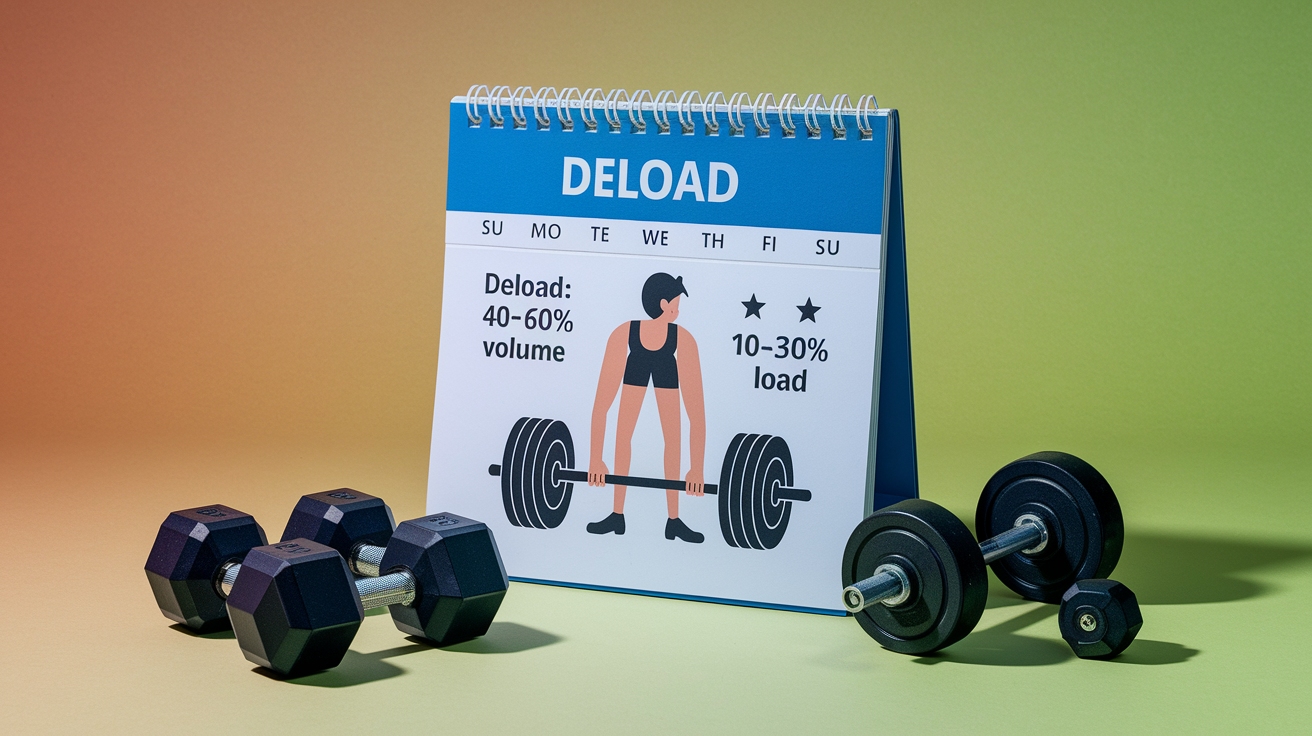
A deload is a planned reduction in training volume or intensity designed to give your body extra recovery time without stopping training entirely. Beginners should schedule a deload every three to six weeks, with every fourth week being the most common timing. During a deload week, you still train, but the workload is lighter. This gives muscles, joints, tendons, and your central nervous system a chance to catch up and fully adapt to the previous weeks of progressive overload.
There are a few ways to structure a deload. The most common method is to reduce total weekly training volume by 40 to 60 percent. That might mean cutting the number of sets in half or reducing the number of training days from four to two or three. Another option is to keep the same number of sets but reduce the weight on the bar by 10 to 30 percent, making each rep feel easier and less taxing. Both approaches work. The goal is to maintain movement quality and practice your lifts without accumulating fatigue.
Some beginners benefit from a full rest week every eight to twelve weeks, especially if training blocks have been intense or if life stress is high. A rest week can mean complete time off from structured training or just very light activity like walking and stretching. This longer break helps prevent burnout, reduces the risk of overuse injuries, and gives you a mental reset before starting the next training cycle.
Common deload strategies:
- Reduce total weekly sets by 40 to 60% while keeping intensity moderate
- Lower working weight by 10 to 30% but maintain normal volume
- Cut training frequency from four days to two or three days
- Replace one or two strength sessions with active recovery or mobility work
| Deload Type | Typical Reduction |
|---|---|
| Volume Deload | 40 to 60% fewer sets or reps per week |
| Intensity Deload | 10 to 30% lighter loads on the bar |
| Frequency Deload | Drop from 4 training days to 2 to 3 days |
Signs of Under Recovery and Overtraining in Beginner Trainees

Your body will tell you when recovery isn’t keeping up with training stress. The key is learning to recognize the signs early, before they turn into chronic fatigue or injury. Beginners sometimes ignore these signals because they assume soreness and tiredness are just part of training. Some soreness is normal, especially in the first few weeks. But persistent soreness that lasts longer than 72 hours, performance that keeps dropping session after session, or feeling drained all day even on rest days are all red flags.
One objective sign to track is resting heart rate. If your resting heart rate is five to ten beats per minute higher than your normal baseline for two to three consecutive mornings, that’s a sign your nervous system is still under stress. Poor sleep quality, reduced appetite, irritability, or loss of motivation are also common markers of under recovery. If you’re getting sick more often than usual or small injuries keep popping up, your immune system and connective tissues may be overloaded. When two or more of these signs show up at the same time, it’s time to back off training intensity or volume for a few days.
Warning signs of under recovery and overtraining:
- Persistent muscle soreness lasting more than 72 hours after a workout
- Resting heart rate elevated by 5 to 10 bpm above baseline for multiple days
- Three or more consecutive workouts where performance declines or planned loads feel impossible
- Sleep quality drops or total sleep falls below six hours per night regularly
- Mood swings, irritability, or noticeable loss of training motivation
- Frequent minor illnesses or recurring small injuries in tendons, joints, or connective tissue
Final Words
Start with this: beginners need 2–3 rest days weekly, including at least one fully passive rest day. Structure rest with short active-recovery sessions, sleep targets, and simple nutrition so muscle recovery can happen.
Use a simple weekly plan: 3× full-body or 4× upper/lower, with 2 rest days and one light day. Add deload weeks every 3–6 weeks and watch for early signs of under-recovery.
If you’re figuring out how to program rest and recovery for beginner trainees, pick one template, track how you feel, and adjust. Small, steady steps add up.
FAQ
Q: What is the 3-3-3 rule at the gym? / What is the 3-3-3 rule for lifting?
A: The 3-3-3 rule at the gym is a strength template of three sets of three heavy repetitions, focusing on max strength, tight technique, and longer rests between sets to lift near-max loads.
Q: What are the 4 R’s of recovery?
A: The 4 R’s of recovery are rest, refuel, rehydrate, and restore — meaning sleep/passive rest, nutritious protein and carbs, fluids and electrolytes, plus mobility or soft-tissue work to aid repair.
Q: What is the 5 3 1 rule?
A: The 5/3/1 rule is a four-week strength cycle: week 1 uses five reps, week 2 three reps, week 3 a heavy single, then a deload week, with percentage-based progression each cycle.