

Stop chasing biceps and mirror muscles.
Train how you move.
When you’re new, focusing on movement patterns builds usable strength faster than trying to train every small muscle separately.
This post shows how to pick exercises for a balanced beginner full-body plan: check five patterns (push, pull, squat, hinge, carry) and choose simple compound variations you can do with clean form.
You’ll learn when to add isolation work, how to swap exercises without losing progress, and how to spread sessions through the week so nothing gets skipped.
Short, practical, and built to fit 30 to 45 minute sessions.
Key Movement Patterns for a Balanced Full-Body Beginner Workout
Movement patterns matter more than individual muscles when you’re starting out. You don’t need to think like a bodybuilder trying to sculpt every angle of your biceps. You need a foundation that makes you stronger and more capable when it actually counts.
That means organizing your workouts around how your body moves, not how an anatomy textbook divides things up.
Each of the five foundational patterns trains multiple muscle groups at once. A squat builds your quads, glutes, and core while teaching you to stand up under load. A hinge like a Romanian deadlift hits your hamstrings, glutes, and lower back. Pushing strengthens your chest, shoulders, and triceps. Pulling works your back, biceps, and rear delts. Carries train your grip, core, and posture under tension.
Together, these five patterns make sure every major muscle group gets work without needing a dozen exercises per session.
Using movement patterns as your framework keeps you from accidentally skipping entire areas. New lifters often load up on bench press and biceps curls, then wonder why their posture suffers and their lower body stays weak. If you check each pattern off your list every week, that imbalance can’t happen. You’re training the whole system. That’s what builds usable, sustainable strength.
The five foundational movement patterns are:
Push – pressing movements that work chest, shoulders, and triceps (bench press, push-ups, overhead press)
Pull – rowing and pulling movements for back, biceps, and rear delts (rows, chin-ups, pulldowns)
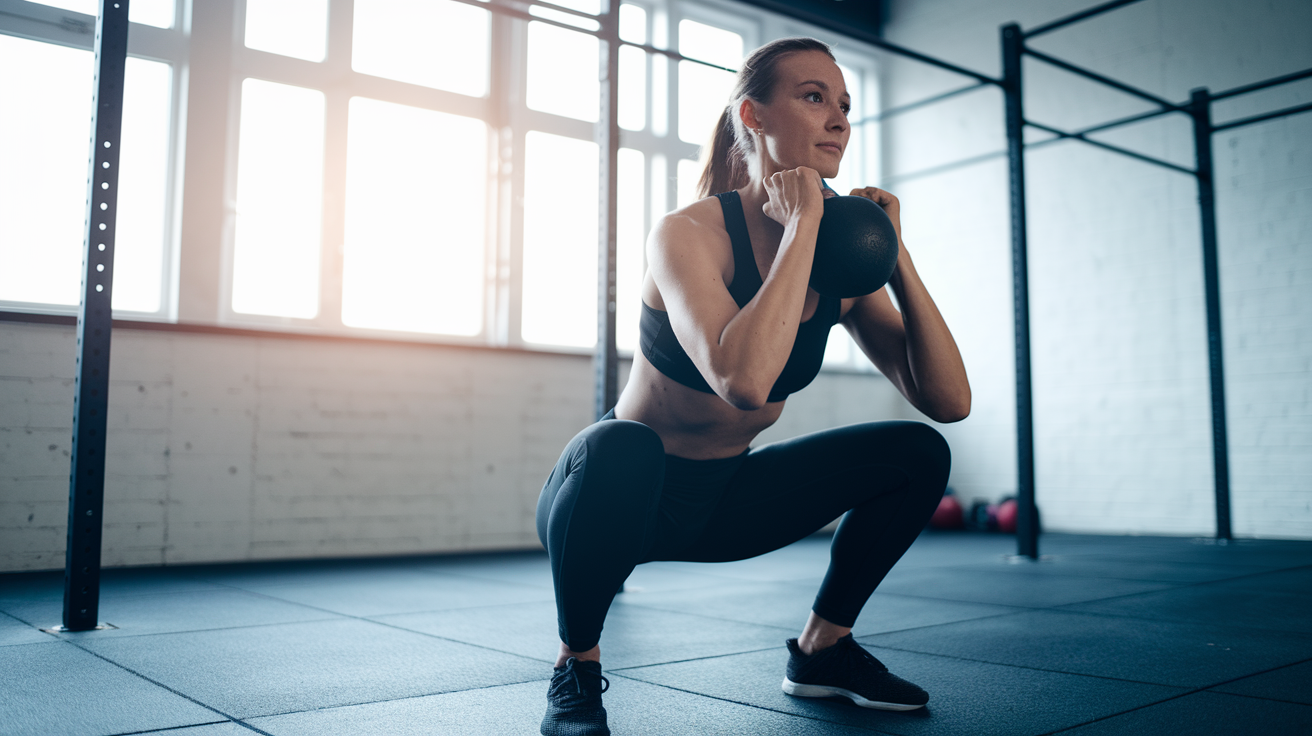
Squat – knee-dominant lower body movements targeting quads, glutes, and core (goblet squat, front squat, back squat)
Hinge – hip-dominant movements that load hamstrings, glutes, and spinal erectors (Romanian deadlift, deadlift variations)
Carry – loaded carries that build grip strength, core stability, and posture (farmer carries, suitcase carries)
Understanding Compound vs. Isolation Exercises for Beginners
Compound exercises work multiple joints and multiple muscle groups at the same time. That makes them efficient. And efficiency matters when you’ve only got 45 minutes and need to train your whole body.
A goblet squat trains your quads, glutes, core, and upper back all in one movement. A bent-over row hits your lats, upper back, biceps, and core. When you’re building your base, compound lifts give you the most return per set. They also teach your body to coordinate movement, which isolation work can’t do.
Isolation exercises target one muscle or one small group. Think biceps curls, triceps pushdowns, lateral raises. These aren’t bad, but they’re supplemental. Add them when a muscle isn’t getting enough work from your compound lifts, or when you want to bring up a weak point without adding more full-body fatigue.
For example, if your shoulders never feel worked after pressing, adding a set or two of lateral raises fills that gap without another heavy compound movement.
Compound movements for beginners:
Multi-joint, multi-muscle (squats, deadlifts, bench press, rows). Build coordination and total body strength quickly.
Isolation movements for beginners:
Single-joint, single-muscle (biceps curls, triceps extensions, calf raises). Used sparingly to address gaps or add targeted volume.
Beginner-Friendly Exercise Options for Each Movement Pattern
Push-ups (push) – bodyweight or elevate hands on a bench to make easier
Dumbbell bench press (push) – easier to control than barbell, safer without a spotter
Bent-over dumbbell row (pull) – simple setup, trains one side at a time for balance
Lat pulldown (pull) – beginner-friendly alternative to chin-ups while you build strength
Goblet squat (squat) – holding a dumbbell or kettlebell at your chest teaches upright posture
Leg press (squat) – machine alternative if barbell squats feel too technical early on
Romanian deadlift (hinge) – safer starting point than conventional deadlifts, builds hamstrings and glutes with less technical demand
Dumbbell step-ups (hinge/squat hybrid) – single-leg work that also loads glutes and quads
Farmer carry (carry) – walk with dumbbells or kettlebells in each hand for 20 to 40 steps
Suitcase carry (carry) – carry one weight on one side to challenge core stability and posture
Pick variations based on what you can perform with little or no pain, what you can do with clean form, and what you can feel in the target muscle. If goblet squats feel awkward, try leg press until your mobility improves. If push-ups hurt your wrists, elevate your hands or use dumbbells for a neutral grip.
The best exercise is the one you can do well and progress over time.
How to Balance Your Full-Body Workouts Over the Week
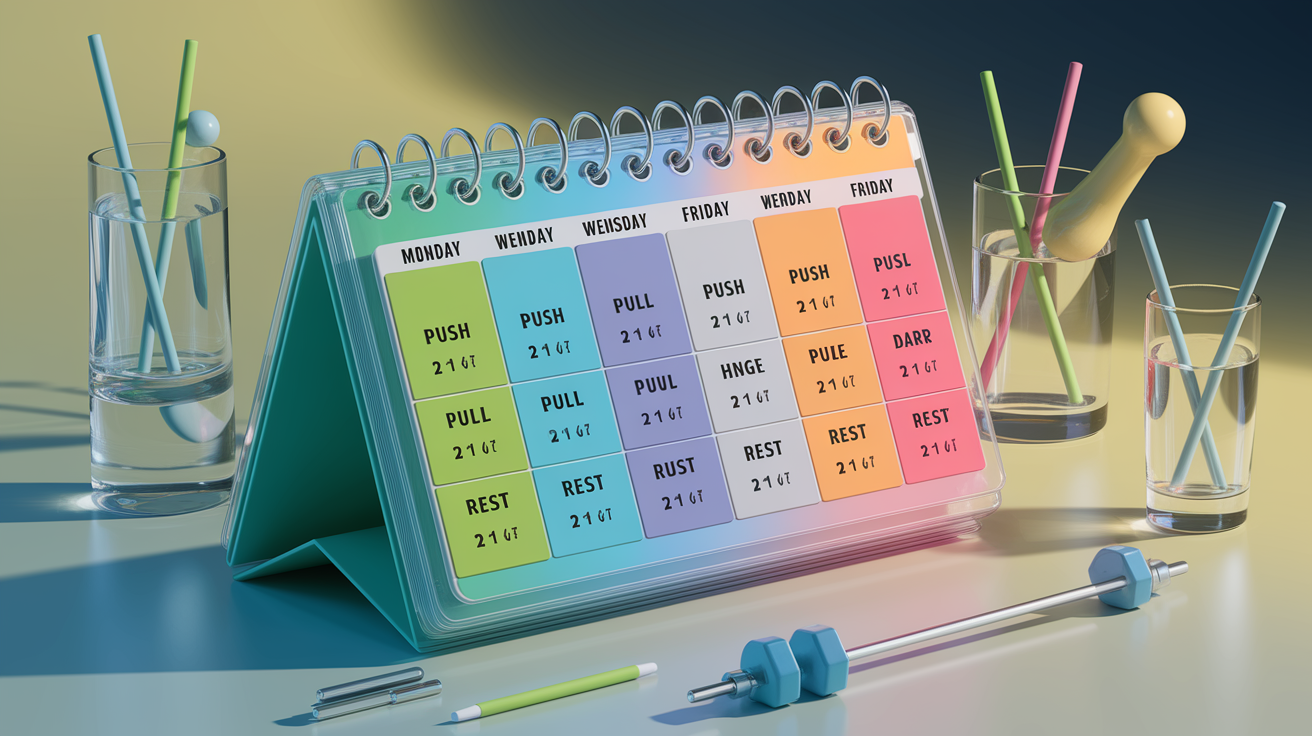
Train full-body two to three times per week with at least one rest day between sessions. That frequency lets you hit every major movement pattern multiple times without overloading any single muscle group. Three sessions per week is ideal for most beginners because it balances stimulus with recovery and gives you room to improve technique each time you lift.
Rotate movement patterns and intensity across sessions to keep workouts fresh and avoid repetitive strain. For example, if Monday includes heavy goblet squats and Romanian deadlifts, Wednesday might swap in leg press and dumbbell step-ups. You’re still covering squat and hinge, but the variation spreads the load and reduces the chance of overuse.
The same principle applies to upper body work. Alternate between horizontal and vertical pushing and pulling across the week so no single joint or muscle sees the same stress three times in seven days.
Track which patterns you’re hitting and how often. If you notice your pull work always feels strong but your hinge never improves, you’re probably under-loading or under-practicing the hinge. Balance isn’t just about equal sets. It’s about equal attention to learning and progressing each pattern. When one pattern lags, prioritize it early in your next session when you’re fresh.
Sample Full-Body Beginner Routines Using the Exercises Above
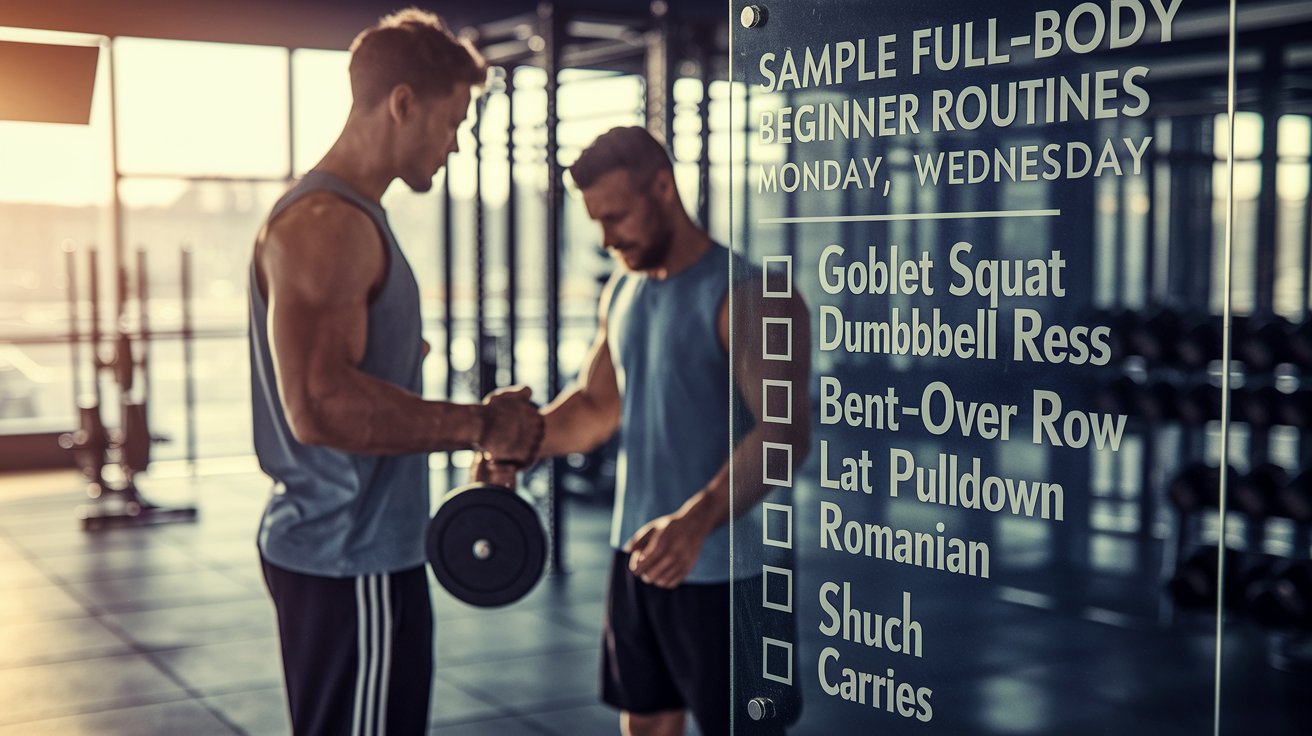
| Day | Exercise Selection | Notes |
|---|---|---|
| Monday | Goblet squat, dumbbell bench press, bent-over row, farmer carry | 3 sets × 8–10 reps for main lifts; 2 sets × 40 steps for carries |
| Wednesday | Romanian deadlift, push-ups, lat pulldown, suitcase carry | 3 sets × 8–10 reps for main lifts; 2 sets × 40 steps per side for carries |
| Friday | Leg press, dumbbell overhead press, dumbbell row, farmer carry | 3 sets × 8–10 reps for main lifts; 2 sets × 40 steps for carries |
You can swap exercises within the same movement pattern whenever you need to. If goblet squats bother your wrists one day, use leg press instead. If bent-over rows hurt your lower back, switch to a chest-supported machine row. The pattern stays the same, the muscles stay covered, and you keep progressing without forcing a painful movement.
Common Beginner Mistakes When Choosing Exercises
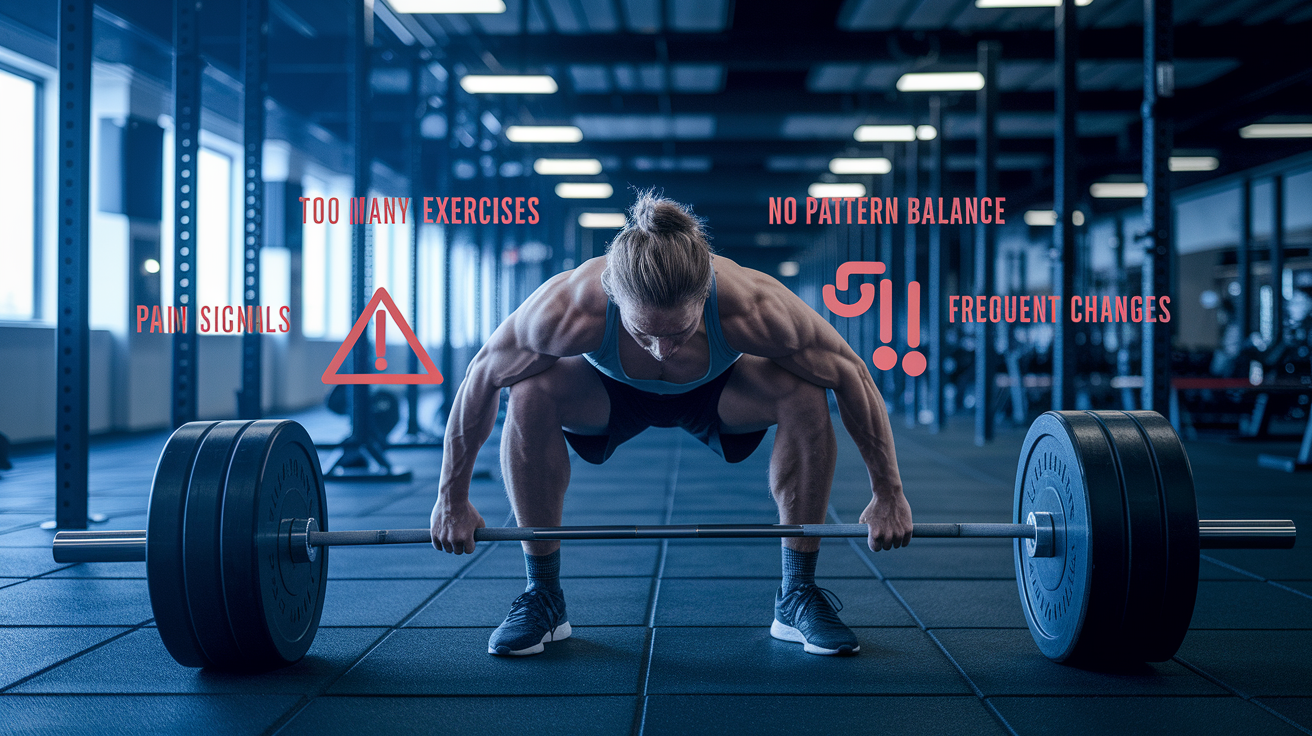
Adding too many exercises too soon – stick to four to six total movements per session. More exercises don’t mean better results when you’re learning.
Skipping entire movement patterns – neglecting hinge or pull work creates imbalance and weak points that show up later as injury or stalled progress.
Choosing exercises that hurt – pain is a signal to stop or modify, not push through. Swap painful movements immediately.
Picking overly complex variations before mastering basics – barbell back squats aren’t beginner-mandatory. Goblet squats and leg press build the same muscles with less technical demand.
Changing exercises every week – progression requires repetition. You can’t add weight or reps if you never do the same lift twice.
Avoiding these mistakes keeps your training simple, progressive, and sustainable. Balance comes from covering all five movement patterns, starting with exercises you can perform well, and giving each lift enough time to improve before swapping it out.
Final Words
You learned to build sessions around the five movement patterns—push, pull, squat, hinge, carry. That keeps your training balanced and cuts down on weak links.
We covered why compound lifts form the base, when to add isolation, simple beginner options, sample weekly layouts, and common mistakes to skip.
If you want one clear takeaway on how to pick exercises for balanced beginner full-body workouts: use pattern-based, beginner-friendly variations, keep volume reasonable, and add a little progress each week. Small steps add up.
FAQ
Q: What are the key movement patterns beginners should use?
A: The key movement patterns beginners should use are push, pull, squat, hinge, and carry — they cover pressing, rowing, leg drive, hip hinge, and loaded carries for balanced total‑body strength.
Q: Why do movement patterns matter more than isolating individual muscles for beginners?
A: Movement patterns matter more than isolating muscles because they teach whole‑body coordination, build practical strength faster, and reduce early imbalances that isolated moves often miss.
Q: What are simple beginner exercises for each movement pattern?
A: Simple beginner exercises per pattern are: push — knee push‑ups, dumbbell press; pull — bodyweight row, dumbbell row; squat — bodyweight, goblet squat; hinge — Romanian deadlift, kettlebell hinge; carry — farmer and suitcase carries.
Q: How should beginners prioritize compound versus isolation exercises?
A: Beginners should prioritize compound exercises because they train multiple muscles at once; add isolation only to correct a weak spot or support a stalled lift, and keep isolation low volume.
Q: How often should beginners train full‑body and how many exercises per session?
A: Beginners should train full‑body 2–3 times per week, with 4–6 exercises per session that cover the five patterns, allowing at least one rest day between sessions.
Q: How do I balance movement patterns across workouts to avoid overuse?
A: Balance patterns by rotating which exercises you do each session, vary intensity (hard, moderate, easy), swap equivalent exercises, and track sets per pattern to spot and fix imbalances.
Q: How do I pick the right variation and progress safely as a beginner?
A: Pick easier bodyweight or low‑load variations until form is solid, then progress by adding reps, then small weight increases, or moving to a harder variation one step at a time.
Q: What common mistakes should beginners avoid when choosing exercises?
A: Common mistakes to avoid are picking overly complex moves too soon, skipping key patterns, relying on isolation, neglecting rest, and not tracking progress—keep it simple and consistent.