


What if you could fix tight shoulders with five minutes a day instead of joint pain and long rehab?
Most shoulder stiffness comes from sitting, screens, and unbalanced overhead work.
These simple mobility exercises restore control, reduce pinching, and let you reach overhead without your neck or low back compensating.
Do them short and often, 3 to 5 times per week, and you’ll see faster gains than rare long sessions.
This post shows the exact drills, what they should feel like, and how to progress safely so you can move better, not just stretch more.
Immediate Shoulder Mobility Solutions for Better Range of Motion

Most shoulder stiffness comes from sitting too long, staring at screens, and doing overhead work without balancing it out. You end up with tight, restricted shoulders that can’t move through a full range. Good news? Simple shoulder mobility exercises restore active control, reduce tension, and let you reach overhead without that pinching feeling or the way your neck and low back try to compensate.
Start with Arm Circles. Stand with your feet hip width apart, arms out to the sides at shoulder height. Make small, controlled circles going forward for 20 to 30 seconds, then gradually get bigger, then reverse it for another 20 to 30 seconds. This wakes up the joint capsule and the muscles around your shoulder blades. Next is the Cross-Body Shoulder Stretch: hold your right arm across your chest at shoulder height, use your left hand to gently pull it closer, and hold for 30 seconds, then switch. Then the Doorway Stretch: place both forearms on a doorframe at shoulder height, step one foot forward, and lean your torso gently forward until you feel a mild stretch across your chest and the front of your shoulders. Hold for 20 to 30 seconds on each side. If you’ve got a resistance band, finish with Band Pull-Aparts: hold it at shoulder height with straight arms, pull it apart to form a “T” shape, keep your shoulders down and ribs neutral, and do 10 to 15 controlled reps.
Do these 3 to 5 times per week. If you’re dealing with chronic tightness or can’t reach overhead without pain, daily short sessions will get you there faster than occasionally grinding through long ones. Keep the movement smooth. Pain free. Discomfort that feels like a gentle stretch is fine, but sharp pain or catching means you stop.
Quick daily shoulder mobility exercises you can do anywhere:
- Arm Circles – 20 to 30 seconds forward, 20 to 30 seconds backward; use this before any upper body work.
- Cross-Body Stretch – 30 seconds each side; hits the back of your shoulder and helps you move your arm across your body.
- Doorway Stretch – 20 to 30 seconds each side; opens your chest and increases how far back your shoulder can go.
- Scapular Push-Up (on knees or toes) – 3 sets of 6 reps; builds control by spreading and squeezing your shoulder blades.
- Band Pull-Aparts – 10 to 15 reps at shoulder height; strengthens the back of your shoulder and upper back.
Understanding Shoulder Mobility and Why It Matters

Shoulder mobility is your ability to move the shoulder joint through its full, active range in all directions without pain, without your body cheating, and without losing control. The shoulder is a ball and socket joint that trades stability for range, which makes it vulnerable to getting stiff when your shoulder blade mechanics break down or your mid back stops moving. When your thoracic spine (mid back) can’t extend or rotate, your shoulder compensates by tilting forward or shrugging up. When the scapula doesn’t glide cleanly on the ribcage, overhead motion gets blocked or your low back arches to make up for it.
Restricted shoulder mobility usually comes from prolonged sitting with rounded posture, repetitive overhead work without rest, old injuries that never fully healed, age related tissue changes, and specific conditions like adhesive capsulitis (frozen shoulder). These deficits cascade. You can’t reach overhead so you arch your low back. Limited external rotation makes it harder to throw, pull, or hold weight overhead. Tightness in the back of the shoulder capsule restricts your ability to move your arm across your body or internally rotate, which shows up when you try to reach your opposite shoulder blade or tuck your shirt in.
But here’s the thing: shoulder mobility responds to consistent work. Most people see real improvements within 4 to 8 weeks. Gains of 10 to 20 degrees in flexion (overhead reach) and 5 to 15 degrees in external rotation if you follow a structured routine 3 to 5 times per week. Improvements come faster when you address both the ball and socket joint itself and the supporting structures (the scapula, thoracic spine, and soft tissues around the shoulder).
Daily movement beats infrequent aggressive stretching. Short, controlled sessions done consistently will restore range, reduce compensations, and lower your risk of impingement, rotator cuff strain, and neck tension. Shoulder mobility isn’t about forcing end range. It’s about owning the motion you have and slowly expanding it under control.
Preparing for Shoulder Mobility Work Safely and Effectively

You need a short warm up before shoulder mobility drills. Cold tissue resists movement and increases injury risk. Do 3 to 5 minutes of light upper body activity. Arm circles in both directions for 30 seconds each, band pull aparts with very light resistance for 10 to 12 reps, or easy jumping jacks to raise tissue temperature and wake up your nervous system. The goal is blood flow and joint fluid production, not to wear yourself out.
Once you’re warm, check your baseline. Stand facing a wall and raise both arms overhead, keep your ribs down and low back flat. Notice how close your arms get to your ears and the wall. Try to reach one hand behind your back and up between your shoulder blades, then switch. Check external rotation by lying on your back with your elbow bent 90 degrees and your upper arm resting on the floor. Let your forearm rotate outward and see where it stops. Record these. They’re your starting points, and you’ll retest every 2 to 4 weeks to see how much you’ve gained.
Pain is your clearest feedback. Mild discomfort during a stretch is normal. Sharp pain, pinching, catching, or anything that shoots down your arm is a red flag. If a movement does that, reduce the range, slow down, or skip it and talk to a professional. Post surgical shoulders, recent dislocations, and active instability require supervised rehab, not you guessing in your living room.
Stop immediately if you experience:
- Sharp or shooting pain inside the shoulder joint
- New or worsening instability (like the shoulder might slip out)
- Swelling after a session
- Numbness, tingling, or weakness radiating into the arm or hand
- Pain that doesn’t go away within a few hours or gets worse the next day
Foundational Shoulder Mobility Drill Breakdown

Static Stretches
The Doorway Stretch targets the front of your shoulder and pec muscles. Stand in a doorway and place your forearms on the frame at shoulder height, elbows bent about 90 degrees. Step one foot forward and gently lean your chest through the opening until you feel a stretch across the front of your shoulders and chest. Keep your ribs down and don’t arch your low back. Hold for 20 to 30 seconds, step back, and repeat on the other side if your doorway allows different arm positions.
The Cross-Body Shoulder Stretch addresses tightness in the back of the shoulder. Stand or sit tall, bring your right arm across your chest at shoulder height, and use your left hand to gently pull the right arm closer to your body. Keep your shoulders level and don’t rotate your torso. You should feel it in the back of your right shoulder. Hold for 30 seconds, then switch. This stretch is safe for most people and really helpful if you have trouble bringing your arm across your body.
Posterior Capsule Work
The Sleeper Stretch targets the back of the shoulder capsule and external rotators. Lie on your right side with your right shoulder and arm on the ground, elbow bent 90 degrees. Use your left hand to gently press your right hand toward the floor, internally rotating the shoulder. Hold for 30 seconds and do 2 to 3 reps per side. Stop right away if you feel sharp pain in the front of your shoulder. This is helpful for overhead athletes and people with tightness in the back of the shoulder capsule, but skip it if you have anterior instability or recent shoulder surgery.
You can also use a Cross-Body Variation while lying on your back. Lie flat, bring your right arm across your chest, and use your left hand to gently pull it closer while keeping your shoulder blade on the floor. This version reduces stress on the front of the capsule and works well if you can’t handle the sleeper position.
Dynamic Primers
Arm Circles work as both a warm up and an active mobility drill. Stand with your feet hip width apart and extend both arms out to the sides at shoulder height, palms down. Start making small, controlled circles moving forward, gradually increasing the diameter over 20 to 30 seconds. Reverse and circle backward for another 20 to 30 seconds. Focus on starting the movement from your shoulder joint, not your elbows or wrists. You should feel gentle activation through your deltoids and rotator cuff. Use arm circles at the start of every session and as a movement break during long stretches of sitting.
Advanced Shoulder Mobility and Stability Training

Advanced drills add dynamic control, end range strength, and multi planar movement. You’re ready for these when you can do the foundational stretches without pain, you’ve stuck to a baseline routine for 2 to 4 weeks, and you can move overhead without your low back or neck compensating. Advanced work integrates scapular motion, thoracic rotation, and joint stability under increasing challenge.
Safety stays the same: stop for sharp pain, don’t force end range, and progress slowly. These movements demand more control, so fatigue increases injury risk. Do them early in your session when you’re fresh, and prioritize quality over reps. If your form breaks down, end the set.
Six advanced shoulder mobility and stability moves with quick notes:
- Dowel Dislocates – improves range in the shoulder joint and shoulder blade motion; start with a wide grip on a PVC pipe or broomstick, raise it overhead and behind your back with straight elbows, then return; 8 to 12 reps, narrowing grip as you get better.
- Scapular Wall Slides – builds upward rotation and overhead mechanics; stand with your back, hips, and head against a wall, arms in a goalpost position, slide your arms up and down while staying in contact with the wall; 10 reps per set.
- High Plank Shoulder Taps – builds anti rotation stability and scapular control; hold a high plank, tap your right hand to your left shoulder, return, then tap left to right; alternate for 20 to 30 seconds, keep hips level.
- YTWL Scapular Patterns – hits the muscles between your shoulder blades and rotator cuff; do these prone or standing with light dumbbells or bands, tracing the shape of each letter for 10 to 12 reps per position.
- Band-Assisted Overhead Reach – loads end range flexion with control; anchor a band low, hold it overhead with straight elbows, and do slow overhead presses; adjust band tension and range as needed.
- Thoracic Rotation in Half-Kneeling – combines shoulder and spine mobility; half kneel with one hand behind your head, rotate your torso toward the front knee, then away; 8 to 10 reps per side.
Resistance Band Shoulder Mobility and Rotator Cuff Strength

Resistance bands add variable tension that increases as you stretch the band, which means you get the most load at end range where your shoulder often needs the most strengthening. Bands are portable, affordable, and let you make micro adjustments in resistance by changing hand position, band length, or anchor height. They’re especially effective for rotator cuff work and scapular retraction because they provide constant tension and immediate feedback when you start compensating.
Band Pull-Aparts reinforce scapular retraction and posterior shoulder strength. Hold a light resistance band at shoulder height with your arms straight and hands about shoulder width apart. Pull the band apart until your arms form a wide “T,” squeezing your shoulder blades together at the end. Keep your shoulders down, ribs neutral, and don’t arch your low back. Do 10 to 15 controlled reps, using a 2 second pull and 2 second return tempo. This is a staple for desk workers and anyone dealing with forward shoulder posture.
External Rotation with Band targets the infraspinatus and teres minor, two critical rotator cuff muscles. Anchor the band at elbow height and stand perpendicular to the anchor point. Hold the band in your outside hand with your elbow bent 90 degrees and your upper arm pressed lightly against your torso. Rotate your forearm outward, away from your body, keeping your elbow tucked. Move slowly and stop if your elbow starts to flare or your torso rotates. Do 12 to 15 reps per side. This movement is essential for overhead athletes, people rehabbing rotator cuff issues, and anyone who wants durable shoulder health. Do rotator cuff strengthening 2 to 3 times per week, with at least one rest day between sessions.
| Exercise | Reps/Hold | Primary Benefit |
|---|---|---|
| Band Pull-Aparts | 10–15 reps | Scapular retraction, posterior shoulder activation |
| External Rotation (band) | 12–15 reps per side | Rotator cuff control, infraspinatus/teres minor strength |
| Internal Rotation (band) | 12–15 reps per side | Subscapularis activation, balanced cuff strength |
| Band-Assisted Overhead Press | 8–12 reps | Overhead range under load, scapular upward rotation |
Thoracic Mobility Techniques to Improve Shoulder Range

Your mid back and your shoulder work as a system. When your thoracic spine can’t extend, your shoulder compensates by tilting forward or hiking up to reach overhead. When your T-spine can’t rotate, your shoulder joint takes on extra torque during throwing, pulling, or reaching across your body. Improving thoracic extension and rotation often unlocks 10 to 15 degrees of shoulder flexion without even touching the shoulder itself.
Foam Roller Thoracic Extensions restore extension range. Lie on your back with a foam roller positioned horizontally across your mid back, just below your shoulder blades. Support your head with your hands, keep your hips on the floor, and gently arch backward over the roller. Hold for 3 to 5 seconds, then lift back to neutral. Do 3 passes of about 20 seconds each, repositioning the roller slightly higher or lower each time. Breathe normally and don’t hyperextend your neck.
Three to four essential thoracic mobility drills:
- Foam Roller Thoracic Extension – lie on your back, roller under mid back, arch gently over the roller; 3 passes of 20 seconds.
- T-Spine Rotation (supine) – lie on your back, knees bent and dropped to one side, extend opposite arm on the floor, rotate torso toward the extended arm; 12 reps per side with 3 second holds at end range.
- Quadruped Thoracic Rotation – hands and knees position, one hand behind your head, rotate your torso to open toward the ceiling, then down toward the floor; 10 reps per side.
- Lacrosse Ball Scapular Release – stand against a wall with a lacrosse ball between your shoulder blade and spine, apply gentle pressure and make small movements to release tight spots; 30 to 60 seconds per side.
Better thoracic mobility reduces compensatory shrugging, forward head posture, and excessive lumbar extension during overhead movements. Add these drills before your shoulder work or as a standalone 5 minute session a few times per week.
Scapular Control and Stability for Long-Term Shoulder Mobility
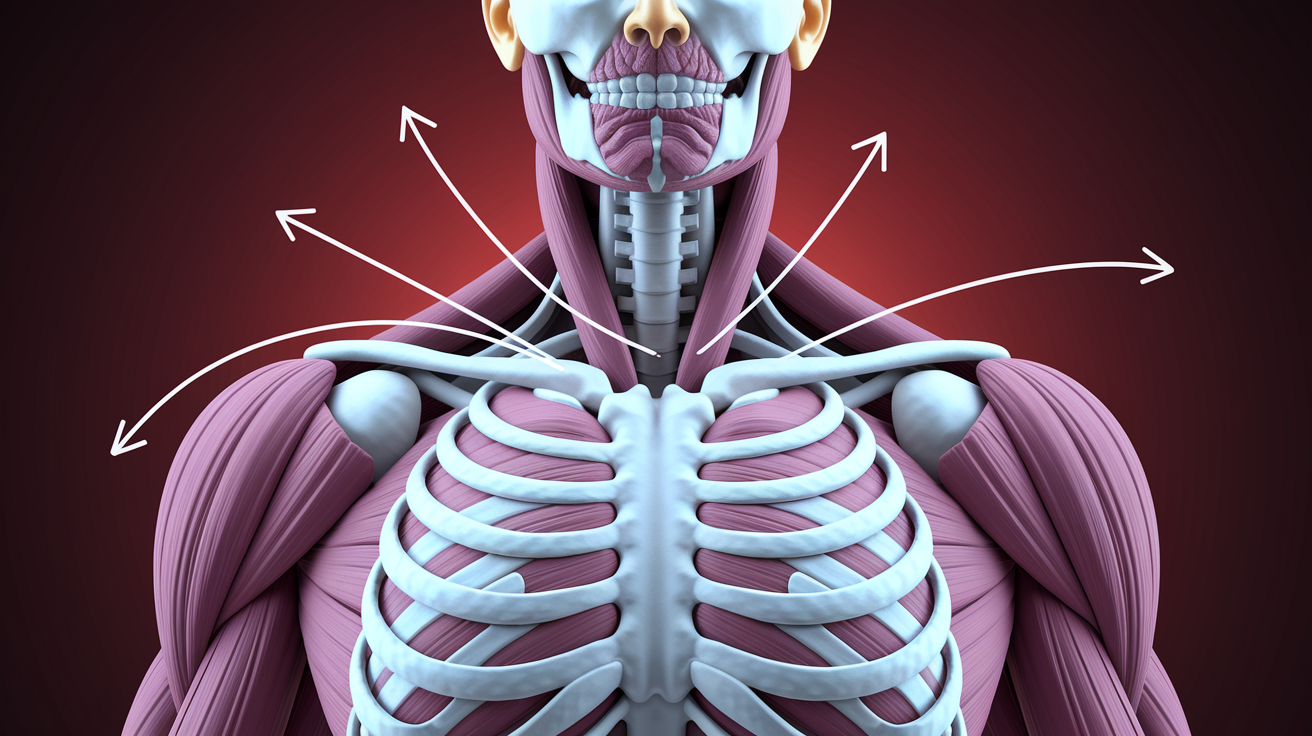
The scapula is the foundation for all shoulder motion. When it doesn’t upwardly rotate, protract, or retract cleanly, your shoulder joint runs out of room and starts to impinge. Poor scapular mechanics are one of the most common drivers of chronic shoulder pain, rotator cuff strain, and limited overhead range. Better scapular control doesn’t just prevent injury. It makes every mobility drill more effective because the shoulder moves from a stable, centered base.
The serratus anterior is the primary scapular protractor and upward rotator. It holds your shoulder blade against your ribcage and prevents winging. Weakness here shows up as your shoulder blade sticking out during push ups or difficulty raising your arm overhead without shrugging. Scapular retractors (mid traps, rhomboids) balance the system by pulling the shoulder blades together and down. When these muscles are weak or poorly coordinated, your shoulders drift forward, your chest collapses, and overhead motion becomes painful.
Five key scapular control drills to integrate into your routine:
- Scapular Wall Slides – back against wall, arms in goalpost position, slide up and down maintaining contact; 10 reps, focus on smooth upward rotation.
- Scapular Push-Ups – high plank or forearm plank, protract shoulder blades to push upper back toward ceiling, retract to lower chest slightly; 3 sets of 6 reps.
- YTWL Patterns – prone on a bench or standing, trace the shape of each letter with your arms using light dumbbells or bands; 10 to 12 reps per letter, 1 to 2 second holds at peak contraction.
- Serratus Punches – lie on your back holding a light weight straight up, protract your shoulder blade by “punching” the weight toward the ceiling without bending your elbow; 12 to 15 reps per side.
- Prone I-Y-T Raises – lie facedown, raise arms overhead in an “I,” then out at 45 degrees in a “Y,” then out to the sides in a “T”; 8 to 10 reps per position with thumbs up.
Sample 10-Minute Shoulder Mobility Routine

This routine gives you a complete session you can do daily or 3 to 5 times per week. It covers tissue prep, range of motion, scapular control, and rotator cuff activation. Do it as a standalone mobility session, as a warm up before upper body training, or as a recovery routine on off days.
Here’s the exact structure with timing and reps:
- Thoracic Foam Roll – 1 minute total; 3 passes of about 20 seconds, repositioning the roller across your mid back to restore extension range.
- Scapular Wall Slides – 2 minutes; do 2 sets of 10 reps with controlled tempo, rest 30 seconds between sets.
- Band Pull-Aparts – 2 minutes; do 2 sets of 12 reps at shoulder height, keep shoulders down and ribs neutral, rest 30 seconds between sets.
- Doorway Pec Stretch – 2 minutes; hold 60 seconds total, 30 seconds per side, alternating or holding one side then the other.
- YTWL Scapular Patterns – 2 minutes; do 1 set of 10 reps for each letter (Y, T, W, L) using bodyweight or very light dumbbells.
- Band External Rotation – 1 minute; do 1 set of 12 reps per side, slow 2 second tempo in each direction.
Do each exercise in order with minimal rest between movements. If you’ve got extra time, add arm circles for 30 seconds at the beginning as a warm up. If you’re short on time, cut the YTWL to one or two letters and keep everything else. Consistency beats duration. A 10 minute session done 5 days per week will get you better results than a 30 minute session once per week.
Mobility Progression: How Long It Takes and What to Track

Most people notice less stiffness and easier overhead reach within 1 to 2 weeks of consistent mobility work. Objective range of motion gains (the kind you can measure with a tape measure or goniometer) typically show up within 4 to 8 weeks. Expect improvements of 10 to 20 degrees in shoulder flexion and 5 to 15 degrees in external rotation if you’re following a structured routine 3 to 5 times per week. Daily short sessions outperform long, infrequent sessions because motor learning and tissue adaptation happen with repetition and frequency, not volume.
Track your progress with simple, repeatable tests. Measure overhead reach distance by standing against a wall and raising both arms as high as you can while keeping your ribs down and low back flat. Mark where your fingertips land or measure the gap between your arms and the wall. For hand behind back reach, try to touch your opposite shoulder blade and note how far up your back your hand travels. For external rotation, lie on your back with your elbow bent 90 degrees, let your forearm fall outward, and measure the angle or distance from the floor. Retest every 2 to 4 weeks and record the numbers.
As your range and control improve, increase intensity by adding reps, lengthening holds, increasing band resistance, or progressing to harder variations like single arm movements or isometric end range holds. After 4 to 6 weeks of consistent mobility work, layer in light loaded movements (dumbbell overhead presses, rows, or kettlebell halos) to build strength through the new range you’ve gained. Strength and mobility work together. Mobility without strength leaves you vulnerable at end range, and strength without mobility forces compensation and increases injury risk.
Modifications, Contraindications, and When to Seek Professional Care
Stop any movement immediately if you experience sharp pain, catching, popping with pain, or instability (the sensation that your shoulder might slip out of place). Differentiate between muscular stretch (a mild, tolerable pulling sensation) and joint pain, which feels sharp, deep, or mechanical. Joint pain is a red flag. Reduce range, lighten resistance, or skip that drill and reassess. If the pain sticks around or gets worse, talk to a physical therapist, sports medicine physician, or orthopedic specialist.
Avoid aggressive end range stretching in the early post operative period after shoulder surgery, labral repair, or rotator cuff repair. Follow your surgeon’s protocol and work with a physical therapist during rehab. The sleeper stretch can aggravate anterior shoulder instability or impingement in some people, so stop if it reproduces sharp anterior pain. People with hypermobile joints should emphasize control and stability over end range stretching. Focus on scapular strength, rotator cuff activation, and slow, controlled movements rather than pushing into extreme ranges.
When to modify, stop, or seek help:
- Sharp or shooting pain – stop the exercise immediately and assess; don’t push through joint pain.
- Neurologic symptoms – numbness, tingling, or weakness radiating into your arm or hand requires professional evaluation.
- Persistent pain lasting more than 4 weeks – if consistent mobility work doesn’t reduce pain or improve range after a month, see a clinician.
- Recent injury or surgery – follow supervised rehab protocols; unsupervised aggressive mobilization can damage healing tissue.
- Condition-specific cautions – frozen shoulder (adhesive capsulitis), rotator cuff tendinopathy, labral tears, and anterior instability all require individualized programming; generic mobility routines may not be appropriate.
Final Words
Start doing the simple drills now: a quick warm-up, arm circles, cross‑body and doorway stretches, plus banded and scapular work. They take 10 minutes and loosen stiff shoulders fast.
Prep before you move, watch for sharp pain, and track overhead reach and rotation as you progress over 4–8 weeks.
Make these shoulder mobility exercises a short habit 3–5 times weekly, or daily if you’re tight. Small, steady steps add up — you’ll get more range and less fuss at the gym.
FAQ
Q: What are the best shoulder mobility exercises?
A: The best shoulder mobility exercises are arm circles, cross-body stretch, doorway pec stretch, scapular push-ups, and band pull-aparts, each improving range, posture, and scapular control. Aim for 20–30 seconds or 10–15 reps.
Q: What are the signs of poor shoulder mobility?
A: Signs of poor shoulder mobility are reduced overhead reach, limited rotation, stiffness, pain with lifting, rounded shoulders or scapular winging, and compensations like neck or low back strain during overhead movement.
Q: Can I use Voltaren on my shoulder?
A: Voltaren can be used on the shoulder for short-term topical pain relief, following label directions. Don’t apply to broken skin, and talk with your doctor if you take blood thinners or have heart, kidney, or skin issues.
Q: How to loosen up an immobile shoulder?
A: To loosen up an immobile shoulder, start with light aerobic warm-up, then gentle dynamic drills (arm circles), thoracic mobility, cross-body and doorway stretches, scapular activation, and progress slowly. See a clinician for sharp or persistent pain.