
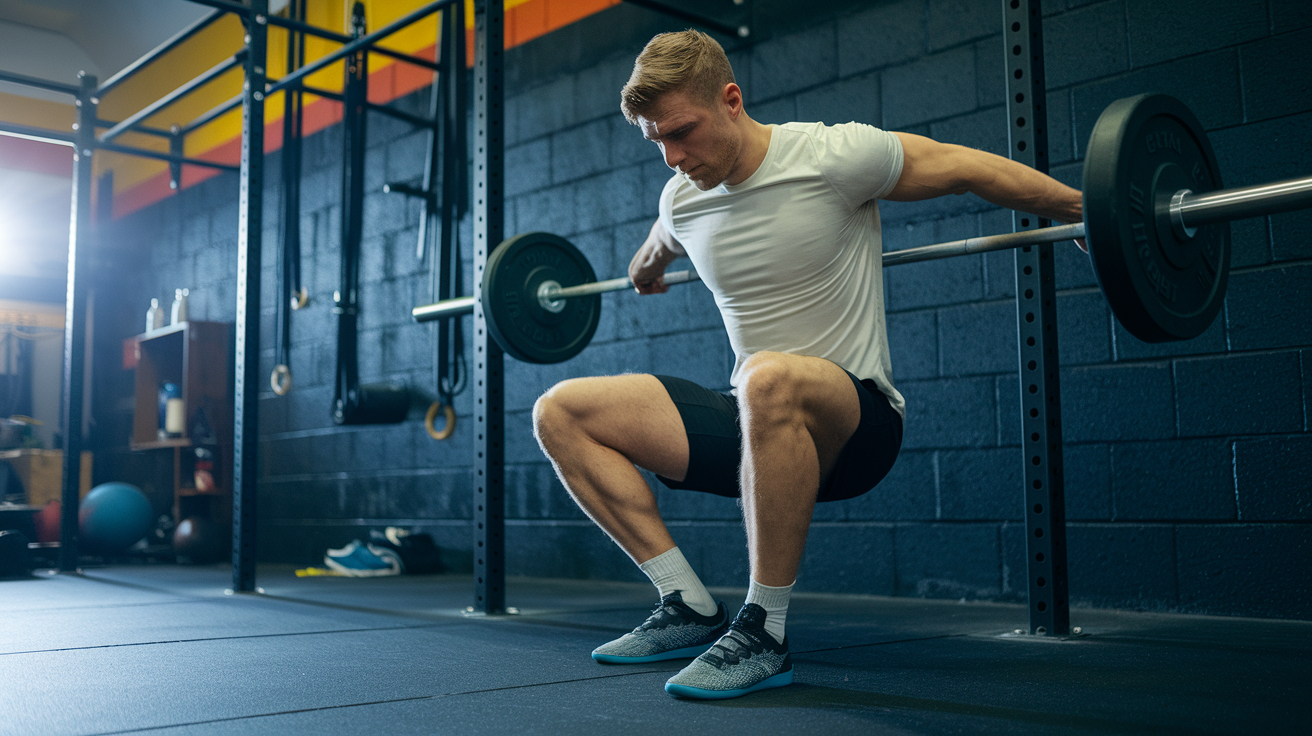

Stretching alone won’t fix your squat or deadlift depth.
Most depth problems come from tight ankles, stiff hips, and a locked upper back.
When those joints don’t move, your body borrows range and you end up with heel lift, butt wink, or a rounded back under the bar.
This short routine targets the exact spots that matter, like ankles, hips, and the thoracic spine, with wall mobilizations, 90/90 drills, foam-roller extension, and a few banded moves.
Do it 2–4 times a week, and you’ll sit deeper with control, not tricks.
Targeted Mobility Routine for Deeper Squats and Deadlifts
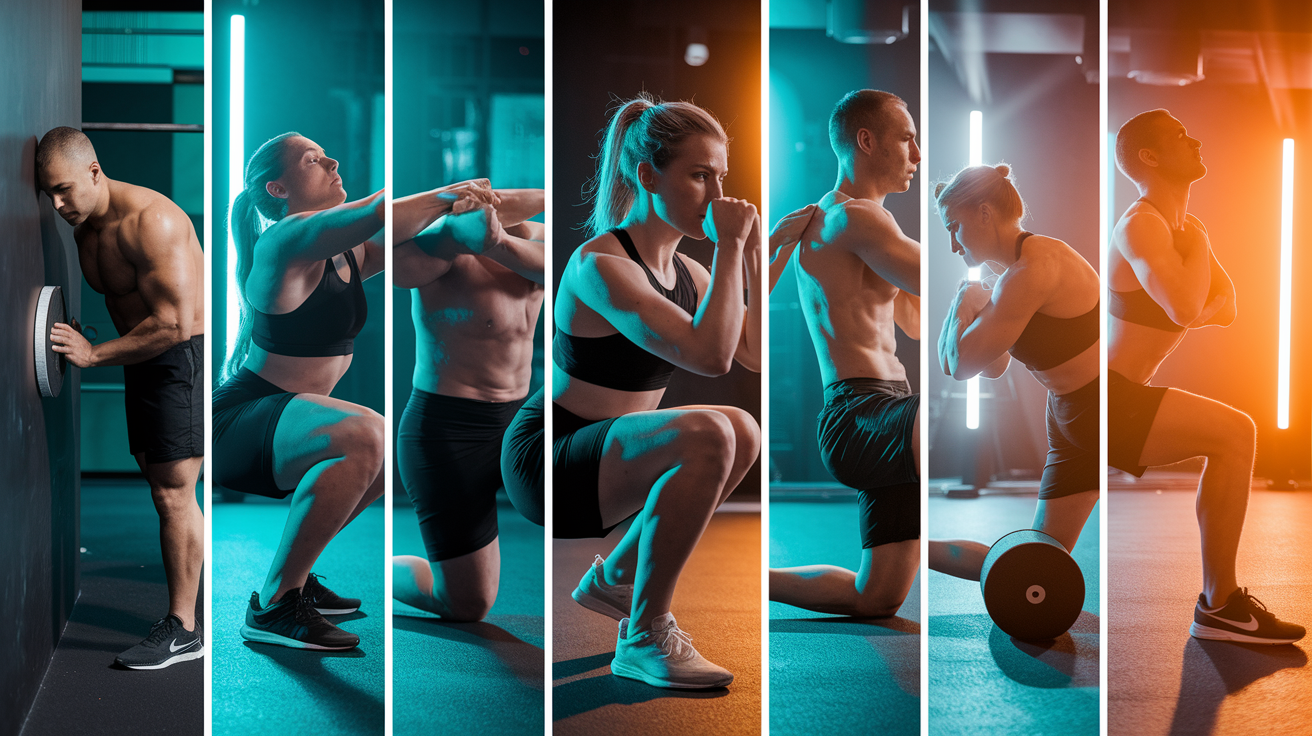
Most depth issues come from three spots: tight ankles, stiff hips, and a locked-up upper back. When your joints don’t move enough, your body steals movement from somewhere else. You get heel lift, butt wink, or a rounded back under the bar. This routine hits the soft tissue and joints that actually matter.
Ankle dorsiflexion wall mobilizations, 2×10 reps per side: Face a wall with one foot forward. Drive your knee toward the wall while keeping your heel down. Feel the stretch through your calf and the front of your ankle. Each rep should push your knee a bit farther past your toes without lifting your heel.
Deep squat pry stretch, 2×45 seconds: Squat down as deep as you can, feet shoulder width. Use your elbows to gently push your knees apart. Keep your chest tall, heels flat. Shift your weight slightly forward and back to find tight spots. Breathe through each position.
90/90 hip rotations, 2×8 per side: Sit with one leg forward at 90 degrees and one leg behind at 90 degrees. Keep both hips on the ground and switch sides with control. This opens internal and external rotation at the hip capsule.
Kneeling hip flexor lunge, 2×30 seconds per side: Kneel on one knee, other foot forward. Squeeze your back glute and push your hips gently forward. You should feel this in the front of your back hip, not your low back. Keep your ribs down, core braced.
Hamstring PNF stretch, 2×10 seconds contract/10 seconds relax: Lie on your back, one leg up, band or towel around your foot. Push your leg into the band for 10 seconds like you’re trying to lower it but the band stops you. Then relax and pull your leg gently deeper for 10 seconds. Repeat twice per side.
Thoracic extension over foam roller, 2×8 slow reps: Place a foam roller across your mid back, knees bent, feet flat. Clasp your hands behind your head. Lower your upper back over the roller, extend your spine, then come back up. Move the roller up and down your upper back between sets.
Run this 2 to 4 times per week. Best timing is right after your session or on rest days when your muscles are warm and your nervous system isn’t fried. You’ll need a foam roller, a resistance band, and a wall. Nothing expensive or complicated.
Mobility Restrictions That Limit Squat and Deadlift Depth
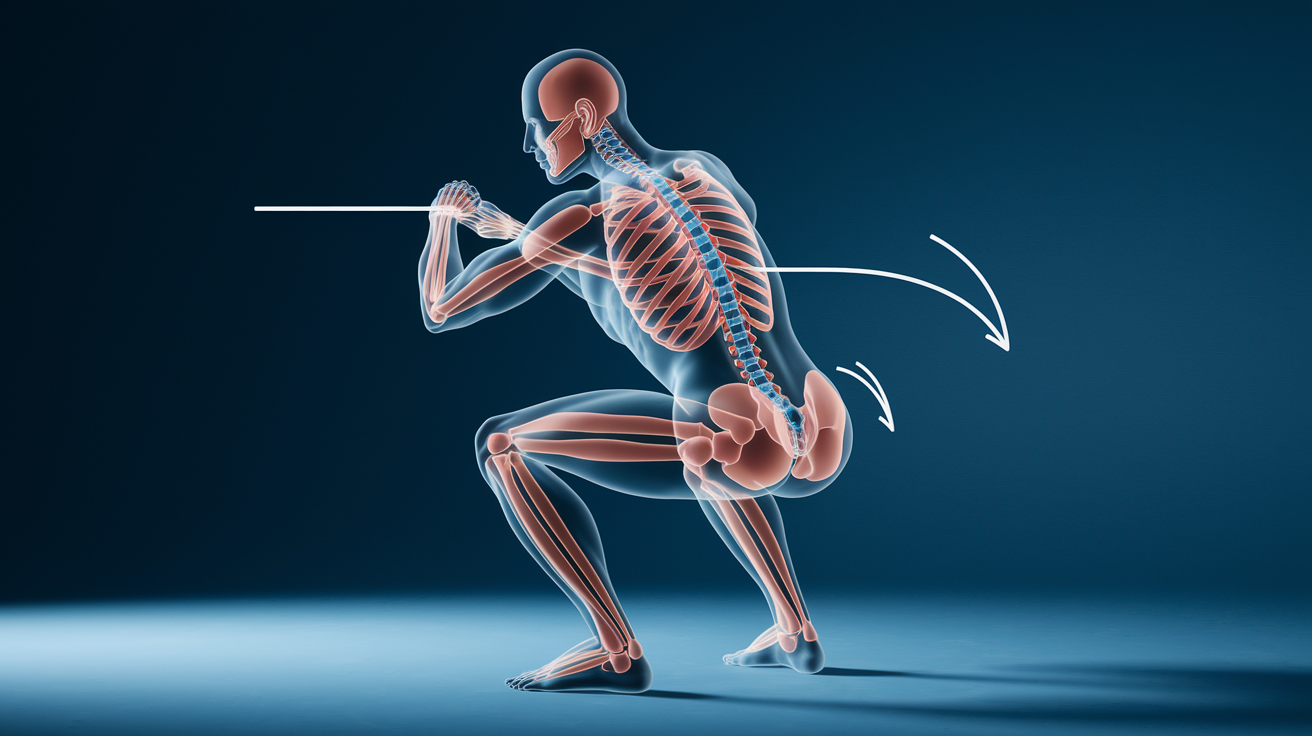
When your ankle can’t flex far enough, your knee can’t travel forward over your toes. That forces your hips to sit farther back or your heels to lift. Either way, your depth suffers and your balance shifts. Limited hip flexion or rotation shows up as butt wink, where your pelvis tucks under at the bottom, or knees caving inward. Tight hip flexors keep your torso tilted forward. Poor upper back extension collapses your chest. On a deadlift, stiff hamstrings prevent you from hinging low enough to reach the bar with a flat back, so your spine rounds to make up the distance.
Each restriction creates a chain reaction. Tight calves pull your ankle into early heel rise. Stiff adductors or hip capsules force your knees to drift inward or your stance to widen beyond what’s strong. A locked upper back tips your ribs forward and dumps load onto your low back instead of your legs. These compensations aren’t just uncomfortable. They leak force, reduce your 1RM potential, and raise injury risk when the weight gets heavy.
The three major restrictions to address first:
Limited ankle dorsiflexion – the single biggest factor in squat depth for most lifters. Restricts forward knee travel and forces heel lift or forward lean.
Restricted hip flexion/rotation – prevents the femur from moving deep into the hip socket. Often shows up as butt wink or inability to sit between the legs in a narrow stance.
Poor upper back extension capacity – keeps the chest down and prevents a vertical torso in the squat or a strong starting position in the deadlift. Common in desk workers and anyone with rounded shoulder posture.
Step by Step Warm Up Mobility Sequence for Squats and Deadlifts

Your warm up should move joints through range, wake up stabilizers, and rehearse the patterns you’re about to load. Static stretching before you lift can reduce force output temporarily, so save long holds for after the session. Instead, use controlled dynamic movements that teach your nervous system where your new range lives and how to own it under light tension.
Start with movements that are easy to control and progress toward positions that look like the lifts. Leg swings and hip airplanes open the joint without asking for stability yet. Deep squat holds and glute bridges add time under tension in ranges you’ll need when the bar is loaded. Hip hinge reps with a dowel give you feedback on spinal position and hip movement quality before you pull from the floor.
Leg swings (front/back, side/side), 15 each: Stand next to a wall or rack for balance. Swing one leg forward and back with control, then switch to side to side. Keep your torso quiet and let the leg move freely at the hip. This wakes up hip flexors, extensors, abductors, and adductors without asking them to hold a position yet.
Hip airplanes, 6 each: Stand on one leg, hinge forward slightly, and rotate your lifted leg open and closed at the hip while keeping your torso still. This drills internal and external rotation while your hip is loaded and your glutes are working to stabilize.
Deep squat holds with breath cycles, 3×20 seconds: Squat as deep as you can, feet flat, chest tall. Take slow breaths and let your hips settle a little deeper with each exhale. Don’t force it. Just spend time in the position and let your nervous system relax into it.
Glute bridges, 2×12: Lie on your back, knees bent, feet flat. Squeeze your glutes and lift your hips until your body is a straight line from knees to shoulders. Pause at the top for a second. This wakes up your glutes and reminds your hips how to extend before you load a squat or deadlift.
Hip hinge reps with dowel, 8 controlled reps: Hold a dowel or PVC pipe against your back, touching your head, upper back, and tailbone. Hinge at the hips, push your butt back, and let the dowel slide down your back while keeping all three contact points. This teaches the hinge pattern and gives you instant feedback if your spine flexes or your hips don’t move first.
Daily Mobility Drills to Improve Depth Over Time
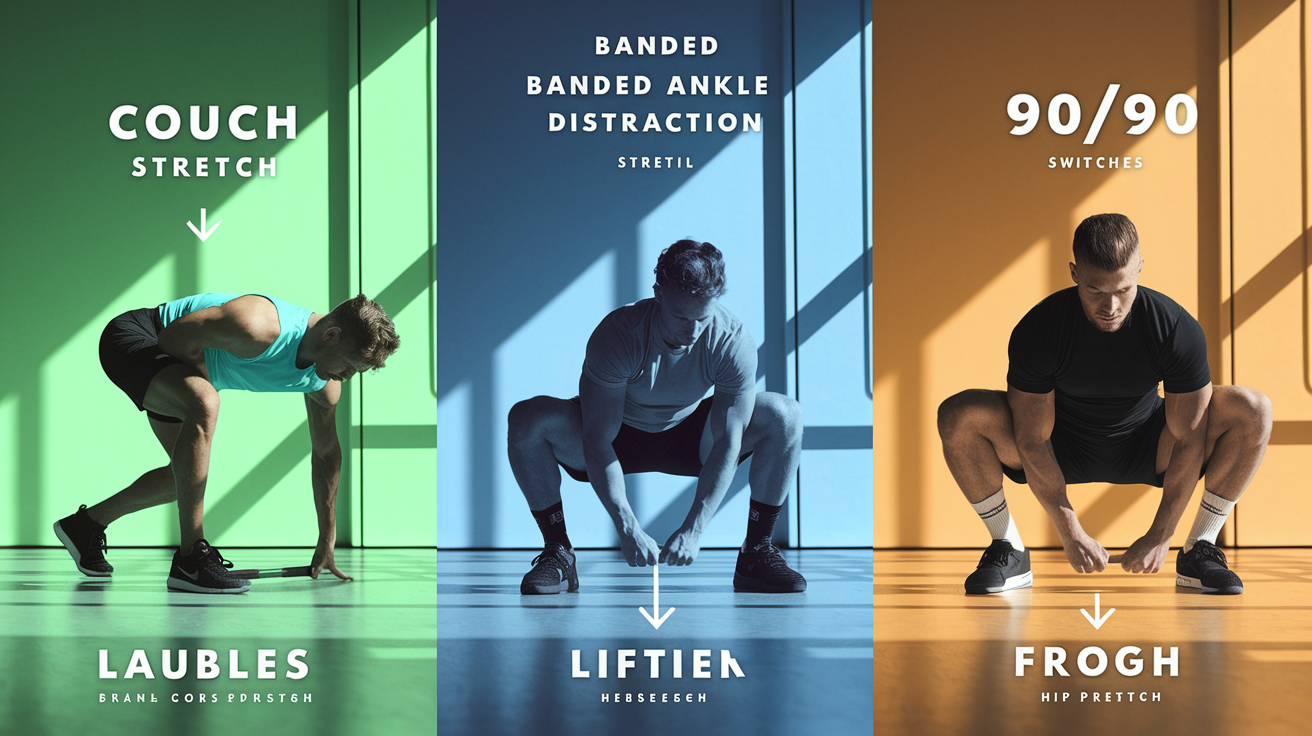
Real improvements come from short, consistent work that targets your tightest spots every day or every other day. These drills don’t require a warm up or a full session. Just 10 to 15 minutes on the floor while you watch TV or between emails. The goal is to spend time in positions your body avoids and teach your nervous system that these ranges are safe and available.
Start with the areas that limit you most. If your ankles are the problem, prioritize banded distractions and couch stretches. If your hips are stiff, spend more time in 90/90 switches and frog stretches. Rotate through all four drills a few times per week so nothing gets ignored, but lean into the ones that feel worst. Those are usually the ones holding you back.
Once you can move through these positions with control and no discomfort, your regular strength training will maintain the range. You won’t need to stretch every day forever. Squat and deadlift variations themselves become your mobility work as long as you’re using full range and good positions under load.
Daily drill rotation:
Couch stretch, 45 seconds per side: Kneel with one shin against a wall or couch, other foot forward in a lunge. Squeeze your back glute and push your hips forward gently. Keep your ribs down. You should feel this in the front of your back hip and quad, not your low back. This opens hip flexors and quads that get short from sitting.
Banded ankle distraction, 2×10 reps: Loop a band around a post and your ankle, just above the ankle joint. Step back to create tension, then lunge forward and drive your knee past your toes while the band pulls your ankle back into the joint. This mobilizes the joint capsule, not just the calf muscle.
90/90 hip switches, 2×10: Sit in a 90/90 position with one leg forward, one back, both knees at 90 degrees. Lift both knees slightly and rotate your hips to switch sides in one smooth motion. Keep your torso upright and your hips on the ground. This trains internal and external rotation dynamically.
Frog stretch, 60 seconds: Get on your hands and knees, spread your knees wide, and push your hips back toward your heels. Keep your ankles in line with your knees and your feet flat or turned out slightly. Rock gently forward and back. You should feel this deep in your groin and inner thighs. It opens the adductors and hip capsule for wide stance squats and sumo pulls.
Strength Assisted Drills That Reinforce Improved Depth
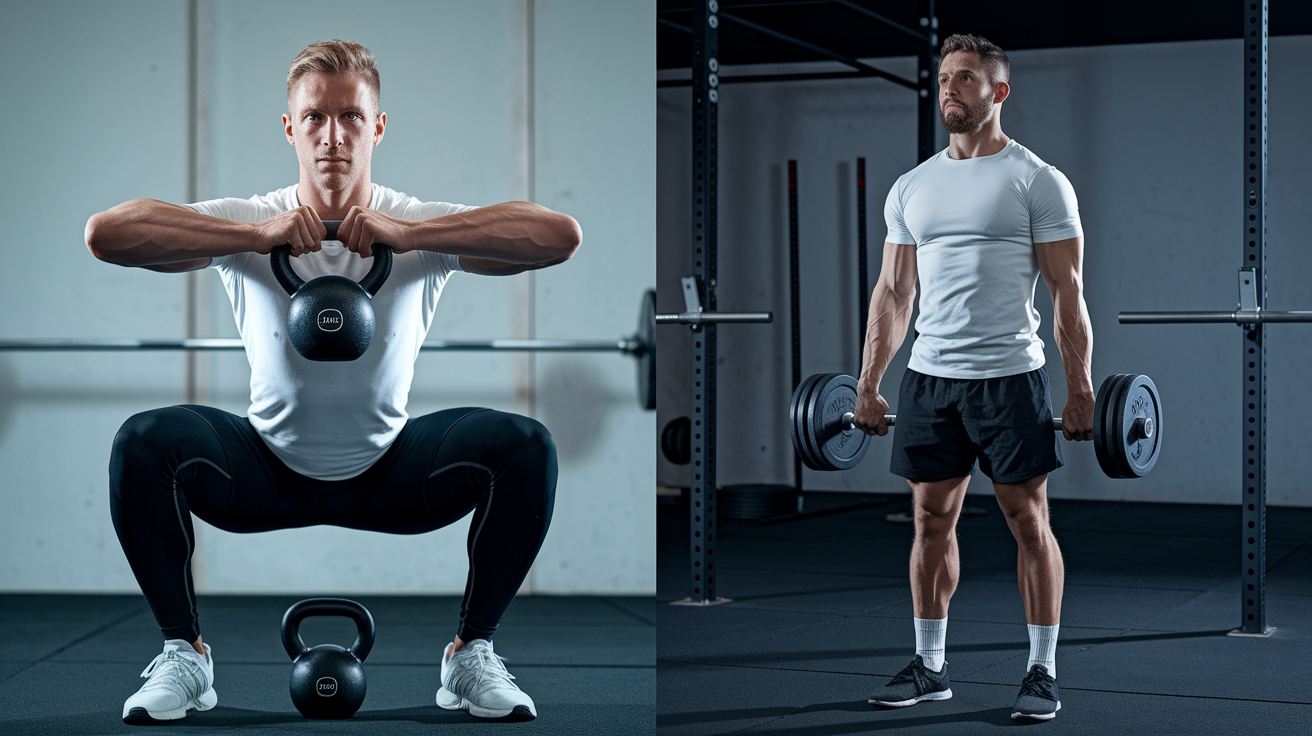
Mobility gives you access to a position. Strength lets you control it under load. Once you can sit into a deep squat or hinge low enough to reach the bar, the next step is teaching your muscles to produce force in that new range. Loaded drills like goblet squats and single leg RDLs build positional strength, coordination, and confidence so your body trusts the depth when you add a barbell.
These drills also serve as a bridge between your mobility work and your main lifts. Goblet squats reward an upright torso and penalize forward lean, so they clean up squat mechanics while loading the pattern. Single leg RDLs force your hips to hinge and stabilize in ranges most people avoid, which translates directly to better deadlift setup and fewer compensations under max effort loads.
Program these 1 to 2 times per week as accessory work after your main lifts or as a primary movement on lighter training days. Focus on control and full range before you chase heavier loads. If your form breaks down, the weight is too heavy or your mobility isn’t there yet. Drop the load and revisit your daily drills.
Goblet Squat Progression
Hold a kettlebell or dumbbell at your chest, elbows pointing down. Squat as deep as you can while keeping your torso vertical and your heels flat. The front loaded weight naturally pulls you into better positions: chest up, core braced, knees tracking over toes. Pause for 2 seconds at the bottom of each rep to build strength and awareness in the deepest part of the range.
Start with 3 sets of 8 to 10 reps at a moderate weight. Enough to feel challenged but not so heavy that you lean forward or lose the pause. Once you own the pattern, add a tempo: 3 seconds down, 2 second pause, 1 second up. This increases time under tension in the ranges you’re trying to strengthen. When goblet squats feel easy and controlled at depth, progress to front squats or barbell back squats using the same depth and tempo standards.
Single Leg RDL for Hip Control
Stand on one leg, hinge at the hip, and reach your other leg straight behind you while lowering a light dumbbell or kettlebell toward the ground. Keep your back flat, your standing knee slightly bent, and your hips level. Don’t let your back hip rotate open. This drill strengthens your glute medius, which stabilizes your pelvis, improves hamstring length tension control, and teaches you how to hinge without rounding your spine.
Perform 2 to 3 sets of 6 to 8 reps per side with a controlled tempo. You should feel this in your glutes and hamstrings, not your low back. If you feel unstable, hold onto a wall or post with your free hand until your balance improves. Single leg work exposes and fixes side to side imbalances that can limit your depth or pull you off center under a heavy barbell.
How to Integrate Mobility Into Your Training Program
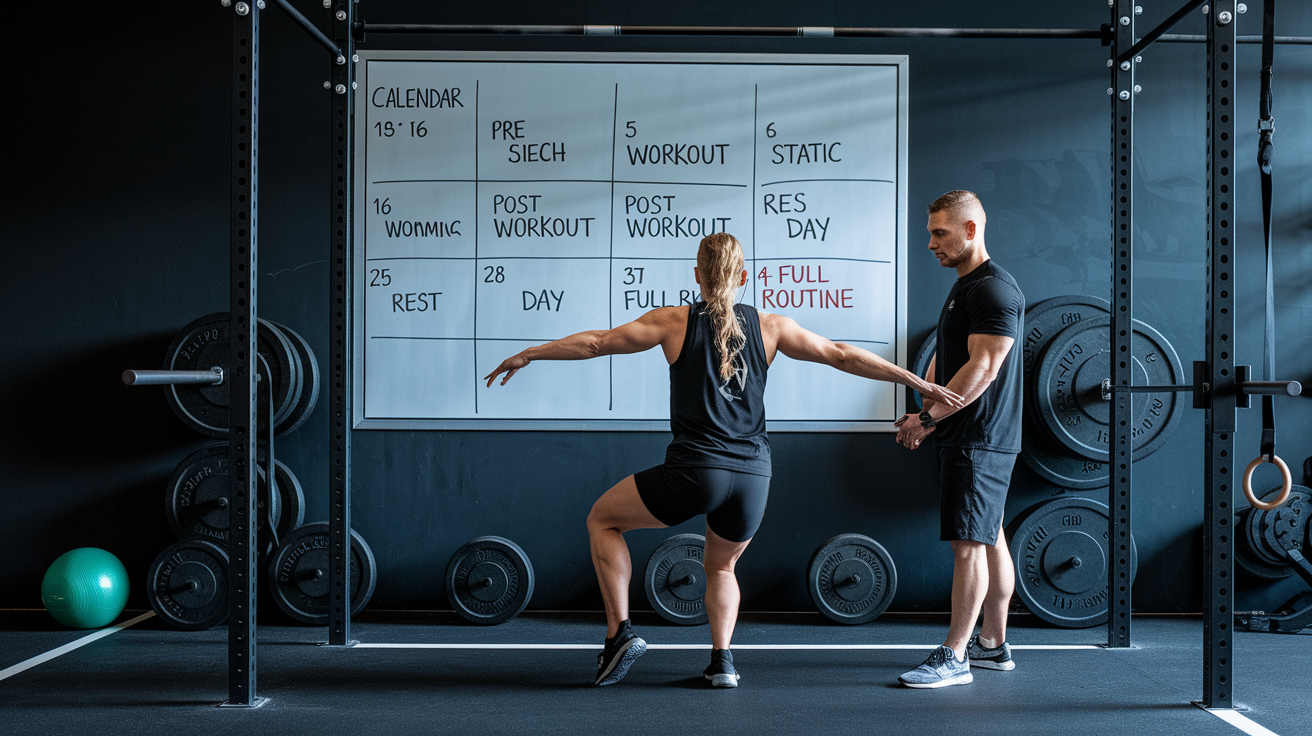
Timing matters. Dynamic movements before you lift prepare your joints and nervous system without reducing force output. Static stretching and longer holds after you lift or on rest days help you build new range when your muscles are warm and your training stimulus is already delivered. Trying to stretch cold or holding long static stretches right before a max effort set can temporarily reduce your ability to produce force.
If mobility is actively limiting your depth, run the targeted routine from the first section after your workouts or on rest days 2 to 4 times per week. Use the warm up sequence before every squat or deadlift session. Add the daily drills on off days or any time you have 10 minutes. Once your depth improves and you can hit solid positions under load, your regular strength training will maintain your mobility. You won’t need dedicated stretching sessions forever.
Here’s how to slot mobility into your week:
Pre workout = dynamic: Leg swings, hip airplanes, deep squat holds, hip hinge drills with a dowel. Spend 5 to 10 minutes moving through ranges you’re about to load. No long holds.
Post workout = static: Targeted routine, ankle mobilizations, 90/90 stretches, couch stretch, hamstring PNF, upper back foam rolling. Your muscles are warm, your nervous system is calm, and you won’t blunt your training effect. Spend 10 to 15 minutes.
Rest days = full routine: Run the entire targeted routine or the daily drill rotation. This is your best window for longer holds and deeper work because you’re not fatigued and you have time to relax into positions.
Tracking Progress in Squat and Deadlift Depth
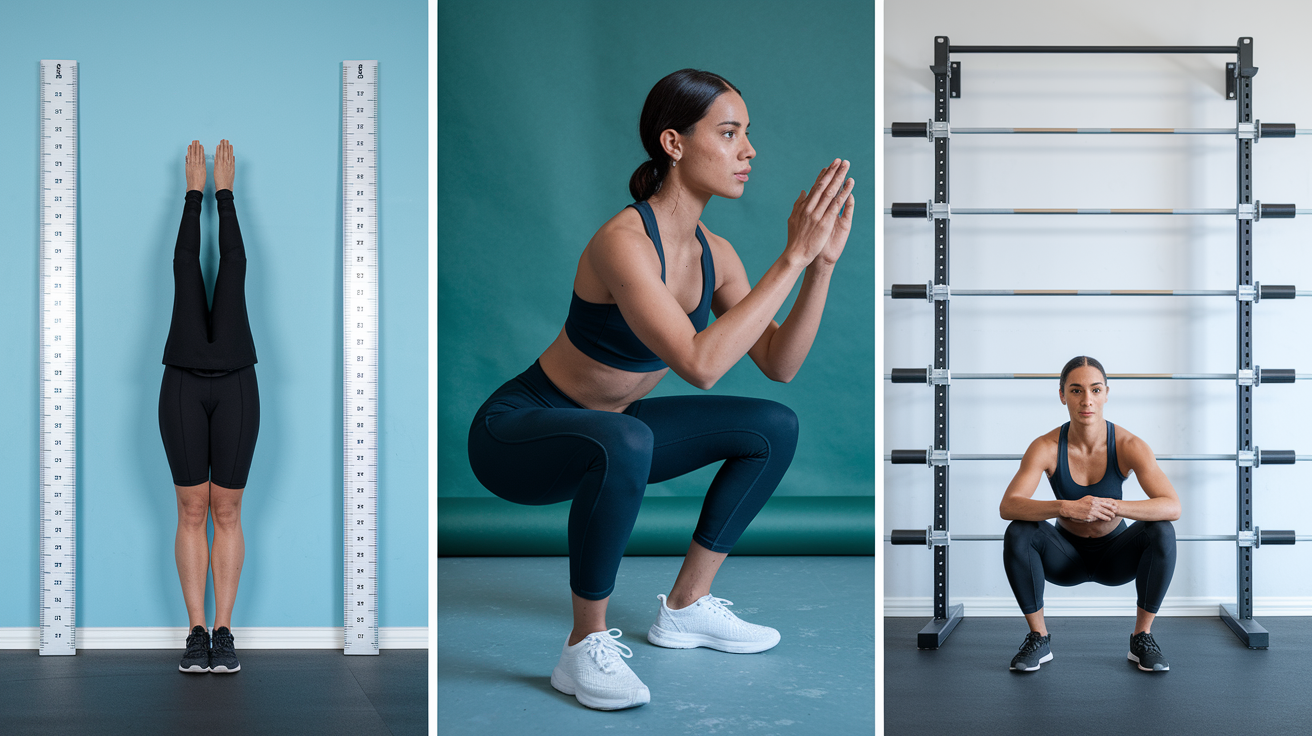
You can’t improve what you don’t measure. Tracking your mobility gives you objective proof that the work is paying off and helps you spot which restrictions are improving and which ones need more attention. Simple tests take less than five minutes and show real change over weeks, not guesses or feelings.
Retest every two to four weeks using the same conditions. Same warm up, same time of day, same measurement tools. Small improvements add up. An extra centimeter of dorsiflexion or an extra inch of depth on video might not feel dramatic in the moment, but those millimeters directly translate to better positions, more usable strength, and higher totals when the bar is loaded.
Three simple ways to track depth progress:
Wall dorsiflexion test (measure cm from wall): Stand facing a wall, one foot forward. Keep your heel down and drive your knee toward the wall. Measure the distance from your big toe to the wall when your knee just touches. Retest every few weeks. More distance means better dorsiflexion and more available squat depth.
Video capture from the side: Set your phone on the ground 6 to 8 feet away, record yourself squatting with just bodyweight or a light load. Watch where your hip crease drops relative to your knee. Compare videos from week to week. You’re looking for your hips to settle lower without your heels lifting or your chest collapsing forward.
Depth markers using box or safety pins: Set a box or the safety pins in a rack at a specific height. Squat down until your hips touch the marker, then stand. Every few weeks, lower the marker by one hole. This gives you a concrete, repeatable depth target and builds confidence that you can control the new range under load.
Common Mobility Mistakes When Trying to Increase Depth
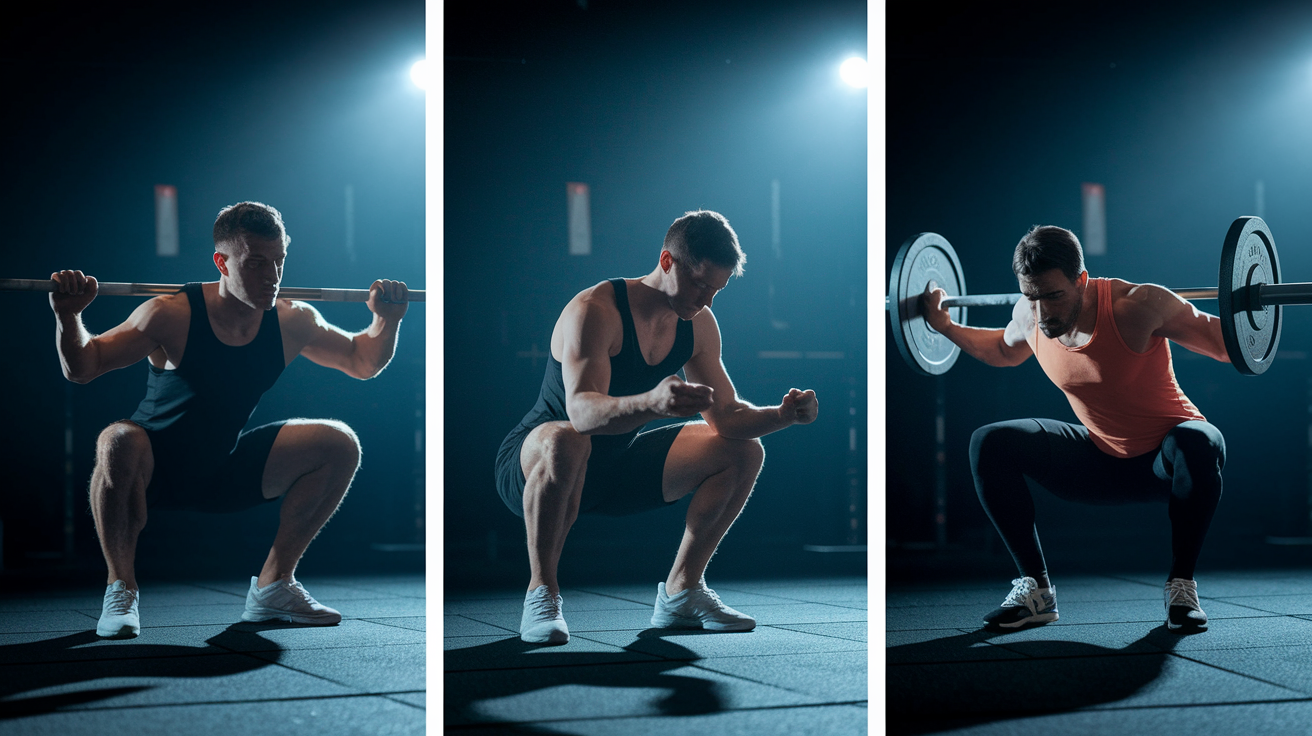
The biggest mistake is stretching without strengthening. Mobility without stability just gives you more range you can’t control, which doesn’t help your lifts and can increase injury risk when you load positions your muscles can’t manage. Your goal isn’t to become a yoga instructor. It’s to access the specific ranges your squat and deadlift need and then own those ranges under a barbell.
Another common error is doing only static stretching right before you train. Long passive holds before lifting can temporarily reduce your ability to produce force and increase your injury risk because your muscles and tendons are more compliant but less responsive. Save static work for after your session or on rest days when it won’t interfere with performance.
Finally, many lifters chase depth by ignoring torso stability and bracing. You can have perfect ankle and hip mobility, but if your core can’t create and maintain tension, your spine will flex under load and your depth will collapse. Mobility and motor control work together. You need both.
Three mistakes to avoid:
Overstretching without strength work: Flexible hips don’t help if your glutes and adductors can’t stabilize the bottom of a squat. Pair every mobility drill with a loaded movement that builds control in the same range.
Doing only static stretching before training: Static holds reduce muscle readiness and force output temporarily. Use dynamic warm ups before lifting. Save long stretches for cooldowns and rest days.
Ignoring torso stability and bracing: Depth requires a stable, braced torso. If your ribs flare or your spine flexes when you go deep, work on breathing, bracing, and core positioning alongside hip and ankle mobility.
Final Words
Keep doing the ankle, hip, and thoracic drills above—ankle wall mobilizations, deep squat prys, 90/90s, and the thoracic foam roller. These exercises plus the warm-up and daily habit drills form a simple plan.
Use the mobility work 2–4× per week, after training or on rest days, and pair it with strength-assisted drills like goblet squats to lock in depth.
This mobility routine to improve squat and deadlift depth is practical and trackable. Stick with it, and you’ll see steady gains.
FAQ
Q: What mobility areas limit squat and deadlift depth?
A: The mobility areas that limit squat and deadlift depth are limited ankle dorsiflexion, restricted hip flexion and rotation, tight hamstrings/adductors, and poor thoracic extension — address these first to gain depth.
Q: What is a simple mobility routine to improve squat and deadlift depth?
A: A simple mobility routine to improve squat and deadlift depth includes ankle dorsiflexion wall mobilizations 2×10 per side; deep squat pry 2×45s; 90/90 rotations 2×8; kneeling lunge 2×30s; hamstring PNF 2×(10s/10s); thoracic extensions 2×8.
Q: How often and when should I do mobility work for better depth?
A: Mobility work for better depth should be done 2–4× per week, ideally after training or on rest days, using minimal equipment like a foam roller and band; consistency beats occasional long sessions.
Q: What warm-up sequence should I use before squats and deadlifts?
A: A warm-up sequence before squats and deadlifts is leg swings 15 each, hip airplanes 6 each, deep squat holds 3×20s, glute bridges 2×12, and hip hinge reps with a dowel 8 controlled reps.
Q: Which daily mobility drills improve depth over time?
A: Daily mobility drills that improve depth over time are couch stretch 45s per side, banded ankle distraction 2×10, 90/90 hip switches 2×10, and frog stretch 60s, done every other day until range feels normal.
Q: What strength-assisted drills reinforce improved depth?
A: Strength-assisted drills that reinforce improved depth include goblet squats (3–4 sets of 8–10 with pauses and 30–60s bottom holds) and single‑leg RDLs to build hip control and glute medius strength.
Q: How do I track progress in squat and deadlift depth?
A: You track progress in squat and deadlift depth with a wall dorsiflexion test (measure cm), side video capture for form, and depth markers like a box or safety pins, logging changes over weeks.
Q: What common mobility mistakes should I avoid when trying to increase depth?
A: Common mobility mistakes to avoid when trying to increase depth are overstretching without strength work, doing only static stretches before lifting, and ignoring torso stability and proper bracing during the lifts.