


What if I told you you don’t need a kitchen scale to hit your protein goals?
Use your hand.
Palm, fist, thumb, even a deck of cards give fast, repeatable protein estimates for meat, fish, beans, yogurt, and nut butter.
This post shows the four simple visual cues, what they mean in grams, and how to use them at home or eating out so you can log protein without guessing or breaking out a scale.
Quickest Ways to Estimate Protein Portions Without a Scale
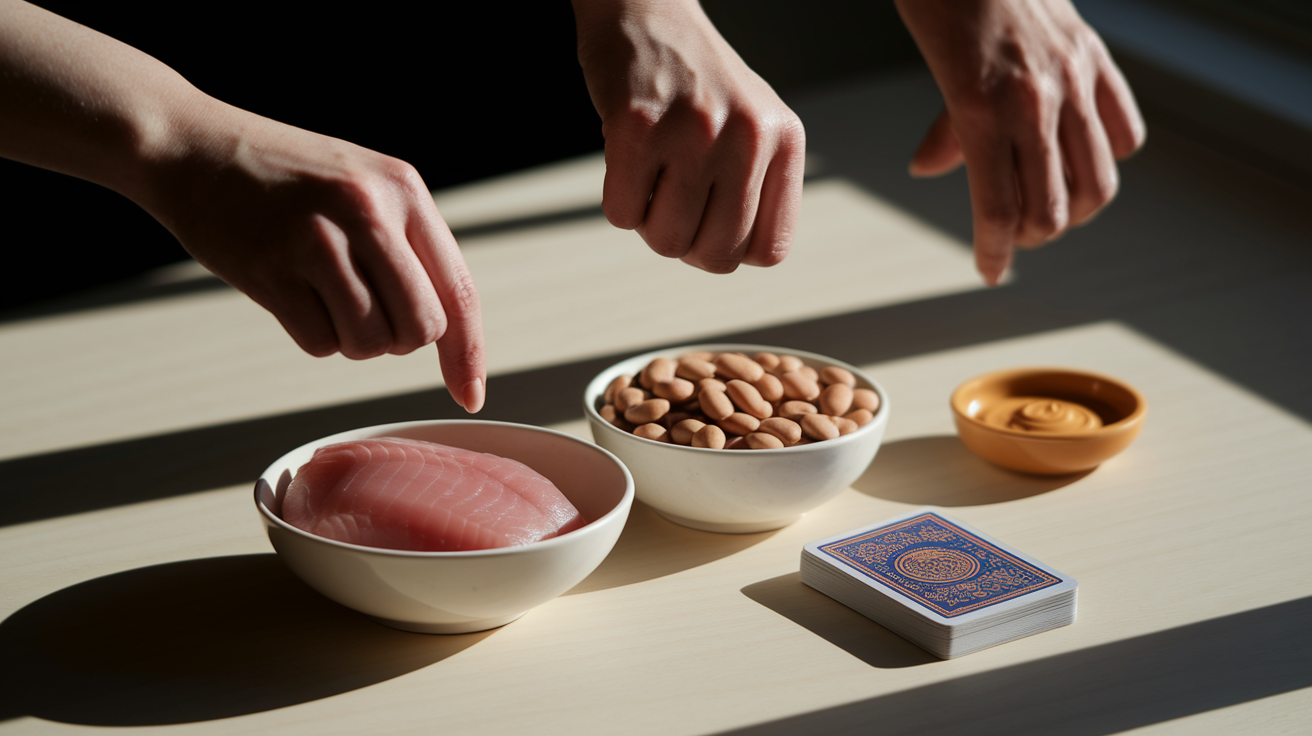
You don’t need a kitchen scale to estimate protein portions. Your hand works fine, and so do a few everyday visual cues.
The fastest method? Use your palm to estimate meat, fish, or poultry. Your fist handles volume stuff like beans or Greek yogurt. Your thumb covers small protein items and nut butters. And the deck-of-cards comparison still holds up for cooked meats like chicken breast or steak.
Each method gives you a fast, repeatable way to log protein without pulling out a scale or getting stuck doing math at the table. Here are the four main visual cues:
Palm method: The size and thickness of your palm (fingers not included) equals roughly one serving of cooked meat, chicken, or fish. About 3 to 4 ounces or 20 to 30 grams of protein.
Fist method: One closed fist represents about one cup of volume-based protein sources like cottage cheese, beans, lentils, or Greek yogurt. Typically 15 to 20 grams of protein depending on the food.
Thumb method: The size of your thumb from base to tip equals about one tablespoon. Useful for almond butter, peanut butter, or small portions of cheese. Roughly 3 to 7 grams of protein per thumb.
Deck-of-cards comparison: A standard deck of playing cards matches the volume and thickness of a 3-ounce cooked portion of chicken, beef, pork, or firm fish. Around 21 to 26 grams of protein.
Most whole-food proteins land in a predictable range. A palm-sized portion of chicken breast gives you about 26 grams. A palm of salmon delivers around 21 grams. A fist of black beans gets you close to 15 grams. A deck-of-cards portion of lean beef checks in near 22 grams. Once you know the visual cue and the rough gram range, you can estimate protein for any meal without second-guessing yourself.
Visual Portion Guides for Different Protein Sources
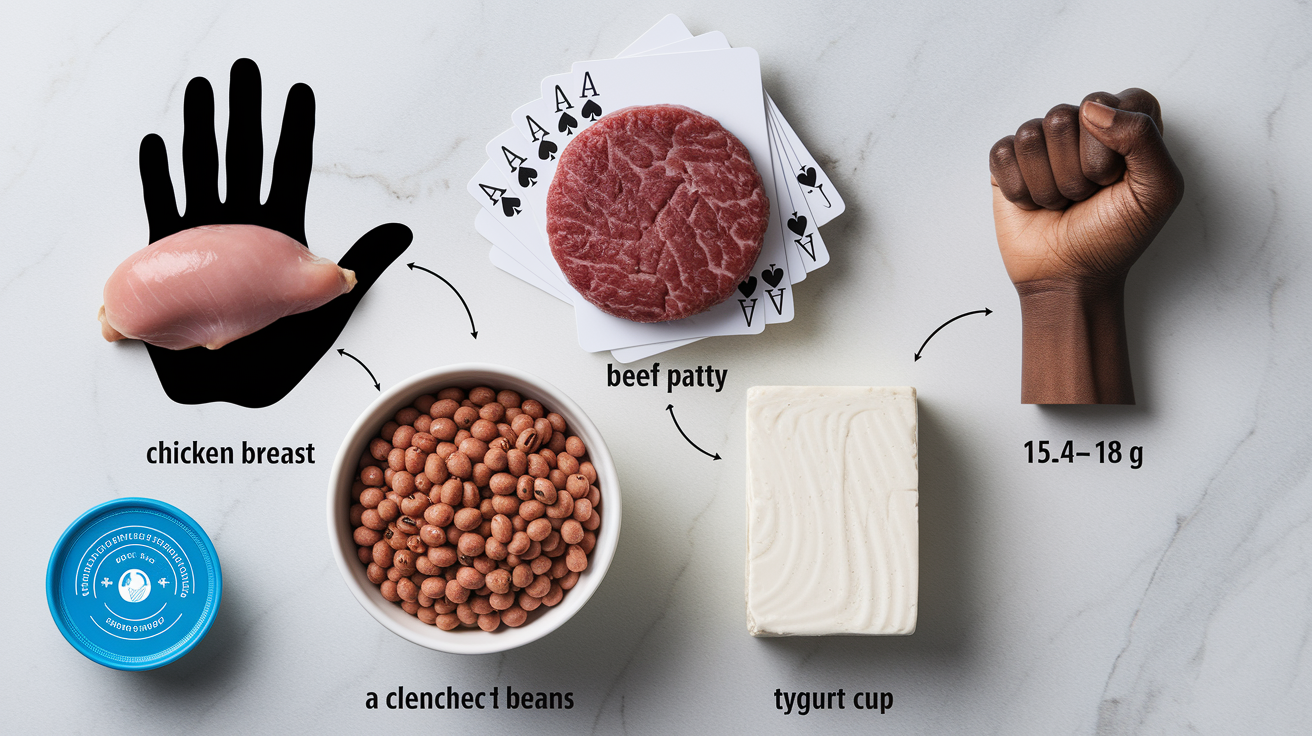
Meat portions are easiest to estimate with the palm or deck-of-cards method. A 3-ounce cooked serving of lean beef, pork tenderloin, or ground meat fits neatly in your palm or matches a deck of cards in thickness and area. That portion delivers roughly 21 to 25 grams of protein. If your hand’s larger than average, round up slightly. Smaller hand? Round down. Restaurant servings of steak or burger patties often exceed 6 ounces, so mentally divide the portion in half and you’re back to a standard palm.
Poultry portions follow the same palm rule. A palm-sized piece of cooked chicken breast or turkey breast equals about 3 to 4 ounces and gives you 24 to 28 grams of protein. Chicken thighs and drumsticks are slightly lower in protein per ounce due to higher fat content, so a palm-sized portion of dark meat lands closer to 20 grams. Ground turkey mirrors ground beef. One cupped palm of cooked ground turkey equals roughly 3 ounces and 22 grams of protein.
Fish and seafood portions are often compared to a checkbook or the size of your palm. A palm-sized fillet of salmon, cod, tilapia, or tuna equals about 3 to 4 ounces cooked and delivers 19 to 23 grams of protein depending on the species. Shrimp and scallops are denser, so a fist-sized portion of cooked shrimp (about ¾ cup) gives you around 20 grams. Canned tuna’s simple: one 5-ounce can drained equals roughly 30 grams of protein, or about one and a half palms if you scoop it onto your hand for reference.
Plant-based proteins vary more in density, so the fist method’s your friend. One fist of cooked beans, lentils, or chickpeas equals about one cup and delivers 12 to 18 grams of protein depending on the type. Tofu’s denser: a palm-sized block of firm tofu (about ½ cup or 4 ounces) gives you roughly 10 grams. Tempeh’s even denser, so a half-palm portion (about 3 ounces) delivers around 15 grams. Greek yogurt clocks in at about 20 grams per one-cup fist. Cottage cheese is similar. One fist equals one cup and roughly 14 to 25 grams of protein depending on fat content. Eggs are the simplest: one large egg equals 6 grams, so two eggs equal 12 grams and fit neatly in your palm when cracked and cooked.
Quick visual rules by category:
Meat and poultry: palm or deck of cards = 3 to 4 oz cooked = 20 to 28 grams protein
Fish and seafood: palm or checkbook = 3 to 4 oz cooked = 19 to 23 grams protein; fist of shrimp = 20 grams
Plant proteins (beans, lentils, tofu): fist = 1 cup beans or ½ cup tofu = 10 to 18 grams protein
Dairy (yogurt, cottage cheese) and eggs: fist = 1 cup = 14 to 25 grams; one egg = 6 grams
How to Estimate Protein Portions When Eating Out
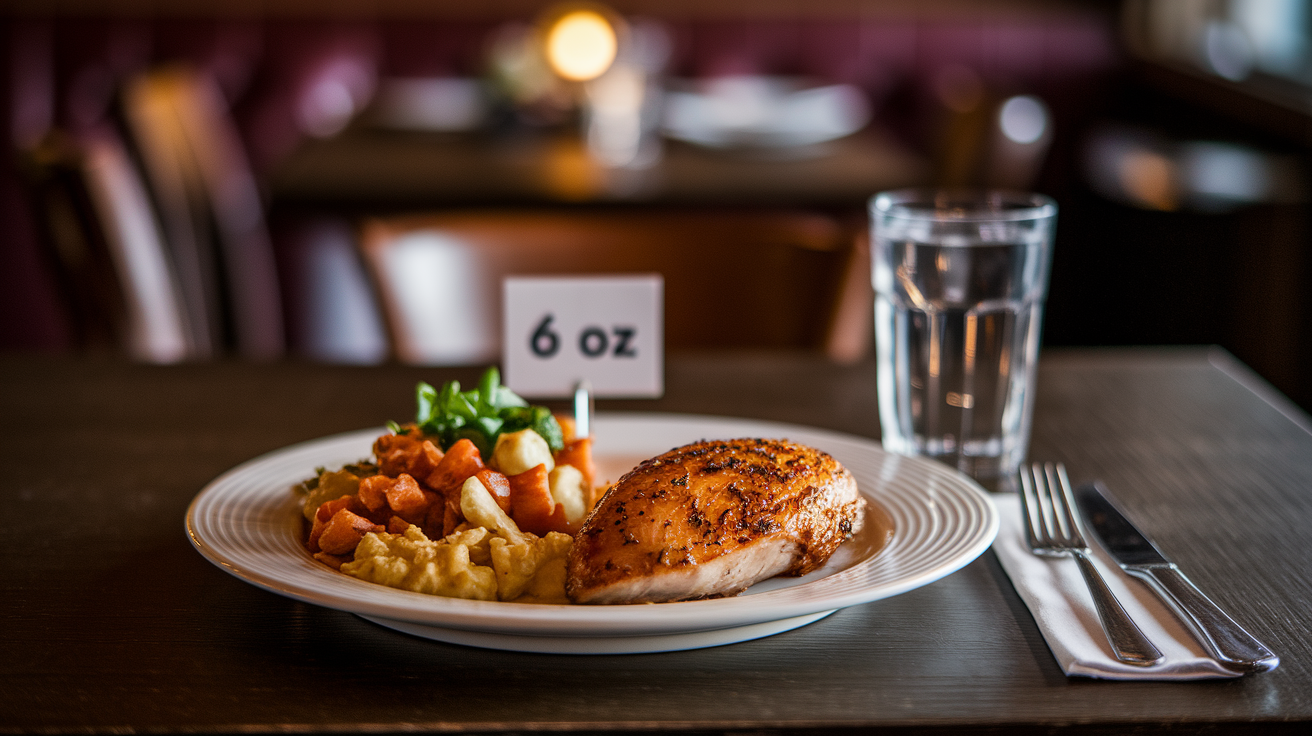
Restaurant portions are almost always larger than home portions, especially for protein. A grilled chicken breast at a chain restaurant often weighs 5 to 8 ounces cooked, and a fish fillet can easily hit 6 to 10 ounces depending on how it’s plated. That’s roughly double a standard palm.
The easiest move? Mentally divide the entrée in half before you start eating. One half’s your protein portion for this meal. The other half’s tomorrow’s lunch or an extra serving you didn’t plan to log. If you’re trying to estimate on the spot, use your hand for a quick sanity check. If the chicken breast covers your whole palm and then some, you’re looking at 5 to 6 ounces and 35 to 40 grams of protein instead of the usual 25.
Mixed dishes like pasta with chicken, stir-fries, grain bowls, or casseroles hide their protein under sauces, grains, and vegetables. A burrito bowl might contain 4 ounces of chicken plus beans plus cheese, putting total protein near 40 grams. A Thai curry could hold 3 ounces of shrimp plus tofu plus cashews, landing around 25 grams. When you can’t see the protein clearly, look for menu callouts like “double protein” or “6 oz portion” and estimate from there. If the menu stays quiet, assume one palm of visible meat or tofu and add a few grams if cheese, beans, or nuts show up in the dish.
Restaurant-specific cues to lean on:
Compare the protein portion to the size of your closed fist or phone. If it’s noticeably bigger, you’re over 4 ounces.
Most grilled entrées default to 6-ounce portions. Visually split them into two palms and log accordingly.
Mixed dishes (burritos, pastas, curries) often contain 3 to 5 ounces of protein total when you account for all sources, including cheese, beans, and nuts. Log conservatively and round up a few grams.
Protein Portion Cheat Sheets and Quick Conversions
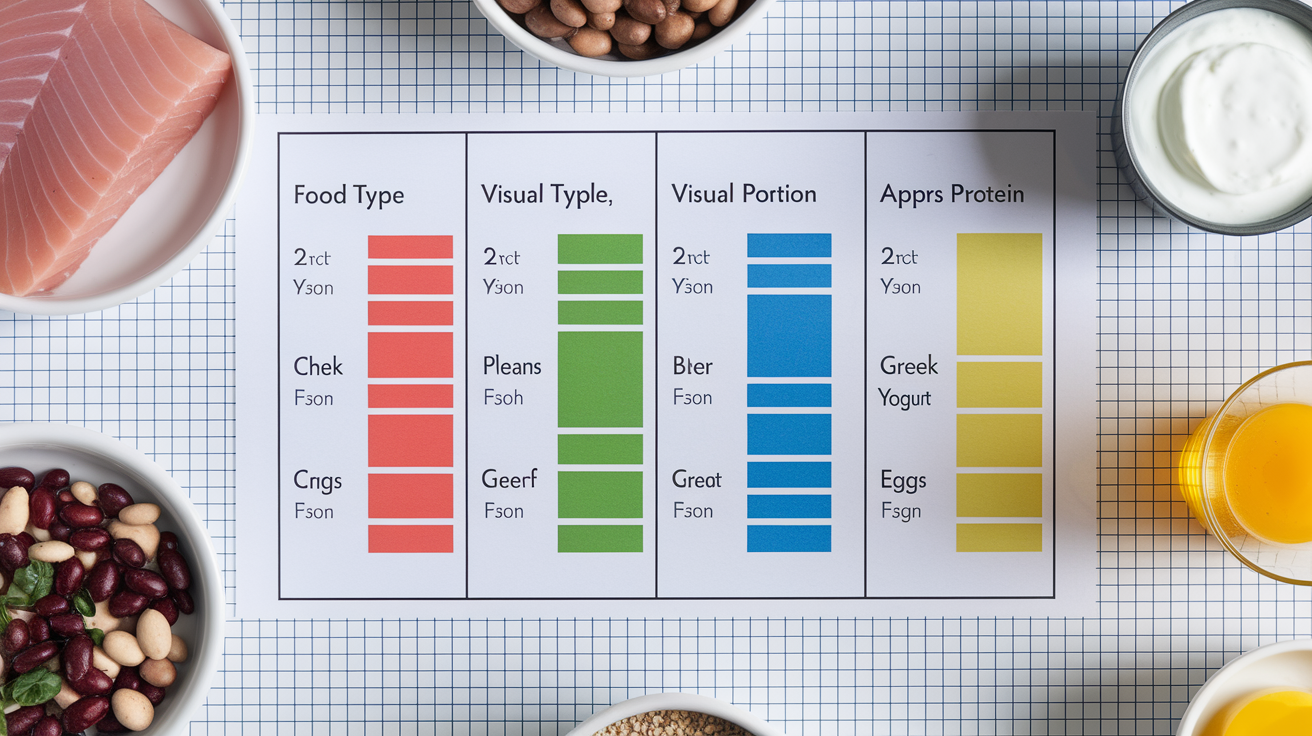
Fast conversions let you log meals without hunting through your app database or second-guessing every portion. The table below maps common protein foods to their visual portion and approximate protein grams so you can estimate on the fly.
| Food Type | Visual Portion | Approx. Grams Protein |
|---|---|---|
| Chicken breast (cooked) | Palm or deck of cards | 24–28 g |
| Salmon or white fish (cooked) | Palm or checkbook | 19–23 g |
| Lean beef or pork (cooked) | Palm or deck of cards | 21–25 g |
| Black beans or lentils (cooked) | Fist (1 cup) | 15–18 g |
| Greek yogurt (plain) | Fist (1 cup) | 18–23 g |
| Eggs (large) | One egg in palm | 6 g per egg |
Use this table as your go-to reference when you’re meal prepping, eating out, or logging food in your tracking app. Once you practice these conversions a few times, you’ll stop needing the chart and start recognizing portions automatically. A palm of chicken’s 25 grams. A fist of yogurt’s 20 grams. Two eggs are 12 grams.
Common Mistakes When Estimating Protein Portions
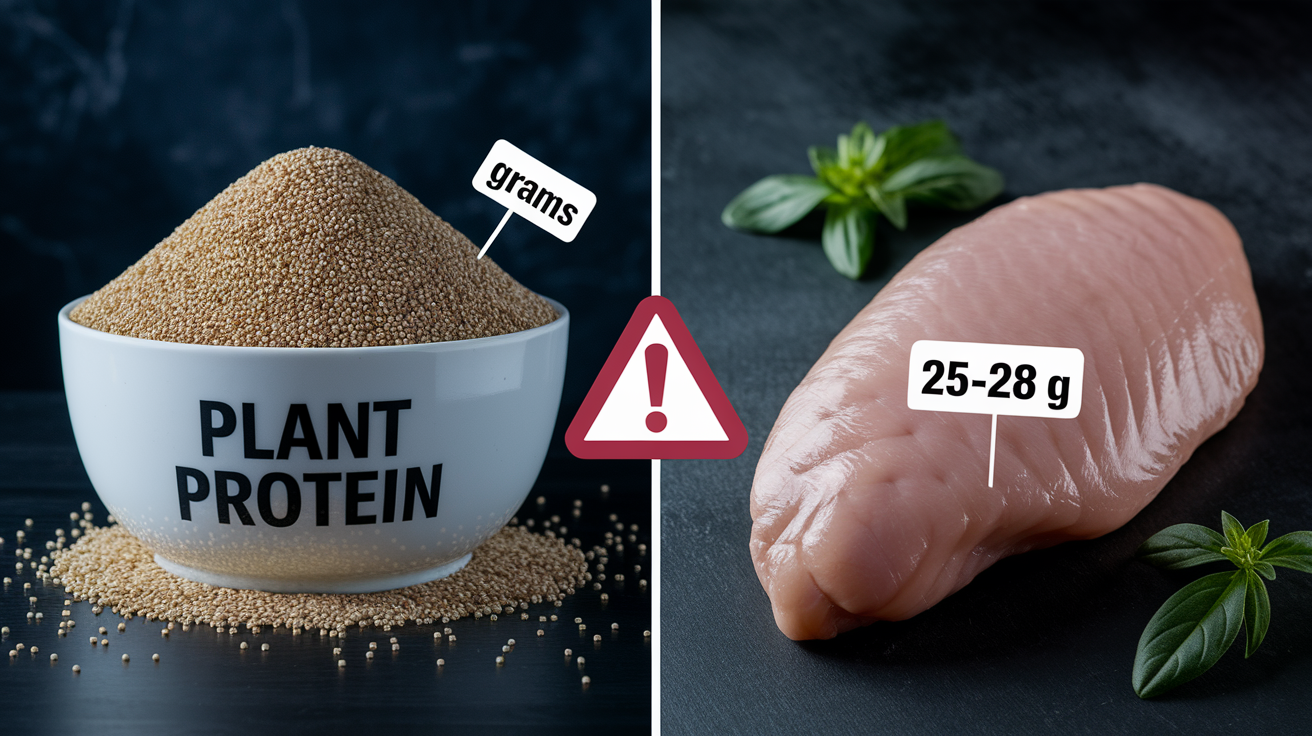
The biggest error people make? Overestimating protein from plant-based foods. A fist of cooked quinoa or a big salad with chickpeas feels like a lot of protein, but quinoa only delivers about 8 grams per cup and a half-cup of chickpeas gives you around 7 grams. Compare that to a palm of chicken at 26 grams and the gap’s clear. If you’re relying on plants for most of your protein, you need larger portions or multiple sources per meal to hit your target.
The opposite mistake happens with restaurant meat portions. People assume a chicken breast or steak equals one standard serving, but most restaurants plate 6 to 10 ounces of cooked protein. That’s two palms, not one. If you log it as a single palm (3 to 4 ounces), you’re underreporting by 50 to 100 percent. A quick visual check before you eat saves you from logging errors that add up over the week.
Mixed dishes trip people up because sauces, oils, and add-ons hide the protein. A grain bowl with grilled chicken might also include feta cheese, sunflower seeds, and a tahini dressing. Each of those adds a few grams of protein, pushing the total higher than the chicken alone. When in doubt, round up a few grams to account for cheese, nuts, seeds, and dairy-based sauces. Better to slightly overestimate a mixed dish than to miss 10 grams of protein because you only counted the visible chicken.
Common mistakes to watch for:
Overestimating plant protein portions. Quinoa, oats, and vegetables contribute some protein, but far less per serving than meat, fish, or dairy.
Underestimating restaurant meat servings. Most entrées are 6+ ounces cooked, not the standard 3 to 4 ounces you’d serve at home.
Ignoring protein in sauces, cheese, and add-ons. Mixed dishes often contain 5 to 15 grams of “hidden” protein from ingredients beyond the main protein source.
Final Words
You now have simple, hands-on ways to estimate protein: palm, fist, thumb, and deck-of-cards cues for meat, fish, poultry, and plant foods.
Use the visual guides for different protein sources, quick restaurant tips when dining out, and the cheat-sheet conversions to check totals. Watch common mistakes like overestimating plant foods or missing hidden protein in mixed dishes.
Practice these cues until they feel natural. Estimating protein portion sizes without a food scale gets easier fast, and it makes tracking real progress doable.
FAQ
Q: How can I measure 100 grams if I don’t have a scale? How can you measure 3 oz of meat without a scale?
A: You can estimate 100 grams (≈3.5 oz) without a scale using visual cues: a deck of cards ≈3 oz (≈85 g), your palm ≈3–4 oz cooked meat, or about 1/2 cup cooked meat.
Q: What is the 9 4 4 rule for calories?
A: The 9 4 4 rule for calories states fat provides 9 kcal per gram, while protein and carbohydrates each provide 4 kcal per gram.