


Think you should add weight every workout?
Not usually.
Beginners can make quick gains, but the smart rule is simple: increase compound lifts (squats, presses, rows) about every 1–2 weeks, and isolation moves every 2–4 weeks.
Use tiny jumps—roughly 2.5–5%—and only when your form and reps stay clean.
This keeps steady progress without wrecking technique or recovery.
Read on for clear checks to know when to add weight, how much to add, and when to hold off.
How Beginners Should Progress Weight in Full Body Training

Progressive overload (gradually increasing the demands on your muscles over time) is what actually builds strength and muscle. For beginners, the rule is straightforward: add weight when you can while keeping form solid and hitting your target reps. If you’re following a program, do exactly what it says. If you’re self-directing, aim to add weight every 1–2 weeks for most exercises.
Most beginners can increase weight on compound lifts (squats, presses, rows, deadlifts) nearly every workout for the first few weeks. That won’t last forever, but early on your nervous system learns fast and muscle adaptation happens quickly. Isolation exercises (biceps curls, lateral raises, triceps extensions) progress slower. You’ll probably add weight to compounds every 1–2 weeks and to isolations every 2–4 weeks.
When you increase, keep it small. 2.5–5% of your current load. If you’re goblet squatting 20 lb, a 5% bump is 1 lb (round to whatever’s available, so 22.5 lb or 25 lb). For upper body work with lighter loads, stick closer to 2.5%. These micro-increases let you build strength without your reps crashing or your form falling apart.
Signs you’re ready to add weight:
- You finish all prescribed reps across all sets with clean form (if the program says 3 sets of 8, you hit 8, 8, 8 without things breaking down).
- The final rep of your last set is tough but controlled, not a grinder where your hips shoot up or your shoulders round.
- Your rate of perceived effort is around 6–7 out of 10 on working sets. Hard work, but not maximal strain.
- You recover fully between sessions. No lingering joint pain, no excessive soreness that messes up the next workout, and your energy and sleep are stable.
- You’ve hit your current weight for at least 2–3 sessions in a row with consistent performance (reps don’t drop session to session).
Factors That Influence How Fast Beginners Should Increase Load

Not every beginner will progress at the same speed, even on identical programs. Your training age (how long you’ve been lifting consistently), sleep quality, nutrition, and workout frequency all shape how quickly you can safely add weight. A beginner eating enough protein, sleeping 7–9 hours, and training three times per week will usually progress faster than someone skimping on recovery or training sporadically.
Movement complexity also matters. A barbell back squat involves more coordination and stability than a leg press, so you might add weight more cautiously on squats even though your legs are getting stronger. Full body programs that train each lift 2–3 times per week offer more frequent practice, which can speed up skill acquisition and strength gains compared to body part splits where you only squat once a week. But that same higher frequency demands better recovery management, because you’re stressing the same muscles multiple times per week.
Key factors that modify your progression timeline:
Sleep and stress: Poor sleep or high life stress slow recovery and blunt strength gains, often requiring an extra week before adding load.
Nutrition: Eating enough total calories and protein (roughly 0.7–1 g per pound of body weight) supports muscle repair and adaptation. Under-eating can stall progress even if your program is solid.
Soreness and fatigue: If you’re still sore or fatigued from the previous session, hold the current weight another workout rather than piling on load.
Training frequency per lift: Hitting a movement pattern 2–3 times per week (common in full body routines) accelerates motor learning and can allow weekly or bi-weekly increases. Once per week frequency often requires slower, more conservative jumps.
Signs You’re Ready to Add Weight

You know you’re ready to increase load when the weight that used to feel challenging now feels controlled and almost easy at the end of your target rep range. Your first rep and your last rep look nearly identical in terms of bar speed, posture, and stability. If your form stays tight and your breathing stays rhythmic through the entire set, that’s a green light.
Another clear signal is that you finish your working sets without needing extra rest. When you used to need two minutes between sets and now you’re ready to go again in ninety seconds, your body has adapted to the current stimulus. Your joints feel smooth. No popping, pinching, or lingering discomfort. And your muscles recover fully between sessions without excessive soreness that disrupts daily life or the next workout.
Check your reps across sets. If your program calls for 3 sets of 10 and you’re consistently hitting 10, 10, 10 (or even 10, 11, 10), you’ve outgrown that weight. Once you can complete the top of your rep range with solid form for 2–3 consecutive sessions, it’s time to add a small increment and drop back to the lower end of the range to rebuild.
How Much Weight Should Beginners Add Per Exercise Type
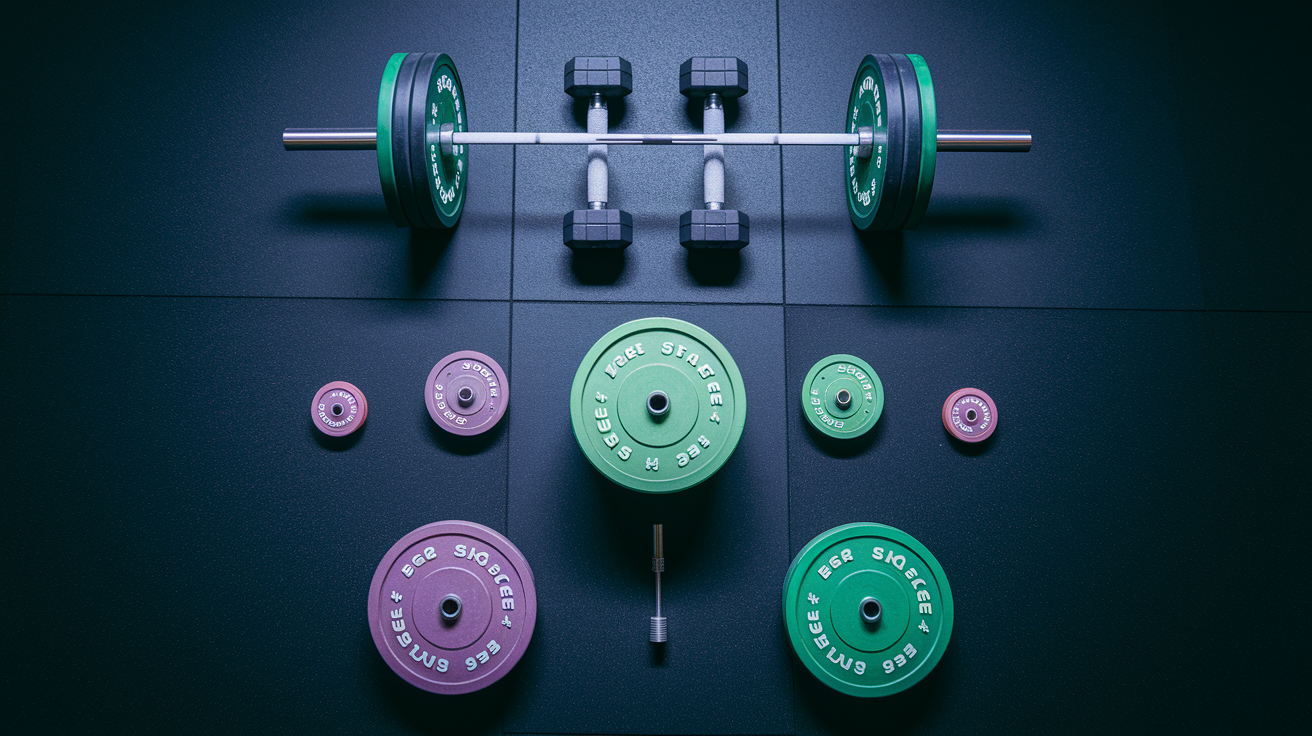
The size of your load increase depends on the movement type and the equipment you’re using. Compound lifts that recruit large muscle groups can handle slightly larger jumps than small isolation exercises. Barbells allow the smallest increments (you can add a 2.5 lb plate to each side for a total 5 lb increase), while dumbbells and machines often force you into larger steps because of how the weight is manufactured.
For most compound barbell lifts (squats, deadlifts, bench press, overhead press, barbell rows), a 5 lb total increase (2.5 lb per side) is standard and safe for beginners. That works out to roughly 2–4% depending on your starting load. Upper body dumbbell work and isolation exercises should use smaller jumps, closer to 2–3%, because the absolute weights are lighter and your margin for error is narrower. If your gym’s dumbbells jump by 5 lb increments (a common problem), you may need to increase reps or add a set instead of jumping weight until you’re strong enough to handle the next pair.
| Exercise Type | Typical Increase % | Typical Increase (lb) |
|---|---|---|
| Barbell compound (squat, deadlift, bench, row) | 3–5% | 5 lb (2.5 lb per side) |
| Dumbbell compound (goblet squat, dumbbell press, dumbbell row) | 4–6% | 5–10 lb per hand (often limited by available pairs) |
| Machine compound (leg press, chest press, cable row) | 5% | 5–10 lb (add small plates to stack if machine jumps are too large) |
| Isolation (biceps curl, triceps extension, lateral raise) | 2–3% | 2.5 lb per hand (use microplates or increase reps instead) |
Weekly vs Bi-Weekly Load Progression for Beginners
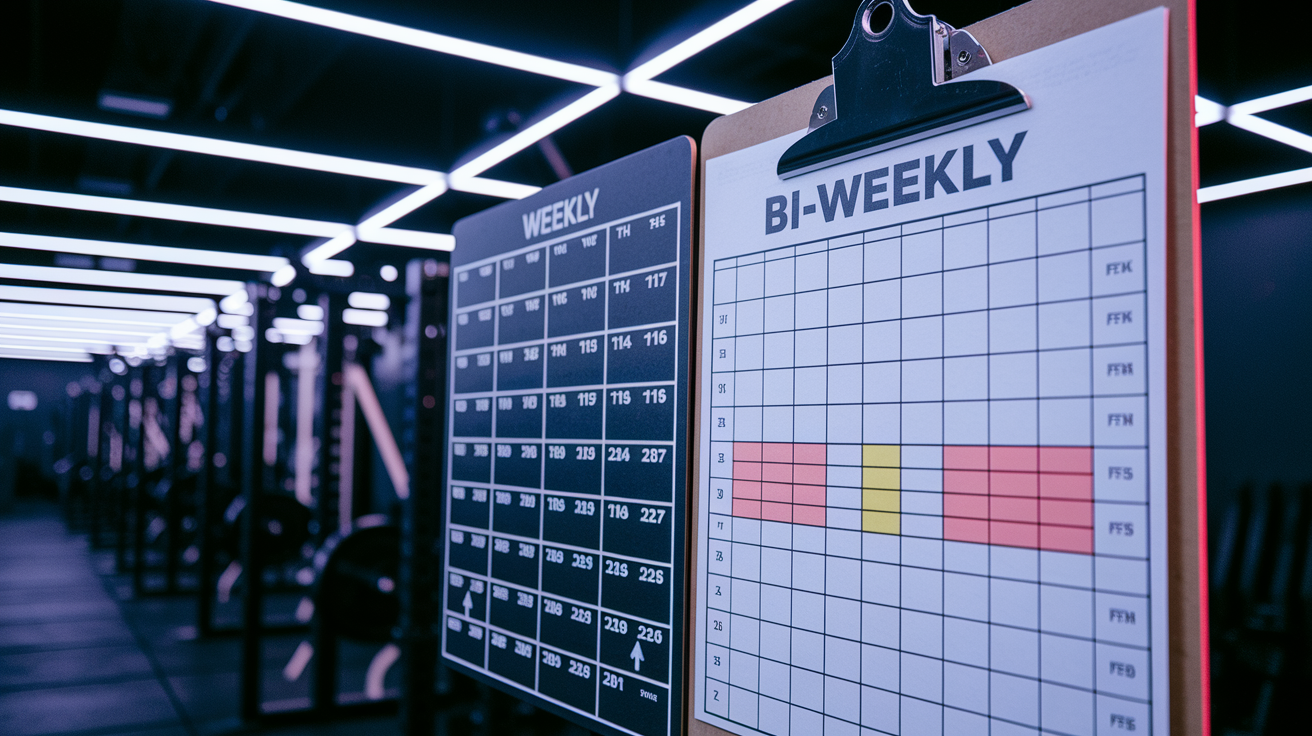
Many beginner programs use weekly increases because early gains come fast and your body adapts quickly when movements are new. A simple linear progression (add 5 lb to your squat every week, for example) works well for the first few months if you’re eating and sleeping right. Weekly jumps keep the program simple and give you clear, measurable progress that builds confidence.
Bi-weekly progression is the smarter choice if you’re managing higher life stress, inconsistent sleep, or you notice your form starting to slip when you try to add weight every single week. Giving yourself two weeks at the same weight lets you practice the movement more, nail down technique, and accumulate slightly more volume before the next jump. Bi-weekly increases also make sense once you’ve been training for a few months and your beginner honeymoon phase starts to taper off.
Why weekly progression works for beginners:
Rapid neural adaptation in the first 8–12 weeks means you can often handle small, frequent increases without stalling.
Frequent weight jumps keep motivation high and make it easy to see that the program is working.
Full body programs that train each lift 2–3 times per week provide enough practice frequency to support weekly gains.
Why bi-weekly progression works for beginners:
Extra practice time at the same weight improves movement quality and reduces injury risk, especially on complex lifts like squats and deadlifts.
Lower stress on recovery systems, which matters if sleep or nutrition aren’t dialed in perfectly.
Easier to sustain over time. You’re less likely to hit a wall or burn out compared to pushing for a PR every single week.
When Beginners Should NOT Increase Load

If your form breaks down (your lower back rounds on deadlifts, your knees cave in on squats, or your shoulders shrug up on overhead press), do not add weight. Form breakdown is your body telling you the current load is at or beyond your technical capacity. Adding more weight will only groove bad movement patterns and increase your risk of strains, impingement, or worse.
Another clear stop sign is when your reps collapse across sets. If your program calls for 4 sets of 8 and you’re hitting 7, 6, 5, 4, you’re not ready to go heavier. Your nervous system and muscles need more time to adapt to the current demand. Hold the weight steady, focus on hitting all your reps with clean form, and only then consider a small increase. Excessive soreness that lasts more than 48–72 hours, joint pain that doesn’t resolve with a rest day, disrupted sleep, or a general feeling of being run down are all signs you need to pause progression and prioritize recovery.
Alternatives to Weight Increases for Progressive Overload
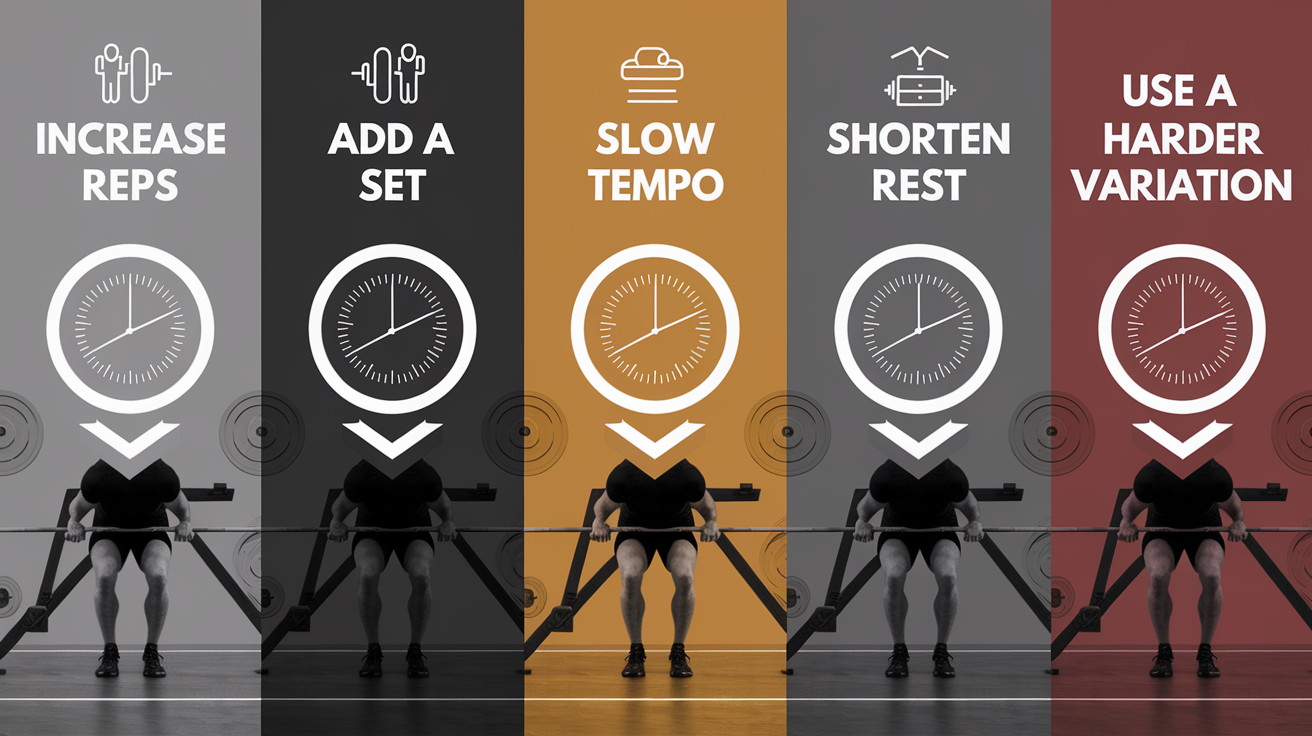
Progressive overload doesn’t always mean adding pounds to the bar. When you can’t increase weight (maybe your gym’s dumbbells jump by 10 lb and you’re not ready for that leap, or you’ve hit the top of the machine stack), you can still drive adaptation by manipulating other training variables. These alternatives keep you progressing without forcing unsafe load jumps.
Five ways to create progressive overload without adding weight:
Increase reps within your target range. If you’re doing 3 sets of 8 reps, work up to 3 sets of 10 or 12 reps at the same weight before increasing load. More reps mean more total work and more time under tension.
Add one set. Going from 3 sets to 4 sets increases total volume by 33%, which is a meaningful stimulus for growth. Use this strategically. Don’t add sets to every exercise or your workouts will balloon in length.
Slow down the tempo. A 2 second eccentric (lowering phase) becomes a 3 or 4 second eccentric. Example: lower the dumbbell for 4 seconds on a biceps curl instead of 2 seconds. The same weight now creates a harder challenge because your muscles are under tension longer.
Shorten rest intervals. If you’re resting 2 minutes between sets, try cutting that to 90 seconds. Less rest means less recovery between efforts, which increases the metabolic and cardiovascular demand of the workout.
Improve exercise difficulty. Swap an easier variation for a harder one at the same load. Example: replace push-ups on your knees with full push-ups, or trade goblet squats for barbell back squats. The movement becomes more technically demanding, which stimulates new adaptations even without heavier weight.
Before you add weight, try one of these methods for 1–2 sessions. Once you’ve mastered the harder version or higher volume, you’ll often find that the next weight jump feels manageable because your capacity has grown.
Final Words
Increase weight when you can finish every rep with clean form and an RPE under about 7. A simple rule works: most beginners add weight every 1–2 weeks, using roughly 2.5–5% jumps for compound lifts and smaller steps for dumbbells or isolation moves.
If form falters, soreness stays high, or sleep slips, hold the weight and try extra reps, slower tempo, or another set instead.
If you’re asking how often should beginners increase load in full body programs, start with 1–2 weeks and adjust to recovery and movement complexity. Keep it steady and consistent.
FAQ
Q: What is the 3-3-3 rule at the gym / What is the 3 3 3 rule of lifting?
A: The 3-3-3 rule at the gym is doing three sets of three heavy reps to build strength, with full rest between sets and small, slow weight increases when all reps stay clean.
Q: What is the 5-3-1 rule in gym?
A: The 5-3-1 rule in the gym is a strength cycle (Jim Wendler style): weekly heavy sets of 5, then 3, then 1 rep using percentages of your max and planned small weight jumps.
Q: What is the 5 5 5 30 rule?
A: The 5 5 5 30 rule commonly means five sets of five reps with 30 seconds rest between sets, blending strength and conditioning—use slightly lighter loads to keep good form across sets.