


Can you really lose fat and gain muscle at the same time?
Yes, if you stop chasing extremes and get the basics right.
Body recomposition works when you eat at maintenance or a slight deficit, keep protein high (about 1.6 to 2.2 g/kg), and lift with progressive overload while prioritizing sleep and recovery.
Do those things consistently for 8 to 12 weeks, and your body will burn fat for energy while using protein and training signals to build or hold muscle.
This post lays out the simple, step-by-step plan to make it work.
Core Strategy for Losing Fat and Gaining Muscle Simultaneously

Body recomposition is basically losing fat while you’re building muscle at the same time. It’s tricky, but it works when you dial in the balance between what you eat and how you train. The setup? You eat at maintenance calories or slightly below, slam your protein intake somewhere between 1.6 and 2.2 grams per kilogram of body weight, and keep lifting progressively heavier weights. This creates a situation where your body burns fat for energy while still having what it needs to build and repair muscle tissue. When you get it right, fat stores shrink while muscle grows or at least holds steady.
Some people respond better to recomposition than others. If you’re new to lifting, coming back after time off, or carrying extra body fat, you’ll probably see faster results. Beginners get what people call “newbie gains,” where your body freaks out over the new training stimulus and muscles grow fast. If you used to train and stopped, muscle memory kicks in and helps you rebuild what you lost way quicker than starting from scratch. And if you’ve got higher body fat, your body can tap into those stores to fuel training and recovery without needing extra calories, which makes simultaneous fat loss and muscle gain more realistic.
Sleep and recovery aren’t optional. Bad sleep messes with the hormones that control hunger, muscle growth, and fat loss. There’s a study showing people who slept one hour less lost 85% of their weight from lean mass instead of fat. Not great. Your muscles need rest to repair and adapt. Without it, even perfect nutrition and killer workouts won’t deliver.
Five Core Steps to Successful Recomposition:
- Set your calorie target. Start at maintenance or 10 to 15% below, then adjust weekly based on what’s happening with your weight and energy.
- Hit your protein target. Shoot for 1.6 to 2.2 g/kg daily, spread across three to five meals.
- Apply progressive overload. Add weight, reps, or sets every week or two so your muscles have to keep adapting.
- Prioritize recovery. Get 7 to 9 hours of sleep each night and take one or two full rest days weekly.
- Stay consistent. Track intake, workouts, and measurements for at least 8 to 12 weeks before changing anything major.
Nutrition Principles That Drive Recomposition

Protein, carbs, and fats all do different things during recomposition, and getting the balance right speeds up both fat loss and muscle gain. Protein’s the big one because it gives you the amino acids your muscles need to repair and grow. It also has the highest thermic effect, meaning your body burns more calories digesting protein than it does breaking down carbs or fat. Carbs fuel your training and refill muscle glycogen, which is the stored energy that powers your heaviest lifts. Fats keep your hormones balanced (testosterone, growth hormone), manage inflammation, and help you absorb certain vitamins. Cut any of these too low and recomposition stalls. But protein? That stays high no matter what.
A solid starting macro split is around 30 to 35% protein, 30 to 40% carbs, and 25 to 35% fat. Tweak based on how much you’re training, your body composition, and what feels sustainable. For a 180-pound person eating 2,200 calories, that’s roughly 165 to 190 grams of protein, 165 to 220 grams of carbs, and 60 to 85 grams of fat. These ranges give you enough protein to protect and build muscle, enough carbs to train hard, and enough fat to keep hormones functioning. If you’re doing high volume training, you might bump carbs higher. If you prefer more fat or fewer carbs, adjust within those ranges but keep protein at the top end.
Figuring out your calorie needs starts with estimating your Total Daily Energy Expenditure, which is your basal metabolic rate plus activity. Online calculators give you a rough starting point, but real feedback beats guessing. Track your weight and measurements for two weeks at what you think is maintenance. If your weight stays stable, that’s your true maintenance number. From there, subtract 10 to 15% for a recomposition deficit, or stay at maintenance if you’re brand new to lifting or have significant fat to lose. Recomposition happens in a much narrower calorie range than bulking or cutting, so precision actually matters here.
When you eat matters a bit too, though not as much as total daily intake. Getting 20 to 40 grams of protein within a few hours of training helps maximize muscle protein synthesis, and spreading protein across three to five meals keeps amino acids steady in your system. Eating most of your carbs around your workout (before for energy, after for recovery) improves training quality and glycogen replacement. Fats are flexible, but don’t eat a high fat meal right before training since it slows digestion. Timing is secondary to hitting your daily totals, but these small tweaks add up over weeks and months.
Practical Meal Planning for Recomposition

Building meals for recomposition means pairing a lean protein with complex carbs and a serving of healthy fats each time you eat. Simple formula: one palm-sized portion of protein, one to two fist-sized portions of carbs, one thumb-sized portion of fat, and as many fibrous vegetables as you want. This keeps meals balanced, keeps you full, and makes hitting your macros way easier without obsessing over every gram. Grilled chicken with brown rice, steamed broccoli, and a little olive oil checks all the boxes. Eating at roughly the same times each day helps regulate hunger, stabilize energy, and build habits that stick.
The trick to sticking with it? Variety within structure. Rotate your proteins, carbs, and fats so you don’t get bored while still supporting your goals. Meal prep makes everything simpler. Cook proteins and grains in bulk once or twice a week, portion them into containers, then pair with fresh or frozen vegetables throughout the week. This cuts down on decision fatigue and makes it almost impossible to skip meals or default to worse choices when you’re busy or exhausted.
Recomposition-Friendly Foods:
Chicken breast, turkey breast, lean ground beef, white fish, salmon, and other seafood. Eggs and egg whites, plain Greek yogurt, cottage cheese, and low fat dairy. Brown rice, quinoa, oats, sweet potatoes, whole grain bread, and legumes. Broccoli, spinach, bell peppers, zucchini, cauliflower, and leafy greens. Almonds, avocado, extra virgin olive oil, natural peanut butter, and chia seeds. Blueberries, bananas, apples, and other whole fruits in moderate portions.
| Meal | Protein Source | Suggested Pairing |
|---|---|---|
| Breakfast | Scrambled eggs + egg whites | Oatmeal, berries, almond butter |
| Lunch | Grilled chicken breast | Brown rice, steamed broccoli, olive oil |
| Dinner | Baked salmon fillet | Quinoa, roasted vegetables, avocado |
| Snack | Plain Greek yogurt | Banana, handful of almonds |
Training Fundamentals for Building Muscle While Burning Fat
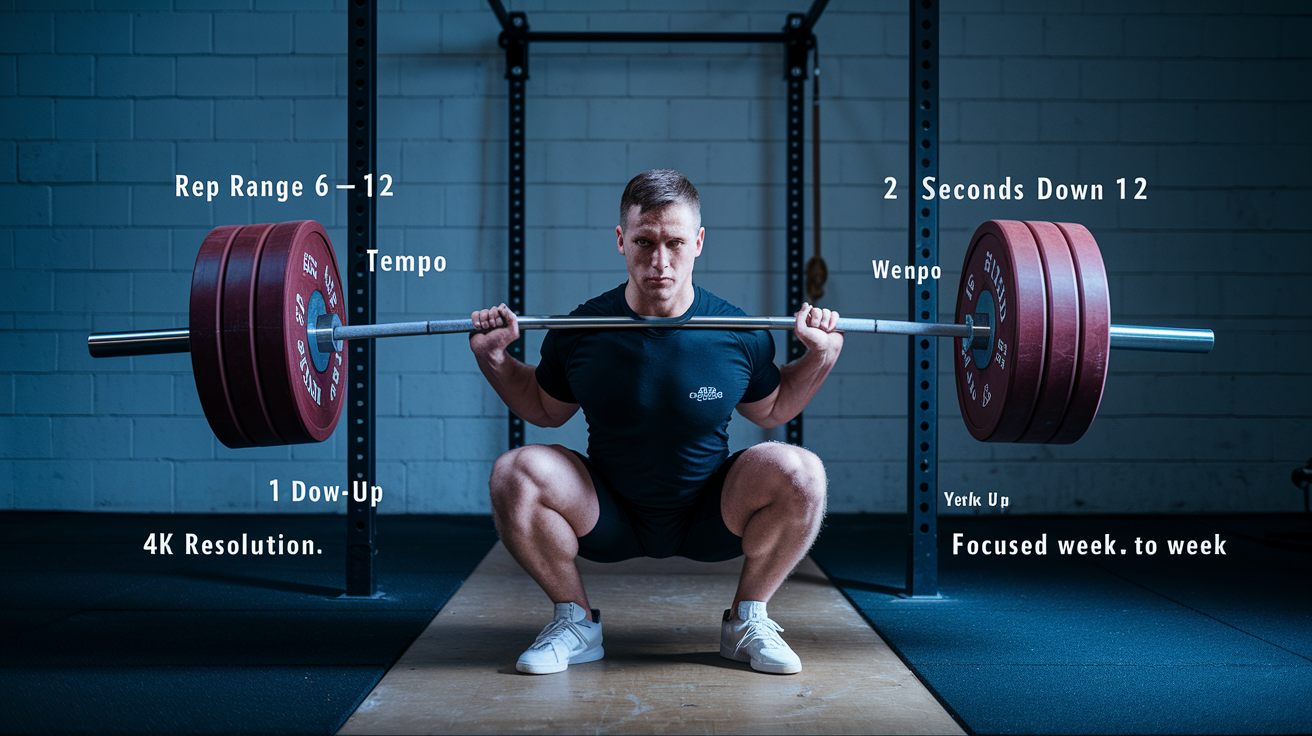
Strength training is what drives muscle growth during recomposition, and your program needs to be built around progressive overload. That’s the principle of gradually increasing the demands you put on your muscles over time. Without it, your body has zero reason to build new tissue. You increase the weight you lift, add reps within a target range, or add sets as you adapt. Even in a calorie deficit, your muscles will respond to heavier loads by maintaining or growing, as long as you’re feeding them enough protein and giving them time to recover. Progressive overload is the signal. Nutrition and rest are the building blocks.
Compound lifts form the foundation of any solid recomposition program. These are exercises that involve multiple joints and large muscle groups. Squats, deadlifts, bench presses, overhead presses, rows, and pull-ups recruit the most muscle fibers, burn the most calories, and trigger the strongest metabolic responses. They also let you lift heavier weights than isolation exercises, which amplifies the overload signal. A program built mostly around compounds, with a few isolation movements added for weak points or specific goals, delivers the best results in the least time. Train each major muscle group at least twice per week, using rep ranges of 6 to 12 for most sets to balance strength and muscle growth.
Frequency matters as much as intensity. Training a muscle group once per week leaves six days of missed growth opportunities. Aim for three to five strength sessions weekly, distributing volume so each muscle gets hit two or three times. This higher frequency lets you rack up more quality sets per muscle without overloading any single session, and it keeps muscle protein synthesis elevated more consistently. Rest days should be actual recovery. Light activity like walking is fine, but don’t turn every off day into a cardio beatdown.
Essential Training Principles for Recomposition:
Prioritize compound lifts in the 6 to 12 rep range for most of your working sets. Increase weight by 2.5 to 5 pounds or add 1 to 2 reps per set every week or two as you adapt. Train each major muscle group at least twice per week across 3 to 5 total sessions. Use controlled tempos (2 seconds down, 1 second up) to maximize time under tension. Track every workout (weight, reps, sets) so you can confirm progress week over week.
Example Training Splits Optimized for Recomposition

Choosing the right training split depends on your schedule, recovery capacity, and experience level. But the goal’s always the same: accumulate 10 to 20 working sets per muscle group each week while allowing enough recovery between sessions.
3-Day Full-Body Split (ideal for beginners or limited time):
- Monday, Wednesday, Friday. Each session trains all major muscle groups with 2 to 3 exercises per group. Example: squat or leg press, bench press or push-up variation, row or pull-up, overhead press, and a core exercise. This frequency ensures every muscle gets stimulated multiple times per week, and the off days give you plenty of recovery.
- Exercise selection. Use one lower body push (squat, lunge), one lower body pull (deadlift, Romanian deadlift), one upper body push (bench, overhead press), one upper body pull (row, pull-up), and optional arms or abs. Rotate variations every 4 to 6 weeks to prevent adaptation.
- Progression. Add weight or reps each week on at least one key lift per session. Track your top set and try to beat it the following week.
4-Day Upper/Lower Split (ideal for intermediate lifters):
- Monday: Upper A. Horizontal push and pull focus. Bench press, barbell row, incline dumbbell press, cable row, lateral raises, biceps curls. This session emphasizes chest, back, and shoulder volume.
- Tuesday: Lower A. Squat-dominant. Back squat or front squat, Romanian deadlift, leg press, hamstring curls, calf raises. This session prioritizes quad and posterior chain development.
- Thursday: Upper B. Vertical push and pull focus. Overhead press, pull-ups or lat pulldown, dumbbell bench press, face pulls, triceps extensions. This session targets shoulders, lats, and arms from different angles.
- Friday: Lower B. Deadlift-dominant. Conventional or sumo deadlift, Bulgarian split squats, leg extensions, glute-ham raises, core work. This session emphasizes hip hinge strength and unilateral leg work.
Cardio Integration Without Hindering Muscle Growth

Cardio helps fat loss by increasing total daily energy expenditure, but too much or the wrong type can mess with muscle recovery and growth. Low intensity steady state cardio (walking, cycling, or elliptical at a conversational pace) burns calories without creating major fatigue or competing with your strength training adaptations. Shoot for 20 to 40 minutes of LISS two to four times per week, ideally on non lifting days or after your weights session when muscle building work is already done. LISS also improves cardiovascular health and aids recovery by increasing blood flow to sore muscles without adding mechanical stress.
High intensity interval training can speed up fat loss and improve conditioning, but you’ve got to program it carefully to avoid overtraining. HIIT sessions (short bursts of all out effort followed by rest or low intensity recovery) create a big metabolic demand and can elevate calorie burn for hours afterward. But they also tax your central nervous system and legs, which can hurt performance in your next lower body lifting session. Limit HIIT to one or two sessions per week, schedule them at least 24 hours away from heavy leg days, and keep sessions under 20 to 25 minutes total work time. If you notice strength dropping or soreness lasting longer than usual, scale back the intensity or frequency.
Cardio Guidelines for Recomposition:
Use low intensity cardio (LISS) as your primary fat loss tool. 2 to 4 sessions of 20 to 40 minutes weekly. Add HIIT sparingly (1 to 2 sessions per week maximum) and keep them short (15 to 25 minutes including warm-up). Schedule cardio after strength training or on separate days to prioritize muscle stimulus and recovery. Avoid excessive daily step goals or long endurance sessions that can erode muscle mass in a calorie deficit.
Expected Timelines and Who Recomposition Works Best For
Body recomposition is slower than traditional bulk and cut cycles, but it produces sustainable, high quality changes in body composition without the wild swings in body weight and appearance. Most people start noticing visible changes (improved muscle definition, tighter midsection, better performance in the gym) within 8 to 12 weeks of consistent training and nutrition. Strength gains often show up first, followed by visible fat loss and muscle growth. The timeline depends heavily on your training age, starting body composition, and adherence. Someone new to lifting might see dramatic changes in three months, while an advanced lifter might need six months to produce similar visual improvements.
New lifters experience the fastest recomposition because their bodies respond powerfully to the novel stimulus of resistance training. This “beginner gains” phase can last 6 to 12 months. During this time, muscle growth happens even in a moderate calorie deficit as long as protein intake and training intensity are adequate. People returning to training after a break also benefit from accelerated progress due to muscle memory, which is the ability of previously trained muscles to regrow faster than building them initially. Individuals with higher body fat percentages (roughly 20% or above for men, 30% or above for women) can fuel muscle growth from stored energy while losing fat, making simultaneous progress easier than for someone already lean.
Recomposition gets harder as you get leaner and more trained. Advanced lifters with low body fat and years of consistent training may need to cycle between focused fat loss and muscle gain phases because their bodies are closer to their genetic potential and less responsive to training. For these individuals, recomposition may still happen, but at a much slower rate. Maybe a few pounds of muscle and fat change over six months. Patience and precise tracking become even more important as progress slows, and small weekly improvements in strength or body measurements become the primary indicators of success.
Common Mistakes That Slow or Stop Recomposition
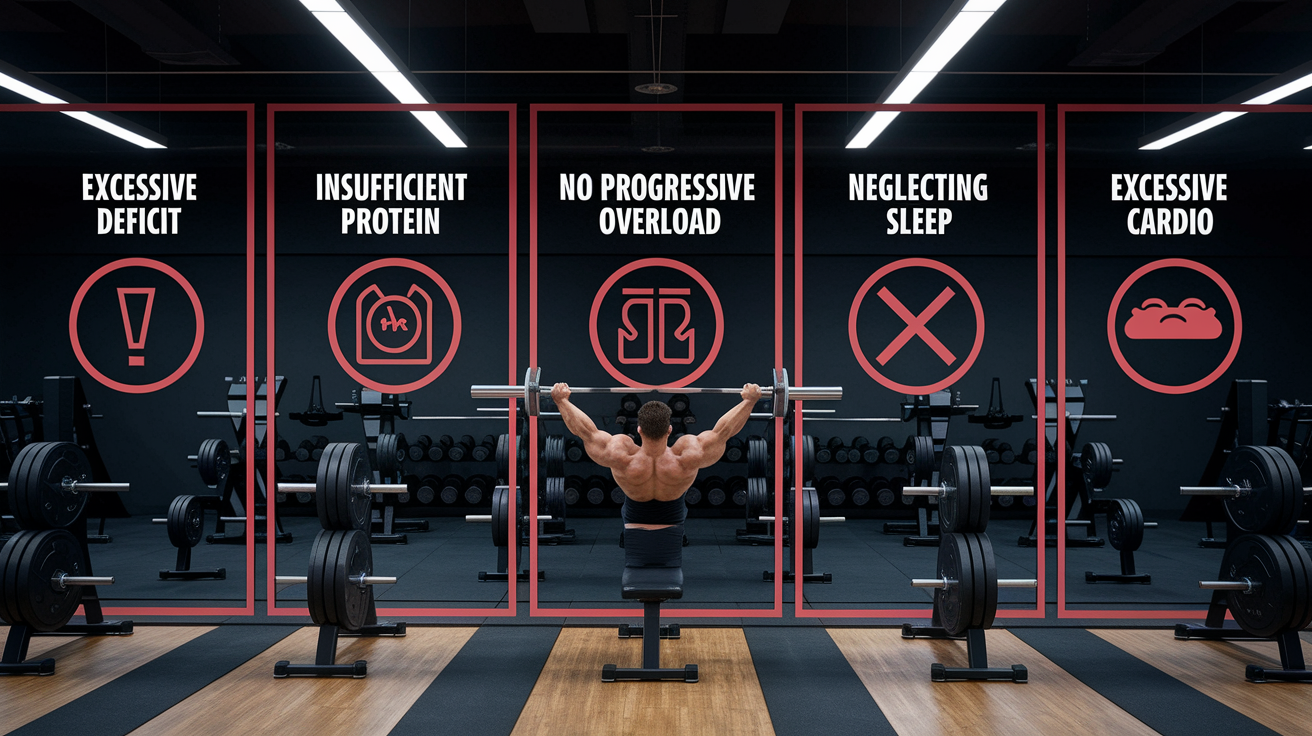
One of the biggest recomposition mistakes is eating too few calories trying to speed up fat loss. But severe deficits prioritize survival over muscle growth and can quickly lead to muscle loss, fatigue, and metabolic slowdown. Your body needs enough energy to fuel hard training, recover from it, and synthesize new muscle protein. A deficit larger than 20% below maintenance typically sacrifices muscle, especially if training volume or protein intake is low. If you’re losing more than one pound per week consistently or your strength is dropping across multiple sessions, your deficit is probably too aggressive. Slow, steady progress protects muscle and keeps your metabolism functioning.
Not eating enough protein is another major issue. Lots of people hit their calorie target but fail to consume the 1.6 to 2.2 g/kg protein required for muscle maintenance and growth during recomposition. When protein is low, your body breaks down muscle tissue to access amino acids for other metabolic processes, especially in a calorie deficit. Missing your protein target by even 20 to 30 grams daily adds up over weeks and months, blunting or reversing muscle gains. Prioritize protein at every meal and use shakes or bars if whole foods alone don’t get you there.
Five Mistakes That Sabotage Recomposition:
Eating in too large a calorie deficit (more than 20% below maintenance) and losing muscle along with fat. Consuming insufficient protein (shoot for at least 1.6 g/kg daily, distributed evenly across meals). Failing to apply progressive overload in training. Lifting the same weights for months produces no new stimulus. Neglecting sleep and recovery. Poor sleep disrupts hormones, increases hunger, and prioritizes fat storage over muscle growth. Doing excessive cardio or high intensity work that interferes with strength training recovery and muscle adaptation.
Final Words
You’ve set up the basics: a slight calorie deficit or maintenance, high protein, and progressive strength work with enough recovery. Keep training heavy and aim for progressive overload.
Pair that with simple meal plans, smart cardio, and consistent sleep. Use the 3-5 day training splits and 10-20 sets per muscle group. Watch for common mistakes: undereating, low protein, too much cardio.
If you want one clear step, track food and lifts for 8-12 weeks and adjust slowly. That’s the short answer on how to body recomposition, and steady progress is coming.
FAQ
Q: How long does it take to body recomposition? Can I body recomp in 3 months?
A: The time to body recomposition varies by starting point; many see visible changes in 8–12 weeks, but meaningful fat loss plus muscle gain often takes 3–6+ months. Three months can show solid progress.
Q: How to properly do a body recomp?
A: To properly do a body recomp, aim for a slight calorie deficit or maintenance, eat 1.6–2.2 g/kg protein, train with progressive overload, prioritize sleep and recovery, and be consistent.
Q: What does 12% body fat actually look like?
A: Twelve percent body fat looks like clear abdominal definition, visible muscle separation, and some vascularity. It’s common for lean athletic men; for women, 12% is very low and uncommon outside sports.