
Want upper-body strength that actually shows up in real life, not just on a machine?
Free weight exercises for upper body force your stabilizers to work, fix imbalances, and give strength you can use outside the gym.
Here are the ten moves that hit every major muscle, plus clear setup, what to feel, common mistakes, and easy progressions so you can train smarter and build muscle that lasts.
No fluff, just practical coaching you can use next session.
Quick Start: Top 10 Free‑Weight Upper‑Body Exercises
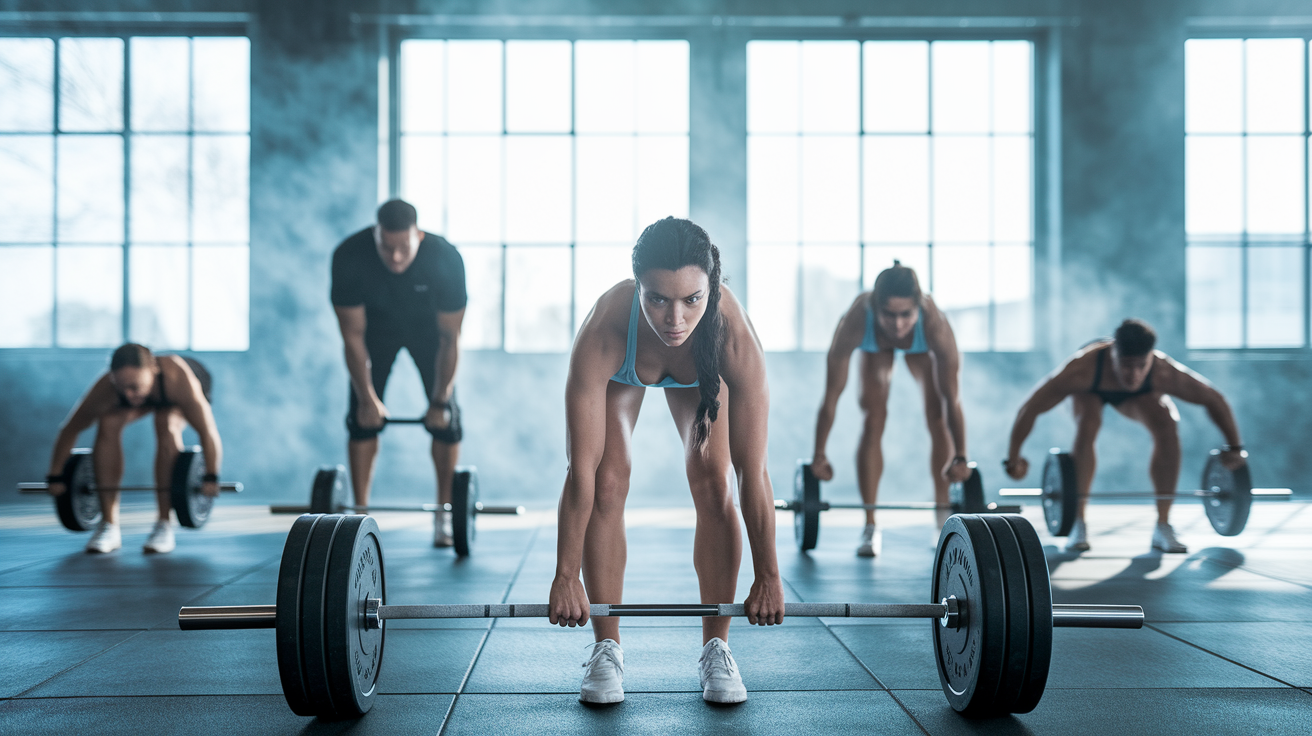
If you want to build upper body strength with free weights, start here. These ten movements hit every major muscle group and form the foundation of most solid routines. Each exercise gets broken down in the sections below, so you’ll know exactly how to set up, execute, and get better over time.
Barbell Bench Press – chest, shoulders, triceps
Dumbbell Shoulder Press – deltoids, triceps
Bent‑Over Row – lats, traps, rhomboids
Dumbbell Chest Fly – pectorals, front deltoids
Farmer’s Walk – traps, forearms, shoulders
Bicep Curls – biceps
Triceps Kickback – triceps
Barbell Push Press – shoulders, triceps, chest
Bent‑Over Reverse Fly – rear deltoids, upper back
Overhead Kettlebell Lunge – shoulders, core, legs
Chest‑Focused Free Weight Training for Upper-Body Strength

Free weight chest work forces every stabilizer in your shoulder to fire. Machines guide the bar path for you. Dumbbells and barbells don’t, so you control the weight in three dimensions. That extra demand builds strength you can actually use outside the gym and keeps both sides of your body honest.
The most common mistake? Lowering too fast or bouncing the weight off your chest to squeeze out another rep. If your elbows flare straight out during a press, you’re asking for shoulder problems. Keep them around 45 degrees from your torso. On flies, locking your elbows turns the move into a shoulder injury waiting to happen. Keep a slight, fixed bend the whole time.
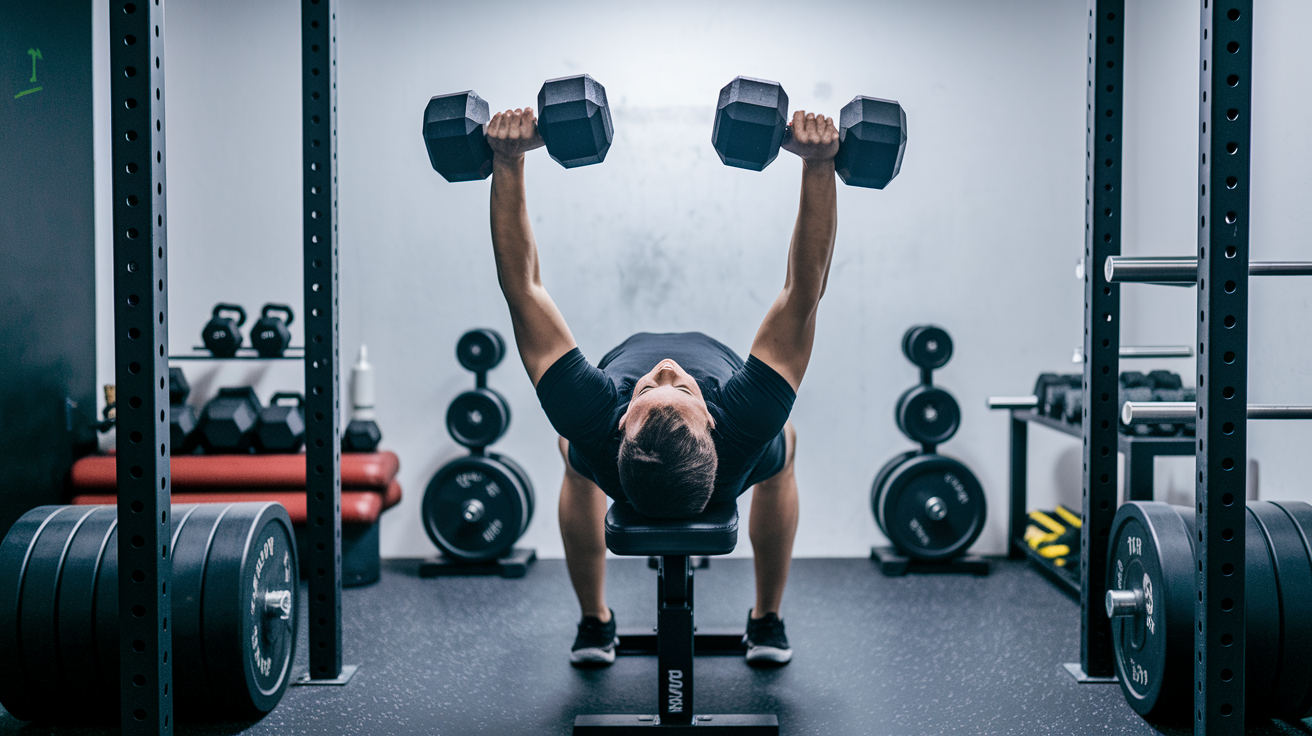
Bench Press (barbell or dumbbells) – Lie on the bench with the bar at eye level or dumbbells by your shoulders. Plant your heels flat (stack plates under them if you can’t reach). Lower the bar to the bottom of your pecs or bring the dumbbells just past shoulder level, then press straight up. Keep your hips down. Use a spotter if you’re pushing a heavy set. Example: 3 sets of 6 reps.
Incline Dumbbell Press – Set the bench between 30 and 45 degrees. Start with dumbbells at shoulder height, palms forward. Press up and slightly inward without letting the weights touch. This angle shifts more work to your upper chest and front delts. Example: 3 sets of 8 reps.
Decline Dumbbell Press – Set a decline angle (head lower than hips). Press from chest height to full extension. The decline shifts focus to the lower pecs. Example: 3 sets of 8 reps.
Dumbbell Fly – Lie flat with a light to medium pair of dumbbells held above your chest, palms facing each other. Keep a slight bend in your elbows and lower the weights out in a wide arc until you feel a stretch across your chest. Reverse the arc to bring them back up. Don’t let the dumbbells wobble or drop uncontrolled. If you’re new to flies, get a spotter to watch your form. Example: 3 sets of 6 reps.
Back-Building Free Weight Exercises for Upper-Body Development
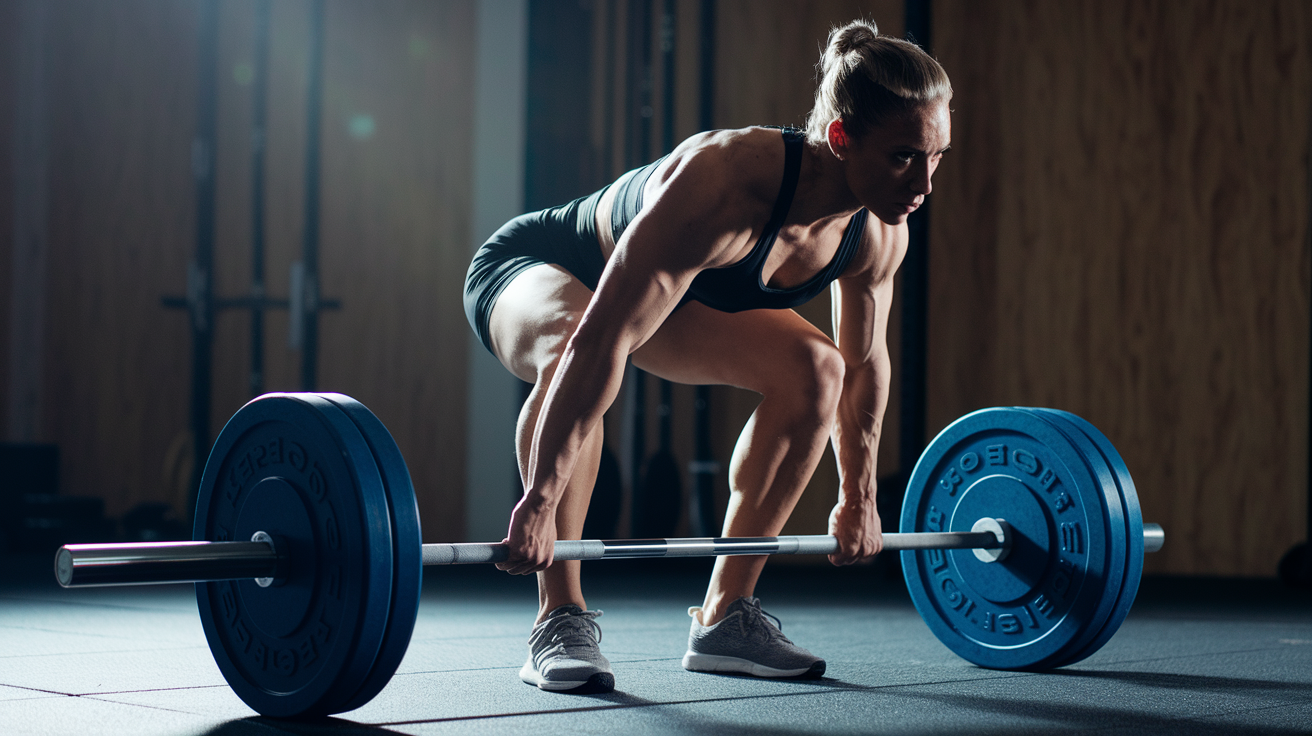
A strong back starts with a solid hip hinge. Stand with feet hip width apart, push your hips back like you’re closing a car door with your butt, and let your torso tip forward while keeping your spine flat. Your knees will bend slightly, but the power comes from the hinge at your hips. Not from rounding your lower back. That hinge position is your home base for most rowing movements.
Scapular retraction means pulling your shoulder blades together before you pull the weight. Think “squeeze a pencil between your shoulder blades” at the top of every row. Skip that step and your arms do all the work while your lats stay asleep. You should feel tension across your mid back and into your lats, not just a bicep pump.
Unilateral rows (one arm at a time) let you spot and fix strength imbalances. If your right side rows 40 pounds for ten clean reps but your left side wobbles at eight, you know exactly where to focus. Work the weaker side first, match the reps on the stronger side. The gap will close over time.
| Exercise | Primary Muscles | Recommended Sets/Reps |
|---|---|---|
| Bent‑Over Row | Lats, traps, rhomboids, lower back | 3 sets of 6–8 reps |
| Single‑Arm Row | Lats, core (anti‑rotation) | 3 sets of 8–12 reps per side |
| Reverse Fly | Rear delts, upper back | 3 sets of 6 reps |
| Farmer Carry | Traps, shoulders, forearms, core | 3 sets of 20–30 seconds |
Shoulder‑Strengthening Free Weight Movements
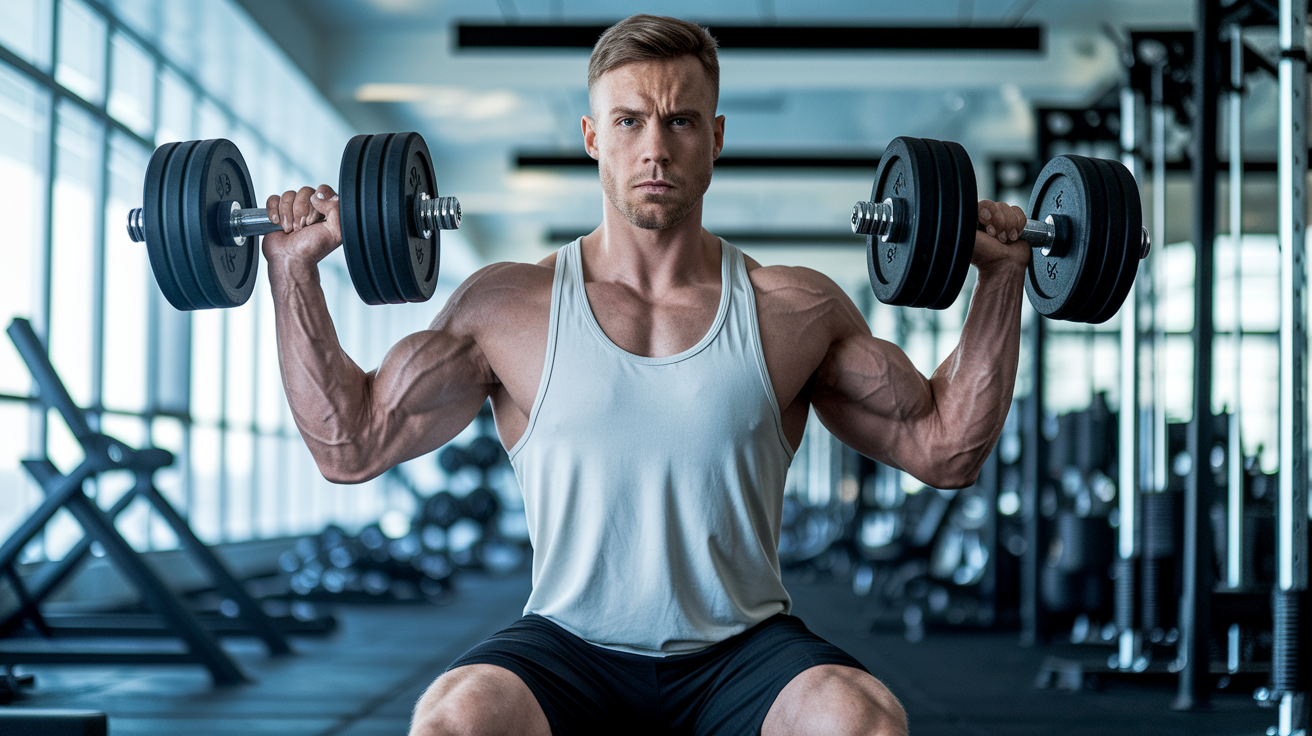
Your deltoids have three distinct regions: front, side, and rear. Overhead presses hit the front and side hard. Bent over reverse flies target the rear delts that most people neglect. Lateral raises isolate the side delts and give your shoulders that wider look. Mixing press variations with raise variations is how you build balanced, resilient shoulders.
Strict overhead presses (seated or standing military style) keep your torso upright and eliminate leg drive, so every ounce of force comes from your shoulders and triceps. The Arnold press adds a rotation at the bottom that recruits more of the front delt. Push presses use a quick dip and drive from your legs to help you move heavier weight overhead. That makes them a hybrid strength and power move.
Seated Dumbbell Shoulder Press – Sit with your back supported, dumbbells at shoulder height, knuckles facing your body or palms forward. Press straight up without arching your lower back. Lower under control. Example: 3 sets of 8 reps.
Standing Military Press – Stand with feet hip width, core tight. Hold dumbbells or a barbell at shoulder level and press overhead without using your legs. Keep your ribs down and don’t lean back. Example: 3 sets of 6–8 reps.
Arnold Press – Start with palms facing you at chest height. As you press up, rotate your wrists so palms face forward at the top. Reverse the motion on the way down. The rotation brings more front delt activation. Example: 3 sets of 8 reps.
Lateral Raise Variations – Stand with dumbbells at your sides, slight bend in your elbows. Lift the weights out to the sides until they reach shoulder height, then lower with control. You can also do these seated or with one arm at a time to increase stability demand. Example: 3 sets of 10–15 reps.
Bent‑Over Reverse Fly – Hinge at your hips with a flat back and slight knee bend. Hold light dumbbells with arms hanging down. Lift the weights out to your sides in a wide arc, pause at the top, and lower. This hits the rear delts and upper back muscles that keep your shoulders healthy. Example: 3 sets of 6 reps.
Arm‑Focused Free Weight Training for Upper-Body Definition
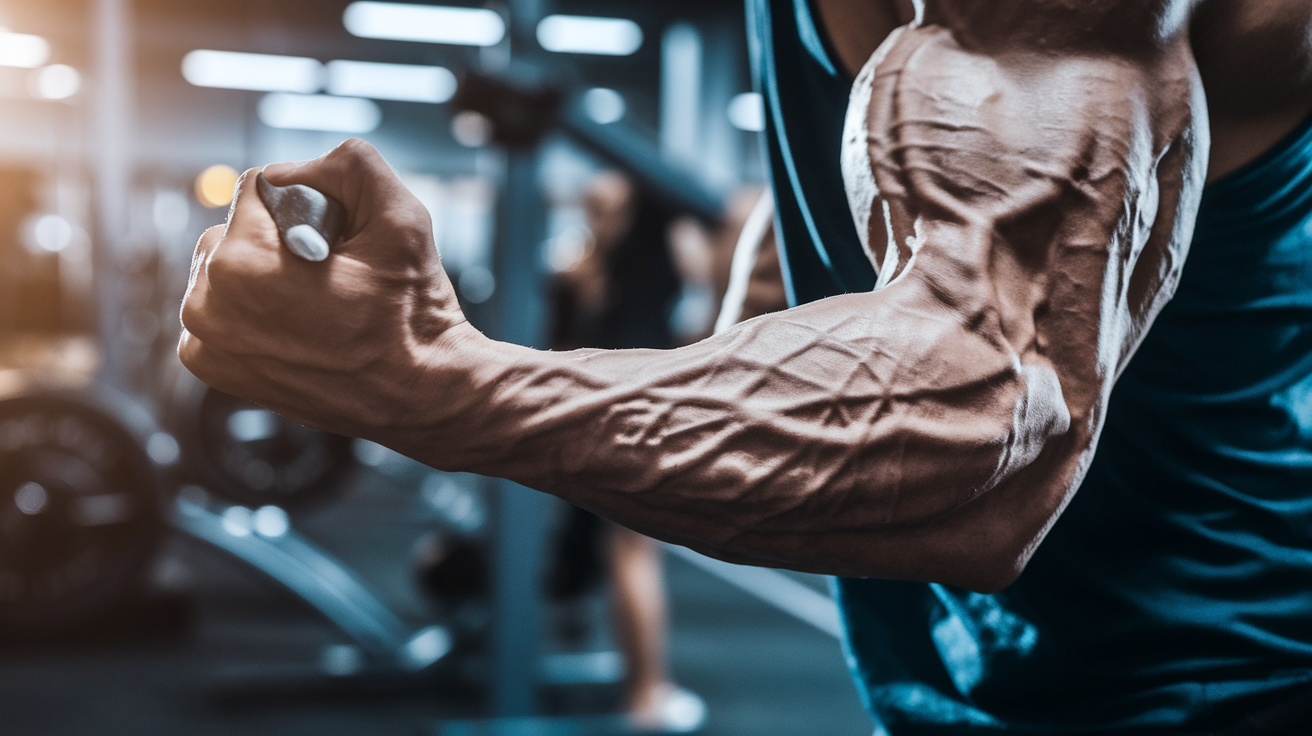
Isolation moves for your arms work best at the end of a session, after you’ve finished your heavy presses and rows. By that point your biceps and triceps are already warmed up and partially fatigued, so lighter weights will still create a strong stimulus. The key is keeping your upper arm completely still. If your elbow drifts forward or back during a curl or extension, you’re losing tension on the target muscle.
Hammer curls use a neutral grip (palms facing each other) and hit the brachialis, a muscle that sits underneath your biceps and adds thickness to your upper arm. Standard curls with palms up emphasize the biceps peak. Overhead triceps extensions stretch the long head of the triceps at the bottom, which you don’t get from pushdowns or kickbacks. Skull crushers (lying triceps extensions) let you load the triceps heavier because the bench supports your body.
Skull Crushers (Lying Dumbbell Triceps Extension) – Lie on a bench holding dumbbells with arms extended above your chest. Keep your upper arms perpendicular to the floor. Bend only at the elbows to lower the weights toward your temples, then extend back up. Example: 3 sets of 8–12 reps.
Triceps Kickback – Hinge forward with one hand on a bench for support. Hold a dumbbell in the working hand, upper arm tight to your side. Extend your elbow to straighten your arm behind you, pause for one second, then lower. Keep your upper arm locked in place. Example: 3 sets of 8 reps per arm.
Overhead Triceps Extension – Stand or sit holding one dumbbell with both hands. Lift it overhead, then lower it behind your head by bending your elbows. Press it back up without letting your elbows flare out. Example: 3 sets of 8–12 reps.
Hammer Curl – Stand with dumbbells at your sides, palms facing your body. Curl the weights up toward your shoulders without twisting your wrists. Lower under control. Example: 3 sets of 8–12 reps.
Incline Dumbbell Curl – Sit on an incline bench (45 degrees), arms hanging straight down. Curl the dumbbells up. The incline stretches the biceps at the bottom for a deeper range of motion. Example: 3 sets of 8–12 reps.
Concentration Curl – Sit on a bench, rest your elbow against the inside of your thigh, and curl one dumbbell at a time. This setup locks your upper arm in place and isolates the biceps. Example: 3 sets of 8–12 reps per arm.
Technique Cues and Safety Guidelines for Upper-Body Free Weight Lifts

Brace your core on every rep like you’re about to take a light punch to the stomach. Firm, not stiff. That internal pressure protects your spine during presses and rows and keeps your torso stable when you’re moving weight overhead or out to the sides.
Keep your back flat during any hinge movement. Flat doesn’t mean vertical. It means your spine stays in a neutral line from your head to your tailbone. If you see your lower back rounding in a mirror, reset your hips and lighten the load. Use a spotter any time you’re pressing heavy weight overhead or doing barbell bench work. The spotter isn’t there to do the lift for you. They’re insurance against a failed rep pinning you to the bench or crashing onto your face.
Control the lowering phase of every rep. That eccentric portion builds as much strength as the lift itself. Letting gravity take over turns your workout into a momentum game instead of a strength session. Keep your wrists in a neutral position. Don’t let dumbbells tilt forward or back. If your wrist hurts, the angle is wrong or the weight is too heavy.
Sample Free Weight Upper-Body Routines for All Experience Levels
Beginner Routine
Pick four exercises that cover chest, back, shoulders, and arms. Perform each for 8 to 12 reps, rest about 60 seconds, then move to the next exercise. Repeat the entire circuit three times. Warm up for 10 to 15 minutes with jumping jacks, arm circles, and a few light dumbbell presses before you start.
Example circuit: Dumbbell Bench Press (8–12 reps) → Bent‑Over Row (8–12 reps) → Dumbbell Shoulder Press (8–12 reps) → Hammer Curl (8–12 reps). Rest 60–90 seconds between circuits.
Intermediate Routine
Do your heavy compound lifts first while you’re fresh, then finish with lighter isolation work. Rest 90 to 120 seconds between sets of compound moves, 60 seconds for isolation. Add weight or reps every week.
Example: Barbell Bench Press (3 sets of 6–8 reps) → Bent‑Over Barbell Row (3 sets of 6–8 reps) → Dumbbell Shoulder Press (3 sets of 8 reps) → Dumbbell Chest Fly (3 sets of 8 reps) → Lateral Raise (3 sets of 10–12 reps) → Triceps Kickback (3 sets of 8 reps per arm) → Hammer Curl (3 sets of 10 reps).
Advanced Upper‑Body Split
Split your upper body across two sessions per week. Session A focuses on horizontal push and pull (bench press, rows). Session B focuses on vertical push and pull (overhead press, pull ups or pullovers) plus targeted arm work. Use progressive overload: track your weights and try to add one rep or five pounds every two weeks on your main lifts.
Session A example: Barbell Bench Press (4 sets of 5 reps, heavy) → Single‑Arm Dumbbell Row (4 sets of 6–8 per side) → Incline Dumbbell Press (3 sets of 8) → Chest Fly (3 sets of 8) → Skull Crushers (3 sets of 10).
Session B example: Barbell Push Press (4 sets of 6 reps) → Lying Dumbbell Pullover (3 sets of 8) → Arnold Press (3 sets of 8) → Bent‑Over Reverse Fly (3 sets of 10) → Overhead Triceps Extension (3 sets of 10) → Incline Dumbbell Curl (3 sets of 10).
Home Training With Minimal Equipment for Upper-Body Strength
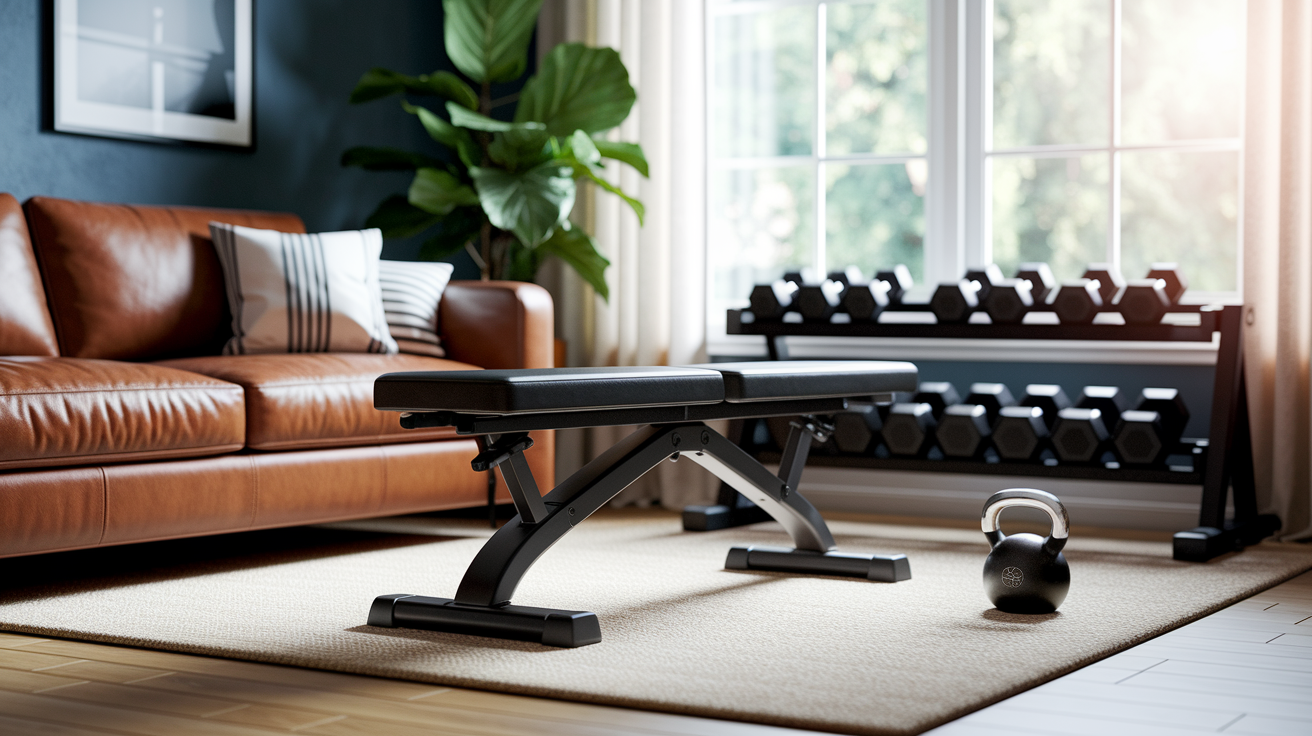
Two or three pairs of dumbbells (light, medium, and heavy) cover almost every upper body exercise in this guide. Adjustable dumbbells save space and money if you’re training at home long term. A flat bench opens up presses, flies, rows, and skull crushers. An adjustable bench adds incline and decline angles. Kettlebells work as dumbbell substitutes and add a stabilization challenge because the weight hangs below the handle.
You don’t need a commercial gym setup. A medium weight pair of dumbbells, a sturdy bench, and enough ceiling height to press overhead will get you years of progress. If you can’t increase the weight yet, slow down your reps (three seconds to lower, one second pause, two seconds to lift) or add an extra set. That’s still progressive overload.
| Equipment | Best Uses | Notes |
|---|---|---|
| Dumbbell pair (light) | Lateral raises, triceps kickbacks, warm‑up sets | 5–15 pounds for most beginners |
| Dumbbell pair (medium) | Shoulder presses, curls, chest flies, rows | 15–30 pounds typical range |
| Dumbbell pair (heavy) | Bench press, bent‑over rows, goblet squats | 30–50+ pounds as you progress |
| Flat or adjustable bench | Presses, flies, rows, skull crushers, incline/decline work | Adjustable adds versatility; flat is enough to start |
Final Words
You now have a clear starter plan: the top 10 free-weight upper-body moves, plus focused how-to sections on chest, back, shoulders, and arms.
You also got practical technique cues, safety guidelines, sample routines for every level, and a simple home gear guide. Small, repeatable steps—nothing flashy.
Use these free weight exercises for upper body with the technique tips and routines, track tiny wins, and build strength steadily. Keep it consistent and the progress will follow.
FAQ
Q: What is a good upper body workout with free weights?
A: A good upper-body workout with free weights is a mix of compound pushes, pulls, and accessories: bench or dumbbell press, bent-over or single-arm row, overhead press, curls, triceps extensions, and farmer’s carry.
Q: What is the 3-3-3 rule for weight lifting?
A: The 3-3-3 rule for weight lifting means doing three sets of three reps with heavy load to build strength; take longer rests, keep strict form, and increase weight slowly over time.
Q: What exercise is good for high blood pressure?
A: A good exercise for high blood pressure is regular aerobic activity like brisk walking or cycling; add light-to-moderate resistance training and check with your doctor before starting or changing exercise.
Q: Can a 70 year old woman get rid of flabby arms?
A: A 70-year-old woman can reduce flabby arms with consistent strength training focused on triceps and shoulders, progressive resistance twice weekly, adequate protein, and patience—tone and strength improve over months.