


Most lifters ignore forearms until their grip gives out and a PR dies on the floor.
This short, no-nonsense guide lays out six exercises that hit flexors, extensors, the brachioradialis, and all three grip styles (crush, pinch, support).
You’ll get clear sets, rests, and simple progress steps you can repeat 2–3 times a week.
Do the plan for a few 4–8 week blocks and your grip will stop holding you back.
Stronger holds. Better lifts. Less frustration.
Immediate Action Plan for Effective Forearm Strength Training

Start here if you need a complete forearm routine right now. This six-exercise plan hits flexors, extensors, brachioradialis, and all three grip types (crush, pinch, support) in one session.
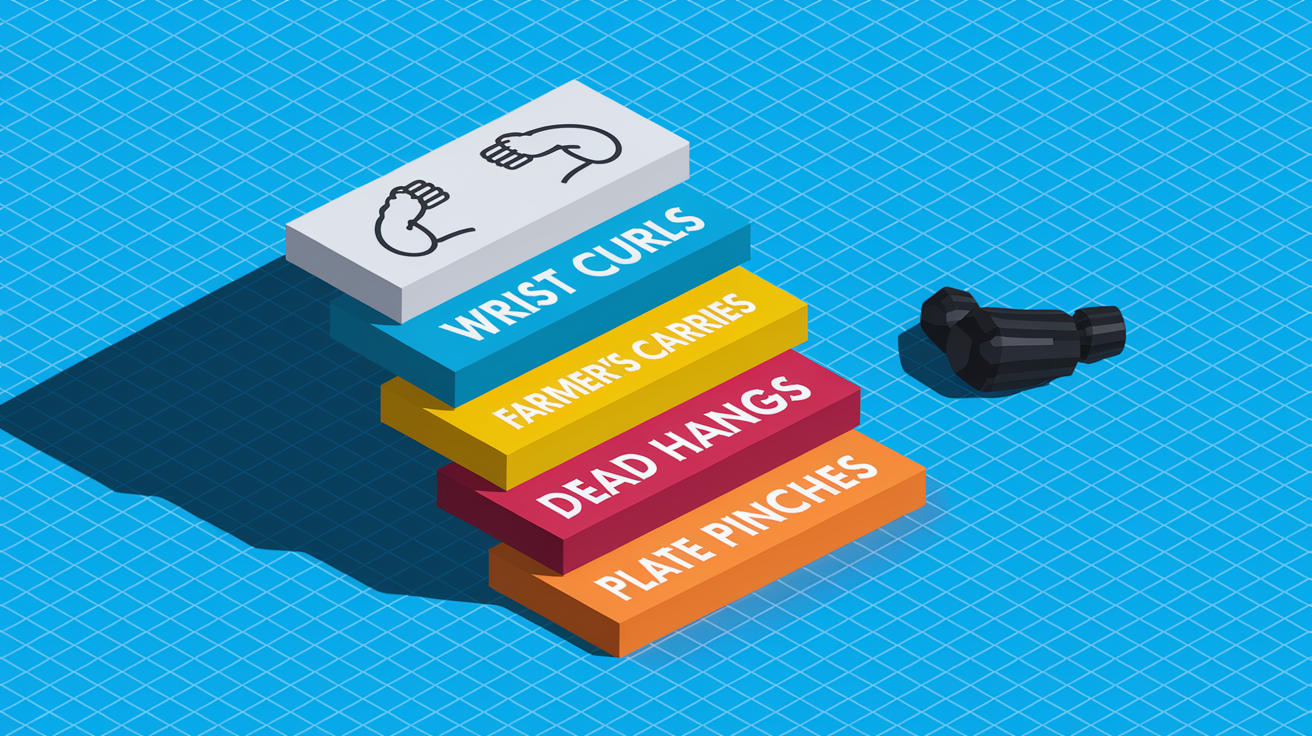
- Wrist Curls (Flexors) – 3 sets x 12–15 reps, 60s rest. Seated with forearms on bench, slow 3–4s lower.
- Reverse Wrist Curls (Extensors) – 3 sets x 15 reps, 60s rest. Same setup, palms down.
- Hammer Curls (Brachioradialis) – 3 sets x 8–12 reps, 60–90s rest. Neutral grip, full ROM.
- Farmer’s Carries – 3 carries x 40–60s, 90s rest. Heavy dumbbells, tight grip, walk steady.
- Plate Pinches – 3 sets x 30–45s, 90s rest. Two plates pinched between thumb and fingers.
- Dead Hangs – 3 sets x 20–30s, 90–120s rest. Active shoulders, full bodyweight.
Run this 2–3 times per week at the end of your regular training. Allow at least 48 hours between forearm days. When you can complete all prescribed reps and times across all sets, add load (2.5–5 lb for curls), extend holds (5–10s for carries and hangs), or shorten rest by 10–20s. Small steps build powerful grip over 4–8 week blocks.
Anatomy Essentials for Effective Forearm Training
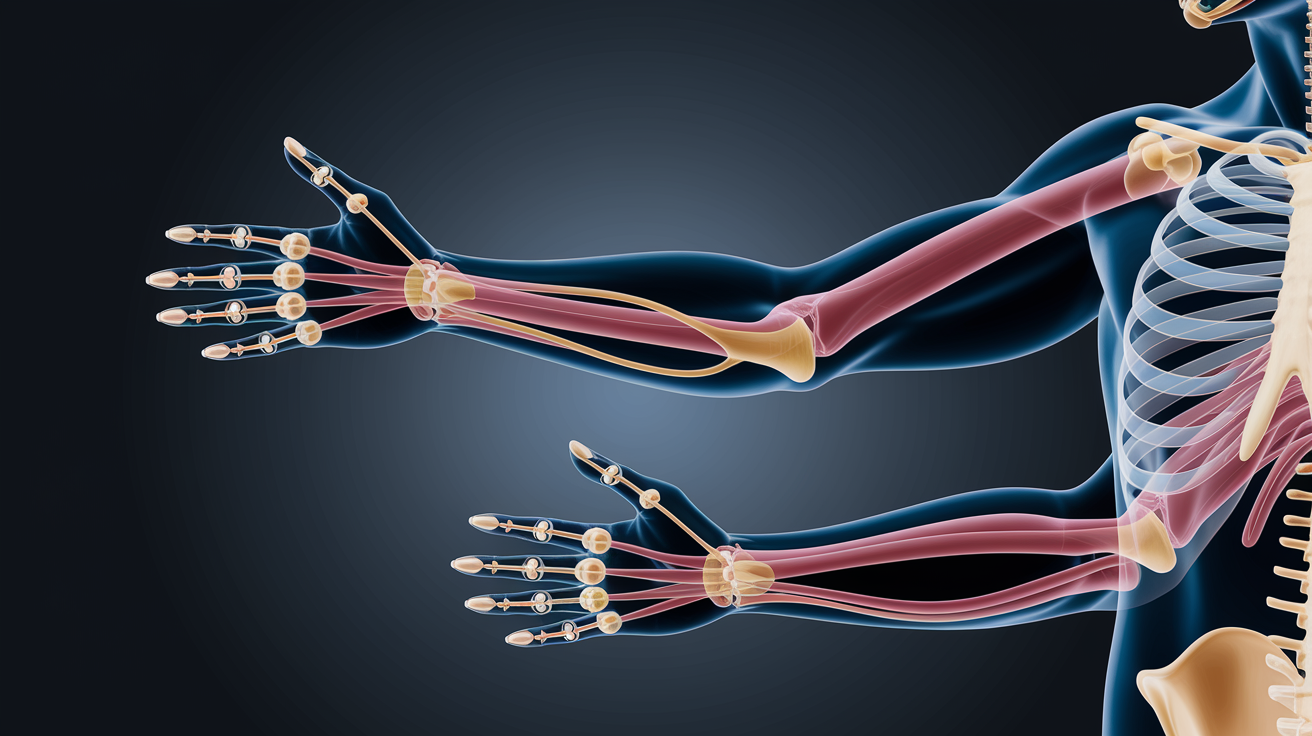
Forearm strength training improves your ability to hold, lift, and control objects under load. Unlike calves or quads, forearms get recruited in almost every upper body compound lift. They respond best to higher reps (12–20+) and extended time under tension. Slow twitch muscle fibers dominate the forearm compartments, which is why grinding out longer sets and static holds produces better size and endurance gains than brief, explosive work.
The forearm contains roughly 20 distinct muscles organized into three functional groups. The flexor group (palmar side) drives wrist flexion and finger curling. The extensor group (dorsal side) handles wrist extension and finger opening. A third group manages pronation (palm down) and supination (palm up) rotation at the radioulnar joint. Training all three prevents imbalances and protects against elbow tendinopathy.
Two long bones, the radius and ulna, run from your elbow to your wrist and are joined by a tough interosseous membrane. This membrane anchors many forearm muscles, creating a stable platform for force transmission. When you curl a dumbbell or hang from a bar, these muscles pull on the radius and ulna to generate wrist motion, finger grip, and elbow flexion.
The brachioradialis is the largest and most powerful forearm muscle. It sits on the lateral (thumb side) of your forearm and acts primarily as an elbow flexor, especially when your hand is in a neutral (thumbs up) position. Because it crosses the elbow rather than the wrist, you target it through hammer curls and reverse grip curls, not wrist curls. Neglecting this muscle leaves visible gaps in forearm development and limits your pulling strength.
Flexors get trained with wrist curls, finger curls, and any movement that involves closing your hand under load (grippers, farmer’s carries, plate pinches). Extensors respond to reverse wrist curls, eccentric wrist extensions, and static holds that require you to resist wrist collapse. Pronators and supinators get hit during Zottman curls, cable rotation drills, and pronated or supinated grip variations on curls and pulls.
Programs should address all three groups each week. A balanced approach might look like this:
Flexors: wrist curls, plate pinches, farmer’s carries, dead hangs
Extensors: reverse wrist curls, eccentric wrist extensions, thick bar holds
Brachioradialis: hammer curls, reverse grip curls, towel pull ups
Pronators/Supinators: Zottman curls, cable pronation/supination drills, grip rotation variations
Core Forearm Strength Training Movements and Form Breakdown

Wrist Curls (Flexors)
Wrist curls isolate the flexor group that runs along the palmar side of your forearm. Sit on a bench with your forearms resting flat, palms up, and let the barbell or dumbbells roll down to your fingertips. Curl your wrists up as high as possible, pause 1 second at the top, then lower slowly over 3–4 seconds. This eccentric phase builds tendon resilience and maximizes time under tension.
Start with 3–4 sets of 10–20 reps, resting 60–90 seconds. Use a weight you can control for a full 3–4 second eccentric on every rep. Keep your forearms flat on the bench and don’t lift your elbows. Let the bar roll to your fingertips at the bottom to hit the finger flexors. Increase load by 2.5–5 lb once you can complete 4 sets of 20 clean reps.
Reverse Wrist Curls (Extensors)
Reverse wrist curls target the extensor muscles on the back of your forearm. Same seated setup, but palms face down. Lower the weight slowly (2 seconds), then curl your knuckles toward the ceiling. The eccentric is again critical. Extensors are often weaker and more injury prone than flexors, so start light and focus on controlled tempo.
Do 3 sets of 12–20 reps with 60 seconds rest. Use roughly half the weight you’d use for standard wrist curls. Keep wrists, forearms, and elbows stable. Only the wrist joint moves. A 2 second lower and a 1 second pause at the top. Progress by adding 2.5 lb or extending the eccentric to 3–4 seconds.
Hammer Curls (Brachioradialis)
Hammer curls hit the brachioradialis hard because the neutral (thumbs up) grip shifts peak activation away from the biceps. Stand with dumbbells at your sides, thumbs pointing forward. Curl the weights straight up, keeping your elbows tight to your torso. Lower under control. This is an elbow flexion movement, not a wrist curl, but it’s essential for complete forearm development.
Do 3 sets of 8–12 reps with 60–90 seconds rest. Keep elbows stationary and don’t swing the weights. Use a 2 second concentric, brief pause, 2 second eccentric. For extra brachioradialis emphasis, stop just short of full elbow extension at the bottom. Increase load by 5 lb when you can complete 3 sets of 12 with strict form.
Plate Pinches (Pinch Grip Strength)
Plate pinches train your thumb to finger pinch grip, which is critical for holding objects with irregular shapes or wide diameters. Pinch two weight plates smooth side out between your thumb and fingers. Hold for time, aiming for 30–60 seconds per set. Start with 5–10 kg total (two 2.5–5 kg plates) and progress by adding weight or extending hold time.
Do 3–5 sets of 20–60 seconds with 90 seconds rest. Keep your thumb and index finger aligned. Stand tall with shoulders back to prevent compensation through upper traps. When you can hold a given weight for 60 seconds, add 2.5–5 kg. Use chalk if sweaty palms limit your hold time, but train without it when possible to build raw grip.
Structured Forearm Strength Training Routines (Beginner to Advanced)
Forearm focused sessions fit best at the end of your regular upper body or full body workouts, after your main lifts are complete. This prevents early grip fatigue from limiting performance on heavy rows, deadlifts, or pull ups. Beginners should train forearms 2 times per week, intermediates 3 times, and advanced lifters can handle 3–4 weekly sessions as long as recovery stays solid. Each session takes 15–25 minutes when you stick to strict rest intervals.
Programming forearm work follows the same progressive overload principles as any other muscle group. Start with a 4 week introductory block to build work capacity and refine technique. Move to an 8 week hypertrophy or strength block once you can complete all prescribed sets and reps with good form. Deload every 4–8 weeks by reducing volume 30–50% to let connective tissue recover and supercompensate.
Progression happens through small, measurable increments. Add 2.5–5 lb to curls when you hit the top end of the rep range across all sets. Extend static holds by 5–10 seconds when the current duration feels manageable. Increase total sets or reduce rest intervals by 10–20 seconds to boost density. Varying grip style (pronated, supinated, neutral, thick grip, towel) every 4–6 weeks prevents neural adaptation plateaus and keeps recruitment high.
| Level | Exercises | Prescriptions |
|---|---|---|
| Beginner | Wrist curls, reverse wrist curls, farmer’s carries, dead hangs, hand grippers | 3 x 12–15 (60s rest), 3 x 15 (60s), 3 x 40–60s (90s), 3 x 20–30s (90–120s), 3 x 8 closes |
| Intermediate | Wrist roller, plate pinches, towel pull ups, reverse wrist curls (eccentric focus) | 3 x 45–75s, 4 x 30–45s (90s rest), 4 x 5–8 (90s), 3 x 12–15 with 3s eccentric |
| Advanced | Heavy farmer’s carries, max effort grippers, weighted hangs, wrist curl/reverse superset | 4 x 60–90s, 5–8 sets x 1–3 reps (near max tension), 4 x 15–40s, 4 x 10–15 minimal rest |
Progression Models and Overload Strategies for Forearm Strength Gains

Progressive overload in forearm training follows four primary levers: load, time under tension, training density, and grip variation. Load progression works best for dynamic movements like wrist curls, hammer curls, and Zottman curls. Add 2.5–5 lb when you can complete the top end of your rep range with controlled tempo across all working sets. For static holds (hangs, carries, pinches), extend duration by 5–10 seconds every 1–2 weeks until you reach your target time cap, then increase the weight or resistance.
Density progression means doing more work in the same time window. Reduce rest intervals by 10–20 seconds every 2–3 weeks, or add an extra set while keeping rest constant. This is especially effective for building grip endurance and muscular stamina without requiring heavier loads. Climbers and grapplers benefit from high density blocks because they mimic the repeated grip demands of their sports.
Grip variation cycles prevent neural accommodation and ensure balanced development. Rotate between pronated, supinated, neutral, thick grip (Fat Gripz), and towel or rope grips every 4–8 weeks. Each grip style recruits slightly different motor unit pools and challenges grip stability in unique ways. Thick grips increase surface diameter and demand higher muscle activation to maintain the same hold time or rep count.
Measurable progress targets keep you honest and motivated:
Increase dead hang time by 10–30 seconds over a 4–6 week block.
Add 5–10% to farmer’s carry load (total combined dumbbell weight) within 4 weeks.
Close a hand gripper rated one level higher (typically +5–10 lb spring tension) within 6–8 weeks.
Extend wrist roller time from 30 seconds to 75–90 seconds in a single 8 week cycle.
Improve plate pinch hold from 30 seconds to 60 seconds, then add 2.5–5 kg and repeat.
Equipment Options for Effective Forearm Strength Training

You can build serious forearm strength with minimal gear, but the right tools accelerate progress and unlock specific grip patterns. Adjustable dumbbells cover wrist curls, hammer curls, Zottman curls, and farmer’s carries. A basic barbell and plates let you load wrist curls heavier and perform plate pinches. If budget is tight, start with a single pair of adjustable dumbbells and add implements as your training advances.
Hand grippers, wrist rollers, and thick grip attachments are inexpensive force multipliers. Grippers cost $10–$40 each and deliver targeted crush grip work in under five minutes. A wrist roller runs $15–$40 and provides brutal time under tension for flexors and extensors. Fat Gripz or similar thick bar adapters ($20–$35) instantly convert any barbell or dumbbell into a high demand grip challenge. Climbers and advanced trainees benefit from a dedicated hangboard ($120–$200) and a sturdy pull up bar ($20–$150 depending on mounting style).
| Equipment | Purpose | Price Range |
|---|---|---|
| Adjustable dumbbells | Wrist curls, hammer curls, farmer’s carries | $50–$300 |
| Barbell and plates | Heavy wrist curls, plate pinches | $150–$500 |
| Wrist roller | Flexor/extensor time under tension | $15–$40 |
| Hand grippers (various tensions) | Crush grip strength | $10–$40 each |
| Fat Gripz / thick bar adapters | Increased diameter for all barbell/dumbbell work | $20–$35 |
| Hangboard | Climbing specific finger and support grip | $120–$200 |
| Pull up bar | Dead hangs, towel hangs, support grip | $20–$150 |
Safety, Recovery, and Injury Prevention in Forearm Strength Training

Forearm muscles and tendons recover more slowly than larger muscle groups because they’re heavily recruited during daily tasks and nearly every upper body lift. Schedule at least 48–72 hours between high intensity forearm sessions. If you train forearms Monday and Thursday, keep Wednesday’s workouts light on grip intensive movements like heavy rows or deadlifts. Deload every 4–8 weeks by cutting volume 30–50 percent while maintaining intensity, giving connective tissue time to adapt and repair.
Soft tissue work accelerates recovery and maintains tissue quality. Spend 3–5 minutes after each session foam rolling your forearms with moderate pressure, moving slowly from elbow to wrist. Follow with static stretches for both flexors and extensors, holding each position for 30 seconds and repeating three times. These stretches improve range of motion and reduce the risk of tendinitis, especially if you’re adding volume or switching to thicker grips.
Eccentric focused extensor work is the gold standard for rehabbing and preventing tennis elbow (lateral epicondylitis). Do 3 sets of 15 slow reverse wrist curls once or twice daily for 6–12 weeks, emphasizing a controlled 3–4 second lower. Load should be light enough to avoid sharp pain but heavy enough to create a deep ache in the muscle. This protocol has strong clinical support and works for golfer’s elbow (medial epicondylitis) when applied to wrist flexors instead.
Skip max effort hangs or grippers if you’re experiencing sharp elbow or forearm pain. Dull muscle soreness is normal and expected. Sharp, localized pain near a tendon insertion point signals overload and requires rest, load reduction, or a visit to a sports medicine clinician. Persistent pain lasting more than 7–10 days despite reduced volume warrants professional assessment.
Watch for these early overtraining signs:
Persistent morning stiffness in wrists or fingers that doesn’t improve with warm up
Sharp pain during or immediately after gripping movements
Visible swelling or warmth around the wrist or elbow joints
Declining performance (shorter hang times, lower loads) across multiple sessions despite adequate rest
Sport Specific Forearm Strength Training Applications

Climbers require finger flexor strength and support grip endurance to hang from small holds for extended periods. A standard hangboard protocol uses 7 second hangs followed by 3 second rests, repeated 6–10 times per set, for 3–6 total sets. Start with one session per week and add a second session after 4–6 weeks of consistent training. Don’t jump straight to full bodyweight max hangs early in a training cycle. Use foot assistance or resistance bands to reduce load and build volume safely.
Racquet sport athletes (tennis, squash, badminton) benefit from pronation and supination drills that mimic the rapid wrist rotations required for topspin, slice, and volleys. Cable or band pronation/supination exercises performed for 3 sets of 12–20 reps improve rotation control and reduce the risk of medial or lateral epicondylitis. Pair these drills with eccentric reverse wrist curls to balance flexor and extensor strength.
Baseball and softball pitchers and hitters need explosive wrist snap and rotational power. Plate flips (rapid pinch style grabs and releases) train high velocity grip coordination. A study of 43 high school baseball players found measurable forearm strength gains after 8 weeks of structured wrist curl and grip work, suggesting sport carryover when exercises match movement patterns.
Sport specific forearm drills:
Rock climbing: Hangboard repeaters (7s on/3s off), campus board training, pinch block holds
Tennis/racquet sports: Cable pronation/supination, eccentric wrist extensions, wrist roller with rotational emphasis
Baseball/softball: Plate flips, wrist curls with rotation, light bat swings with thick grips
Grappling/martial arts: Gi or towel pull ups, towel hangs, thick rope climbs to simulate fabric grips
Weightlifting: Hook grip farmer’s carries, barbell holds, snatch grip deadlift static holds
Strongman: Heavy farmer’s carries, axle bar lifts, thick handle deadlifts, sandbag carries
Mobility, Stretching, and Soft Tissue Work for Forearm Health

Forearm mobility drills prepare wrists and elbows for loaded training and reduce injury risk. A simple three part warm up includes wrist circles (10 reps each direction), wrist flexor stretches (30 seconds per side with arm extended and palm up, gently pulling fingers back with the opposite hand), and wrist extensor stretches (30 seconds per side with arm extended and palm down, pressing the back of the hand toward the body). Do this before every forearm focused session and after any workout involving heavy pulling or gripping.
Foam rolling targets the muscle bellies and fascia between the radius and ulna. Place your forearm on a foam roller with moderate pressure and roll slowly from just below the elbow to just above the wrist. Spend extra time on tender spots, pausing for 10–20 seconds to allow tissue to release. Combine rolling with active wrist flexion and extension to improve glide between muscle layers and reduce adhesions.
Sample mobility and recovery sequence:
2 minutes light wrist circles and finger flexion/extension (no load)
3–5 minutes forearm foam rolling, focusing on flexor and extensor compartments
3 x 30 seconds wrist flexor stretch (palm up, fingers pulled gently back)
3 x 30 seconds wrist extensor stretch (palm down, back of hand pressed gently toward body)
Final Words
Hit the immediate action plan—use the six exercises, sets, and times as a plug-and-play routine you can do twice a week.
Pair that with the anatomy and form cues so you target the right muscles and move safely. Progress from beginner to advanced blocks, use progressive overload, and pick practical gear that fits your budget.
Forearm strength training is a skill: track load, hang times, or rest density and follow the mobility and recovery steps. Small, steady gains add up. You’re on the right track.
FAQ
Q: How do I build or improve forearm strength?
A: Building or improving forearm strength requires targeted, progressive work: wrist curls, reverse wrist curls, hammer curls, farmer carries, plate pinches, dead hangs, and grippers—2–4 sessions weekly, 3–4 sets, 8–20 reps or 20–60s holds.
Q: Can forearm exercises help with carpal tunnel?
A: Forearm exercises can help carpal tunnel by strengthening wrist and finger muscles and reducing tendon imbalance, but only when done pain-free and with clinician guidance—focus on nerve glides, eccentric wrist extensors, and avoid painful hangs.
Q: How do I make my forearms larger?
A: Making your forearms larger involves higher-rep and time-under-tension training—wrist and reverse curls, hammer curls, carries, and pinches—trained 2–4 times weekly with progressive overload (add 2.5–5 lb, more reps, or longer holds).