
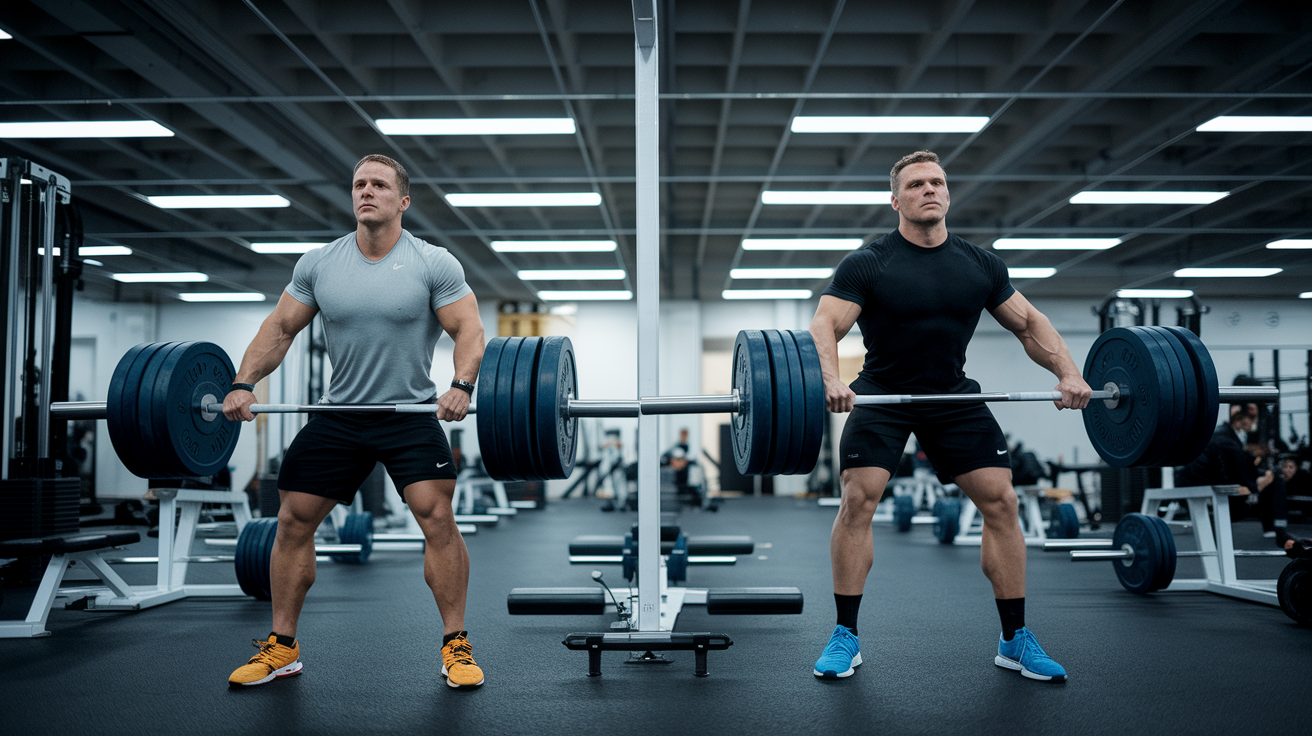

Which actually makes you stronger in real life: lifting heavy on a barbell or swinging a kettlebell?
Both work, but they target different wins: traditional training builds measurable muscle and raw one-rep strength, while functional training builds balance, coordination, and strength you can use day to day.
Neither is universally better.
Choose traditional when your goal is bigger lifts or muscle size, choose functional when you need movement, stability, and task transfer, and for most people the fastest route to better results is a smart blend that leans toward your goal.
Key Definitions of Traditional and Functional Strength Training

Traditional strength training is about building muscle size and raw power using barbells, dumbbells, machines, and cable systems. The focus? Hypertrophy (bigger muscles) and maximal strength (more force from a single muscle or muscle group). Think barbell bench press: three sets of eight reps at 70% of your one-rep max, resting two to three minutes between sets. The movement’s controlled, linear, and built to overload your chest, shoulders, and triceps in a repeatable pattern. You add weight or reps over time to force your body to adapt. Simple goal: make that muscle bigger and stronger.
Functional strength training is built around movement patterns that show up in real life. Instead of isolating muscles, you’re training your body to move efficiently through compound, multi-joint movements. A kettlebell Turkish get-up is functional. It challenges stability, coordination, core control, shoulder integrity, and hip mobility all at once as you move from lying down to standing with a weight overhead. You’ll use bodyweight, kettlebells, resistance bands, medicine balls, and fewer machines. Sessions often include carries, single-leg work, rotational drills, and explosive movements. The whole point? Build strength you can actually use: picking up a toddler, carrying groceries, pushing a sled, balancing on one leg, changing direction fast in a sport.
Here’s the split: traditional training asks how much weight this muscle can move in a controlled, predictable pattern. Functional training asks how efficiently your whole body can coordinate force, balance, and control in varied, real situations. One builds capacity. The other builds application.
Core distinctions between traditional and functional strength training:
- Movement patterns: traditional uses isolated, linear motions. Functional uses multi-joint, multi-planar patterns.
- Equipment: traditional relies on barbells, machines, and fixed paths. Functional uses free weights, bands, bodyweight, and unstable tools.
- Goals: traditional targets muscle size and maximal strength. Functional targets movement quality, balance, stability, and task transfer.
- Muscle engagement: traditional isolates specific muscles. Functional recruits chains of muscles working together.
How Traditional and Functional Strength Training Differ in Practice
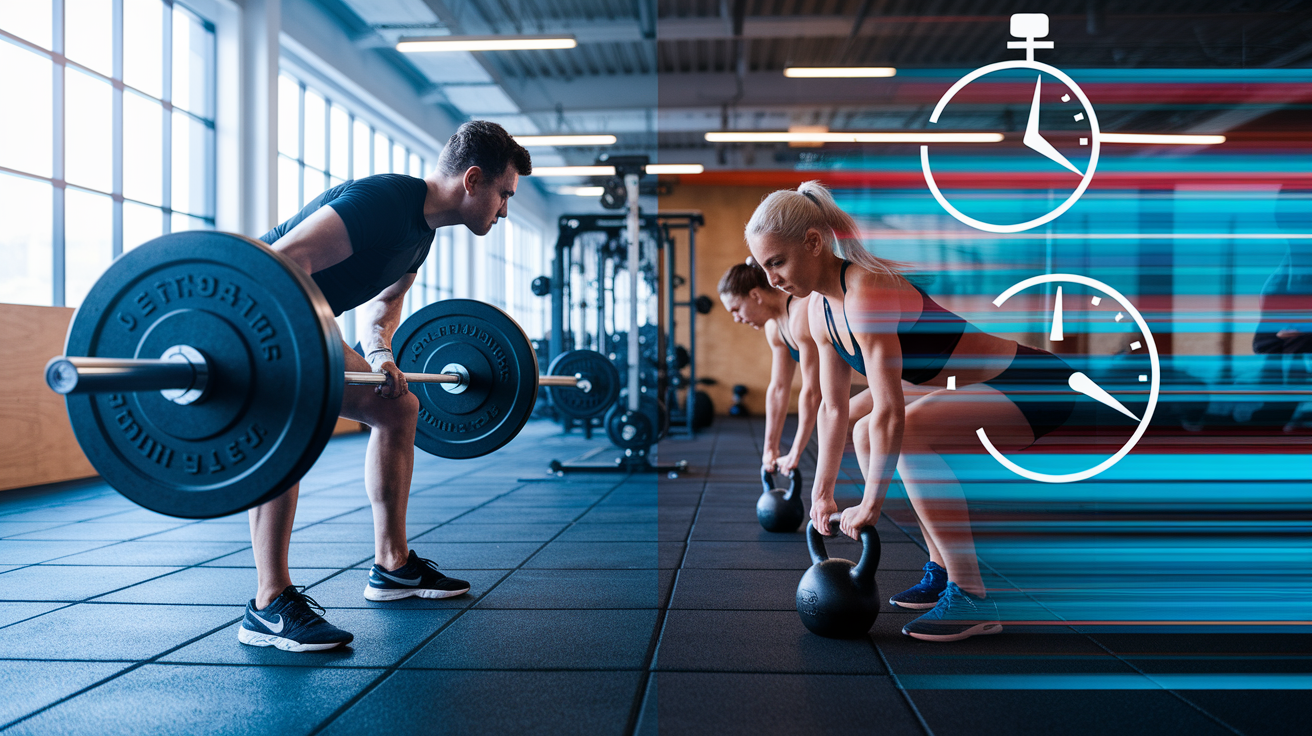
When you walk into a gym, the difference is obvious. Traditional lifters move deliberately through fixed ranges, pausing between sets, adding plates to a bar, tracking numbers in a notebook. Functional trainees might work through a circuit: swinging a kettlebell, lunging with rotation, carrying weights across the floor. Moving quickly and breathing hard.
| Training Type | Practical Characteristics |
|---|---|
| Traditional Strength Training | Controlled tempo (2–4 seconds per rep), longer rest periods (2–5 minutes for heavy sets), uses barbells/machines/dumbbells, exercises repeated consistently across weeks, isolated or compound lifts performed in straight planes of motion, primary metric is weight × reps |
| Functional Strength Training | Variable tempo (including explosive movements), shorter rest intervals (15–90 seconds), uses bodyweight/kettlebells/bands/medicine balls, frequent exercise variation to challenge new patterns, multi-directional and rotational movements common, metrics include balance time, carry distance, movement quality, or task completion speed |
| Session Structure (Traditional) | Warm-up → 3–6 main lifts → 2–4 sets per exercise → cool-down, total session 45–75 minutes, one or two muscle groups emphasized per day |
| Session Structure (Functional) | Dynamic warm-up → circuit or flow of 4–8 movements → 2–5 rounds → often includes cardio integration, total session 30–60 minutes, full-body emphasis most days |
| Progression Method (Traditional) | Add weight or reps weekly, follow 8–12 week blocks, track estimated 1RM or rep maxes |
| Progression Method (Functional) | Increase load, reduce rest, add complexity (single-leg, unstable surface, rotation), improve movement speed or control, track task-specific metrics |
These differences shape outcomes. Traditional training builds repeatable, measurable strength in specific lifts and predictable muscle growth because the stimulus is consistent and the variables (sets, reps, load) are easy to manipulate. Functional training builds adaptability, coordination, and movement resilience because it constantly challenges your nervous system to solve new motor problems under load.
Neither is better. They’re just optimized for different results. If your goal is a bigger chest or a 405-pound deadlift, traditional programming will get you there faster. If your goal is to move better, stay injury-free, and handle unpredictable physical demands, functional training delivers that more directly.
Benefits of Traditional Strength Training
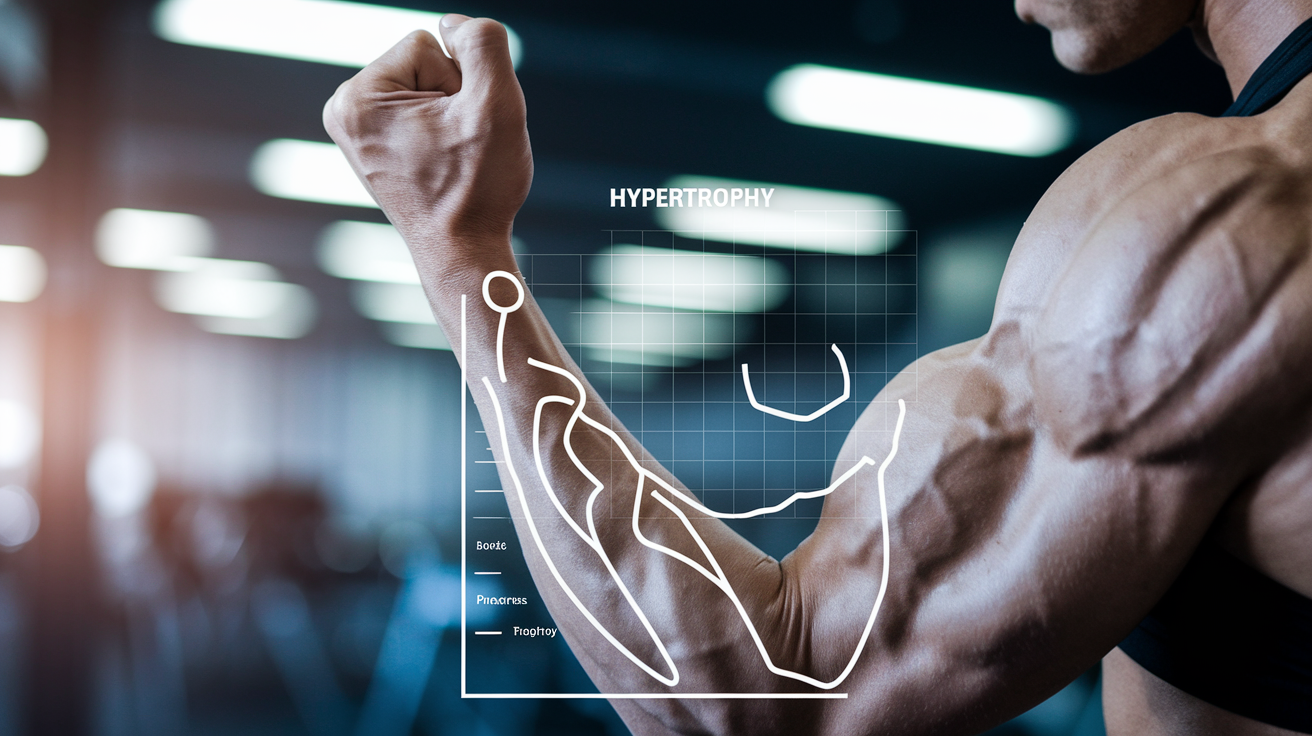
Traditional strength training excels at building measurable capacity. When you follow a structured progressive-overload program (adding small increments of weight or reps every week), you force your muscles and nervous system to adapt. Over six to twelve weeks, that results in visible muscle growth and strength increases you can actually quantify. A beginner might add 50 pounds to their squat in eight weeks. An intermediate lifter might gain an inch on their arms in twelve weeks. The simplicity of the system makes progress trackable and motivating.
This style also supports bone density and joint integrity when performed correctly. Loading your skeleton with heavy resistance signals your body to reinforce bone structure, which is especially important as you age. Traditional strength work is one of the most effective interventions for preventing sarcopenia (age-related muscle loss) and osteoporosis. Two to three sessions per week, focusing on compound movements like squats, deadlifts, and presses, can preserve and build muscle mass well into older age.
For athletes in strength-dependent sports (powerlifting, bodybuilding, strongman, or Olympic lifting), traditional training is non-negotiable. These sports require maximal force production in specific movement patterns, and the only way to improve a one-rep max is to practice heavy, low-rep work in that exact lift. Traditional programming also allows precise targeting of lagging muscle groups through isolation exercises, which is critical for physique athletes and anyone rehabbing an injury.
Five key benefits of traditional strength training:
- Hypertrophy: consistent muscle size increases when following 6–12 rep ranges and 2–4 sets over 8–12 weeks
- Maximal strength: best developed with heavy loads (≥85% 1RM) and low reps (1–5)
- Simplicity: easy to track progress via load and reps. Clear progression rules.
- Bone density: heavy loading stimulates bone remodeling and reduces fracture risk
- Isolation options: allows targeted strengthening of weak or injured muscles for rehab or physique goals
Benefits of Functional Strength Training

Functional strength training builds strength that transfers. When you train movements instead of muscles, you improve your ability to handle real-world tasks: lifting a heavy box off the floor, carrying groceries up stairs, catching yourself when you slip, pushing a stalled car. These tasks require coordination, balance, core stability, and the ability to produce force while your body is moving through space. Functional training rehearses exactly that.
This approach also reduces injury risk by improving movement quality and joint control. Single-leg exercises like Bulgarian split squats and single-leg Romanian deadlifts strengthen stabilizer muscles around the hips and knees, which protects those joints during cutting, jumping, or sudden direction changes. Anti-rotation core work (like Pallof presses or single-arm carries) trains your trunk to resist unwanted movement, which protects your spine during twisting or asymmetric loading. Older adults who include functional training in their routines show measurable improvements in balance and fall-prevention metrics within six to twelve weeks.
Functional training often integrates cardiovascular conditioning naturally. A kettlebell swing circuit or a series of sled pushes will elevate your heart rate and challenge your aerobic system while you’re building strength. That makes functional sessions time-efficient if your goal is general fitness, not just muscle size. You can improve strength, endurance, and mobility in a single 45-minute session.
Five key benefits of functional strength training:
- Improves balance and proprioception, especially important for older adults and athletes in dynamic sports
- Builds core strength through integrated, full-body movements instead of isolated ab exercises
- Enhances movement patterns and coordination, reducing injury risk in daily tasks and sports
- Transfers directly to real-life performance: carrying, pushing, pulling, climbing, sprinting
- Requires minimal equipment and adapts easily to different environments (home, park, gym)
Drawbacks and Limitations of Each Training Style
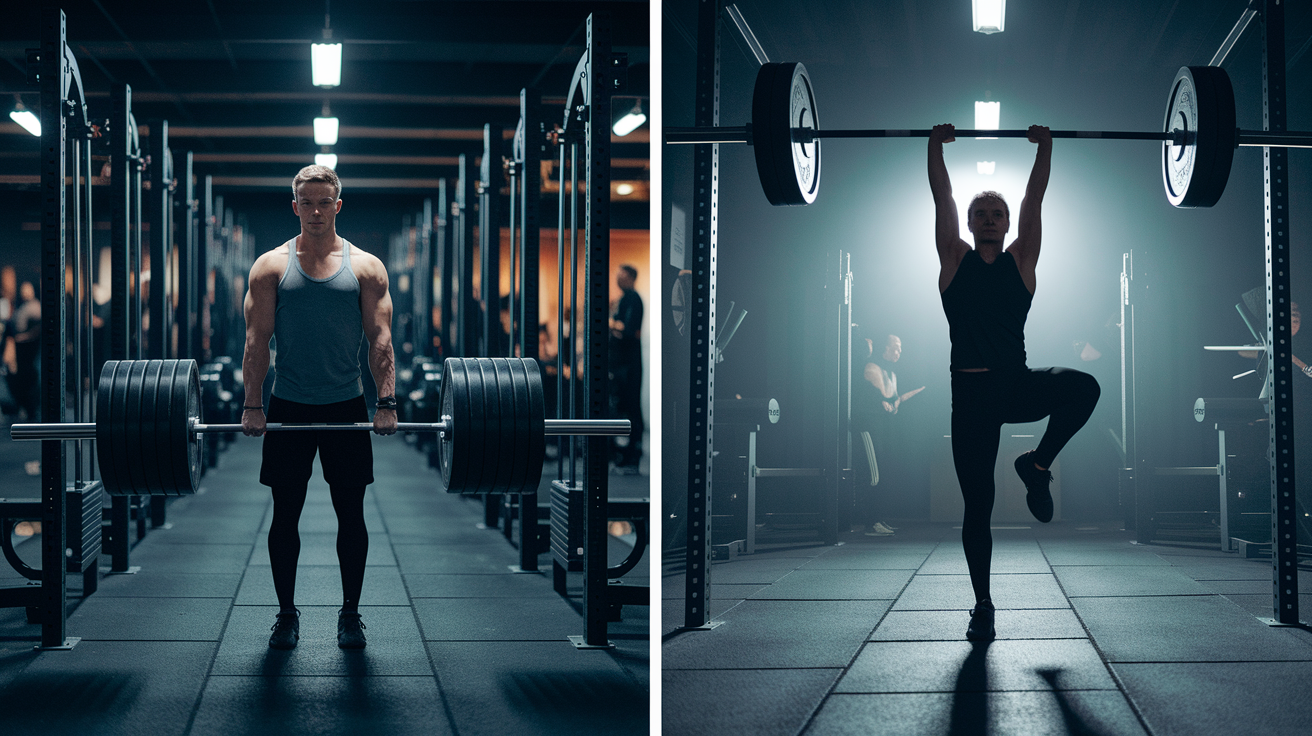
Traditional strength training can leave gaps in movement quality if used exclusively. Spending years on machines and barbells without challenging balance, rotation, or unilateral control can create strong muscles that don’t coordinate well. You might squat 315 pounds but struggle to balance on one leg for ten seconds. You might bench press impressively but lack shoulder stability for overhead carries or rotational throws. Traditional programs also tend to neglect mobility work unless it’s intentionally programmed, which can lead to restricted range of motion over time.
Functional training may produce less maximal muscle growth and absolute strength compared to heavy, isolated loading. If your primary goal is to build as much muscle as possible or hit a specific one-rep max, functional circuits and movement-focused sessions won’t get you there as fast. Technique complexity is another limitation. Exercises like Turkish get-ups, single-leg deadlifts, and rotational medicine-ball throws require coaching and practice to perform safely. Loading these movements too soon or with poor form increases injury risk.
Drawbacks of traditional strength training:
- Limited transfer to complex, multi-joint tasks and real-world movement patterns
- May neglect core endurance, balance, proprioception, and rotational strength
- Can create mobility restrictions if flexibility work is not included
- Requires gym access and equipment for most effective programming
Drawbacks of functional strength training:
- Produces less maximal hypertrophy per muscle if heavy bilateral overload is de-emphasized
- May limit absolute 1RM strength development compared to traditional heavy lifting
- Higher technique demand can increase injury risk if progression is too aggressive
- Harder to quantify and track progress compared to simple load × reps metrics
Time is a trade-off for both. If you train exclusively traditional, you sacrifice movement variability and real-world application. If you train exclusively functional, you sacrifice some muscle-building efficiency and maximal force output. Most people benefit from elements of both, but the right balance depends on your specific goals, schedule, and physical needs. Neither style is complete on its own for long-term health and performance.
Who Each Training Style Is Best For
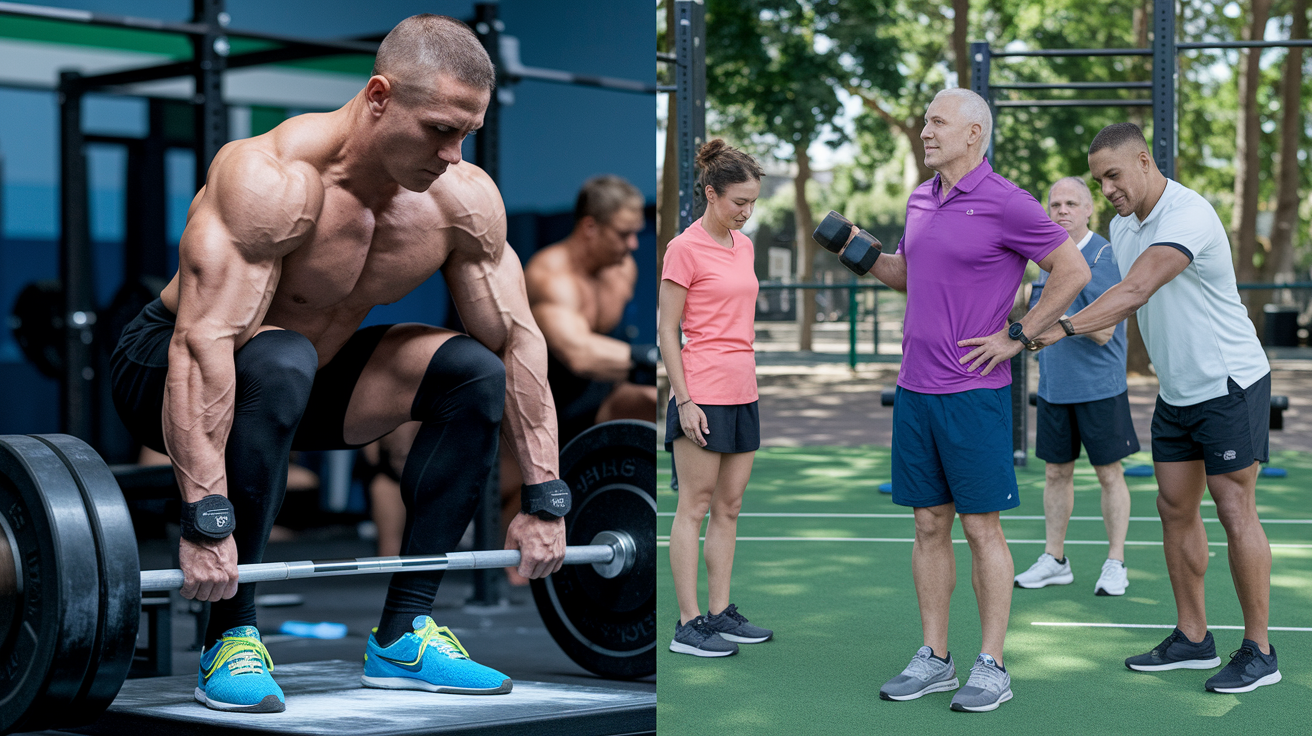
Traditional strength training is best for anyone whose primary goal is muscle size, maximal strength, or competitive lifting. Bodybuilders, powerlifters, and Olympic weightlifters need the structured, progressive-overload approach that traditional programming provides. If you want to see your biceps grow, hit a 500-pound deadlift, or step on stage with a physique you’ve sculpted muscle by muscle, traditional training is the most direct path. It’s also ideal for people who enjoy the simplicity of tracking numbers: adding five pounds to the bar every week, watching rep maxes climb, and seeing clear, measurable progress.
Functional strength training is best for athletes in dynamic sports (basketball, soccer, hockey, martial arts), tactical professionals (military, fire, law enforcement), older adults focused on maintaining independence, and anyone prioritizing injury prevention and daily-life performance over aesthetics. If your job or sport requires you to sprint, change direction, carry uneven loads, or stabilize under unpredictable conditions, functional training builds exactly those capacities. It’s also well-suited for people with limited equipment or those who want efficient, full-body sessions that combine strength and cardio.
There’s plenty of overlap. Many people fall somewhere in the middle: they want to look good, feel strong, move well, and stay injury-free. For general fitness, a hybrid approach works best. Two to three traditional strength sessions per week for muscle and max strength, plus one to two functional sessions for movement quality and conditioning. That combination covers all bases without requiring you to choose one style exclusively.
How to Choose the Right Approach for Your Goals
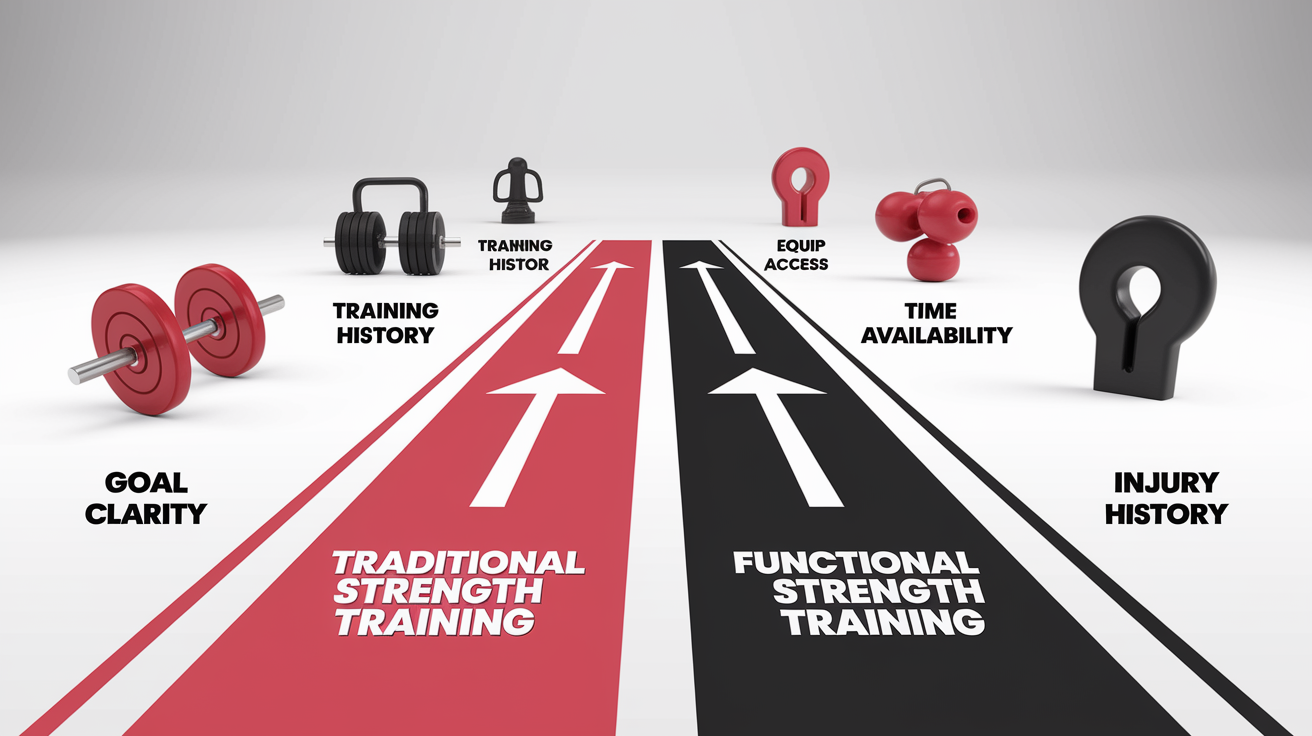
Start with your primary goal. If muscle growth or maximal strength is the priority, build your program around traditional strength training and add functional work as accessory sessions or finishers. If movement quality, injury resilience, or sport-specific performance is the priority, make functional training the foundation and include one or two heavy lifting days per week to build force capacity.
Five decision factors to guide your choice:
- Goal clarity: Aesthetics and max strength favor traditional. Real-world movement and sport performance favor functional.
- Training history: Beginners benefit from learning both. Experienced lifters can specialize or periodize blocks of each style.
- Equipment access: Traditional programs usually require a gym. Functional training adapts well to minimal equipment.
- Time availability: Functional sessions often combine strength and cardio in 30–45 minutes. Traditional hypertrophy programs may require 60–75 minutes per session.
- Injury history or physical limitations: Functional training allows easier modification for joint issues. Traditional isolated work is useful for targeted rehab strengthening.
In practice, most people should blend both. A simple recommendation: if you train three days per week, do two traditional strength sessions (upper/lower or full-body splits with progressive overload) and one functional movement session (carries, single-leg work, core, explosive drills). If you train four or more days, alternate blocks every eight to twelve weeks: one block emphasizing traditional hypertrophy and strength, the next emphasizing functional conditioning and movement. That approach builds muscle, strength, mobility, and real-world capability without leaving gaps.
Sample Workouts for Traditional and Functional Strength Training
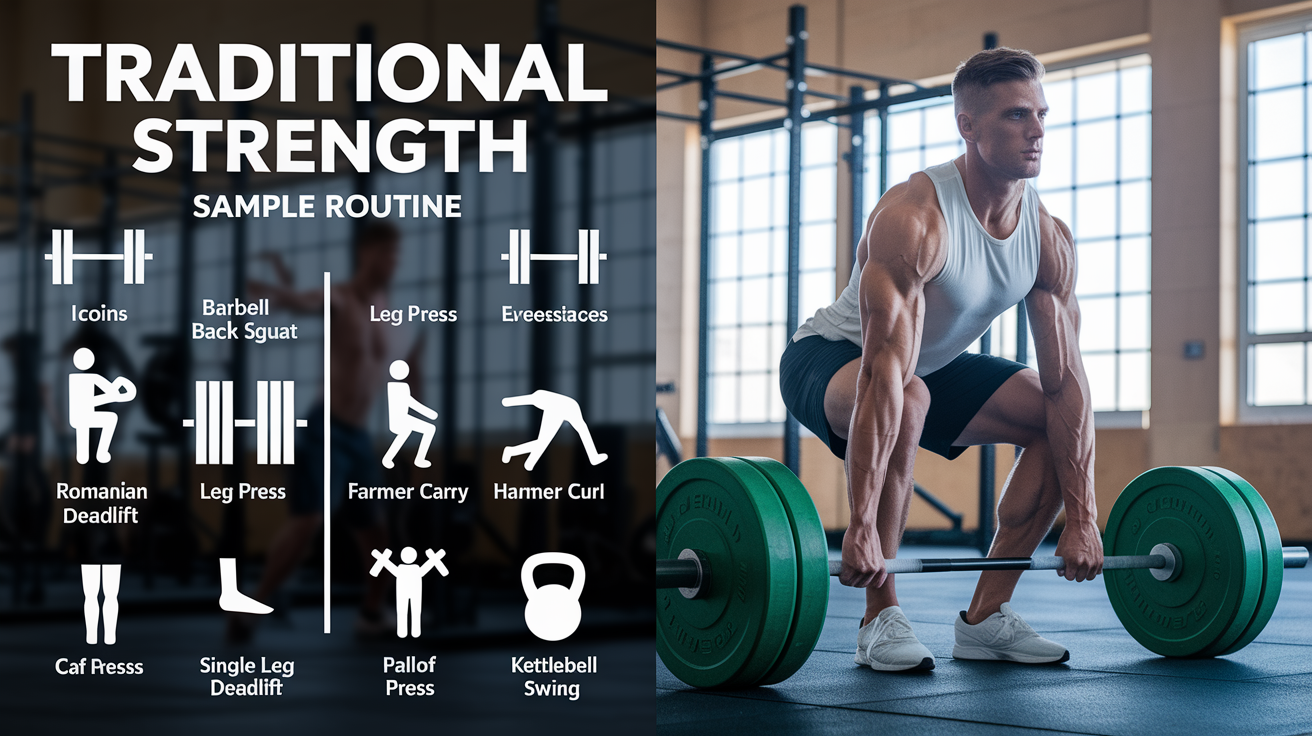
Traditional Strength Sample Routine
This session focuses on lower-body hypertrophy and maximal strength using progressive overload. Perform this workout once per week as part of a three- to four-day split. Rest two to five minutes between heavy sets, sixty to ninety seconds between accessory sets.
Day A: Lower Body Hypertrophy & Strength
- Barbell Back Squat: 4 sets × 6–8 reps @ 70–80% 1RM
- Romanian Deadlift: 3 sets × 8–10 reps @ 65–75% 1RM
- Leg Press: 3 sets × 10–12 reps, increase load each set
- Hamstring Curl (machine): 3 sets × 10–12 reps
- Calf Raises: 3 sets × 12–15 reps, controlled tempo (2 seconds up, 2 seconds down)
Track your working weights and try to add 2.5–5% load or one to two reps per exercise every week. After eight to twelve weeks, test a new estimated 1RM and adjust your percentages.
Functional Strength Sample Routine
This session emphasizes full-body movement patterns, core stability, unilateral strength, and dynamic coordination. Perform this workout once or twice per week. Rest fifteen to sixty seconds between exercises within a circuit, ninety to 120 seconds between full rounds.
Day B: Functional Movement & Conditioning
- Trap-Bar Deadlift: 4 sets × 4–6 reps (explosive concentric, controlled eccentric)
- Farmer Carry: 4 rounds × 40–60 meters with heavy dumbbells or kettlebells
- Single-Leg Romanian Deadlift: 3 sets × 8 reps each leg (bodyweight or light dumbbell)
- Pallof Press: 3 sets × 12 reps each side (anti-rotation core work, use cable or resistance band)
- Kettlebell Swing: 5 sets × 15 reps (explosive hip hinge, rest 45 seconds between sets)
Focus on movement quality first. Add load only when you can complete all reps with clean form and control. Track metrics like carry distance, single-leg balance time, or swing power (how high the kettlebell travels) to measure progress.
Final Words
We broke down what traditional and functional strength training are, showed how they look in practice, and listed the main pros and cons.
You saw who each style suits and got practical tips to choose. There are two sample routines you can try this week.
Pick the path that fits your goals, or blend both. Either way, stick with steady progress and clean technique. traditional vs functional strength training can coexist, and you’ll get stronger if you keep at it.
FAQ
Q: What is the difference between functional strength and traditional strength training?
A: The difference between functional strength and traditional strength training is that functional training focuses on multi‑joint, real‑world movement, balance, and coordination, while traditional training targets isolated muscles, heavy loads, and measurable strength or size gains.
Q: What is the 3-3-3 rule at the gym?
A: The 3-3-3 rule at the gym is a simple strength prescription: three sets of three heavy reps per key lift, used to build maximal strength while keeping total volume manageable and technique sharp.
Q: What is the difference between functional and traditional strength training on Apple Watch?
A: The difference between functional and traditional strength training on Apple Watch is the workout label and tracking logic—choose functional for dynamic, full‑body work and traditional for steady, isolated lifts to improve calorie and movement estimates.
Q: Can strength training reverse osteoporosis?
A: Strength training can help reverse bone loss by increasing bone density and strength when done progressively and consistently, but results vary and you should follow medical advice and supervised programming for safety.