

What if the way you make a fist is costing you strength and risking injury?
Forming a proper fist isn’t just for fighters, it’s a simple alignment trick that turns your hand into a solid tool for gripping, knocking, or striking.
In this post I’ll show the anatomy behind why a correct fist stacks bones and fires the right muscles, the safe techniques used in boxing and martial arts, and the surprising cultural meanings of a raised fist or a fist bump.
Read on to learn how to form, use, and respect your fist with smart, practical steps.
Core Meaning and Function of a Fist

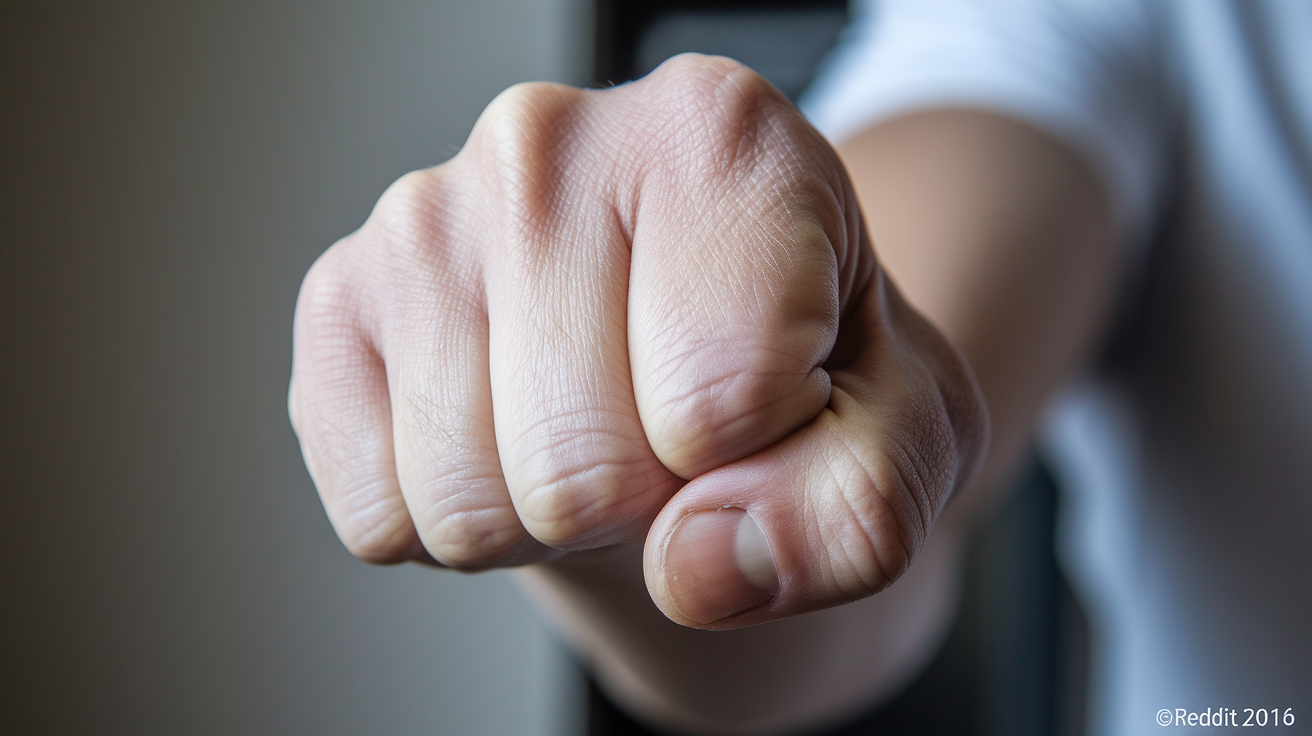
A fist is what you get when you curl your fingers tight into your palm. The fingertips press against the base of your hand, and your thumb wraps around the outside to lock everything in place. It’s a closed, compact structure. Way more solid than an open hand.
The real advantage comes from how the bones line up. When you form a fist correctly, your metacarpals (the long bones in your hand) and your forearm bones stack into one straight column from wrist to knuckles. That alignment spreads force evenly, which cuts down on injury risk and makes strikes or grips way more efficient. Making a fist also fires up muscles in your forearm, wrist, and hand, giving you active stability.
Dictionaries list a few different literal meanings for “fist.” It works as both a noun and a verb, covering things like grasping, holding, striking. In old printing, “fist” meant the index symbol, that little pointing hand (☞) used to highlight text. Sometimes people used “fist” to describe handwriting, but that’s pretty much dead now.
The main dictionary senses are:
- A clenched hand with fingers curled into the palm
- Hitting or striking with that closed hand
- A measure of how much you can hold in one closed hand
- The printing index symbol
Proper Fist Formation and Hand Positioning
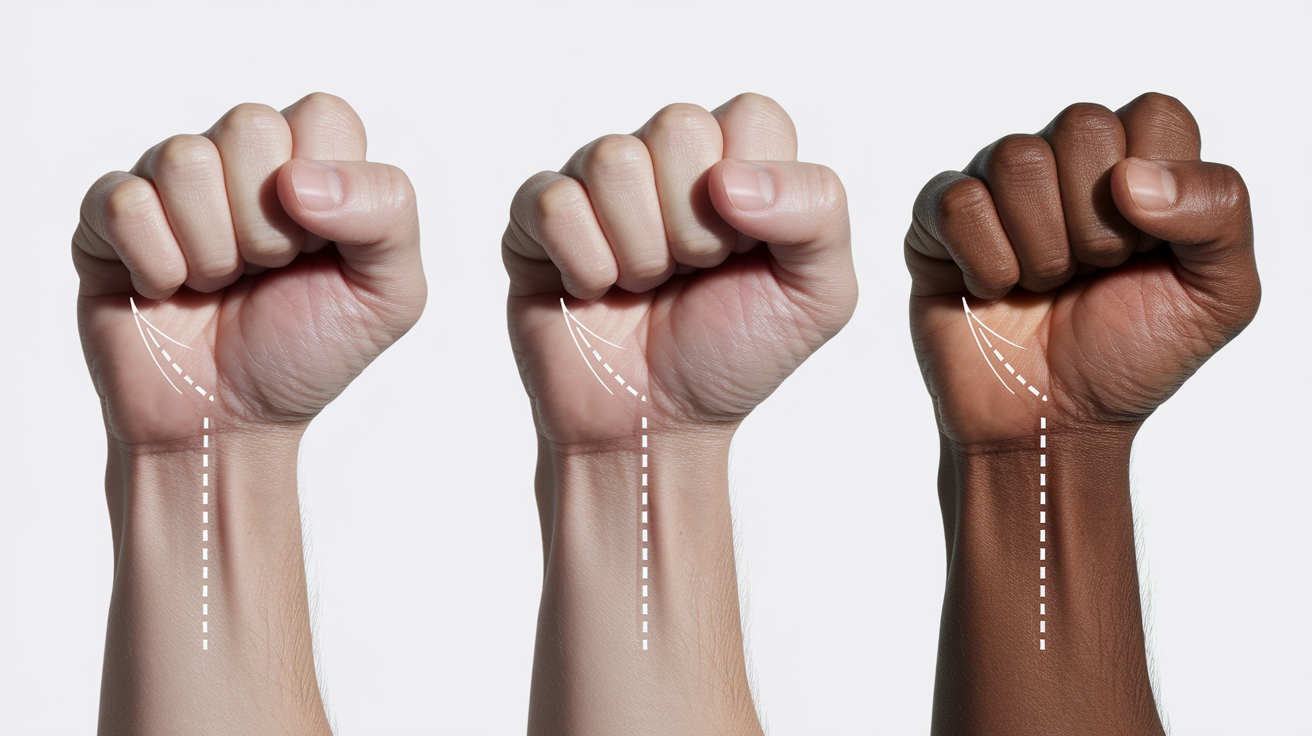
Learning to make a fist the right way keeps your hand and wrist safe from sprains, fractures, and tissue damage. The key is alignment. You want bones stacked so force moves cleanly through your wrist and forearm. Mess up the technique, leave your thumb tucked inside, or bend your wrist too much, and you’re asking for a boxer’s fracture or wrist sprain.
Start with your hand relaxed. Curl your fingers inward, beginning at the tips and rolling through each joint until your fingertips press firmly into the base of your palm. Keep it tight but not cramped. Your knuckles should form a flat, even line across the top of your hand. Don’t let one finger stick out farther than the others. That creates a weak spot.
Your wrist matters just as much as your fingers. Keep it straight or very slightly extended. Never sharply bent up or down. If your fist is aligned right, you can draw an imaginary straight line from forearm through wrist to knuckles. That’s what distributes force evenly and stops your wrist from collapsing.
Here’s how to form a safe, functional fist:
- Curl your fingertips toward your palm, starting at the tips and rolling through the middle and base joints.
- Tighten the curl so fingertips press firmly into the palm.
- Align your knuckles into a flat plane across the top. Check that your index and middle knuckles are level and prominent.
- Position your thumb based on what you’re doing (see below).
- Engage your wrist by keeping it neutral or slightly extended. Squeeze your forearm muscles to lock the structure.
Common Thumb Placement Options
Where your thumb goes depends on whether you’re striking, gripping, or doing a specific martial arts move. In boxing and most Western striking, the thumb wraps over the outside of your fingers, lying flat across the middle sections of your index and middle fingers. This protects the thumb from hyperextension and reinforces the fist. Never tuck your thumb inside the fingers. That’s a broken thumb waiting to happen.
In traditional martial arts like karate or taekwondo, the thumb often wraps tight along the side of the fist, pressing against the index finger instead of lying flat on top. This keeps the thumb out of the way during certain blocks and strikes, and it gives you a cleaner, more compact fist. Some styles teach a vertical fist position (palm facing in), where the thumb sits naturally along the side and helps stabilize the structure during straight punches.
Everyday Uses of a Fist: Greetings, Grip, and Action

Outside combat sports and self defense, fists show up in practical and social ways all the time. The fist bump has mostly replaced the handshake for casual greetings, especially where hygiene or personal space matters. Think post workout gym culture, medical settings, quick hellos in crowded spots. A fist bump is just two people gently tapping their closed fists together. It conveys respect, agreement, or camaraderie without the formality or germ transfer of a full handshake.
Everyday fist use includes:
Holding objects: Gripping a shopping bag handle, clutching a balloon string, carrying a heavy rope. “She held the balloon in one fist, and an ice cream cone in the other.”
Gesturing: Raising a fist to signal success, celebration, or determination after finishing a hard task.
Knocking: Using the side or back of the fist to rap on doors or surfaces. Often more effective than knuckles alone.
Signaling: A closed fist can show readiness, strength, or a call for attention in group settings or during physical activities.
Supporting weight: Placing fists on a surface (like a desk or ground) during push ups or stretching.
Celebrating: The fist pump. A quick upward thrust of a closed fist. Marks moments of victory or excitement.
The difference between a fist and an open hand comes down to force concentration and surface area. An open hand spreads impact across the palm and fingers. Useful for pushing, blocking, carrying flat objects. A fist concentrates force into a small, hard point at the knuckles. Perfect for striking or gripping narrow handles. For greetings, the fist bump cuts down contact surface compared to a handshake, which is why it got popular in health conscious settings.
Fists in Martial Arts and Combat Technique

Fists are foundational striking tools in nearly every striking based martial art and combat sport. Proper fist technique focuses on maximizing force transfer, minimizing injury risk, and keeping speed and accuracy up. Each style emphasizes different parts of fist formation, wrist alignment, and striking surface, shaped by the rules, protective gear, and tactical goals of the art.
In boxing, fighters strike with the first two knuckles (index and middle finger joints) while wearing padded gloves. The glove design encourages a tight, stable fist with the thumb wrapped firmly over the fingers. Wrist wraps and tape give extra support, letting boxers throw punches with full power while cutting down the risk of wrist hyperextension. The focus is on straight punches. Jabs, crosses, hooks. All landing cleanly with correct wrist and forearm alignment.
Karate and other traditional striking arts often train bareknuckle or with minimal padding, which demands even stricter attention to knuckle conditioning and alignment. The seiken (forefist) is the standard striking surface, using the same two knuckle contact point as boxing but with greater emphasis on wrist rigidity and forearm tension. Some styles also teach the ippon ken (single knuckle fist) or nakadaka ken (middle knuckle fist) for precision strikes to vulnerable targets. Because there’s no glove to absorb shock, practitioners condition their knuckles through controlled impact training. Gradually toughening skin, bone, and connective tissue.
| Technique | Primary Focus | Risk Considerations |
|---|---|---|
| Boxing straight punch | Speed, accuracy, two knuckle landing with glove support | Wrist sprains if alignment breaks; thumb injury if thumb placement is loose |
| Karate seiken strike | Bareknuckle conditioning, rigid wrist, precise two knuckle contact | Knuckle fractures without gradual conditioning; metacarpal stress from improper form |
| Wing Chun vertical fist | Centerline alignment, close range rapid strikes, thumb along side | Reduced power if wrist bends; thumb vulnerable if not tucked securely |
Key Striking Variations Across Styles
Boxing emphasizes horizontal fists (palm down) for hooks and straight punches, with the forearm and fist forming a single rigid unit. The glove padding allows for a wider margin of error in wrist angle, but fighters still drill alignment constantly. The jab and cross both require the fist to rotate slightly inward as it extends, making sure the two primary knuckles land flush and the wrist stays locked.
Karate practitioners use both horizontal and vertical fist positions, depending on the technique and target. The gyaku zuki (reverse punch) typically lands with a horizontal fist, rotating from chamber to full extension in a corkscrew motion that adds torque and tightens the shoulder girdle. The vertical fist (tate zuki) keeps the thumb up and elbow down. Perfect for close range strikes and certain blocking applications where rotation isn’t practical.
Wing Chun’s vertical fist is designed for rapid, direct punches along the centerline of the body. The fist stays vertical throughout the strike, with the thumb pressed tightly against the side of the index finger. This position aligns the wrist naturally and allows quick recovery, supporting Wing Chun’s emphasis on speed and chain punching. The vertical orientation also reduces the risk of glancing blows, since the fist structure drives forward without excessive rotation.
Common Fist Injuries and Treatment Basics
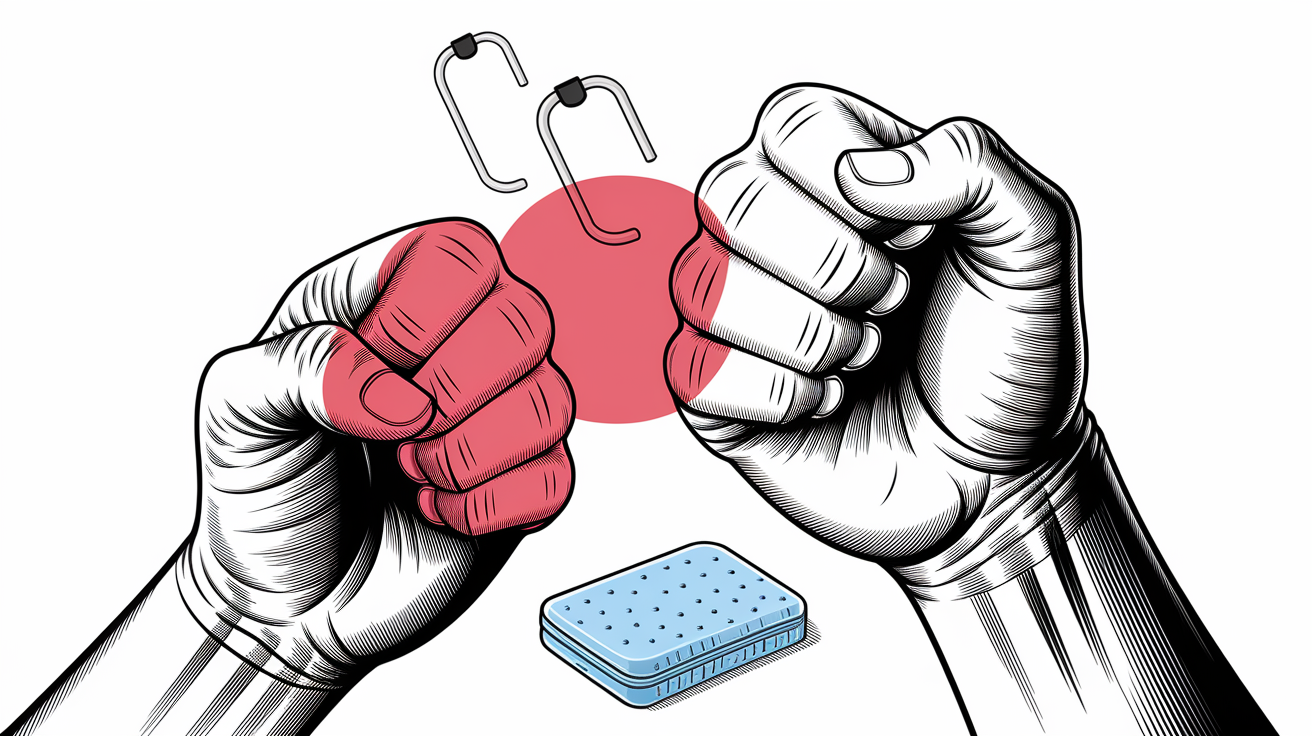
Fist related injuries range from minor bruises and sprains to serious fractures and ligament damage. The most common injury is the boxer’s fracture, a break of the fifth metacarpal, the long bone connected to the pinky finger. This fracture usually happens when someone punches a hard surface (like a wall or another person’s head) with poor technique, landing too far toward the outside of the hand instead of the reinforced index and middle knuckles.
Other frequent injuries include sprains of the wrist or finger joints, contusions (deep bruising of soft tissue and bone), and lacerations over the knuckles. Dislocations can happen if a punch lands at an awkward angle, forcing a finger joint out of alignment. Chronic overuse without proper conditioning can lead to arthritis in the knuckle joints and stress fractures in the metacarpals. Swelling, pain, and loss of range of motion are immediate warning signs that something’s wrong.
If you suspect a fist injury, follow these steps right away:
Apply ice to the affected area for 15 to 20 minutes at a time, using a cloth barrier to protect the skin.
Immobilize the hand and wrist. Don’t move the fingers or wrist if you see deformity, severe swelling, or feel grinding sensations (crepitus).
Assess for deformity, abnormal angles, or inability to make a fist. These signs suggest a fracture or dislocation.
Get medical evaluation and X ray imaging as soon as possible if pain is severe, if you can’t bear weight on the hand, or if numbness or tingling develops.
Severe swelling that doesn’t go down after 24 hours, visible deformity, open wounds over the knuckles, or complete loss of finger or wrist movement all need urgent professional care. Fractures left untreated can heal wrong, leading to chronic pain, reduced grip strength, and limited hand function. Even minor sprains benefit from rest, compression, and follow up to confirm no ligament tears are present.
Symbolic and Cultural Meanings of the Fist

The raised fist is one of the most recognizable symbols of solidarity, resistance, and collective action. Across decades and continents, the closed, elevated fist has represented defiance against oppression, unity in struggle, and the resolve of marginalized communities demanding justice. Its visual simplicity makes it effective in protest imagery, political art, and public demonstrations. Strong, compact, unmistakable.
In body language, a clenched fist often signals tension, anger, or readiness for confrontation. Someone making fists during an argument is communicating frustration or the potential for physical escalation. In contrast, a single raised fist in celebration or victory conveys triumph, determination, or relief. Think of an athlete crossing the finish line or a student receiving good news. The fist pump, a quick upward thrust of a closed fist, has become a universal gesture of personal achievement or team success.
Cultural and symbolic uses include:
Political protest: The raised fist became a global symbol of resistance movements, labor rights, and civil rights activism throughout the 20th and 21st centuries.
Body language tension: Clenched fists at the sides or in front of the body show anger, stress, or readiness to defend.
Celebratory gestures: Fist pumps and raised fists mark moments of victory, accomplishment, or relief in sports, competitions, and personal milestones.
Solidarity and unity: Groups raising fists together signal shared purpose, collective strength, and mutual support.
Strength metaphors: Fists in visual art and media represent power, resilience, and the capacity to fight back against adversity.
Historical Developments of the Raised Fist
The raised fist emerged as a political symbol in the early 20th century, tied to labor movements and socialist organizations advocating for workers’ rights. By the 1960s, the image became central to the Black Power movement in the United States, famously displayed by athletes Tommie Smith and John Carlos during their medal ceremony at the 1968 Olympics in Mexico City. Their raised, gloved fists (heads bowed, standing on the podium) became an enduring image of resistance and dignity in the face of systemic racism.
Throughout the 1970s and 1980s, the raised fist appeared in anti apartheid campaigns, feminist movements, and labor strikes across Europe, Latin America, and Africa. The symbol transcended language and national borders, instantly recognizable as a call for justice and equality. In the 21st century, the raised fist has been adopted by movements like Black Lives Matter, climate justice campaigns, and pro democracy protests worldwide, maintaining its role as a visual shorthand for collective resistance.
Language, Usage, and Etymology of “Fist”
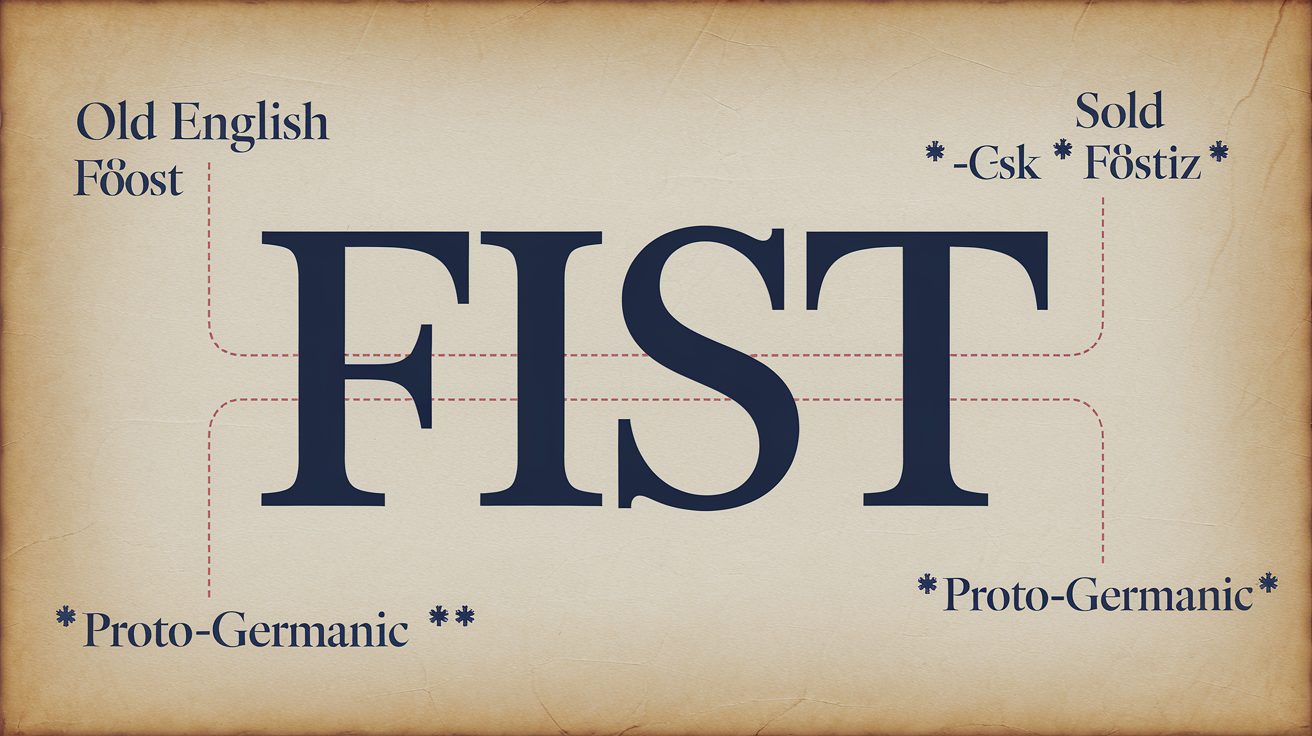
The word “fist” goes back over a thousand years, showing up in Old English as “fȳst,” a term describing the closed hand. Its linguistic roots connect to the Proto Germanic “*fūstiz” and are related to the German “Faust,” both reflecting the hand’s basic anatomy and function. Etymologists link the word to the concept of five, the five fingers that curl into the palm to form the structure. This connection to the number five appears across Indo European language families, tying the physical form of the hand to its numerical composition.
In modern usage, “fist” works as both a noun and a verb. As a noun, it names the closed hand, the act of gripping, or the quantity held in a closed hand (a fistful). As a verb, “to fist” means to make a fist, to grasp something tightly, or to strike with the closed hand. The plural “fists” is standard, and the word appears in compound forms like “fist sized,” “fist fight,” and “fist bump.” The verb forms are regular: fist, fists, fisted, fisting.
| Idiom | Meaning | Example Context |
|---|---|---|
| Iron fist | Harsh, authoritarian control or rule | “The dictator governed with an iron fist, silencing all dissent.” |
| Mailed fist | Threat of force or military power, often behind diplomacy | “Negotiations continued, but the mailed fist of military action loomed in the background.” |
| Hand over fist | Rapidly and in large quantities, often describing money or progress | “The company made money hand over fist during the holiday season.” |
| Monkey fist | A type of knot used in sailing to add weight to the end of a rope | “The sailor tied a monkey fist to throw the line across to the dock.” |
Figurative uses of “fist” show up throughout English, often tied to strength, control, or conflict. “Iron fist” and “mailed fist” both bring up images of unyielding authority, drawing on the historical link between armored hands and military power. “Hand over fist” originally described sailors hauling rope quickly, one hand over the other in rapid succession. The phrase evolved to mean any fast accumulation of resources or progress. These expressions embed physical action into abstract meaning, using the tangible image of the closed hand to communicate force, speed, or dominance.
Final Words
Started by defining the fist as a hand with fingers curled into the palm, then showed how the bones, joints, and knuckles work together.
We walked through proper fist formation, thumb options, and wrist alignment, plus everyday uses like fist bumps and grip. We also covered martial arts striking, common injuries, and simple first steps for care.
You saw symbolic uses and the word’s long history. Use this to form a safer fist, spot problems early, and keep getting stronger—small practice adds up.
FAQ
Q: What does fist mean? What is the other meaning of fist?
A: The fist means a hand with the fingers curled into the palm (a clenched hand). It also names the act of striking, informal reference to handwriting or the hand, and a printing index.
Q: What does the fist symbolize? What does the fist up mean?
A: The fist symbolizes solidarity, resistance, strength, or defiance. A raised fist (fist up) specifically signals protest, unity with a group, or an assertive political stance depending on context.