


Think you should load the bar to match the strongest person in the gym?
Think again.
Starting too heavy is the fastest way to learn bad habits and hurt yourself.
This post shows how to pick safe starting weights for squats, bench, and deadlifts.
We’ll use simple rules: start light, test with 5–10 reps, check bar path and spine, and only add tiny jumps when form stays clean.
By the end you’ll have a clear starting weight for each lift and a simple plan to progress without risking technique.
How to Choose Your Starting Weights for Squat, Bench, and Deadlift

Start with the empty barbell for bench and squat. Add light plates to the deadlift so the bar sits at the right height. Most beginners can handle the standard 20 kg (45 lb) bar for bench press. Same goes for squats, though some people can add 10–20 kg (22–44 lb) if they’ve got the depth and control down. For deadlifts, aim for 30–40% of your bodyweight or throw 10 kg bumper plates on each side to get the bar at mid-shin.
Test whatever you pick with a simple 5–10 rep set. The weight should feel manageable. Focus entirely on moving well. If you can finish all the reps without your form falling apart, the bar slowing down, or straining hard, you’re good. If your back rounds, the bar drifts, or you can’t finish smoothly, drop the load and try again.
Here’s how to pick your starting weights:
- Warm up with 5 minutes of light cardio and some dynamic stretches for hips, shoulders, ankles.
- Load the bar conservatively. Empty bar or a light load based on what you think you can handle.
- Do 5–10 reps and check your form. Record yourself or get a coach to watch bar path, depth, spinal position.
- Ask yourself: does the weight feel controlled at the bottom? Can you complete each rep at the same speed?
- Lock in the weight once you’re sure you can finish all the reps without any technique problems.
Don’t test your one-rep max in the first few weeks. Beginners don’t have the coordination or connective tissue conditioning to handle maximal loads safely. Movement quality and consistency matter more than the numbers on the bar. Your starting weight is just a baseline for getting better, not a measure of what you’re capable of down the road.
Starting Weight Guidelines for the Squat

Begin with the empty 20 kg (45 lb) bar and practice hitting full depth. Your hips should drop below parallel to your knees. Keep your torso upright, brace your core like you’re about to take a light punch to the stomach, and drive through your mid-foot. Your knees should track over your toes without caving in, and the bar should stay directly over your center of mass the whole time. Do 2–3 sets of 8–10 reps with the empty bar to nail the pattern. If you can finish those sets with consistent depth and no lower back rounding, you’re ready to add weight.
Add weight in small jumps of 2.5–5 kg (5.5–11 lb) per side. Most beginners will work with 40–60% of bodyweight once form is solid. A 70 kg (154 lb) person might use 30–40 kg (66–88 lb) total for their first working sets. Test each new load with a warm-up set of 5 reps before moving to your working sets of 8–12 reps. If your depth decreases, your knees collapse inward, or your lower back rounds at any point, drop the weight right away and spend another session on form. Patience here builds a foundation that supports years of safe progress.
Starting Weight Guidelines for the Bench Press

The standard bar weighs 20 kg (45 lb), and that’s where most beginners should start. Lie flat with your shoulder blades squeezed together and pulled down toward your hips, feet flat on the floor, eyes directly under the bar. Grip the bar slightly wider than shoulder width and unrack it with straight arms. Lower the bar in a controlled line to your mid-chest, keeping your elbows at roughly a 45-degree angle to your torso. Not flared out to 90 degrees. Press the bar back up along the same path until your arms are nearly straight without locking your elbows hard.
If the empty bar feels too heavy or unstable, use lighter dumbbells (5–10 lb each) to practice the press and build shoulder stability. Once you can do 2 sets of 10 reps with the empty bar and keep a consistent bar path with no wobbling, add 2.5 kg (5.5 lb) to each side and retest. Upper body lifts need smaller jumps than lower body because the muscles are smaller and fatigue faster. Progress in 1.25–2.5 kg increments and focus on control and even bar speed instead of chasing heavier weight.
Starting Weight Guidelines for the Deadlift
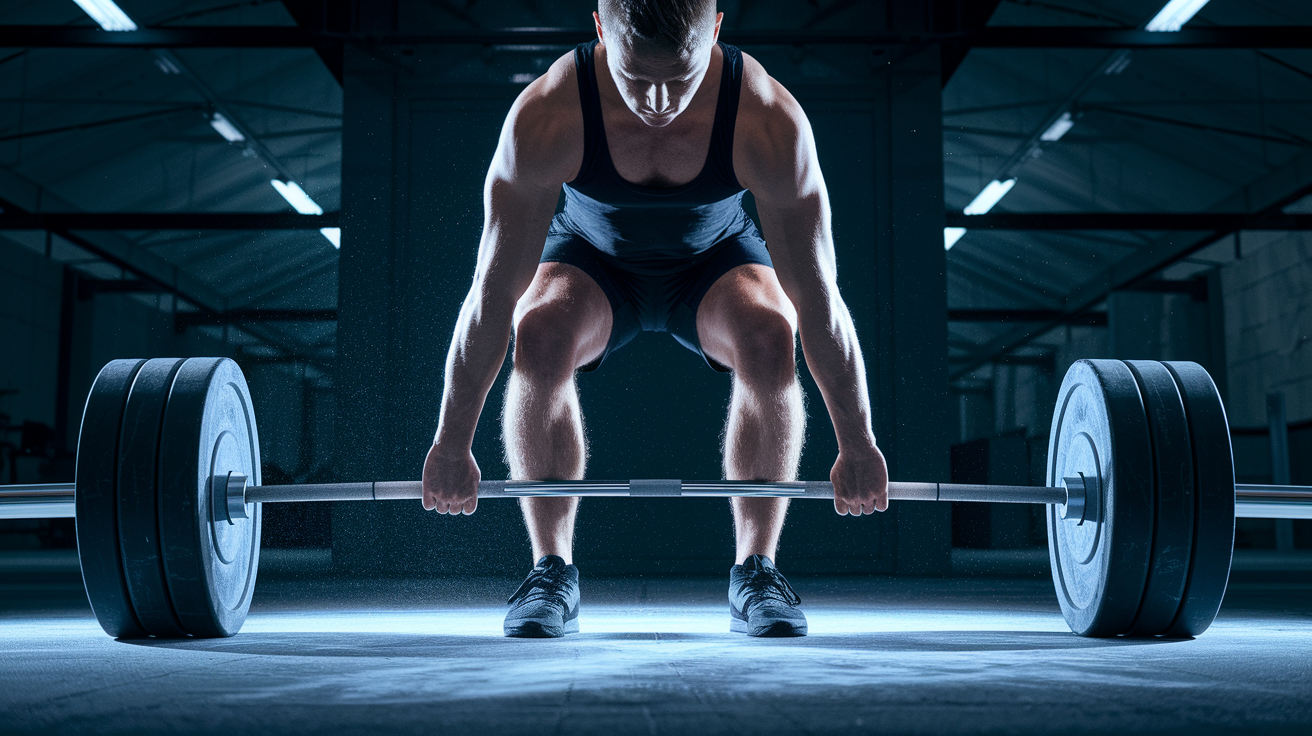
Beginners should start with 30–50% of bodyweight or use 10 kg bumper plates on each side to bring the bar to the standard height of about 22.5 cm (roughly 9 inches) off the floor. This height lets you set your hips correctly and grip the bar without rounding your lower back too much. If your gym doesn’t have bumper plates and only has standard iron plates, you can elevate the bar on weight plate stacks or low boxes to get the correct starting position while using lighter loads.
Stand with the bar over the middle of your foot, about an inch from your shins. Hinge at your hips, keep your chest up, and grip the bar just outside your knees. Before you pull, brace your core, pull the slack out of the bar by engaging your lats (imagine bending the bar around your shins), and push the floor away with your legs as you stand. Your hips and shoulders should rise together. Not hips first.
Key setup checkpoints before every deadlift rep:
- Bar over mid-foot, roughly one inch from shins.
- Shoulder blades directly over or slightly in front of the bar when viewed from the side.
- Overhand or mixed grip (one palm forward, one back) firm and secure.
- Core and upper back braced before you start the pull.
If any of these checkpoints fail during your set, stop and reset. Poor setup leads to inefficient bar paths and puts your lower back at risk. Test your chosen weight with 3–5 reps and check whether you can complete each rep with the same setup quality and no lower back rounding.
Technique Checkpoints for All Three Lifts
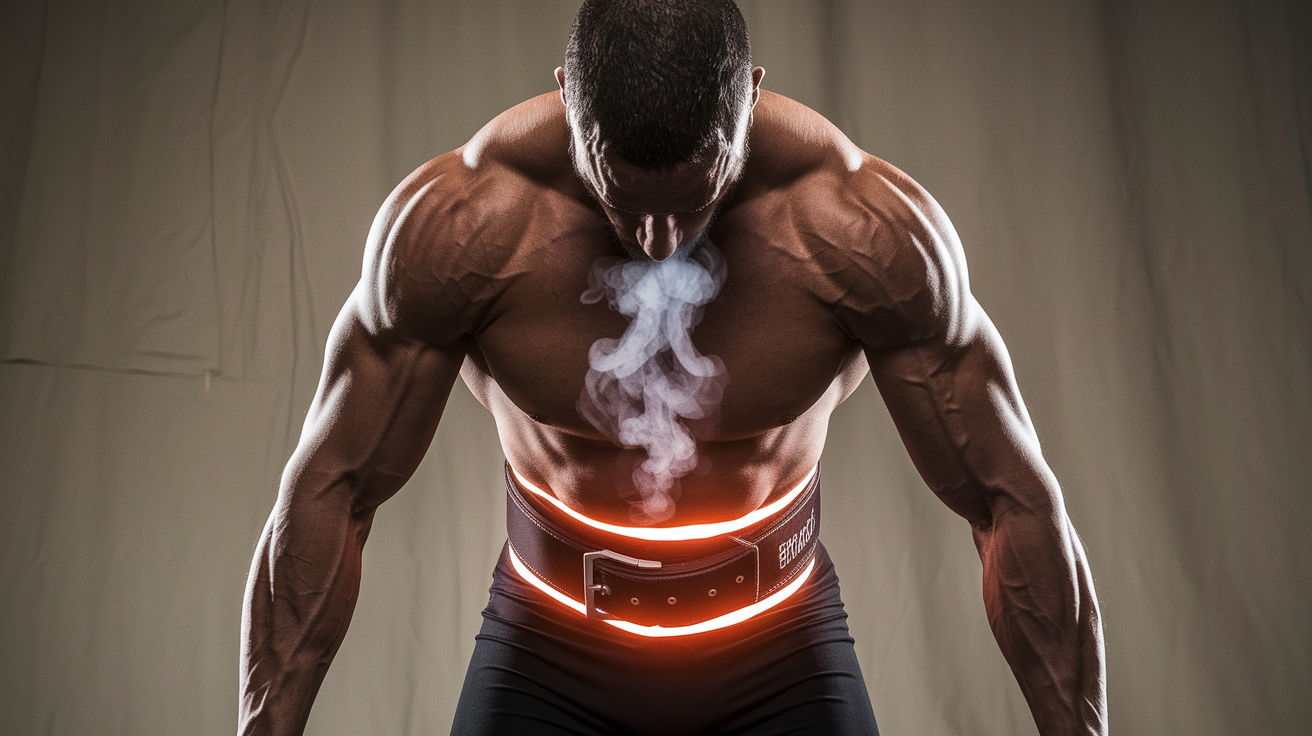
Bracing and breathing are universal across squat, bench, and deadlift. Before every rep, take a deep breath into your belly, brace your abs and obliques like you’re about to be punched, and hold that tension throughout the lifting portion of the movement. Exhale only at the top or after you’ve completed the rep and you’re in a stable position. Holding your breath during the hardest part of the lift (called the Valsalva maneuver) increases intra-abdominal pressure and stabilizes your spine. Don’t hold your breath for multiple reps in a row. Reset your brace between each rep to avoid dizziness or blood pressure spikes.
Keep a neutral spine throughout every lift. Your lower back should hold its natural curve without excessive arching or rounding. In the squat, don’t let your hips shoot up faster than your chest (a sign your back is doing too much work). In the bench press, keep a slight natural arch in your upper back but don’t hyperextend your lower back off the bench. In the deadlift, your spine should stay flat from your tailbone to the base of your skull as you pull. If you see rounding in your lower back during a deadlift or your chest collapses forward in a squat, the weight is too heavy or your setup needs work.
Bar path consistency separates safe, effective reps from inefficient or injury-prone ones. In the squat, the bar should travel in a vertical line over your mid-foot. In the bench press, the bar moves in a slight diagonal from your mid-chest to a position over your shoulders at lockout. In the deadlift, the bar should travel as close to your body as possible, dragging up your shins and thighs, without drifting forward. Film yourself from the side or ask a training partner to watch. If the bar drifts forward or backward significantly, adjust your setup or reduce the weight and drill the correct path.
How to Progress Your Weights Safely
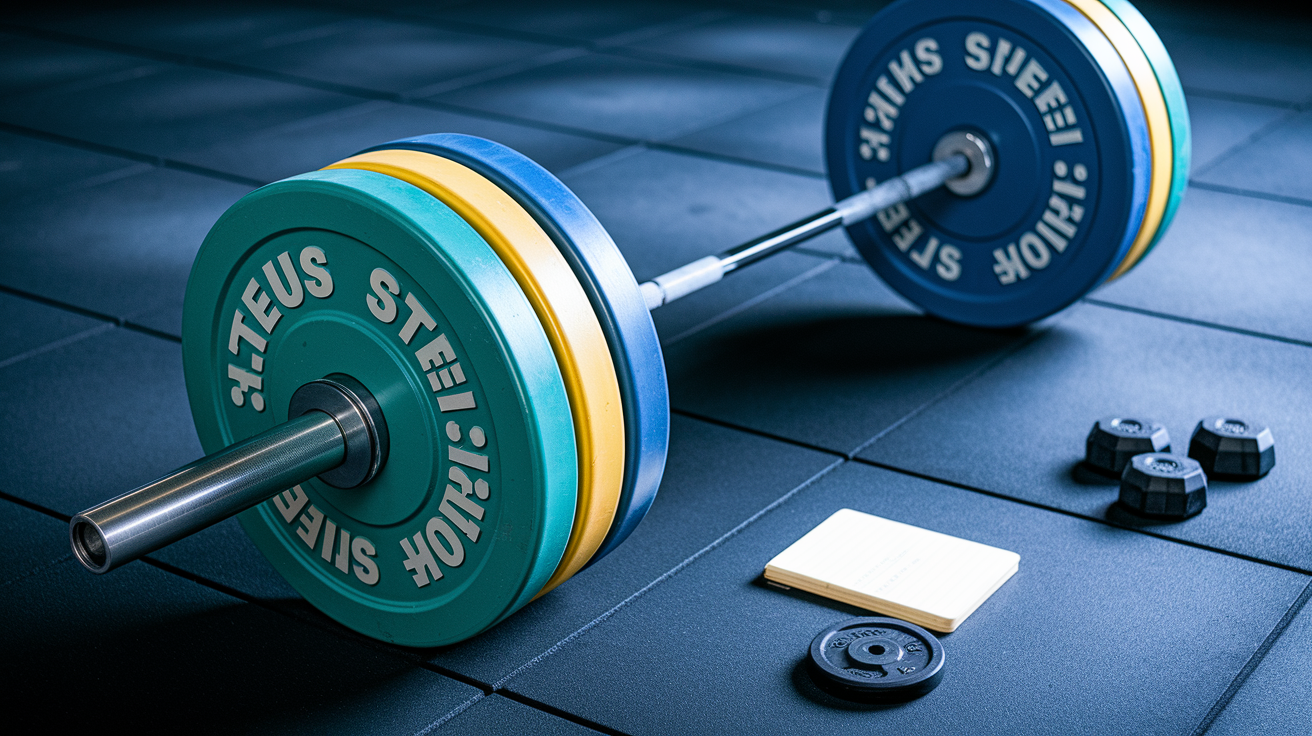
Add weight only when you can complete all prescribed sets and reps with consistent form and controlled bar speed. For lower body lifts like the squat and deadlift, increase the load by 2.5–5 kg (5.5–11 lb) per session or per week. For upper body lifts like the bench press, use smaller jumps of 1.25–2.5 kg (2.75–5.5 lb). Many gyms stock 1.25 kg (2.75 lb) plates specifically for this purpose. If your gym doesn’t have microplates, you can buy a pair online or progress by adding an extra rep to each set before increasing weight.
Track every workout in a notebook or phone app. Write down the date, exercise, weight used, sets, reps, and any notes about how the lift felt (easy, moderate, hard, form breakdown). This log gives you objective data to guide your decisions. If you completed 3 sets of 8 reps at 40 kg last week and all reps felt controlled, try 42.5 kg this week. If you only managed 3 sets of 6 reps and your form suffered on the last set, repeat 40 kg and aim for 3 sets of 8 before moving up.
Steps for identifying when to increase weight:
- Complete all prescribed reps and sets with zero form breakdowns. No rounding, no bar drift, consistent tempo.
- Check that the last rep of your final set moved at roughly the same speed as your first rep.
- Record the session as “successful” in your training log.
- Add the smallest available increment at your next session and reassess. If form holds, the increase was right. If not, go back to the previous weight for one more session.
Expect progress to slow after the first 6–8 weeks. Beginners can often add weight every session for the first month or two because neuromuscular adaptation (your nervous system learning to recruit muscle fibers efficiently) drives rapid strength gains. Once those early adaptations plateau, you’ll progress weekly or biweekly instead of session to session. This is normal and healthy. Don’t chase unsustainable jumps or sacrifice form to keep adding weight every workout.
Common Mistakes Beginners Make

Starting too heavy is the most common error. Beginners often overestimate their strength or feel pressure to match the weights used by more experienced lifters in the gym. Loading the bar with weight you can’t control teaches bad movement patterns, increases injury risk, and stalls progress because you can’t practice quality reps. Your ego isn’t part of the training program. Choose a weight that feels almost too light for the first few weeks and focus entirely on movement quality, depth, bar path, and bracing. Strength will come quickly once the technique is consistent.
Rushing progression and neglecting technique work creates a weak foundation. Adding 5 kg every session might work for two or three weeks, but if you skip filming your lifts, ignore small form errors, or never spend time drilling weak points (like squat depth or deadlift setup), you’ll hit a wall or get hurt. Dedicate at least one session per week to lighter technique work. Practice the same lifts at 60–70% of your working weight and move slowly with perfect form. Treat these sessions as skill practice, not conditioning. The better your technique becomes under light loads, the safer and stronger you’ll be when the weights get heavy.
Final Words
We covered simple starting rules: empty bar for bench, empty bar or 30-40% bodyweight for squats and deadlifts, a 5-10 rep test, and small, consistent jumps for progress.
You also got technique checkpoints, a five-step testing routine, and safety notes to avoid max attempts.
Use this guide to practice how to choose starting weights for squats bench deadlifts as a beginner, start light, track reps, and only increase when form stays clean. Keep going; steady, small steps build real strength.
FAQ
Q: What is the 3 3 3 rule at the gym?
A: The 3 3 3 rule at the gym is performing three sets of three reps (3×3) per lift to build strength, using heavy but controlled loads and focusing on clean technique and full rest between sets.
Q: What weight should a beginner use for squats?
A: A beginner should use the empty bar (20 kg/45 lb) or about 30–40% of bodyweight, or pick a weight you can do 5–10 perfect reps with proper depth, bracing, and control.
Q: What is the 5-3-1 rule in gym?
A: The 5-3-1 rule in the gym is a four-week strength cycle with top sets of 5, then 3, then 1 rep at set percentages of your one-rep max, designed to increase strength gradually.
Q: Are squats safe if you have osteoporosis?
A: Squats can be safe with osteoporosis after medical clearance; use light to moderate loads, strict technique, slower tempo, a focus on bracing, and professional supervision to avoid heavy maximal lifts.