
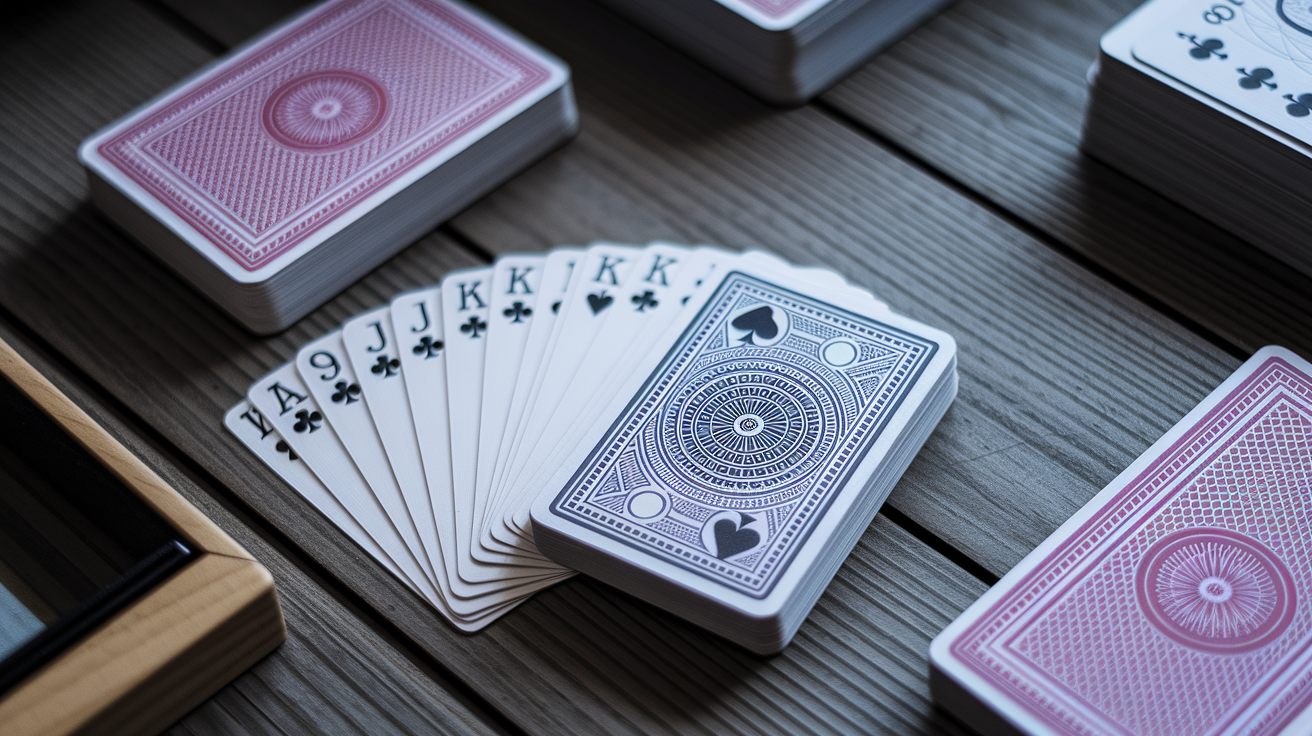

Think all decks are the same? They’re not.
A standard deck hides centuries of design choices: 52 cards, four suits, face and pip cards, plus Jokers.
This post breaks down that structure, explains what each suit and rank really means, and shows how to pick the right set for poker, magic, casual play, or collecting.
You’ll get clear tips on size, material, and finish so you stop guessing and buy a deck that plays well and lasts.
Essential Breakdown of a Standard Deck’s Structure and Components

A standard deck holds 52 cards split into 4 suits: hearts, diamonds, clubs, and spades. Each suit runs 13 ranks, from Ace through King. Ace is weird because it can count high or low depending on what you’re playing. Then you’ve got numbered cards 2 through 10, followed by Jack, Queen, and King. Most decks toss in 2 Jokers too, bringing the full count to 54 when you crack open a fresh box. That setup hasn’t really changed in centuries. Same structure whether you’re dealing poker at a casino, running card tricks, or teaching a kid Go Fish.
Face cards (Jack, Queen, King) are the illustrated ones. They went double‑headed back in the 1860s so you didn’t have to flip them around to see the rank. Pip cards are the numbered ones, 2 through 10, showing suit symbols that match their rank. Jokers work as wild cards in some games or get pulled out entirely if you don’t need them. Two common physical sizes: poker (2.5 × 3.5 inches) and bridge (2.25 × 3.5 inches). Poker size is what you’ll see most places.
Quick breakdown:
- Total cards: 52 (plus 2 Jokers in most packs)
- Suits: 4 (hearts ♥, diamonds ♦, clubs ♣, spades ♠)
- Ranks per suit: 13 (A, 2–10, J, Q, K)
- Face cards: 12 total (3 per suit)
- Pip cards: 36 total (2–10 in each suit)
- Jokers: Usually 2, sometimes ignored
Suit Symbols, Origins, and Meanings in Playing Card Decks
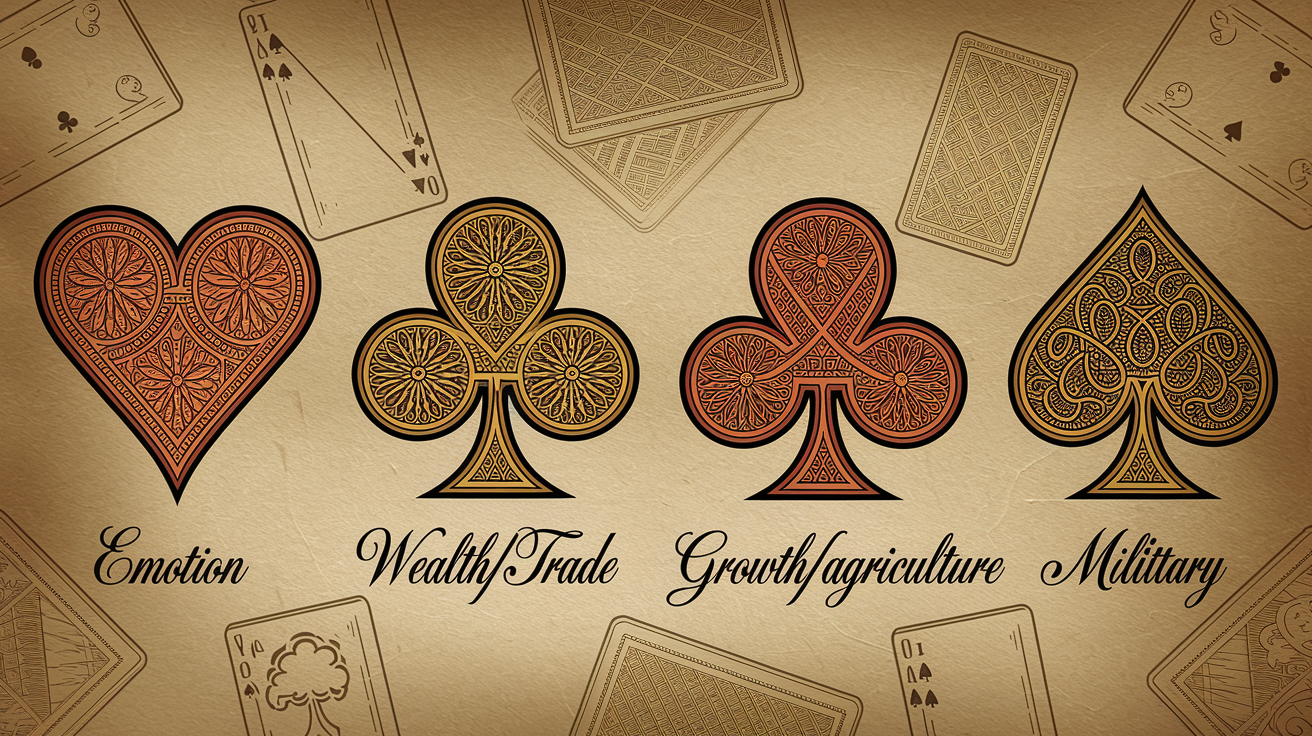
The four suits we use now got standardized in France during the 1400s. Each one carried loose symbolic weight that changed depending on where you were and when. Hearts linked to clergy, emotion, love. Diamonds represented merchants and wealth. Clubs tied to agriculture and peasants. Spades connected to the military, intellect, sometimes death. None of that was ever strict, just cultural texture layered onto functional game pieces.
Other parts of the world ran different suit systems before the French version took over. German decks used hearts, bells, acorns, and leaves. Italian and Spanish decks had cups, coins, swords, and batons. French suits won because they were simpler to print and easier to recognize at a glance. That mattered when card production scaled up in the 1500s and 1600s.
| Suit | Symbol | Typical Meaning |
|---|---|---|
| Hearts | ♥ | Emotion, clergy, love |
| Diamonds | ♦ | Wealth, merchants, trade |
| Clubs | ♣ | Growth, agriculture, peasants |
| Spades | ♠ | Intellect, military, conflict |
Exploring Card Ranks, Aces, Face Cards, and Pip Cards
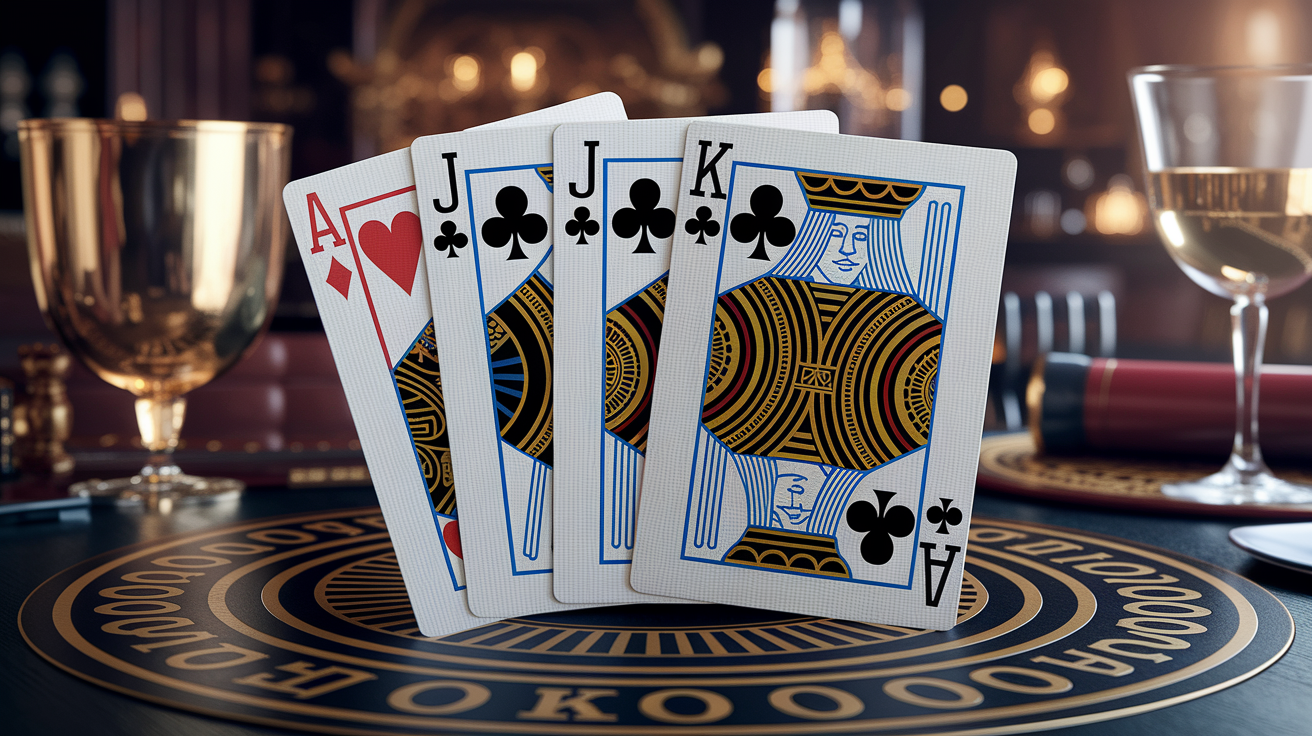
Ranks set the hierarchy and value for each card in its suit. Standard decks run Ace through King. Ace is unique because it shifts value depending on the game. Sometimes it’s the lowest (worth 1), sometimes the highest (worth 14 in poker variants), and in Blackjack it can be either 1 or 11 depending on what helps your hand. That flexibility makes the Ace one of the most strategically interesting cards you’ll touch.
Face cards (Jack, Queen, King) are the illustrated ones that used to show royalty or court figures. They went double‑headed in the mid‑1860s so players wouldn’t accidentally reveal information by how they held their cards. Before that, you had to flip a card to read the rank clearly, which slowed things down and sometimes gave away tells. Pip cards are numbered 2 through 10, named for the suit symbols printed on them. A 7 of hearts shows seven heart symbols. Simple, fast, universal.
Here’s how ranks usually behave:
- Poker: Ace usually high, straights can wrap (A‑2‑3‑4‑5 works, so does A‑K‑Q‑J‑10).
- Blackjack: Ace counts as 1 or 11, face cards all count as 10.
- Rummy: Ace usually low (counts as 1), face cards count as 10.
- War: Ace almost always highest, 2 is lowest.
Variations Beyond the Standard Deck: Tarot, Pinochle, Euchre, and More
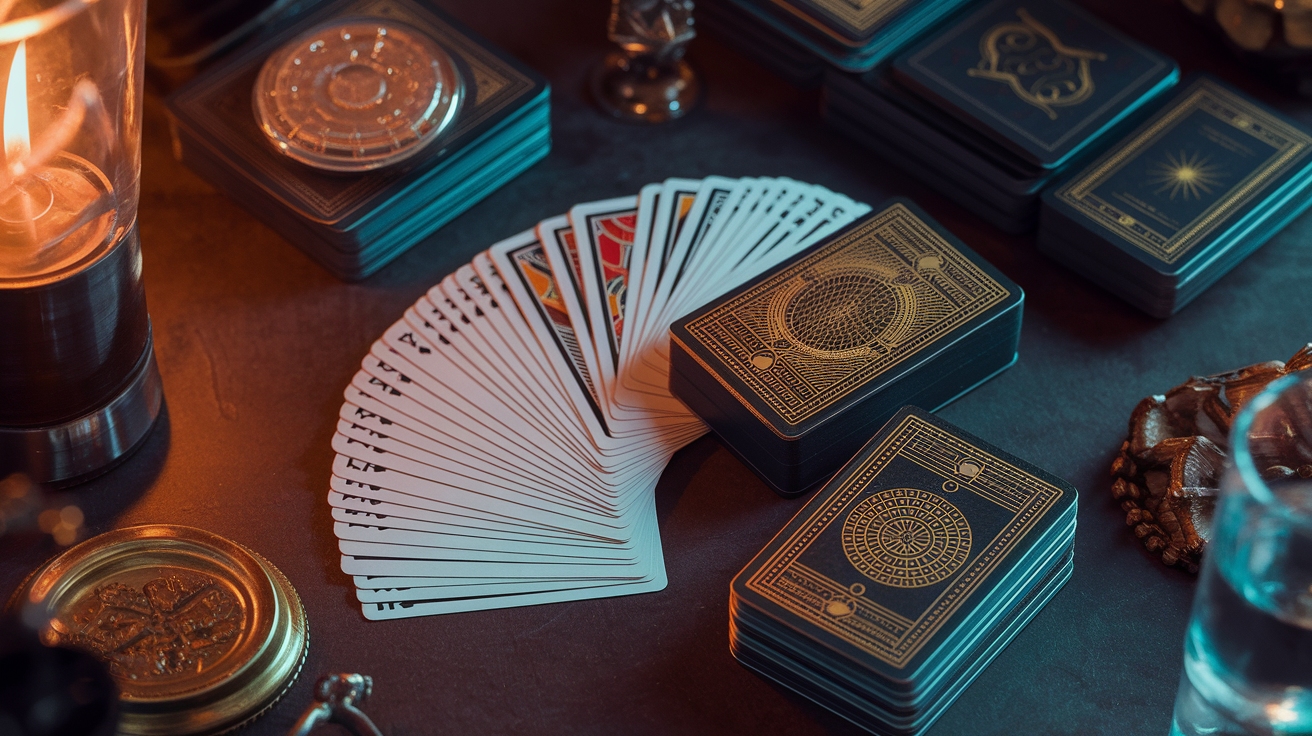
Not every deck sticks to 52 cards. Tarot decks hold 78 cards split into the 22‑card Major Arcana (the big trump cards like The Fool, The Tower, Death) and the 56‑card Minor Arcana, which mirror the four suits of a playing deck but add a Knight rank between Jack and Queen. Tarot gets used for divination and also for traditional European card games that predate most of the fortune‑telling stuff by centuries.
Pinochle runs a 48‑card deck made by doubling the 9 through Ace ranks in all four suits. Two 9s of hearts, two 10s of hearts, and so on. Euchre strips a standard deck down to just 24 cards (9 through Ace in each suit) for fast trick‑taking. Double decks combine two full 52‑card decks into a single 104‑card set, used in games like Canasta or in casinos where shoe games need multiple decks shuffled together.
| Deck Type | Card Count | Primary Use |
|---|---|---|
| Standard | 52 (+ 2 Jokers) | Poker, Rummy, Bridge, Solitaire |
| Tarot | 78 | Divination, European trick games |
| Pinochle | 48 | Pinochle (trick‑taking) |
| Euchre | 24 | Euchre (fast trick‑taking) |
| Double Deck | 104 | Canasta, casino shoe games |
Regional and Specialty Decks
Spanish and Italian decks traditionally use 40 cards with suits of cups, coins, swords, and batons. These decks often skip ranks like 8 and 9, and face cards look different. Spanish decks feature a knight (caballo) instead of a queen. Regional games like Briscola, Scopa, and Tute rely on these decks. Novelty and art decks are also big among collectors and cardists. Luxury brands and independent designers put out limited runs with custom court illustrations, geometric back designs, metallic foils, and themed artwork ranging from mythology to pop culture. These decks still play like standard 52‑card decks but offer visual flair and collectibility.
Historical Evolution of the Modern Deck of Cards

Playing cards trace back to China, where paper cards showed up around the 9th century during the Tang dynasty. The exact games and designs are lost, but the concept of portable, printed game pieces spread along trade routes. By the 12th and 13th centuries, Mamluk decks in Egypt featured suits of cups, coins, swords, and polo sticks, plus ranks that included numbered cards and court figures. No illustrated people, in keeping with Islamic artistic traditions. Those Mamluk decks are the clearest ancestors of European playing cards.
Cards arrived in Europe by the late 1300s, with documented references appearing around 1377 in treatises and city records. Different regions developed their own suit systems. German, Italian, Spanish, and Swiss decks all diverged in design. The French suit system (hearts, diamonds, clubs, spades) emerged in the 1400s and proved simpler and cheaper to print than earlier designs, which helped it spread across Europe and eventually the world. Tarot decks appeared in northern Italy in the 1440s as an expansion of the standard deck, adding 22 trump cards for new trick‑taking games.
The Joker card is an American invention, first appearing around the 1860s as a trump card for Euchre. It didn’t exist in European decks before that. Double‑headed face cards also became standard in the mid‑19th century, making it easier to hold and read cards without giving away information. These small changes refined the deck into the form we use today, a structure that’s stayed nearly identical for more than a century.
Physical Specifications: Card Sizes, Materials, Finishes, and Durability
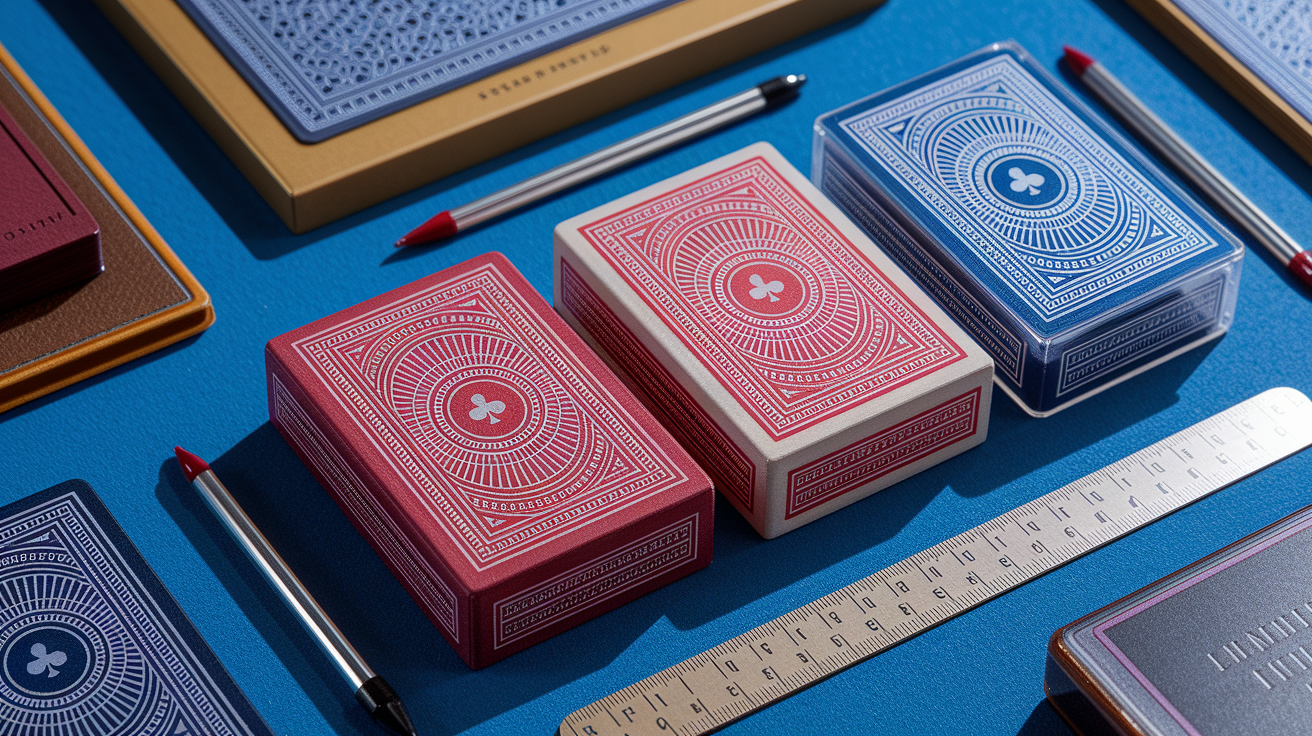
The two most common card sizes are poker and bridge. Poker size measures 2.5 × 3.5 inches (63.5 × 88.9 mm) and is the default for most casual play, casinos, and magic. Bridge size is slightly narrower at 2.25 × 3.5 inches (57 × 88.9 mm), designed to make it easier to hold a 13‑card hand during Bridge games. Both sizes use the same height, so the difference is only in width. Most decks you buy off the shelf will be poker size unless labeled otherwise.
Card stock weight usually sits between 300 and 330 grams per square meter (gsm), giving cards enough stiffness to shuffle cleanly without bending too easily. Casino‑grade decks often hit around 305 gsm with a controlled thickness of about 0.3 mm per card. Paper decks are made from layered paperboard with a clay coating that lets ink sit cleanly and provides a smooth or textured finish. Plastic decks use PVC or cellulose‑acetate and are fully waterproof, washable, and far more durable. They last years instead of weeks in heavy use.
Common finish types:
- Linen/air‑cushion: Textured finish that helps with shuffling and handling. Most popular in casinos and among magicians.
- Smooth coated: Flat finish with less grip. Used in budget decks and some European designs.
- Plastic/PVC: Fully waterproof and durable. Resists bending, spills, and heavy wear.
- Embossed: Raised texture or patterns on the card back for decorative effect or added grip.
- Varnish or UV coating: Clear protective layer that extends the life of paper decks and adds slight gloss.
How Playing Cards Are Manufactured: From Printing to Tuck Box
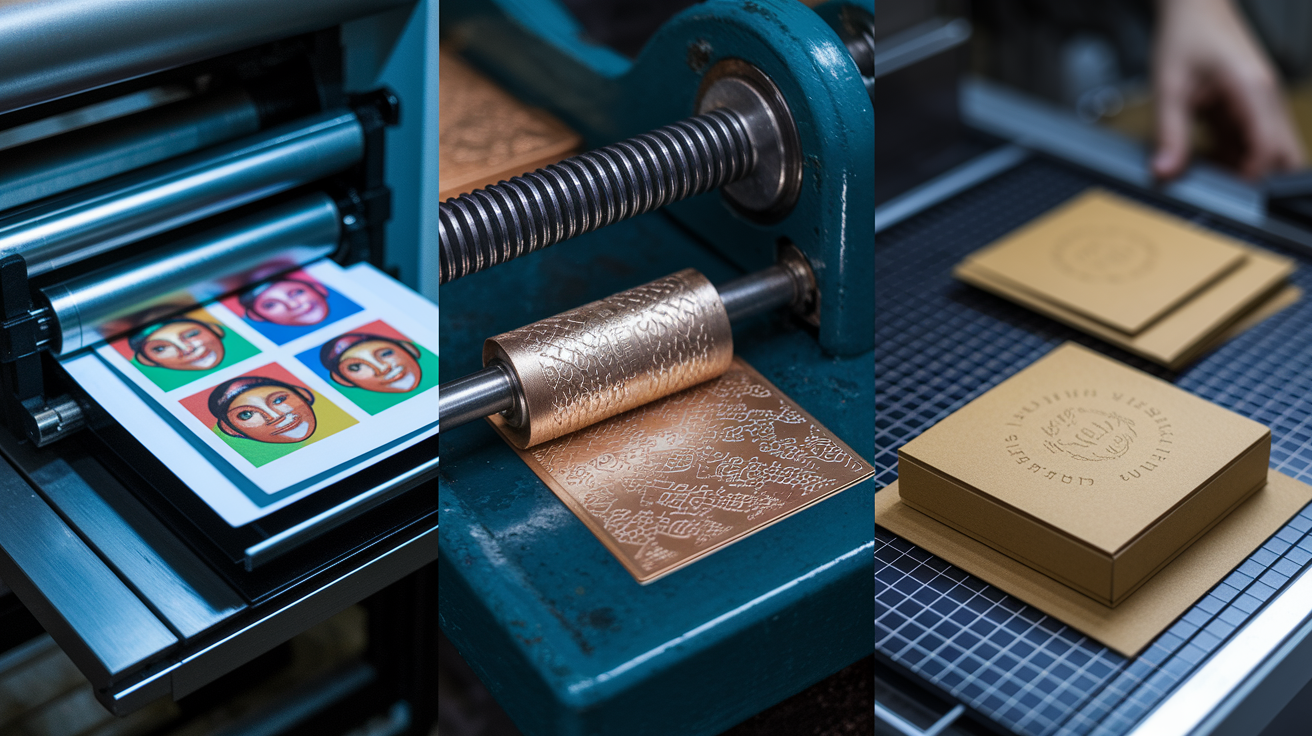
Modern playing card production starts with design work in digital software, using CMYK or spot colors for the card faces, backs, and any decorative elements. Once the design is finalized, decks get printed using offset lithography, a high‑speed, high‑quality printing method that handles fine detail and color consistency across thousands of sheets. Premium decks sometimes add hot‑foil stamping (metallic accents), embossing (raised textures), or UV spot coating (glossy highlights) to specific areas like the card back or the tuck box.
After printing, large sheets get laminated or coated with varnish to protect the ink and add the desired finish texture. For plastic decks, layers of PVC or cellulose‑acetate are fused together before printing on the surface. The sheets are then die‑cut into individual cards, and corners are rounded using precision cutting tools. Most decks use a radius of about 3–4 mm. Quality control checks for centering, color accuracy, and finish consistency before the cards are collated, jokers and information cards added, and the full deck packed into a tuck box with a seal.
Production stages:
- Design and proofing: Finalize artwork, colors, and layout. Approve physical proofs.
- Printing: Offset lithography or specialty digital printing for small runs.
- Finishing: Apply varnish, UV coating, foil, or embossing as specified.
- Lamination: For plastic decks, fuse layers. For paper decks, add protective coating.
- Die‑cutting and rounding: Cut sheets into individual cards and round the corners.
- Collation and packing: Stack cards in order, add jokers, seal in tuck box.
Production Costs and Minimum Orders
Custom deck printing usually requires a minimum order quantity (MOQ) of 250 to 1,000 decks depending on the manufacturer and finish complexity. Large runs of standard paper decks with basic finishes cost roughly $2.50 to $6 per deck, making bulk orders affordable for promotional use or small publishers. Smaller runs, premium finishes (foil, embossing, plastic), and custom tuck boxes can push per‑deck costs to $8–$30 or more. Lead times usually range from 2 to 8 weeks depending on run size, shipping, and any custom tooling required for special features. For one‑off prototypes or very small batches, print‑on‑demand services exist but cost significantly more per deck, often $15–$40 each.
Buying Guide: Choosing the Best Deck for Games, Magic, or Cardistry
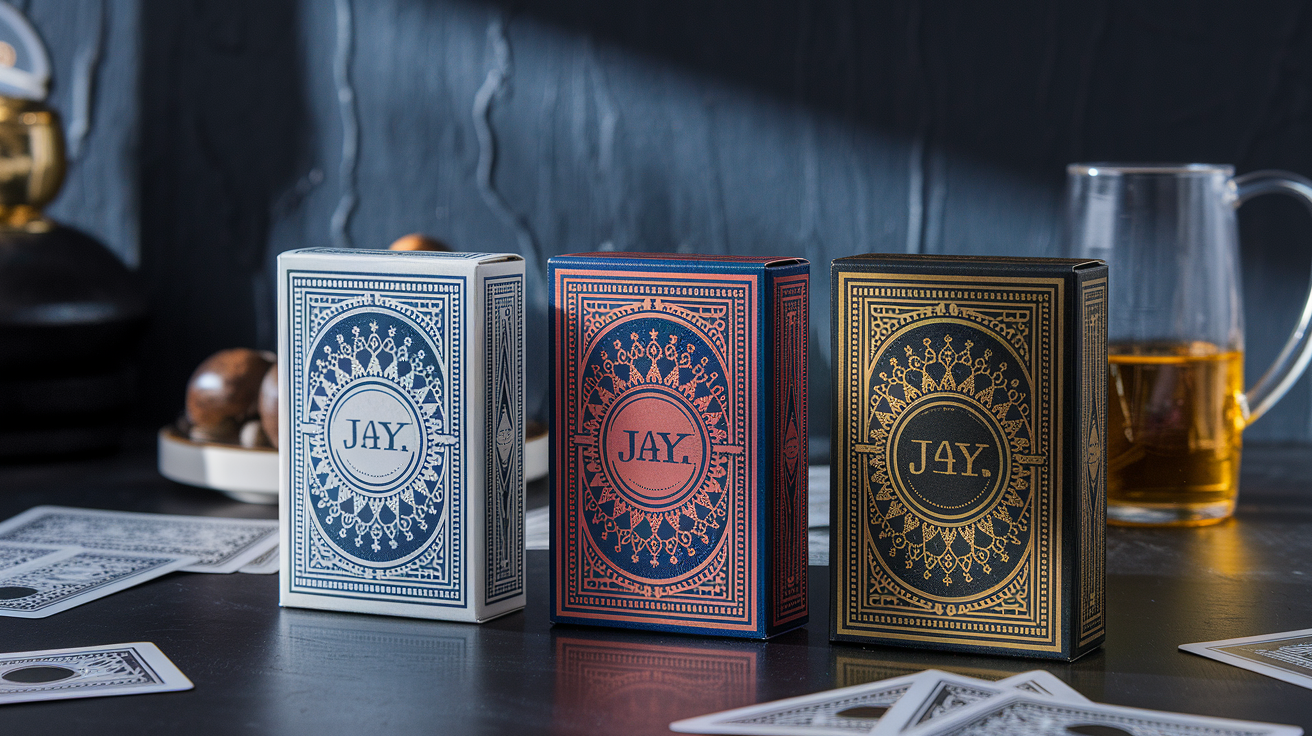
The right deck depends on what you’re doing with it. For casual games at home (poker nights, family card games, teaching kids), a mass‑market deck from a trusted brand works perfectly and costs between $2 and $10. These decks use paper stock with a linen or smooth finish, shuffle well out of the box, and last through dozens of games before the edges start to fray or the finish wears. If you play frequently or want something that holds up to spills and heavy handling, a plastic deck is worth the $6–$20 investment. Plastic decks are washable, won’t warp from humidity, and can last years even with daily use.
Magicians and cardists need decks with specific handling qualities. Smooth, consistent cuts. A finish that allows for controlled slides and fans. Precise centering so cards don’t reveal themselves during sleights. Premium designer decks in the $12–$30 range are built for this, using higher‑quality stock, tighter manufacturing tolerances, and finishes tuned for performance rather than just durability. Limited‑edition and luxury decks can run $50 to $200 or more, often featuring custom court artwork, metallic inks, embossed tuck boxes, and small print runs that make them collectible. These are for enthusiasts, collectors, and performers who want a deck that looks as good as it handles.
If you’re looking for decks that work well for teaching kids or family play, check out resources like 10 kid-friendly card games to match the deck to the game’s age range and complexity.
| Use Case | Recommended Deck Type | Price Range |
|---|---|---|
| Casual home games | Mass‑market paper (Bicycle, Bee) | $2–$10 |
| Frequent play, durability | Plastic/PVC (KEM, Copag) | $6–$20 |
| Magic and cardistry | Premium designer (Theory11, Ellusionist) | $12–$30 |
| Collecting, display | Limited edition, luxury | $50–$200+ |
Popular Card Games and the Deck Requirements for Each

Most classic card games use a standard 52‑card deck, but the way cards are dealt, the number of players, and the game’s objective create wildly different experiences. Texas Hold’em Poker deals each player 2 hole cards and builds 5 community cards in the center. Players make the best 5‑card hand using any combination of their hole cards and the shared cards. Blackjack uses 1 to 8 decks shuffled together in a shoe, with the goal of reaching a hand total of 21 without going over. Bridge deals all 52 cards evenly to 4 players (13 cards each) and revolves around trick‑taking and partnership strategy.
Solitaire (Klondike being the most common variant) uses a single 52‑card deck and is a solo puzzle of building up suited stacks from Ace to King. Rummy variants like Gin Rummy typically deal 7 to 10 cards per player and focus on forming sets and runs. Games like War and Snap are simpler, requiring only basic card comparison and quick reflexes, making them ideal for younger players. The deck requirements rarely change. What shifts is how many cards each player holds and what the rules ask you to do with them.
| Game | Deck Type | Key Rules Element |
|---|---|---|
| Texas Hold’em | Standard 52‑card | 2 hole cards + 5 community cards |
| Blackjack | 1–8 standard decks | Reach 21 without busting |
| Bridge | Standard 52‑card | 4 players, 13 cards each, trick‑taking |
| Solitaire (Klondike) | Standard 52‑card | Solo; build suited stacks A–K |
| Gin Rummy | Standard 52‑card | Form sets and runs to go out |
| Euchre | 24‑card (9–A) | 4 players, trump suit, trick‑taking |
Child-Friendly Choices
Games like Go Fish, Memory (also called Concentration), War, and Snap work well for kids because the rules are simple and the card handling is minimal. Go Fish typically deals 5 to 7 cards per player depending on the number of players, and the goal is to collect sets of four matching ranks by asking opponents for specific cards. Memory uses anywhere from 12 to 52 cards laid face‑down in a grid. Players flip two cards per turn trying to find matching pairs, which builds focus and recall. War splits a full deck between two players and compares cards one at a time, with the higher card winning the round. Snap has players slap a pile when two cards of the same rank appear consecutively. These games suit ages 3 to 12 and require nothing more than a standard deck and a flat surface.
Shuffling, Randomization, and Dealing Techniques
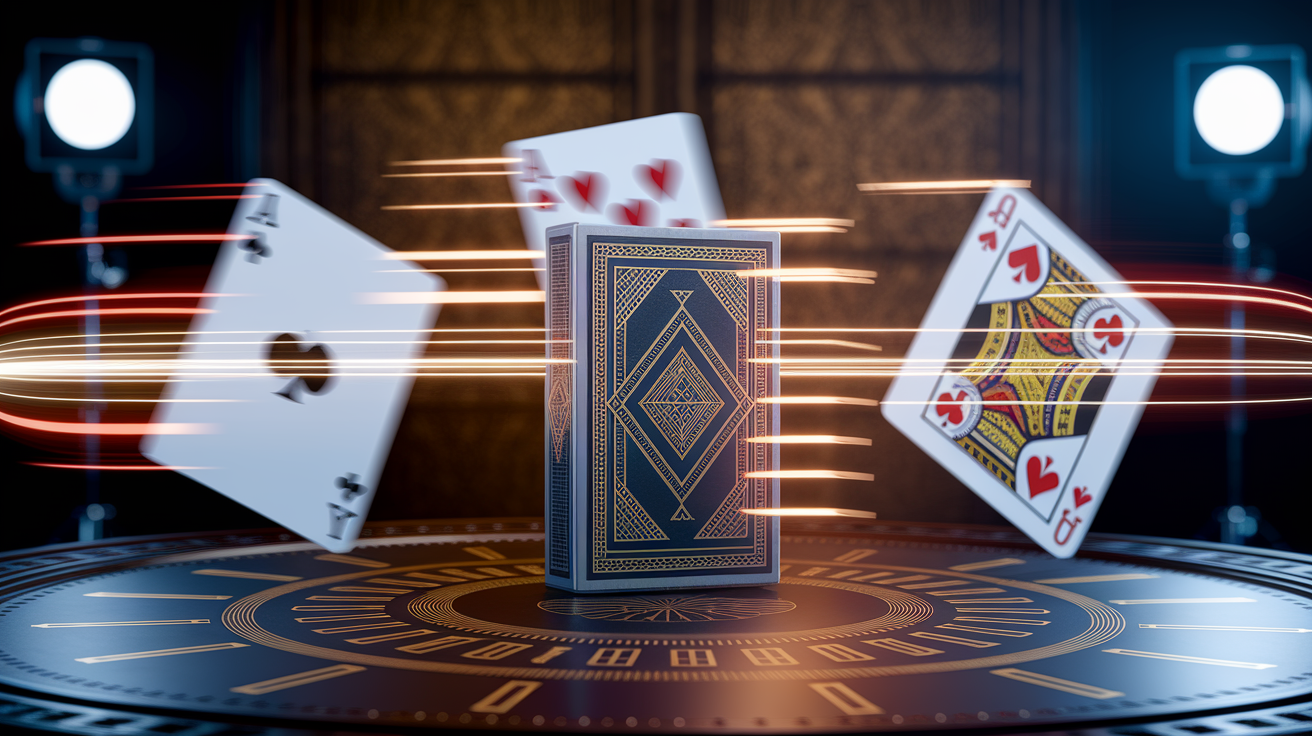
Shuffling mixes the deck so cards appear in an unpredictable order, which is essential for fairness in any game. The most common techniques include the riffle shuffle (bending the deck into two halves and interleaving them), the overhand shuffle (pulling small packets from the top and dropping them onto the bottom), and the Hindu shuffle (pulling cards from the bottom and dropping them on top). False shuffles are techniques used in magic to appear to shuffle without actually changing the order. Useful for tricks but obviously not for fair gameplay.
Other methods include the Faro shuffle (a perfect interleave of two halves, which after eight repetitions returns a 52‑card deck to its original order), the mash shuffle (pushing two halves together, common with sleeved cards), and table/wash shuffles (spreading cards face‑down on a table and mixing them randomly, often seen in casinos). Each method has trade‑offs. Riffle shuffles are fast and effective but can bend cards. Overhand and Hindu shuffles are gentler but less randomizing per shuffle. Faro shuffles require precision and aren’t practical for randomization. Wash shuffles are thorough but slow.
- Riffle shuffle: Split deck in half, bend both halves, interleave. “The casino standard, fast and effective when done smoothly.”
- Overhand shuffle: Pull packets from top, drop onto the deck. “Gentle on cards, but takes many repetitions to randomize.”
- Hindu shuffle: Pull packets from bottom, drop on top. “Common in Asia and among magicians.”
- Faro shuffle: Perfect interleave. Eight repetitions return deck to start. “Precision shuffle used in magic, not for randomization.”
- Mash shuffle: Push two halves together sideways. “Preferred for sleeved cards. No bending required.”
- Table/wash shuffle: Spread face‑down, mix randomly. “Casino method for thorough randomization, but slow.”
- False shuffle: Appears to shuffle without changing order. “Magic technique, not for fair play.”
The Math Behind Randomization
Mathematicians Persi Diaconis and Dave Bayer proved in the early 1990s that it takes about seven riffle shuffles to adequately randomize a standard 52‑card deck. Fewer shuffles leave predictable patterns in the order. More shuffles don’t hurt, but seven is the threshold where the deck reaches a state close to true randomness. This result assumes competent riffle shuffles. Sloppy or uneven shuffles require more repetitions. For other shuffle types, the number needed is higher. Overhand and Hindu shuffles may require dozens of iterations to achieve similar randomness, which is why casinos rely on riffle shuffles and automatic shuffling machines for speed and fairness.
Collecting, Storing, and Protecting Decks of Cards
If you’re collecting decks (whether vintage, limited editions, or custom art decks), proper storage keeps them in mint condition and protects their value. Store decks flat in a cool, dry place away from direct sunlight, which can fade inks and warp paper. Humidity is the enemy of paper decks. Moisture causes cards to curl, stick together, and delaminate. Use airtight plastic bins or archival storage boxes if you live in a humid climate. Keep decks in their original tuck boxes whenever possible, and consider adding outer sleeves (clear plastic protectors) for rare or valuable decks.
For decks you actually use, individual card sleeves add a layer of protection and make shuffling easier, especially for paper decks that see heavy play. Sleeved cards last longer and resist spills, dirt, and edge wear. Clean plastic decks with a damp cloth and mild soap. Paper decks can’t be washed, so handle them with clean, dry hands. Replace any deck that shows significant wear (bent corners, peeling finish, or delamination) both to maintain gameplay quality and to avoid small‑piece hazards if the deck is used around children.
Collectible and vintage decks range widely in value depending on rarity, condition, print run, and historical significance. Common limited‑edition designer decks sell for $50 to $200. Rare vintage decks, misprints, or decks tied to significant historical moments can reach thousands of dollars at auction. To explore high‑end and visually striking decks, check out lists like amazing decks of playing cards for examples of collectible designs and unique artwork.
- Store flat in tuck boxes or protective sleeves in a cool, dry location.
- Avoid humidity to prevent warping, sticking, and delamination.
- Use card sleeves for decks in heavy rotation to extend their lifespan.
- Clean plastic decks with a damp cloth. Never wash paper decks.
- Grade condition carefully when buying or selling collectibles. Centering, corner wear, and finish quality all affect value.
Deck Artwork, Theme Designs, and Modern Aesthetic Trends
The visual design of a deck (especially the card back and the court illustrations) has become a major focus for collectors, cardists, and designers. Modern decks range from minimalist geometric patterns to elaborate illustrations inspired by mythology, history, pop culture, and abstract art. Some brands lean into luxury aesthetics with metallic foils, embossed textures, and multi‑layer tuck boxes that feel more like art objects than game tools. Others prioritize clean, functional design that’s easy to read at a glance and won’t distract during gameplay.
Court cards are a popular canvas for custom artwork. Traditional face cards depict kings, queens, and jacks in Renaissance or Victorian dress, but contemporary designers reimagine them as superheroes, historical figures, animals, or entirely abstract forms. Minimalist decks strip pips and indices down to simple shapes and muted colors, appealing to players who want a modern, understated look. Illustrated art decks go the opposite direction, filling every card with detailed drawings, patterns, or storytelling elements that turn each card into a small piece of visual art.
Theme decks tied to movies, video games, books, and brands are also common. You’ll find decks inspired by everything from classic horror films to space exploration to Art Deco architecture. These themed designs often come with matching tuck boxes, custom seals, and booklet inserts that explain the design concept. Whether you’re drawn to bold colors, intricate line work, vintage aesthetics, or futuristic minimalism, the variety of deck designs available today means you can find a deck that matches your taste and still plays like a standard 52‑card set.
Final Words
You’ve just got a full run-through: deck structure, suits and ranks, face cards and Jokers, plus size and material details. We also covered variations like tarot, pinochle, and double decks.
There’s practical stuff too—how cards are made, what to buy for games or cardistry, shuffling methods, and how to store and protect decks.
Use this as a quick reference when you pick or use a deck of cards. Start with one solid deck, practice the basics, and enjoy getting better. You’ll be playing and collecting with more confidence soon.
FAQ
Q: What’s in a 52-card deck?
A: A 52-card deck contains four suits—hearts, diamonds, clubs, spades—each with 13 ranks: Ace, 2–10, and three face cards (Jack, Queen, King).
Q: How are 52 cards divided?
A: A 52-card deck is divided into four suits of 13 cards each; ranks run Ace through King, with pip cards (2–10) and face cards (J, Q, K).
Q: Are there 52 or 54 cards?
A: A standard deck has 52 playable cards, but most retail decks include two Jokers, making 54; Jokers act as wildcards or game-specific extras and are often not used.