


Think adding weight is the only way to get stronger? Think again.
Tracking dumbbell progress at home is simple and surprisingly powerful.
Write down the weight, sets, reps, rest—and one quick note about how the set felt.
Numbers tell you what changed.
Feel tells you what actually got better.
This post walks you through a one-minute log, monthly measurements, and simple benchmarks so you can prove real gains without guessing.
Read on to track smarter and make every at-home session count.
Practical Methods to Track At‑Home Dumbbell Progress (Core How‑To Section)

Tracking your dumbbell progress means writing down two things after every workout: the numbers and how it felt. Numbers are weight, reps, sets, rest. Feel is confidence, movement quality, pain, effort. You need both. Numbers alone won’t tell you if those ten reps were smooth or a grind. Feel alone won’t remind you whether you actually added weight.
Keep it simple. Write the exercise name, the weight, the sets and reps you finished, and one sentence about how it went. Like this: “Goblet Squat, 20 lb, 3 × 10. Last set was tough but controlled.” That’s your baseline for next time.
Here’s what this looks like over a few weeks. Week one and two, you’re doing bodyweight lunges for 3 sets of 8 per leg. Form feels shaky on the last reps. Week three, you grab 5 lb dumbbells and finish all 8, but the last 2 feel hard. You stick with 5 lbs through week four and work on control. By week six, you’re using 15 lb dumbbells for 3 sets of 10, and the movement feels smooth. That’s real strength gain, tracked with numbers and notes.
What to track:
- Weight used – The actual dumbbell weight. Even a 2.5 lb jump counts.
- Reps completed – Total reps per set. Note where you struggled.
- Sets completed – How many work sets. Adding one more set is progress.
- Rest intervals – Time between sets. Shorter rest with the same load means better conditioning.
- Movement quality – How controlled or stable the reps felt. Mastery shows up before strength does.
- Pain or discomfort – Note if something hurts so you can track whether it’s improving or getting worse.
Using a Structured Training Log to Measure Dumbbell Strength Changes
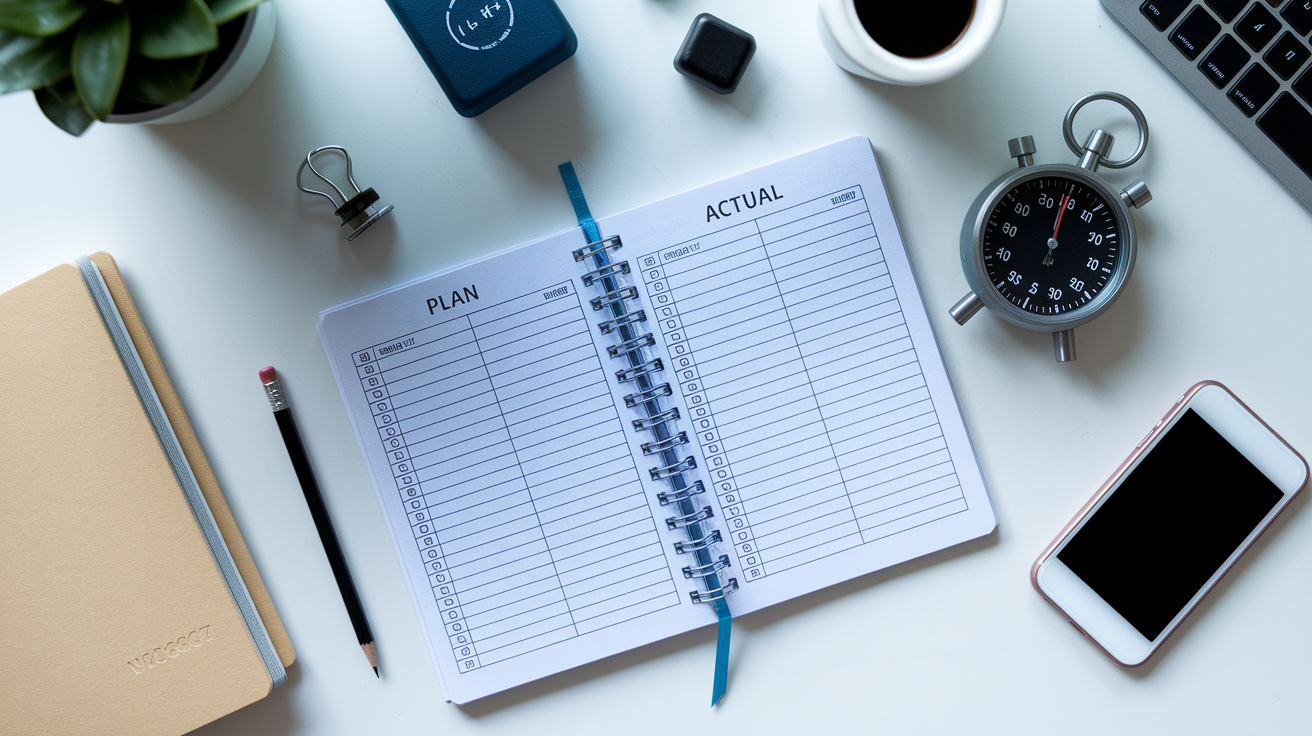
A training log turns your workouts into something you can actually use. Simplest version? Notebook and pen. Every session, you do four things: write the date and your bodyweight at the top, write your planned workout in a clear format, mark off each set as you finish it, and adjust if the plan changes. Takes less than a minute.
Standard format looks like this: [Exercise], [Weight], [Sets] × [Reps]. Example: “Dumbbell Row, 25 lb, 4 × 8.” Include warm-up sets too. It builds the habit and lets you see the full session at a glance. When you finish a work set, make a tally mark next to it. If you planned 4 sets but only got through 3, that missing mark reminds you what happened and helps you plan the next one.
Use a timer for rest between sets. Typical rest for dumbbell strength work is 3 to 5 minutes. If rest matters for the session (like circuit work or intervals), write the rest time under the exercise so you don’t forget to time it.
Step‑by‑Step Logbook Setup
Step 1: Write the date and optional bodyweight. Top of the page. This creates a timeline you can flip through later.
Step 2: Write your planned workout. Use the format [Exercise], [Weight], [Sets] × [Reps] for everything. Include warm-ups. Example: “Warm-up: Goblet Squat, 15 lb, 2 × 8. Work sets: Goblet Squat, 30 lb, 3 × 10.” Planning on paper takes one minute and locks in what you’re doing.
Step 3: Mark completed sets with tally marks. After each work set, make one short mark. When you’re tired, tally marks keep you from losing count.
Step 4: Adapt the format to the session type. If you’re testing a max or unsure of the weight, leave a blank line so you can write the actual number during the workout. If rest intervals are part of the training, write the rest time under each exercise.
Tracking Dumbbell Exercise Progression Through Reps, Weight, and Tempo

Progress shows up in more places than just the weight on the dumbbell. You can improve by completing more reps, by finishing the same reps with better form, by slowing down the tempo, or by using a longer range of motion. All of these are measurable. All of them make you stronger.
When you track reps, write the exact number and note where the set got hard. Example: “Shoulder Press, 20 lb, 3 × 10. Struggled on reps 8, 9, 10 of the last set.” Next week, if you complete all 10 without struggle, that’s progress even if the weight stayed the same.
Tempo is the speed of each rep. For most dumbbell work, you don’t need to track tempo with a stopwatch unless you’re deliberately slowing the movement. But if you notice your reps feel faster or more explosive than last week, write that down. It’s a sign your muscles are adapting.
Range of motion matters too. If your goblet squat depth improves from partial squats to full depth with the same weight, that’s real strength gain. Mark it in your log so you remember where you started.
Small improvements count. Adding one or two reps to a set is progress. Reducing rest from 3 minutes to 2 minutes while keeping the same weight and reps is progress. Holding the bottom of a goblet squat for two seconds instead of one is progress. These changes add up, and they only show up if you write them down.
Progression markers that show you’re getting stronger:
- Completing all planned reps when you couldn’t last week
- Adding 1 to 2 reps to the final set before increasing weight
- Reducing rest between sets while maintaining reps and weight
- Slowing down the lowering phase to increase time under tension
- Increasing range of motion or depth on exercises like squats, lunges, or rows
Measuring Body Changes to Support Dumbbell Progress Tracking

Body measurements give you a second lens to see if your training is working. Strength improvements don’t always show up immediately on the scale or in the mirror, but tracking measurements over time shows patterns you’d miss otherwise.
Measure your waist, hips, chest, arms, and thighs once a month using a soft tape measure. Write the numbers in the same log where you track workouts. If your arm circumference increases by half an inch over eight weeks while your waist stays the same or shrinks, that’s evidence of muscle gain.
Progress photos work the same way. Take a front, side, and back photo in the same lighting and the same clothes every two to four weeks. You won’t notice daily changes in the mirror, but when you compare photos from week one and week eight, the difference is clear.
Bodyweight is useful, but it doesn’t tell the whole story. You can gain muscle, lose fat, and see your weight stay the same. That’s why measurements and photos matter. They show composition changes that the scale misses.
| Measurement Type | What to Track | Frequency |
|---|---|---|
| Bodyweight | Weight in pounds or kilograms, measured at the same time of day | Weekly (same day, same conditions) |
| Circumference | Waist, hips, chest, biceps, thighs in inches or centimeters | Every 2 to 4 weeks |
| Progress Photos | Front, side, back photos in consistent lighting and clothing | Every 2 to 4 weeks |
| Clothing Fit | How a specific pair of jeans or shirt fits | Ongoing (note when fit changes) |
Using At‑Home Performance Benchmarks for Strength Progress

Performance benchmarks are simple tests you repeat every few weeks to measure improvement. Pick one or two dumbbell exercises and test how many reps you can do with a specific weight, or how long you can hold a loaded position.
Example: test how many goblet squats you can complete with a 30 lb dumbbell before your form breaks down. Write that number in your log. Four weeks later, test again. If the number goes up, you got stronger.
Time to fatigue tests work too. Hold the bottom of a goblet squat with a moderate dumbbell and see how long you can stay in position with good form. Or do as many dumbbell rows as possible with a weight that normally allows 10 reps, and count how many you can finish before failure. These benchmarks don’t need to be complicated. The point is to create a repeatable test so you can compare results over time.
Range of motion consistency is another benchmark. If you couldn’t squat to parallel with 25 lb dumbbells in week one, but you can in week six, that’s measurable progress. Note the depth, the weight, and the date. Benchmarks like these show strength gains that daily workout logs might not highlight as clearly.
Goal Setting and Weekly or Monthly Reviews for Dumbbell Training

Set short term goals that are specific and tied to your log. Instead of “get stronger,” write “add 5 lbs to my goblet squat within four weeks” or “complete 12 reps of dumbbell rows with 20 lbs by the end of the month.” These goals give you a clear target and a deadline. When you hit the goal, write the date in your log and set a new one.
Weekly reviews are where you turn the log into actionable next steps. Every Sunday (or whatever day works), flip back through the past week’s entries and ask: Did I complete the planned workouts? Did I add reps, weight, or sets anywhere? Where did I struggle? What felt easier this week than last week?
Write a one sentence summary at the end of the week. Like: “Completed 4 workouts, added 2.5 lbs to shoulder press, goblet squats still feel hard.” That summary becomes the foundation for next week’s plan.
Weekly review items to check in your log:
- Total number of workouts completed (aim for consistency, like 4 to 5 sessions per week)
- Any increases in weight, reps, or sets across exercises
- Exercises or sets where you struggled or failed to complete the plan
- Subjective notes. Did anything feel easier, smoother, or more controlled than last week?
- Adjustments needed for next week (add weight, add reps, change exercise, add a rest day)
Making Sustainable Adjustments to Keep Dumbbell Progress Moving Forward

When progress slows or stops, make one small adjustment and track the result. If you’ve been doing 3 sets of 10 reps with 20 lb dumbbells for three weeks and it still feels the same, either add 2.5 or 5 lbs, add one more set, or add one or two reps per set.
Only change one variable at a time so you know what worked. Write the change in your log and give it two weeks to show results. If the new load or volume feels manageable, keep it. If it’s too much, scale back and try a smaller jump.
Deload weeks prevent burnout and overuse injuries. Every four to six weeks, reduce the weight by 10 to 20% or cut one set from each exercise and focus on perfect form and recovery. A deload isn’t a step backward. It’s a reset that lets your body adapt to the previous weeks’ stress. After a deload, you’ll often come back stronger and ready to add load again.
Linear vs Double Progression
Linear progression means adding weight to the dumbbell each week while keeping reps and sets the same. Example: you do 3 sets of 8 reps with 25 lb dumbbells this week, then 3 sets of 8 with 27.5 lbs next week. This works well early in training when you can add weight frequently.
Double progression means adding reps first, then adding weight. You start with 3 sets of 8 reps at 25 lbs. Once you can do 3 sets of 10 or 12 reps at 25 lbs, you increase the weight to 27.5 or 30 lbs and drop back to 3 sets of 8. Double progression is more sustainable for at home dumbbell training because small weight jumps aren’t always available, and adding reps gives you a way to progress without new equipment.
Final Words
You can put this into practice today: log reps, sets, weight, tempo, and a quick note about how each set felt. Use a simple training log and the 6-week lunge example as a template. Track both numbers and movement quality.
Review weekly, make small changes (add a rep or a little weight), and use body measurements or photos to back up the numbers.
Start recording the basics now — this is how to track at-home dumbbell progress and turn small, steady wins into real strength.
FAQ
Q: How to track dumbbell weights?
A: Tracking dumbbell weights means logging the weight per exercise plus sets, reps, and perceived difficulty. Note exact numbers and a short feel note (e.g., “last 2 reps hard”) and review weekly.
Q: What is the 3-3-3 rule for workout?
A: The 3-3-3 rule for workout is a simple template: three sets of three reps, often applied to three exercises or over three weeks. It favors heavy, low-rep strength work with full rest.
Q: Is it possible to build muscle at home with just dumbbells?
A: Building muscle at home with just dumbbells is possible. Use progressive overload, track reps/weight, vary tempo and sets, and focus on compound moves. Consistency and gradual increases drive gains.
Q: What is the 5-3-1 rule in gym?
A: The 5-3-1 rule in gym is a strength cycle using sets of 5, then 3, then 1 rep at rising intensity, often based on percentage training maxes across a week to build strength steadily.