

You don’t need to shove protein down every two hours to build muscle.
What matters is how much protein you eat each day and how you split it into meals.
Aim for about 20–40 grams per meal.
Use a simple formula: bodyweight in pounds × 0.54–0.73, then divide by the number of meals you actually eat.
This post shows exact examples for three, four, and five meals, plus quick swaps for plant eaters and when to top up after a workout.
Core Principles for Setting Protein Portions for Muscle Gain

You want 20–40 grams of protein per meal if you’re serious about building muscle. That’s the range that keeps muscle protein synthesis firing all day and floods your system with amino acids when you need them most. Three meals? Go closer to 30–40 grams each. Four or five smaller sittings work fine at 20–30 grams per serving.
Here’s how you figure out your portions. Take your daily protein target, usually 0.54–0.73 grams per pound of body weight, and divide by however many meals you’ll actually eat. A 150-pound trainee aiming for 0.7 grams per pound needs 105 grams daily. Split that into three meals and you’re at 35 grams per meal. Spread it across four and you land around 26 grams each. Pick the meal frequency that fits your life, then just do the math.
Don’t panic if you eat more than 40 grams in one go. Recent research had subjects consume 100 grams of protein in a single sitting (think 16-ounce steak) and they still got a full anabolic response. If you miss lunch or travel wrecks your plan, loading 60–100 grams into your next meal won’t derail anything. The 20–40 gram guideline is about optimal spread, not a strict ceiling.
Steps for nailing per-meal protein:
- Calculate your daily target in grams (bodyweight in pounds × 0.54–0.73).
- Divide by the number of meals you plan to eat each day.
- Add 5–10 grams to meals on heavy training days or right after workouts.
- Make sure every meal clears at least 20 grams so synthesis stays active.
Bodyweight Variations and Example Protein Portions

Different body weights and meal frequencies give you different per-meal targets, but the formula doesn’t change. A lighter trainee eating four times daily will portion less per meal than a heavier lifter eating three times. Older adults (55 or above) should aim toward the upper end of the daily range because they don’t use protein as efficiently. Rest days can drop slightly below your training-day total, but keep portions consistent across meals to avoid amino acid gaps.
Heavy lifters and those carrying more muscle tend to do better at the high end, around 0.7–0.73 grams per pound. If you weigh 220 pounds and train hard four days a week, you might target 160 grams daily and spread that across four meals at 40 grams each. Bump it up on training days by tossing in a 20-gram shake or snack. Don’t go past about 2.0 grams per kilogram of body weight (roughly 0.91 grams per pound) without consulting a dietitian. That’s the current upper safety limit.
| Body Weight | Daily Target (g) | 3-Meal Plan (g/meal) | 4-Meal Plan (g/meal) | 5-Meal Plan (g/meal) |
|---|---|---|---|---|
| 120 lb | 84 g | 28 g | 21 g | 17 g |
| 150 lb | 105 g | 35 g | 26 g | 21 g |
| 180 lb | 126 g | 42 g | 32 g | 25 g |
| 200 lb | 140 g | 47 g | 35 g | 28 g |
| 220 lb | 154 g | 51 g | 39 g | 31 g |
Practical Food Examples to Portion Protein for Muscle Gain

A three-ounce cooked portion of chicken breast packs about 24 grams of protein, but the whole piece weighs three ounces, not 24 grams. That’s food weight versus protein content. If you need 30 grams for lunch, grab a slightly bigger chicken breast (around four to five ounces cooked) or toss in a seven-ounce container of plain Greek yogurt (20 grams) alongside a smaller portion. Read labels and weigh your food. The guesswork disappears.
Double the serving, double the protein. Your usual three-ounce chicken breast gives you 24 grams, so a six-ounce portion lands you at roughly 48 grams. That’s handy when you’ve skipped a meal or trained hard and need to catch up. A 16-ounce steak can deliver close to 100 grams of protein in one sitting, which proves that high-protein meals are totally doable when your schedule demands it.
Use these common examples as your baseline. Portion sizes and cooking methods shift the totals a bit, so check labels when you can and adjust for bone, skin, or added ingredients.
- Chicken breast, 3 oz cooked: 24 g protein
- Ground turkey, 3 oz cooked: 23 g protein
- Ground beef (lean), 3 oz cooked: 15 g protein
- Salmon or white fish, 3 oz cooked: 19–22 g protein
- Greek yogurt, plain, 7 oz: 20 g protein
- Large whole egg: 6 g protein
- Firm tofu, 3.5 oz (100 g): 8 g protein
- Tempeh, 3 oz: 15 g protein
Timing Protein Portions Around Workouts for Maximum Growth

Resistance training kicks off muscle protein synthesis, and that elevated state lasts up to 24 hours. You don’t need to chug a shake the second you rack the bar, but getting protein within two hours after training helps. Aim for 15–25 grams post-workout to supply amino acids while your muscles are most responsive. If your next full meal falls within that window, the meal itself counts. You don’t need a separate shake.
Eating 20–30 grams of protein one to two hours before a hard session gives you circulating amino acids during the workout. That pre-training portion won’t make or break your progress, but it can cut down muscle breakdown and improve recovery if you train fasted or early morning. The real priority is hitting your daily total and keeping portions fairly even so you never go more than four to five hours without protein.
Resistance-training protein timing steps:
- Eat 20–30 grams one to two hours before your session (optional but helpful).
- Get 15–25 grams within two hours after training (shake, meal, or snack).
- Choose leucine-rich foods post-workout. Whey, chicken, eggs, Greek yogurt all work.
- Spread the rest of your daily protein evenly across remaining meals so no single gap exceeds five hours.
Protein Portions for Plant-Based Muscle Gain

Plant-based proteins support muscle growth when you eat enough total protein and mix sources throughout the day. Soy products like tofu, tempeh, and edamame are complete proteins, meaning they contain all nine essential amino acids. Most other plant foods are incomplete, so pair beans with rice, lentils with quinoa, or hummus with whole-grain pita to cover the amino acid spectrum. Variety across the day solves the completeness problem without requiring perfect combinations at every meal.
Plant proteins get absorbed less efficiently than animal proteins, so you may need to aim for the higher end of the daily range, closer to 0.7–0.73 grams per pound of body weight, to get the same muscle-building effect. A 150-pound vegan trainee should target around 105–110 grams per day and spread that across four or five meals to keep each portion manageable. Protein powders made from pea, rice, or hemp can fill gaps and add 15–20 grams per shake without much volume.
Track your portions using the gram counts below. Cooking methods and brand formulations change the totals, so check nutrition labels and weigh servings when possible.
- Firm tofu, 3.5 oz (100 g): 8 g protein
- Tempeh, 3 oz: 15 g protein
- Cooked lentils, 1 cup: 18 g protein
- Cooked chickpeas, 1 cup: 15 g protein
- Cooked black beans, 1 cup: 15 g protein
- Cooked green peas, 1 cup: 9 g protein
- Quinoa, cooked, 1 cup: 8 g protein
- Pea protein powder, 22 g scoop: 19 g protein (brand-dependent)
Using Protein Supplements to Hit Per-Meal Targets

Protein powders let you add 15–25 grams of protein to a meal or snack without cooking or carrying containers. A typical whey protein scoop delivers about 17 grams, though some brands go as high as 25 grams per serving. Pea protein powder averages around 19 grams per scoop. If you need 30 grams for breakfast and your oatmeal and fruit only give you 8 grams, one scoop mixed into the oats or a quick shake on the side closes the gap.
Whey digests quickly, usually within one to two hours, so it works well post-workout or between meals when you want amino acids in circulation fast. Casein digests slowly over several hours, which makes it useful before bed if you want a steady trickle of protein overnight. Blended powders combine whey and casein to give you both fast and slow release in one shake. Pea protein sits somewhere in the middle for digestion speed and works for anyone avoiding dairy.
| Protein Type | Digestion Speed | Typical Serving (g protein) | Best Use Case |
|---|---|---|---|
| Whey protein isolate | Fast (1–2 hours) | 17–25 g | Post-workout, between meals, quick top-up |
| Casein protein | Slow (3–7 hours) | 20–24 g | Before bed, long gaps between meals |
| Pea protein | Moderate (2–3 hours) | 19–22 g | Dairy-free, post-workout, general use |
| Blended (whey + casein) | Mixed (1–4 hours) | 18–24 g | Meal replacement, sustained release |
Visual and Measurement Tools to Portion Protein Accurately

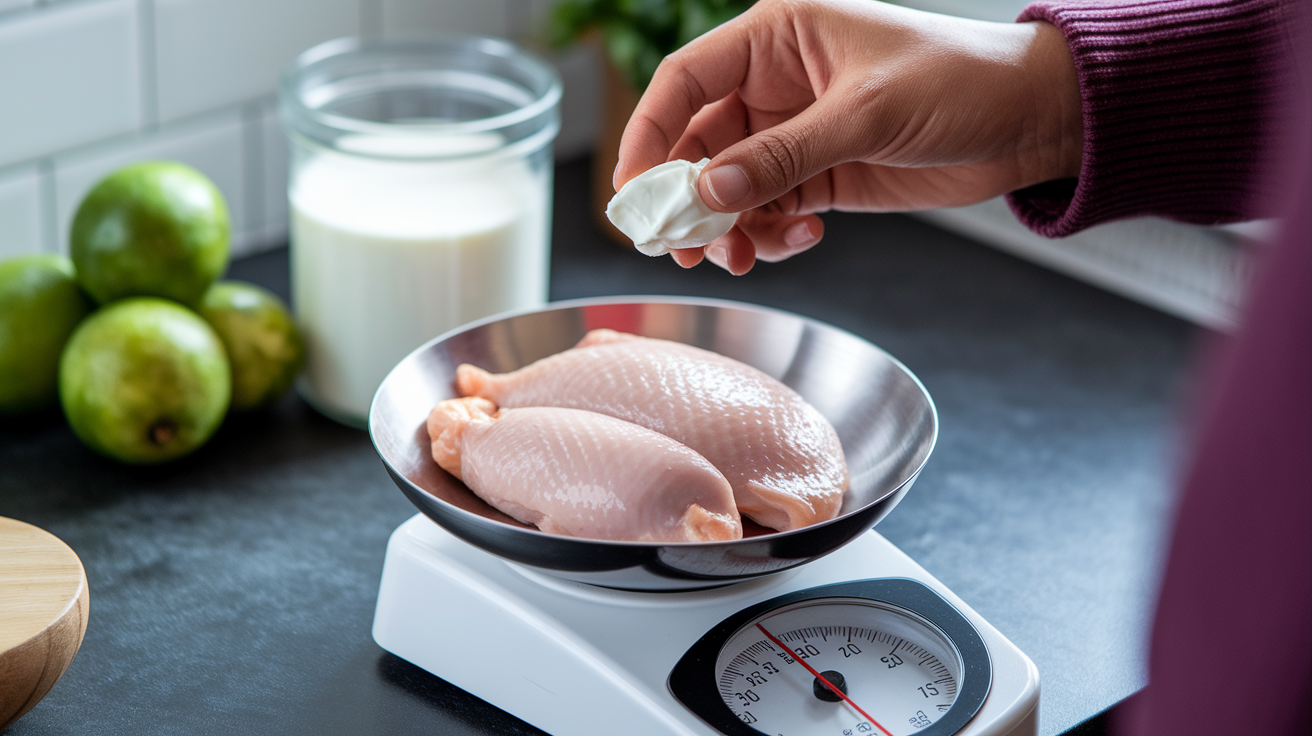
A digital kitchen scale gives you exact grams of cooked meat, which kills the guesswork. Weigh your chicken breast after cooking, check the nutrition label for grams of protein per ounce or per 100 grams, then multiply. If the label says 8 grams of protein per ounce and your cooked portion weighs 5 ounces, you’ve got 40 grams of protein on your plate. Scales cost less than a month of protein powder and pay for themselves in portion consistency.
When you eat out or don’t have a scale, use hand-size estimates as a rough guide. A palm-sized portion of meat or fish (about the size and thickness of your palm without fingers) is roughly three to four ounces cooked and delivers 20–25 grams of protein for most animal sources. Two palms gets you closer to 40–50 grams. For Greek yogurt or cottage cheese, a standard single-serve container is usually seven ounces and contains around 20 grams of protein. One large egg fits in the circle you make with your thumb and index finger and gives you 6 grams.
Tools and methods for accurate portioning:
- Digital kitchen scale: Weigh cooked portions in ounces or grams, then cross-reference nutrition labels for exact protein content.
- Measuring cups: Use for yogurt, cottage cheese, cooked beans, or oatmeal to nail consistent serving sizes.
- Nutrition label reading: Check grams of protein per serving, then scale up or down based on how much you actually eat.
- Hand-size cues: One palm for 20–25 g of meat or fish, one fist for cooked beans (about 15 g per cup), thumb tip for one tablespoon nut butter (3–4 g).
- Mobile tracking apps: Log foods by weight or portion size and the app calculates total protein, helping you see daily distribution across meals.
Sample High-Protein Meal Plan Templates for Consistent Portions
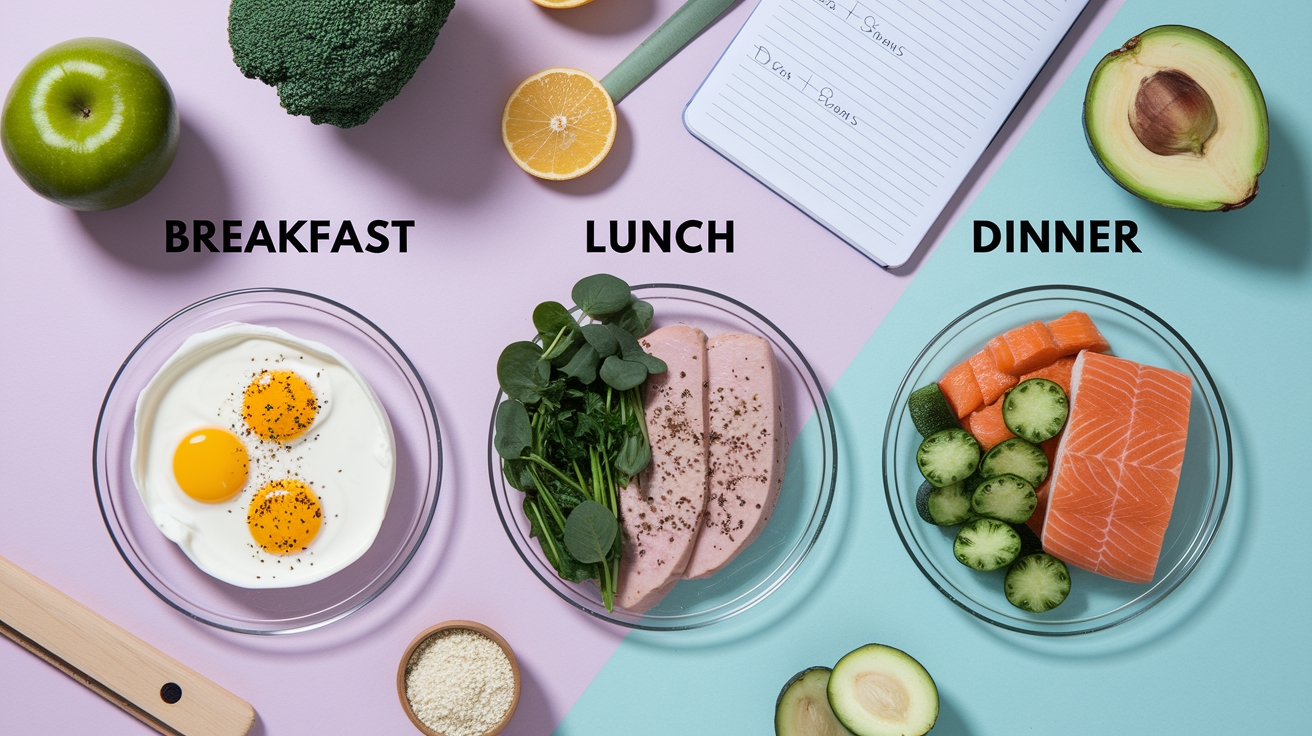
A simple three-meal template for a 150-pound trainee targeting 105 grams per day puts 35 grams of protein at breakfast, lunch, and dinner. If you prefer four meals, drop each portion to about 26 grams and add a fourth meal or large snack. Five smaller meals mean roughly 21 grams per eating occasion, which works well if you like frequent small portions or struggle with appetite after hard training.
On training days, shift 5–10 extra grams into the meal or snack immediately after your workout. That might mean bumping your post-workout shake from 20 grams to 25 grams or adding an extra egg to your lunch. Rest days can stay at the lower end of your range, but keep each meal above 20 grams to keep muscle protein synthesis firing throughout the day.
Use the table below as a starting template, then swap foods based on what you have and what you like. The portion sizes and protein totals give you a realistic picture of what 90–105 grams per day looks like in real life.
| Meal | Protein Food | Protein (g) | Notes |
|---|---|---|---|
| Breakfast | 3 large eggs, scrambled | 18 g | Add 7 oz Greek yogurt on the side for 38 g total |
| Mid-Morning Snack | Whey protein shake, 1 scoop | 20 g | Optional; skip if eating 4 larger meals |
| Lunch | 5 oz grilled chicken breast | 40 g | Serve with vegetables and brown rice |
| Post-Workout | Pea protein shake, 1 scoop | 19 g | Consume within 2 hours after training |
| Dinner | 4 oz salmon fillet | 28 g | Pair with roasted sweet potato and greens |
| Evening Snack | 1 cup cottage cheese (low-fat) | 24 g | Slow-digesting casein; good before bed |
| Alternate Breakfast | Protein pancakes (2 eggs + 1 scoop whey) | 30 g | Top with berries; quick and portable |
| Alternate Lunch | Tofu stir-fry, 6 oz firm tofu | 14 g | Add 1 cup edamame (17 g) for 31 g total |
Final Words
Aim for 20–40 g of protein per meal as your practical target. Use your daily goal (about 0.54–0.73 g per pound) and split it across meals — and know that larger servings can still boost muscle growth.
We covered bodyweight examples, food‑portion visuals, workout timing, plant‑based swaps, supplements, and tools to measure portions. You’ve got simple steps and sample meals to follow.
Put it together, tweak for training days, and use the formulas to guide how to portion protein per meal for muscle gain. Small, steady changes win.
FAQ
Q: Is 50g of protein too much for one meal?
A: The amount of 50 g of protein in one meal is above the practical 20–40 g target but not wasted; it still supports muscle-building, especially for larger or heavily trained individuals.
Q: What is the 2 hour protein rule?
A: The 2-hour protein rule means eating roughly 15–25 g of protein within two hours after training to aid recovery; timing is flexible since exercise raises muscle sensitivity for up to 24 hours.
Q: Is 100g of protein too much for muscle gain? Can I eat 100g of protein in one meal?
A: Eating 100 g of protein in one meal isn’t inherently too much for muscle gain; studies show up to 100 g can trigger an anabolic response, though spreading intake across meals usually boosts synthesis.