
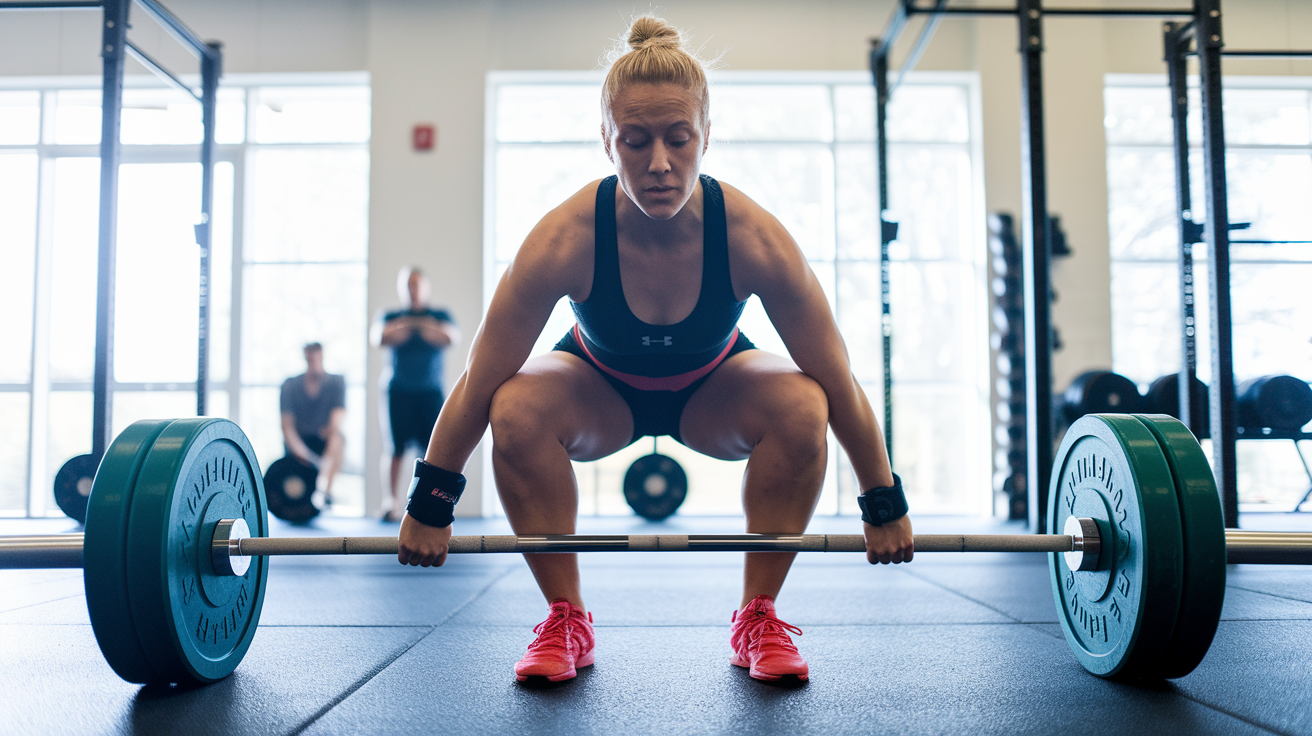

You don’t need fancy programs to get stronger fast.
Stick to a few big lifts and add a little weight every week, and that’s the fastest route for most beginners.
This guide gives a simple, repeatable barbell plan built around squat, overhead press, deadlift, and bench.
You’ll learn warm-ups, how to pick starting loads, sensible weight jumps, and a clear way to record gains so you see progress every week.
If you’re juggling work, family, or short gym time, this plan fits and proves strength you can track.
Core Structure of a Beginner-Friendly Barbell Program With Weekly Measurable Progress

A beginner-friendly barbell program centers on a few high-value compound movements and relies on linear weekly progression to produce measurable strength gains. The core structure prioritizes simplicity over exercise variety: squat, overhead press, deadlift, and bench press carry the bulk of training volume. These lifts engage multiple muscle groups in a single coordinated movement, teach full-body tension and bracing, and allow trainees to load the bar consistently week over week. For a novice, the most effective program is often the simplest one, repeated with steady load increases until progress naturally slows.
Most beginners start with a moderate load and very low volume to learn bar path and reinforce technique without triggering crippling soreness. A common first session template uses a single working set of 5 reps on each core lift, performed at an RPE of approximately 7. RPE 7 means you could complete about 3 to 4 more reps if you had to, but the weight feels like real work. This approach minimizes early recovery demands and allows the nervous system to adapt to movement patterns before high-volume training begins. Once the lifter demonstrates consistent form and recovers well between sessions, volume expands to multiple working sets, and linear session-to-session progression continues.
Frequency options depend on schedule and recovery capacity. A three day per week model spreads squat, press, deadlift, and bench across three full-body sessions, emphasizing lower body work with higher weekly frequency. A four day split allows more upper body training sessions, separates pressing and pulling days, and leaves open slots for conditioning, accessory work, or recovery protocols. Both models support the primary goal: add weight to the bar every workout while maintaining form and recovery, and track those changes week by week.
First Week Beginner Barbell Training Template:
- Day 1: Squat 1×5, Overhead Press 1×5, Deadlift 1×5 (all at RPE 7, record load used).
- Day 2: Rest (or active recovery: light walk, stretching, mobility work).
- Day 3: Squat 1×5, Bench Press 1×5, Deadlift 1×5 (add 5 to 10 lb to squat and deadlift, 2.5 to 5 lb to pressing movements).
- Day 4: Rest.
- Day 5: Squat 1×5, Overhead Press 1×5, Bench Press 1×5 (continue adding small load increments, record all lifts and loads).
Linear Progression Principles That Drive Weekly Barbell Strength Gains

Linear progression means you add a small amount of weight to the bar every workout for as long as technique and recovery allow. This simple rule drives rapid strength gains because the nervous system and muscle fibers adapt to progressively heavier loads without requiring dramatic changes in exercise selection, rep schemes, or programming complexity. For a beginner, the target is to increase load every single session or every week, depending on the lift and the individual’s recovery capacity.
Appropriate load increments keep progress sustainable without overwhelming the body’s ability to adapt. Upper body lifts like overhead press and bench press typically advance in 2.5 to 5 pound jumps, while lower body lifts like squat and deadlift can handle 5 to 10 pound increases per session. Microplates (fractional plates of 0.5 to 1.25 pounds) allow even finer control, extending linear gains for weeks or months longer than standard 5 pound jumps would permit. The key is to stay in the “Goldilocks zone.” Training stress high enough to trigger adaptation but not so high that recovery, technique, or adherence suffer.
Managing volume early is as important as managing load. A single working set per lift on the first few sessions reduces systemic fatigue, limits delayed onset muscle soreness, and allows technique refinement without excessive recovery demands. Once the lifter demonstrates consistent bar path, stable bracing, and adequate session to session recovery, volume expands to 2 or 3 working sets per lift. And linear progression continues.
Weekly Training Frequency and Scheduling for Barbell Progress

Most beginner barbell programs use either three or four training days per week, with at least one full rest day between sessions. A three day schedule spreads full body sessions across Monday, Wednesday, and Friday (or any three non-consecutive days), providing higher weekly frequency for lower body lifts and a simple, repeatable routine. A four day split separates upper and lower work or alternates pressing and pulling emphasis, allowing more upper body volume and easier inclusion of conditioning, accessory movements, or hypertrophy focused sets as the lifter progresses.
Both models support linear weekly gains if rest, nutrition, and load management are appropriate. The choice depends on schedule constraints, recovery capacity, and training goals beyond pure strength.
Sample Weekly Schedules:
• 3 Day Full Body: Mon: Squat/Press/Deadlift, Wed: Squat/Bench/Deadlift, Fri: Squat/Press/Bench.
• 3 Day Alternating: Week A: Mon/Wed/Fri Squat/Press/Deadlift, Week B: Mon/Wed/Fri Squat/Bench/Deadlift (rotate press and bench each week).
• 4 Day Upper/Lower Split: Mon: Squat/Deadlift, Tue: Bench/Press, Thu: Squat variation, Fri: Bench/Press variation.
• 4 Day Press/Pull Emphasis: Mon: Press/Bench, Tue: Squat/Deadlift, Thu: Press/Bench (accessory), Fri: Squat (accessory)/Deadlift.
Technique Foundations for Core Barbell Movements

Proper technique protects joints, improves force transfer, and allows consistent load progression without injury. Every core barbell lift relies on stable bar path, coordinated bracing, and controlled range of motion. Early sessions at moderate loads give beginners time to practice these fundamentals before heavy weights demand flawless execution.
Squat Technique
Set the barbell across the upper back (high bar position) or lower traps (low bar), brace the abdomen as if preparing for a light punch to the stomach, and descend by simultaneously breaking at the hips and knees until the hip crease drops below the top of the kneecap. Drive through the midfoot to stand, keeping the chest up and the bar traveling in a vertical line over the center of the foot. Stable knees, neutral spine, and controlled descent are the priorities before adding significant load.
Bench Press Form
Lie on a flat bench with shoulder blades retracted and feet flat on the floor. Grip the bar slightly wider than shoulder width, unrack with straight arms, and lower the bar in a controlled diagonal path to touch the mid chest or just below the nipple line. Press the bar back up over the shoulders, maintaining tension in the upper back and avoiding excessive arch in the lower spine. The bar path should form a slight backward angle, not a pure vertical press.
Deadlift Basics
Stand with the barbell over the midfoot, feet hip width apart, and grip the bar just outside the legs with arms straight. Hinge at the hips to grasp the bar, flatten the back by engaging the lats and bracing the core, then drive through the floor by extending the hips and knees simultaneously until standing upright with the bar at hip level. The bar should travel in a vertical line close to the shins and thighs. Any horizontal drift away from the body increases moment arm and injury risk.
Overhead Press Fundamentals
Stand with feet hip width, grip the bar at shoulder width, and position the bar at collarbone height with elbows slightly forward of the bar. Brace the core, squeeze the glutes, and press the bar straight up, moving the head back slightly to clear the bar’s path, then pushing the head forward through the “window” created by the arms at lockout. The bar travels in a vertical line. The torso remains rigid and upright throughout the press.
Sets, Reps, Warm-Up, and Your First Month of Measurable Barbell Progress

Every barbell session begins with a structured warm up to prepare the nervous system and reinforce movement patterns under progressively heavier loads. A typical warm up sequence uses the empty bar for 5 to 10 reps, then adds small increments (10 to 20 pounds per jump) for 3 to 5 reps per set until reaching the planned working weight. These warm up sets aren’t logged as “work” but serve as technical rehearsal and injury prevention.
The first workout uses a conservative load and minimal volume to prioritize movement quality and reduce soreness. A single working set of 5 reps on squat, press, deadlift, and bench at RPE 7 allows the lifter to practice bracing, bar path, and range of motion without overwhelming recovery capacity. Over the next few weeks, volume gradually increases as the body adapts: the second week may introduce 2 working sets per lift, and the third week may expand to 3 sets, while load continues to increase every session.
This gradual scaling ensures the lifter builds strength and work capacity in parallel. By week four, most beginners can handle 3 working sets per main lift with consistent week to week load increases still intact.
| Week | Exercise | Sets × Reps |
|---|---|---|
| Week 1 | Squat, Press, Deadlift, Bench Press | 1 × 5 each lift |
| Week 2 | Squat, Press, Deadlift, Bench Press | 2 × 5 each lift |
| Week 3 | Squat, Press, Deadlift, Bench Press | 3 × 5 each lift |
| Week 4 | Squat, Press, Deadlift, Bench Press | 3 × 5 each lift (continue adding load) |
Tracking Strength Gains and Weekly Performance Metrics

Measurable progress depends on accurate, consistent record keeping. Every session should be logged with enough detail to identify trends, diagnose stalls, and confirm weekly gains. A simple training journal or spreadsheet captures the essential data: date, exercise name, weight used, sets completed, reps per set, rest intervals, and a subjective rating of effort or difficulty (such as RPE). This log becomes the primary tool for planning the next session’s load increases and evaluating whether the program is working.
The progression rule is straightforward: when you complete all prescribed sets and reps at the top of the target range for two consecutive sessions, increase the load on the next session by the smallest practical increment. Weekly set volume also matters. Aim for 5 to 9 total working sets per major muscle group per week to stay within the effective training dose for novice lifters without exceeding recovery capacity.
Core Items to Track Each Week:
• Date and session number.
• Exercise name (squat, press, deadlift, bench press).
• Weight used (including bar weight and all plates).
• Sets × reps completed (e.g., 3 × 5 at 135 lb).
• Rest intervals between sets (typically 2 to 3 minutes for main lifts).
• Subjective RPE or difficulty rating (1 to 10 scale, with 7 to 8 being appropriately challenging).
Troubleshooting Stalls in a Beginner Barbell Program

When progress stops for two to four consecutive sessions, the first step is to assess recovery and adherence factors rather than immediately changing the program. Most early stalls result from inadequate sleep, insufficient calorie or protein intake, inconsistent rest intervals, or technical breakdown under heavier loads. Reviewing the training log often reveals patterns: missed reps clustered on certain lifts, insufficient rest between sessions, or unrealistic load jumps that outpaced adaptation.
Temporary solutions restore momentum without abandoning linear progression. A short deload (reducing working weight by 10 to 15 percent for one week) allows recovery to catch up, technique to stabilize, and confidence to rebuild before resuming load increases. Cutting total weekly volume by one or two sets per lift or adding an extra rest day between sessions can also resolve transient stalls without requiring a completely new program.
Four Stall Resolution Strategies:
- Deload the stalled lift: Drop working weight by 10 to 15 percent for one week, then resume adding small increments each session.
- Verify technique with work up sets: Film your warm up sets or ask a coach to review bar path, bracing, and range of motion. Fix any drift before returning to heavier loads.
- Increase rest intervals: Extend rest between working sets from 2 to 3 minutes, or from 3 to 4 minutes, to ensure full ATP recovery and better rep quality.
- Add one extra rest day per week: Shift from 3 sessions per week to 2 sessions for one week, or insert a full recovery day between challenging sessions, then return to the original schedule.
Recovery, Nutrition, and Lifestyle Habits That Support Weekly Barbell Progress

Linear progression depends as much on recovery as it does on training stimulus. The body adapts to training stress during rest, not during the workout itself, so scheduling at least one full rest day between barbell sessions is non-negotiable for beginners. Most novice programs use three or four training days per week, leaving three or four full recovery days for muscle repair, nervous system restoration, and glycogen replenishment. Skipping rest days or adding excessive conditioning work between sessions often stalls strength gains within weeks.
Nutrition provides the raw materials for adaptation. Beginners need adequate total calories to support muscle growth and strength increases, along with sufficient protein to repair and build contractile tissue. A practical starting point is 0.7 to 1 gram of protein per pound of body weight per day, distributed across meals, with enough carbohydrate and fat to maintain energy, mood, and workout performance. Undereating (especially in a steep calorie deficit) will halt linear progression even when training and sleep are perfect.
Sleep quality directly influences training outcomes. Most adults need 7 to 9 hours of sleep per night to optimize hormone production, immune function, and cognitive performance, all of which affect strength and recovery. Poor sleep impairs motor learning, reduces force production, and increases injury risk, making it nearly impossible to add weight to the bar every week. Prioritizing consistent sleep schedules, dark and quiet sleep environments, and stress management habits supports the weekly measurable gains that define a successful beginner barbell program.
Final Words
Keep adding small weight, track each session, and prioritize form. We covered a simple linear plan: core lifts, low starting volume (1×5 at an easy RPE), warm-ups, and frequency options that fit real life.
You also got tools for tracking, fixing stalls, and dialing recovery and nutrition so gains keep coming.
Use this beginner-friendly barbell program focused on weekly measurable progress as your default, start light, log every set, and add a little each session. Progress you can prove.
FAQ
Q: What is a beginner-friendly barbell program and how does it create weekly measurable progress?
A: A beginner-friendly barbell program is a simple full-body plan using core compound lifts, low early volume, and linear progression—add weight each session while keeping technique and recovery intact for weekly measurable gains.
Q: Which core lifts should beginners focus on and why?
A: Beginners should focus on squat, bench press, deadlift, and overhead press because these compound moves train many muscles, build strength quickly, and provide clear weekly numbers to track.
Q: How should I start weight and what does starting at RPE 7 mean?
A: Starting weight should use 1×5 per main lift at RPE 7, which means about 3–4 reps left in reserve—manageable effort to learn technique and limit soreness before adding weight.
Q: How often should beginners train per week: three days or four days?
A: Beginners can train three full-body days or four split days; three emphasizes whole-body frequency, four adds upper-body volume—always leave at least one rest day between sessions.
Q: How does linear progression work and how much weight should I add?
A: Linear progression means adding small weight each workout while form and recovery hold; aim 2.5–5 lb for upper-body lifts and 5–10 lb for lower-body lifts, using microplates if needed.
Q: What is the warm-up and sets/reps plan for the first month?
A: Warm up by gradually ramping loads to your working weight; start week 1 with 1×5 on core lifts, then slowly add sets or small load increases across weeks 2–4 as recovery allows.
Q: What should I track each session to measure weekly progress?
A: Track the date, lift, weight, sets×reps, rest intervals, and subjective RPE so you can see trends and know when you consistently hit top reps and should increase load next session.
Q: What should I do when progress stalls?
A: When progress stalls, check sleep, calories, and recovery first; try a one-week deload (reduce loads 10–15%), cut volume for a week, add a rest day, or review technique.
Q: What recovery and nutrition habits support steady weekly barbell progress?
A: Recovery and nutrition habits are one rest day between sessions, enough protein and calories for growth, consistent sleep quality, and lowering volume when signs of overreaching appear.
Q: What are the key technique cues for squat, bench, deadlift, and overhead press?
A: Key technique cues for each lift are: Squat—brace, sit back, knees tracking; Bench—tight scapula, straight bar path, feet planted; Deadlift—flat back, hips and chest rise together; Press—tight core, bar over mid-foot.