


Think kettlebell swings are only for CrossFit athletes and risk-takers?
They’re not.
Done right, swings build real hip power, boost conditioning, and save time.
This post walks new lifters through the exact steps: how to hinge, drills to lock the pattern, progressions from deadlift to continuous swings, and the safety checks that stop injuries before they start.
Read on if you want swings you can repeat with confidence and steady progress—no guesswork, no ego, just practical steps you can practice today.
Core Mechanics of the Kettlebell Swing

Stand with your heels about hip width apart, toes turned out a bit. Your feet should make a shallow V, not point straight ahead. This gives your hips room to hinge without your knees caving in. Place the kettlebell about a forearm’s length in front of you, handle lined up with your ankle bones. Reach down and grip the handle with both hands. Keep your shoulders packed (pulled down, not shrugged up) and your arms straight. Your shins stay nearly vertical, and your weight spreads evenly across your whole foot. Big toe, little toe, heel all stay grounded. Look straight ahead at the horizon, not down at the floor.
The hip hinge is the engine. Push your hips back while keeping your spine neutral. Imagine someone’s pulling your belt buckle straight behind you. Your chest stays proud and your shoulders stay over or slightly in front of the kettlebell during the backswing. Inhale through your nose as you load the hinge, brace your abs like you’re about to take a light punch, then drive your hips forward hard. That hip snap sends the kettlebell forward and up. You’re not lifting with your arms or shoulders. The bell floats to somewhere between belly and chest height while your arms stay straight and locked by stiff triceps. Exhale sharply as you extend. At the top, you stand tall with glutes squeezed, quads tight, and core braced. At the bottom, the bell shoots back between your legs while you hinge deep and stay braced. Breathing syncs with the movement. Inhale on the way back, sharp exhale on the way up.
The kettlebell follows a pendulum arc, not a lifting arc. It swings away from you, not up toward your face. If you’re doing it right, the bell will feel weightless at the top for a split second. Your lats and triceps will decelerate it on the way back down. You control the bell with tension and timing, not by yanking it around.
Critical swing cues:
- Keep a neutral spine. No rounding forward, no arching back at the top
- Hinge at the hips, don’t squat. Your knees bend slightly but your hips do the work
- Drive power from your glutes and hamstrings, not your shoulders or arms
- Brace your core before every rep to protect your spine
- Let the kettlebell swing back between your legs, don’t lift it with your hands
Prerequisites and Foundational Movement Patterns

Before you touch a kettlebell, you need to own the bodyweight hip hinge. Stand an arm’s length from a wall, face away, and push your hips straight back until your glutes touch the wall. Your knees bend a little, but your shins stay vertical and your spine stays flat. If your back rounds or your knees shoot forward, you’re squatting, not hinging. Practice this pattern until you can hinge smoothly ten times in a row without losing position. The wall gives you instant feedback. If you can’t reach it, you’re not hinging deep enough. If you fall backward, you’re overreaching.
Core bracing locks your ribcage over your pelvis and transfers power safely from your hips through your torso. To find the brace, stand tall, take a breath in through your nose, and tighten your abs like you’re about to get tackled. Your lower ribs shouldn’t flare up and your pelvis shouldn’t tilt forward or back. Hold that tension while you breathe short, controlled breaths. This is the position you maintain during every swing. Without a solid brace, your spine flexes and extends under load, which invites injury and leaks power.
Simple hinge drills to practice:
- Wall taps. Hinge back until your glutes touch a wall, return to standing, repeat for 10 clean reps
- Dowel alignment. Hold a dowel or broomstick along your spine (touching your head, upper back, and tailbone), hinge without losing contact at any of those three points
- Unloaded hinge holds. Hinge to your deepest safe position, hold for 5 seconds with a tight brace, stand up and reset
Beginner Swing Progressions

Start with the kettlebell deadlift. Set the bell on the floor between your feet, hinge down with a flat back, grip the handle, brace your core, and stand up by squeezing your glutes. Your arms stay straight the whole time. Think of them as ropes connecting your shoulders to the bell. Lower the bell back to the floor with control, reset your hinge, and repeat for sets of 5 to 8 reps. This drill teaches you to load your hips, keep your lats engaged (pull your shoulders down and back slightly), and move the bell in a vertical line without rounding your spine. If your back rounds or your shoulders shrug up, the weight’s too heavy or your hinge pattern isn’t locked in yet.
Next, learn the hike pass. Stand about a foot behind the kettlebell, hinge deep, tip the bell toward you slightly, and use your lats to drag it off the floor and push it back between your legs in one smooth motion. Like you’re snapping a football. Your hips stay low in the hinge and your back stays flat. The bell shoots behind you and tries to pull you forward, but you resist by keeping your weight in your heels and your core braced. Let the bell settle back on the floor between reps. The hike pass loads the backswing without the momentum of a full swing, so you can feel what a proper loaded hinge feels like. Most beginners need 10 to 15 reps to get comfortable with the timing and tension.
The dead stop swing connects the hike pass to the hip drive. Hike the bell back, and as it starts to return forward, snap your hips to full extension. Glutes tight, quads engaged, core braced. The bell floats up to belly or chest height while your arms stay straight. Let it swing back down, catch it with your lats and hinge, guide it to the floor, and reset before the next rep. Dead stop swings force you to generate power from a complete stop, which builds the hip snap and prevents you from using momentum to cheat the movement. Practice sets of 3 to 5 reps, resting and resetting between each one. Watch for your spine position and make sure the bell isn’t pulling your shoulders forward.
Once your dead stop swings are clean and consistent, link them into continuous swings. Instead of setting the bell down after each rep, catch the backswing with your hinge and immediately drive your hips forward again. The bell should swing in a smooth pendulum rhythm. Back, forward, back, forward. Your breath matches the tempo. Start with short sets of 5 to 10 swings, park the bell safely on the final backswing, and rest before the next set. Continuous swings demand more coordination and conditioning, but they also teach you to control the bell dynamically and sustain good form under fatigue.
Choosing the Right Kettlebell Weight for Beginners
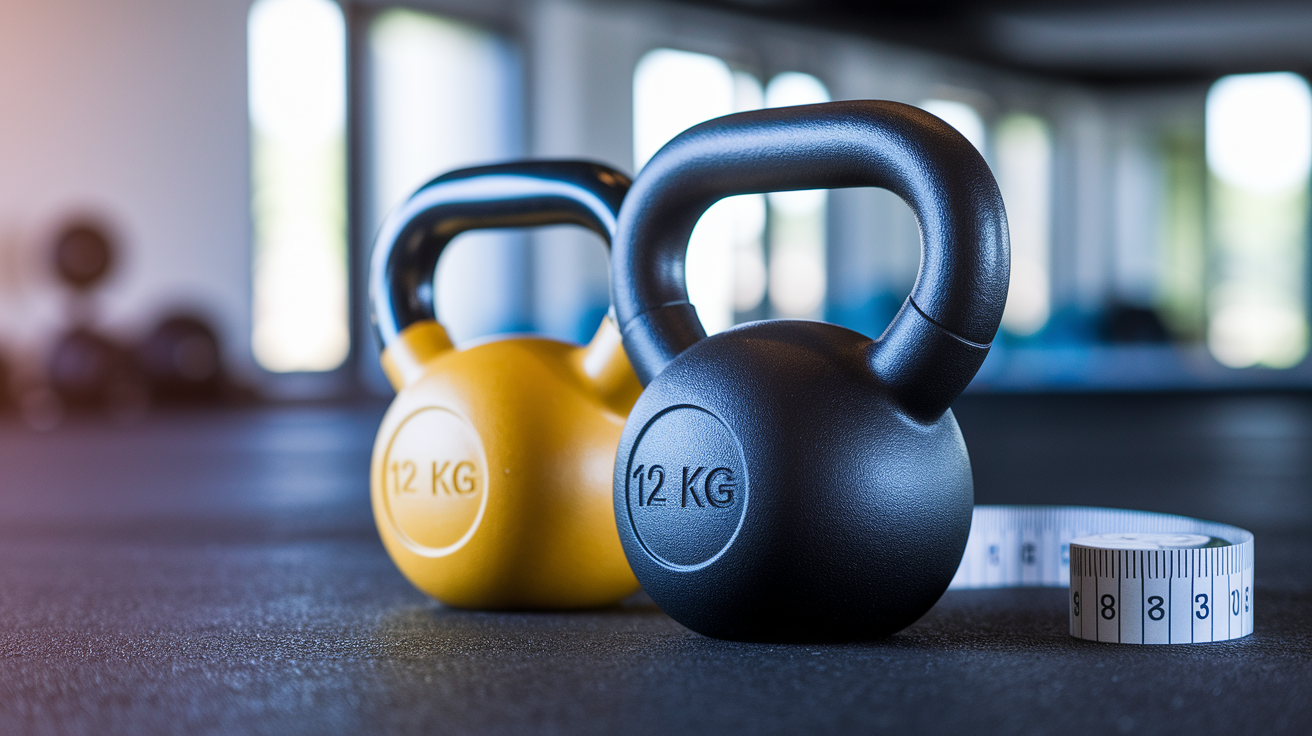
A common starting point is 12 kg (about 26 pounds) for women and 16 kg (about 35 pounds) for men, but these are guidelines, not rules. Your actual starting weight depends on your hinge strength, your ability to brace under load, and how well you can control the bell through the backswing. If you can perform 10 to 15 clean swings with a flat back, tight core, and no shoulder shrugging, the weight’s probably right. If your form breaks down after 3 or 4 reps, go lighter until your technique is solid.
Too light a kettlebell encourages you to lift with your arms and shoulders instead of driving with your hips. The bell should feel heavy enough that you have to use real hip power to move it, but not so heavy that it pulls you out of position or forces you to round your back. A good test: if the kettlebell floats higher than your shoulders or if you feel it mostly in your arms and traps instead of your glutes and hamstrings, it’s too light. If your back rounds, your knees collapse inward, or the bell yanks you forward during the backswing, it’s too heavy.
Most beginners progress in small jumps. 2 to 4 kg at a time. Once they can complete 3 sets of 12 to 15 swings with consistent form. Don’t rush the weight increases. Your connective tissue and nervous system need time to adapt to the ballistic load, and pushing too fast invites injury. Strength you can share means strength you can repeat, and that takes patient, progressive practice.
Common Errors and How to Correct Them

Six mistakes beginners make and how to fix them:
-
Squatting instead of hinging. Your knees shoot forward and your hips drop straight down, turning the swing into a front squat. Fix: push your hips back first, keep your shins nearly vertical, and feel the load in your hamstrings and glutes, not your quads.
-
Lifting with the shoulders. The bell rises because you’re shrugging or rowing it up with your arms, not because your hips are driving. Fix: keep your shoulders pulled down, arms locked straight, and focus all your power on the hip snap. If the bell droops or doesn’t float, you need more speed and force from your glutes and legs.
-
Overextending the lower back at the top. You lean back and arch your spine to finish the swing, which dumps load into your low back. Fix: stand tall at the top with glutes squeezed hard, ribs down, and core braced. Your body should form a straight line, not a backward bend.
-
Following the kettlebell forward. The bell pulls you onto your toes and drags your torso forward during the backswing. Fix: keep your weight in your heels, brace hard, and use your lats to decelerate the bell. Think of pulling it back into the hinge, not chasing it.
-
Bobbing or bouncing at the bottom. Your hips rise or your knees extend at the end of the backswing, breaking the hinge. Fix: stay deep in the hinge until the bell starts its forward swing, then explode your hips. Don’t stand up early.
-
Letting the bell swing too low. The kettlebell drops below your knees or crashes into your shins. Fix: start the hinge sooner, engage your lats to guide the bell back through your legs at the right height, and adjust your stance or bell placement if needed.
Error correction isn’t optional. It’s the path to safe, sustainable progress. Every rep with poor form reinforces a bad motor pattern and increases injury risk, especially in the lower back and shoulders. When you catch a mistake, stop the set, reset your position, and drill the correction with lighter weight or a regression like the deadlift or hike pass.
Better form doesn’t just prevent injury. It unlocks more power, better conditioning, and faster progression. A clean swing lets you add reps, load, and volume without breaking down, which is how you build real, repeatable strength over time.
Safety Principles and Injury Prevention

Your spine stays neutral from the first hinge to the final rep. Neutral means your natural curves are preserved. No rounding forward in the lower back, no excessive arching at the top of the swing. Loss of spinal position under load is the fastest way to injure a disc or strain a muscle. If you can’t maintain a flat back during the hinge, reduce the kettlebell weight, revisit your bodyweight hinge drills, or work on hamstring and hip mobility until your range of motion improves. Spinal safety is non-negotiable, and it starts with a strong brace and a disciplined hinge.
Shoulder protection depends on lat engagement and tricep tension. Your lats pull the kettlebell into the backswing and decelerate it on the return. Your triceps keep your arms straight so the bell doesn’t yank your shoulders forward. If your lats aren’t working, the bell will drag you out of position and load your shoulder joints instead of your hips. Practice the drag deadlift and hike pass to build that connection. Pull the bell toward you with your lats before you ever try to swing it. Keep your shoulders packed (down and slightly back) throughout the entire movement. If your traps start burning or your shoulders feel strained, you’re lifting with your upper body instead of driving with your hips.
Load control is about knowing when to stop. Fatigue breaks down form, and broken form under a moving kettlebell creates injury. If your back starts to round, your hinge gets shallow, or you lose your brace, end the set. It’s better to do 3 perfect sets of 8 than 5 sloppy sets of 15. Track your reps and rest periods so you can see when your technique holds up and when it doesn’t. Strength training is cumulative. What you do today sets up what you can do next week. Pushing through bad reps doesn’t make you tougher. It makes you hurt.
Warm‑Up Protocols for Effective Swing Practice

A solid warm up primes your hips, hamstrings, glutes, and core so your first swing feels controlled and powerful, not stiff and uncertain. Spend 5 to 10 minutes before you touch the kettlebell. Start with low intensity movement that raises your heart rate slightly and gets blood flowing to your posterior chain. Walk briskly, march in place, or do light jumping jacks. The goal is to shift from a resting state into a ready to move state without fatiguing yourself.
Mobility work targets the exact ranges you’ll use in the swing. Cat camels (on hands and knees, arching and rounding your spine slowly) wake up spinal movement and reinforce the difference between a flexed and neutral back. Hip circles (stand on one leg, draw slow circles with the other knee) open up your hip joint and improve hinge depth. Dynamic hamstring sweeps (stand tall, hinge forward, reach toward your toes, return to standing) stretch the hamstrings actively and rehearse the hinge pattern. Spend 30 to 60 seconds on each drill, moving smoothly and breathing steadily. You’re not trying to set flexibility records. You’re preparing the joints and tissues for loaded, explosive movement.
Activation drills recruit the muscles that stabilize and power the swing. Glute bridges (lie on your back, feet flat, drive your hips up and squeeze your glutes hard for 2 seconds, lower and repeat for 10 to 12 reps) turn on your glutes and teach you what a strong hip extension feels like. Plank holds (forearms on the ground, body in a straight line, squeeze everything for 10 to 15 seconds) reinforce core bracing. Dead bugs (lie on your back, arms up, knees bent, slowly lower opposite arm and leg while keeping your lower back flat, alternate sides for 8 to 10 reps per side) train anti-rotation and spinal stability. These drills don’t need to be long or exhausting. Just enough to activate the right muscles and lock in good movement patterns before you load them with a kettlebell.
Final Words
Keep practicing the hip hinge, neutral spine, and the grip and stance cues from the core mechanics section. Start each session with the warm-up and hinge drills so you move better before adding load.
Follow the progression: deadlift, hike pass, power swing, then continuous swings. Pick a kettlebell that forces hip drive, fix common faults, and use the safety principles to protect your back and shoulders.
Apply the beginner kettlebell swing progressions and safety we’ve covered consistently, track small wins, and build strength without rush. You’re on the right path.
FAQ
Q: What are the core mechanics of the kettlebell swing for beginners?
A: The core mechanics of the kettlebell swing for beginners are a strong hip hinge, neutral spine, packed shoulders, firm two-hand grip, hip-driven power (not arms), kettlebell path above the knees, and breath bracing.
Q: How should I set my stance and grip for a kettlebell swing?
A: The stance and grip for swings are shoulder-width feet, toes slightly turned, weight on the midfoot, with a firm two‑hand (or controlled single‑hand) grip, wrists neutral, and shoulders kept packed.
Q: What is the correct hip hinge and how do I brace my core?
A: The correct hip hinge and core brace mean pushing the hips back, keeping a neutral spine with a slight knee bend, and bracing like you’re about to take a light punch so ribs stay stacked over the pelvis.
Q: What are the beginner swing progressions and their order?
A: The beginner swing progressions are kettlebell deadlift, hike pass, power (single) swing, then continuous swings; each step builds hip loading, tight lats, safer kettlebell trajectory, and timing confidence.
Q: How do I choose the right kettlebell weight as a beginner?
A: Choosing the right kettlebell weight means starting around 12 kg for many women and 16 kg for many men; pick a weight that forces hip drive for 10–20 reps without breaking your hinge or spine position.
Q: What common kettlebell swing errors should I watch for and how do I fix them?
A: Common kettlebell swing errors are squatting instead of hinging, lifting with the arms, overextending the lower back, and losing control; fix with hinge drills, lighter weight, cueed hip drive, lat tension, and breath bracing.
Q: What safety principles prevent injury during kettlebell swings?
A: The safety principles for kettlebell swings are a stable stance, controlled hinge, neutral spine, proper breath bracing, lat tension to protect the shoulders, and gradual load progression to limit lumbar stress.
Q: How should I warm up before kettlebell swings?
A: The warm-up before swings should increase hip mobility, activate the posterior chain and core, and include movements like glute bridges, dynamic hamstring sweeps, cat-camels, and a few light hinge reps.
Q: What hinge drills should I do before starting swings?
A: The hinge drills to practice are wall taps, dowel alignment for spinal neutrality, and unloaded hip hinges; they train hip pushback, spinal alignment, and help stop the back from rounding.