


Controversial take: you can train full-body every day and still make progress.
But only if most sessions are short, low-intensity, and low-volume.
Heavy, all-out full-body days every day will stall progress and raise injury risk.
Muscles grow during rest, not during the lift, and intense sessions usually need 48–72 hours to recover.
So the short answer is yes: daily full-body training can be safe and effective only when you keep effort modest (RPE 5–7, stop 3–5 reps short) and spread your weekly sets across many lighter days.
Clear Guidance on Whether Daily Full Body Workouts Are Safe and Effective

Short answer: you can do full-body workouts every day, but only if you’re keeping intensity and volume low per session. Daily heavy full-body sessions don’t work because they don’t give your muscles enough time to actually repair before you hammer them again.
Your muscles don’t grow during the workout. They grow during rest. Muscle protein synthesis (the process that rebuilds and strengthens tissue) usually peaks somewhere between 24 and 48 hours after you train. Heavy or intense full-body sessions stress every major muscle group at once and need 48 to 72 hours of recovery before you can safely train those muscles hard again. If you train the same muscles intensely before that window closes, you’re more likely to break down tissue than build it up.
Daily full-body training can be safe if you stick to a low-volume, low-intensity model. That means keeping most sessions at RPE 5 to 7 (submaximal effort, leaving 3 to 5 reps in the tank), doing just a handful of working sets per session, and spreading your weekly volume across many lighter days instead of cramming it into a few brutal sessions. Most people will see better results from 2 to 4 full-body sessions per week with deliberate recovery between them.
- Muscle soreness that hangs around longer than 72 hours. Your tissues haven’t repaired yet.
- Weights feeling heavier or your performance dropping. Sign your nervous system or muscles are fatigued.
- Chronic tiredness that sleep doesn’t fix. You’re stacking stress faster than you can recover from it.
- Elevated resting heart rate. Typically an increase of 5 to 10+ beats per minute above your normal baseline.
- Poor sleep quality or waking up feeling wrecked. Overtraining messes with the hormones that regulate rest and recovery.
How Muscle Recovery Works After Full Body Workouts

When you lift weights, you create small tears in muscle fibers and drain energy stores. The real growth and adaptation happen in the hours and days afterward. Muscle protein synthesis ramps up within the first few hours after training and usually stays elevated for 24 to 48 hours post-workout. During this window, your body repairs the damaged fibers and adds a little extra capacity so the muscle can handle that stress next time. Train the same muscles hard again before synthesis peaks and recovery completes? You’re interrupting that rebuilding process.
Intensity plays a huge role in how long recovery takes. Heavy sessions, working near failure, high rep counts to failure, or using loads above 85 percent of your one-rep max all create more muscle damage and central nervous system fatigue than moderate or light sessions. Sets performed at RPE 8 to 9 or true failure demand longer recovery, sometimes 48 to 72 hours or more, before you can train those muscles intensely again. Lighter sessions at RPE 5 to 7 cause less damage and let you train more frequently without piling up fatigue.
| Training Type | Typical Recovery Window |
|---|---|
| Low to moderate intensity (RPE 5–7) | 24–48 hours |
| Heavy/high-intensity (RPE 8–9 or >85% 1RM) | 48–72 hours |
Benefits and Drawbacks of Attempting Full Body Workouts Every Day

Daily full-body training does offer some advantages if you structure it correctly. It keeps you consistent, burns more calories per session because you’re engaging the entire body, and can be time-efficient if sessions stay short. Daily movement also helps keep muscle protein synthesis at a steady baseline and can support cardiovascular health and mental well-being when intensity stays low and enjoyable.
The drawbacks usually outweigh the benefits when volume or intensity creeps up. Training the whole body intensely every day risks central nervous system fatigue because compound lifts like squats, deadlifts, and presses tax your nervous system heavily. You also run into hormonal disruption, particularly elevated cortisol, which can hurt recovery, worsen sleep, increase fat storage, and lower your mood. Injury risk goes up when you’re training fatigued because form breaks down. Progress stalls because you never give your body the chance to fully adapt and grow stronger.
- You stay consistent with daily training habits and build momentum.
- Sessions can be short and time-efficient if volume per session is low.
- Daily movement supports overall calorie burn and cardiovascular health.
- Insufficient recovery can stall strength and muscle gains.
- Central nervous system fatigue piles up from frequent heavy compound lifts.
- Elevated cortisol and hormonal imbalance hurt sleep, mood, and body composition.
Structuring Full Body Training Frequency for Optimal Results

Most people see the best results with 2 to 4 full-body sessions per week. This frequency lets you hit each major muscle group multiple times while leaving at least one full day of recovery between heavy sessions. Weekly volume per muscle group typically falls in the 10 to 20 sets range for hypertrophy and 8 to 20 sets for strength, and you can distribute that volume across your weekly sessions in different ways.
If you choose 3 full-body sessions per week, you might do 4 sets per muscle group per session, giving you 12 sets total. Want to train 6 days per week using a low-volume daily model? You’d do 2 sets per muscle group per session to hit the same 12 sets per week. The key is that your cumulative weekly sets stay in the effective range, not that every single session is packed with volume.
Keep most sessions at RPE 5 to 7, meaning you stop each set with 3 to 5 reps left in the tank. Limit your heavy sessions (RPE 8 to 9 or loads above 85 percent of your one-rep max) to 1 to 3 times per week for any given muscle group. This mix of intensities gives you enough stimulus to progress while protecting recovery capacity.
- 3-day full-body. Monday, Wednesday, Friday with full rest days between, moderate to high intensity and volume per session.
- 4-day full-body. Monday, Tuesday, Thursday, Friday with lighter sessions on back-to-back days and heavier sessions separated by a rest day.
- 5 to 6-day low-volume. Daily sessions with 4 to 8 total working sets per session, keeping intensity submaximal and weekly volume in target range.
- Undulating model. 1 to 2 heavy full-body days plus 3 to 4 lighter technique or conditioning days across the week.
Safe Models for Training Full Body Nearly Every Day
Low-Volume Daily Model
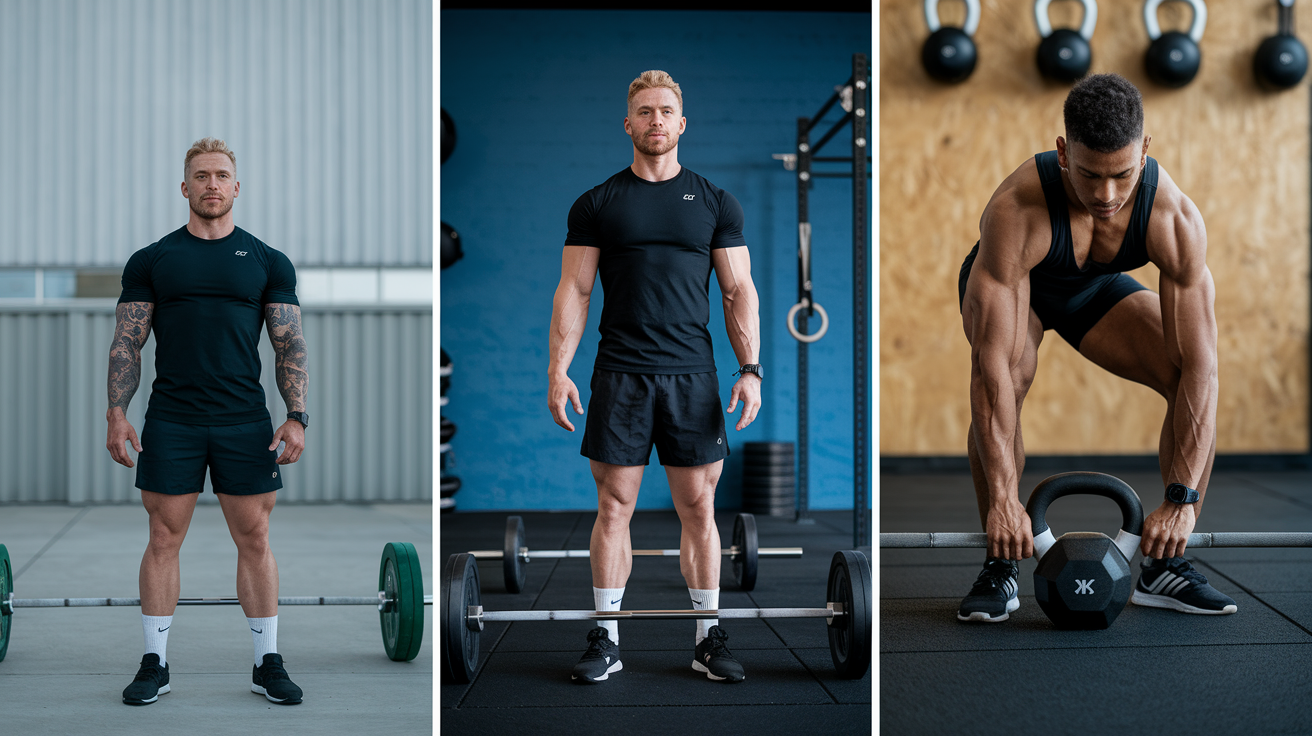
This model spreads 20 to 30 total sets per week across 5 to 6 sessions, so each session only includes 1 to 2 sets per major muscle group. Sessions last 20 to 30 minutes and use compound movements at moderate loads and submaximal effort. You might squat, bench, row, and do a core movement one day, then deadlift light, overhead press, pulldown, and lunge the next. The goal is consistent practice and movement quality without accumulating fatigue. This model works well during maintenance phases, for beginners with low absolute loads, or when you want daily movement for mental health and habit-building without chasing maximal strength or size gains.
Undulating Intensity Model
In this model you mix 1 to 2 heavy full-body sessions per week with 3 to 4 lighter sessions. Heavy days include compound lifts taken to RPE 8 to 9 with 3 to 5 sets per lift. Light days use the same movement patterns but at 60 to 70 percent intensity, focusing on speed, technique, or higher rep ranges with less fatigue. Monday might be heavy squats, bench, and rows. Wednesday light deadlifts and overhead press for technique. Friday moderate-intensity full-body work, and Sunday active recovery or mobility. The variation in intensity keeps weekly volume high without overloading recovery on any single day.
Skill/Conditioning-Focused Model
Some people train daily but replace traditional heavy lifting with skill work, bodyweight drills, mobility sessions, or low-load conditioning. You might do barbell practice with an empty bar, gymnastic strength progressions, kettlebell flows, or swim and bike sessions on most days, then add 1 to 2 traditional strength sessions per week. This approach supports daily movement and motor learning without the recovery cost of repeated heavy loading. It’s common in athletic programs, CrossFit-style training, and for people who enjoy varied movement more than pure strength work.
Signs Your Full Body Workout Frequency Is Too High

Your body will tell you when frequency is too high if you know what to watch for. Persistent muscle soreness that lasts longer than 72 hours after a session is a clear sign tissues haven’t fully repaired. When weights that used to feel manageable suddenly feel heavier or your performance drops for more than one session, that’s usually central nervous system fatigue or incomplete muscle recovery, not a bad day.
Chronic tiredness that doesn’t improve with a night or two of good sleep, along with mood changes like irritability or loss of motivation, often points to accumulated stress and hormonal disruption. Poor sleep quality, waking unrefreshed, or trouble falling asleep despite being tired are also red flags. Track your resting heart rate each morning. An increase of 5 to 10 beats per minute above your normal baseline, sustained for several days, suggests your body is under more stress than it can currently handle.
- Muscle soreness lasting more than 72 hours
- Declining performance or strength for 2+ sessions in a row
- Fatigue that persists despite adequate sleep
- Elevated morning resting heart rate by 5 to 10+ bpm
- Frequent minor illnesses or feeling run-down
Sample Full Body Workout Templates for Daily or Near-Daily Training

Beginner Full Body Routine (20–30 minutes)
Beginners tolerate higher frequency because absolute loads and total volume are low. A beginner can train full-body 3 to 4 times per week or even 5 to 6 times using very light sessions. Start with 2 to 3 compound movements per session, 2 to 3 sets each, 8 to 12 reps. Goblet squat 3 sets of 10, dumbbell bench press 3 sets of 10, and a bodyweight row or assisted pullup for 3 sets of 8 covers legs, chest, and back. Add a plank or dead bug for 2 sets to finish. Keep intensity at RPE 5 to 6. Focus on learning the movement and building the habit. If training daily, alternate lower-body emphasis one day with upper-body emphasis the next, or use the same movements at very low intensity each day and add one rep or a small amount of weight each week.
Intermediate Full Body Routine (30–40 minutes)
Intermediate lifters benefit from 3 to 4 full-body sessions per week with moderate to high intensity on heavy days and lighter work on other days. A sample session includes back squat 4 sets of 6 to 8 reps, bench press 4 sets of 6 to 8, barbell row 3 sets of 8 to 10, and Romanian deadlift 3 sets of 8 to 10, finishing with 2 sets of ab wheel or hanging knee raises. Heavy sessions run at RPE 7 to 8. Light sessions the next day might use the same lifts at 60 to 70 percent intensity for technique or speed work, 3 sets of 5 reps, keeping RPE around 6. If training 5 days, include 2 heavy sessions, 2 light sessions, and 1 moderate session, with full rest days or active recovery on weekends.
Advanced Full Body Routine (40–45 minutes)
Advanced lifters often use 4 to 6 sessions per week but carefully manage intensity distribution. A heavy session includes competition-style squats 5 sets of 3 to 5 reps at 80 to 90 percent, bench press 4 sets of 4 to 6, weighted pullups 4 sets of 5 to 8, and deadlift 3 sets of 3 to 5, all at RPE 8 to 9. Light sessions use variations like front squats, overhead press, and single-leg work at moderate loads for 3 sets of 6 to 10 reps at RPE 6 to 7. Include one dedicated technique or conditioning day with barbell complexes, kettlebell work, or bodyweight circuits. Many advanced lifters eventually shift to Upper/Lower or Push/Pull/Legs splits because they allow higher per-muscle volume without the full-body fatigue load every session.
Recovery Essentials When Training Full Body Frequently

Recovery determines whether frequent training builds you up or breaks you down. Protein intake should hit 1.6 to 2.2 grams per kilogram of bodyweight per day, spread across meals, to support muscle repair and growth. If you weigh 80 kilograms, aim for roughly 130 to 175 grams of protein daily. Carbohydrates fuel your sessions and refill muscle glycogen, so don’t shortchange carbs on higher-volume training days. A caloric surplus of 250 to 500 calories per day supports muscle growth if that’s your goal, while maintenance or a slight deficit works for strength without size gain.
Sleep is non-negotiable. Target 7 to 9 hours per night. Poor sleep blunts protein synthesis, raises cortisol, and tanks performance. If you’re training frequently and sleep suffers, cut a session rather than push through fatigue. Use objective markers like heart rate variability or resting heart rate to guide training decisions. If HRV drops significantly or resting HR stays elevated for several days, take an extra rest day or swap a hard session for easy movement.
Plan regular deload weeks every 4 to 12 weeks depending on your training load and how you feel. A deload reduces volume and intensity by 40 to 60 percent for 5 to 7 days, giving your body time to fully recover and adapt. You’ll come back stronger. Missing a deload when you need one is how plateaus and overtraining happen.
When Full Body Every Day Is Not the Best Choice and Safer Alternatives
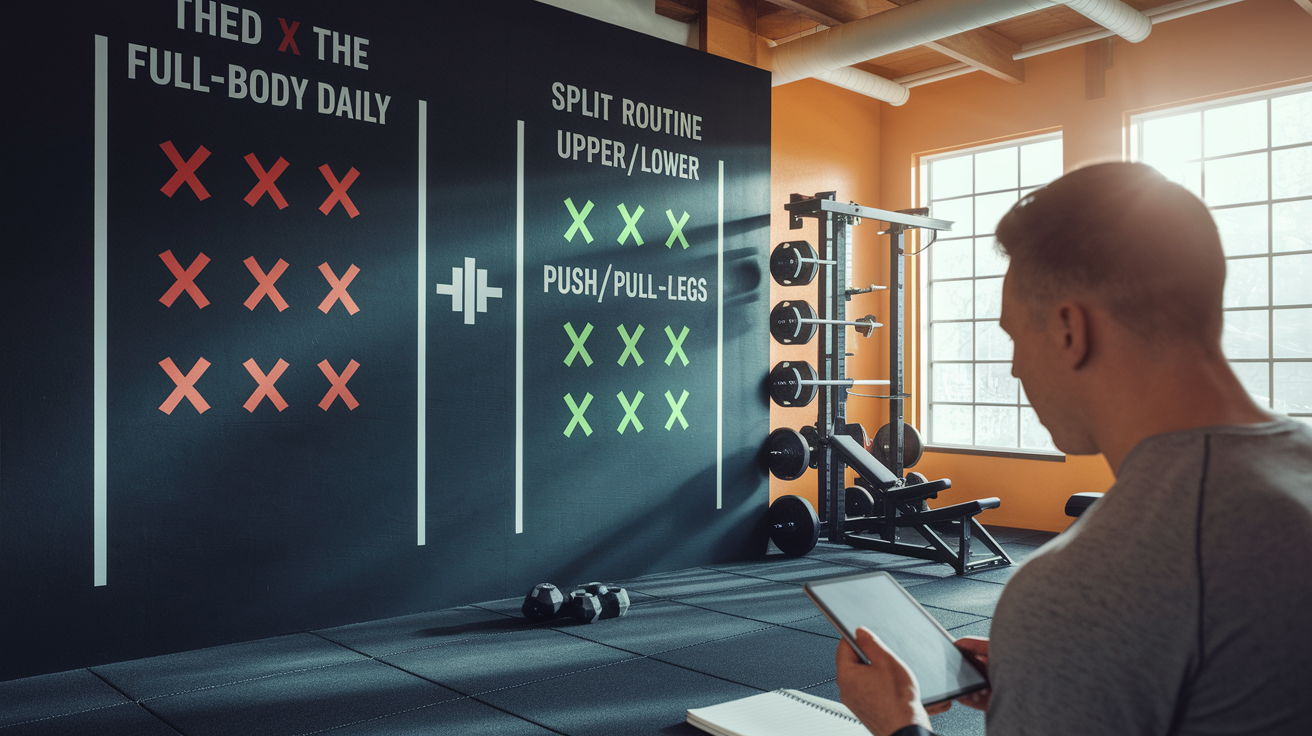
Daily full-body training isn’t practical or effective for everyone. Advanced lifters often need higher per-muscle volume than a daily low-volume model allows, and spreading 15 to 20 sets per muscle across 6 sessions feels inefficient. Bodybuilders and powerlifters usually get better results from split routines that let them concentrate intensity and volume on specific muscle groups each session, then allow those muscles several days to recover while training others.
If you find daily full-body training leaves you chronically sore, stalled in strength, or constantly tired, switch to a proven split. Upper/Lower splits run 4 days per week, training upper body Monday and Thursday, lower body Tuesday and Friday. Push/Pull/Legs splits run 3 to 6 days per week, separating pushing movements (chest, shoulders, triceps), pulling movements (back, biceps), and legs. Three-times-per-week full-body with deliberate progression is still one of the most effective and sustainable approaches for general strength and hypertrophy if you’re not chasing elite performance or competition goals.
| Split Type | Weekly Days | Best For |
|---|---|---|
| Full-body 3×/week | 3 (non-consecutive) | Beginners, general fitness, time-limited schedules |
| Upper/Lower | 4 | Intermediate lifters, balanced strength and hypertrophy goals |
| Push/Pull/Legs | 3–6 | Advanced lifters, bodybuilding, high per-muscle volume needs |
Final Words
in the action: daily heavy full-body training isn’t smart for most. Hard sessions need 48–72 hours to recover, so 2–4 full-body workouts per week usually works better.
We covered muscle protein synthesis, safe near-daily models, sample templates, recovery tactics, and red flags like soreness over 72 hours or a rising resting heart rate.
So, can you do full body workouts everyday? Yes, but only with very low volume, alternating intensity, solid sleep, and planned deloads. Start conservative, track how you feel, and adjust. You’ll keep improving without burning out.
FAQ
Q: What is the 3-3-3 rule at the gym?
A: The 3-3-3 rule at the gym is a simple strength template using three sets of three reps on main lifts, focusing on heavier weight, tight technique, and low volume to build strength.
Q: Can I build muscle while on zepbound?
A: You can build muscle while on Zepbound, but it needs focused resistance training, enough calories and protein (1.6–2.2 g/kg), and monitoring, so work with your doctor if appetite or energy drop.
Q: Does working out increase cortisol?
A: Working out can increase cortisol temporarily. Short to moderate sessions raise it briefly to support energy and recovery, while very long or intense workouts raise cortisol more and can hurt recovery if chronic.
Q: How many times a week should you do a full body workout?
A: You should do a full body workout 2–4 times per week for most people; heavy sessions need 48–72 hours recovery, and near-daily training only works with low intensity and reduced volume.