


Core workouts at home aren’t just sit-ups.
You can build a stronger midsection with no gear, short circuits, and better form.
This guide lays out practical, equipment-free core workouts that train your abs, low back, glutes, and pelvic floor together so you move better and feel sturdier.
Follow step-by-step cues, beginner-to-advanced routines, and quick 5–20 minute plans you can do almost every day.
Want real, usable core strength that fits a busy life? Start here.
At-Home Core Training Essentials for Fast, Equipment-Free Results
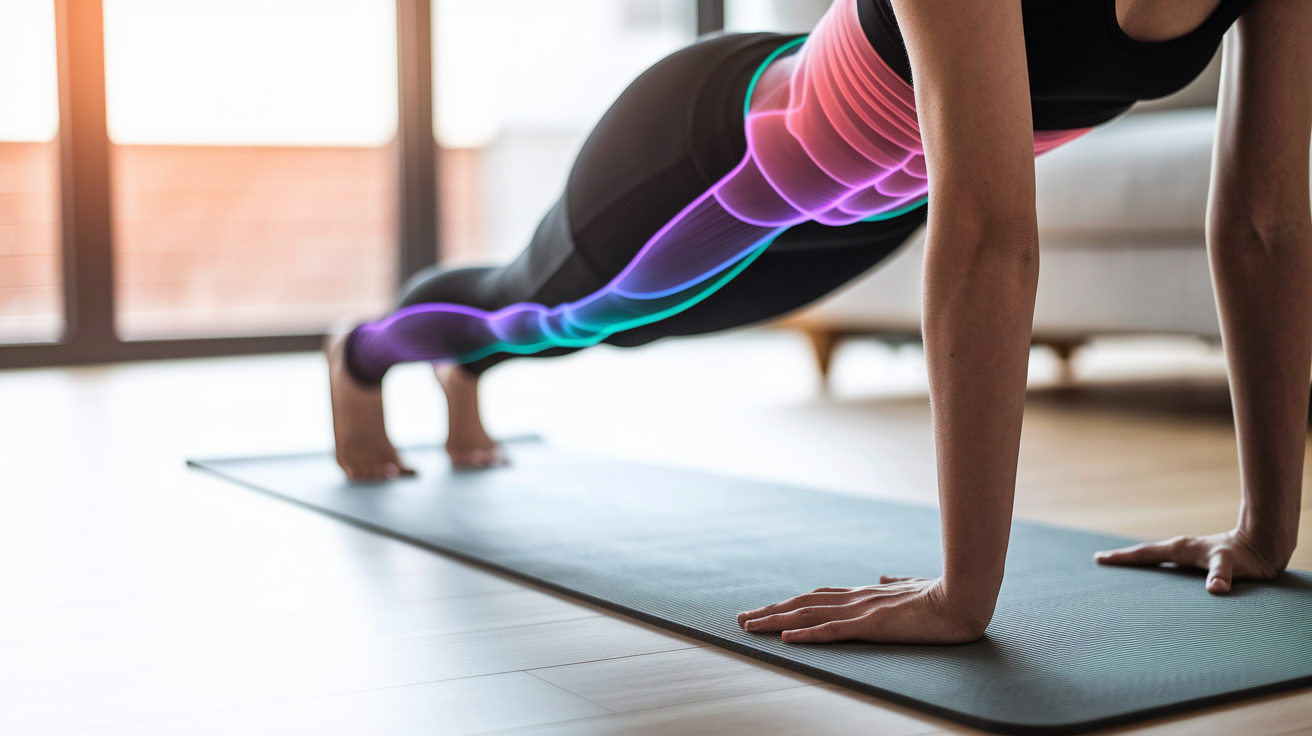
You can train your core every day. Unlike bigger muscle groups that need 48 hours between sessions, your abs and stabilizers recover fast enough to work daily. That makes at-home core training one of the easiest ways to build real strength without gym access or gear.
Here’s what matters: a complete core routine hits more than your six-pack. You’re working your low back, glutes, pelvic floor, and deep abdominals together. That combination improves your posture, tightens your balance, and cuts your risk of low back pain.
Most moves use bodyweight only. You need space for a yoga mat or towel, nothing else. No barbells, cables, or fancy machines required. The trick is nailing your form, breathing right, and stacking exercises into short circuits that fit your day.
The best at-home core exercises:
- Plank
- Side plank
- Dead bug
- Bird dog
- Bicycle crunch
- Reverse crunch
- Mountain climbers
- Flutter kicks
- Russian twist
- Hollow hold
Want a quick 5-minute routine? Pick 5 to 7 moves and run through them with minimal rest. For 10 minutes, repeat the same circuit twice or choose 10 different exercises and hit each one once. Either way works.
Start every session with a pelvic tilt warm-up. Do 10 to 12 reps to wake up your deep abs before you load them with harder stuff. That simple step helps you brace correctly and keeps your low back safer during planks, crunches, and leg raises.
Core Exercises at Home With Step-by-Step Form Cues

Each exercise below targets a different part of your core. Follow the setup and breathing notes so you feel the right muscles working.
Plank
Get on your forearms and toes, elbows stacked under your shoulders. Pull your belly button toward your spine, tuck your ribs, and look a few inches in front of your hands to keep your neck neutral. Hold 30 seconds when you’re starting out, build to 1 minute. Breathe steady. If your hips sag or shoulders creep up, drop to your knees and reset.
Side Plank
Lie on your side, forearm flat, elbow under your shoulder. Stack your feet and lift your hips off the ground so you’re a straight line from head to heels. Hold 30 to 45 seconds per side. Keep your top shoulder pulled back and your core tight so you don’t collapse through your waist.
Dead Bug
Lie on your back, arms reaching up, knees bent 90 degrees above your hips. Lower your right arm overhead while straightening your left leg, keeping your low back pressed to the floor. Come back to center and switch. Do 8 to 16 reps per side. Exhale when you extend, inhale when you return.
Bird Dog
Start on hands and knees, wrists under shoulders, knees under hips. Reach your right arm forward and your left leg back, forming a straight line. Hold 2 seconds, return, switch. Do 8 to 12 reps per side. Keep your hips level and your core braced so your lower back doesn’t arch.
Bicycle Crunch
Lie on your back, hands behind your head, legs in tabletop. Lift your shoulder blades and bring your right elbow toward your left knee while straightening your right leg at 45 degrees. Switch in a pedaling motion. Do 10 reps per side (20 total). Move with control, not speed.
Reverse Crunch
Lie flat, knees bent 90 degrees, shins parallel to the floor. Press your palms down and curl your hips off the ground, bringing your knees toward your chest. Lower with control, keeping your low back pressed. Do 10 to 15 reps. Exhale when you lift, inhale when you lower.
Mountain Climbers
High plank, hands under shoulders. Drive your right knee toward your chest, then quickly switch legs like you’re running in place. Keep your hips level and core tight. Go for 30 seconds at a steady pace. If you’re new, slow it down and nail the form before you speed up.
Flutter Kicks
Lie on your back, legs straight and lifted to 45 degrees. Press your low back down and scissor your legs up and down in small, controlled movements. Do 15 reps (count each time one leg kicks up). Tuck your hands under your glutes if you need extra low-back support.
Russian Twist
Sit with knees bent and feet flat. Lean back slightly, lift your feet an inch or two, and twist your torso to tap the floor on each side of your hips. Do 5 reps per side. You can hold a light dumbbell or water bottle, or just use bodyweight. Keep your chest up and core braced.
Hollow Hold
Lie flat and press your low back into the floor. Lift your shoulders and legs a few inches, arms reaching long by your sides. Your body forms a shallow dish shape. Hold 20 to 60 seconds. If your back arches, bend your knees slightly or lower your legs closer to the ground.
Beginner-Friendly Core Workouts at Home

If you’re new to core work, your first goal is learning how to brace your abs and breathe correctly while moving. Keep your spine neutral (a small natural curve in your low back, not flat and not arched). Exhale on the hard part of each rep. Don’t yank your head forward or hold your breath. You want to feel your abs, glutes, and low back working together, not just your hip flexors dragging your legs around.
Start with exercises that give you a stable base and clear feedback. Dead bugs, bird dogs, and glute bridges teach you how to move one limb while keeping your torso still. Planks and side planks build strength in a static position. Heel taps and reverse crunches add gentle movement without overloading your lower back.
A simple 5-minute beginner circuit:
- Pelvic tilt: 10 to 12 reps (warm-up)
- Plank: 20 to 30 seconds
- Dead bug: 8 reps per side
- Glute bridge: 10 to 12 reps
- Heel taps: 20 total
- Bird dog: 8 reps per side
Progress by adding 5 seconds to your plank each week or bumping reps by 2 to 5 per exercise. After two to three weeks, add a second round. You should feel stronger and more stable, not sore or strained.
Advanced At-Home Core Routines for More Challenge

Once you can hold a full plank for 60 seconds and knock out 15 clean reverse crunches, you’re ready for harder stuff. Advanced routines use longer holds (45 to 90 seconds), higher reps (12 to 20), and added instability or load. Hold a light dumbbell during Russian twists, elevate your feet during planks, or slow your tempo on mountain climbers to increase time under tension.
An 8-exercise advanced circuit:
- Hollow hold: 45 to 60 seconds
- Single-leg glute bridge: 12 reps per side
- V-ups: 8 to 15 reps
- Weighted Russian twist: 10 reps per side with 5 to 15 lb
- Side plank with leg lift: 30 seconds per side
- Bicycle crunch: 15 reps per side
- Leg raises: 10 to 15 reps
- Mountain climbers (fast tempo): 45 seconds
To add overload without equipment, do exercises on one leg (single-leg deadlift plank), use a slower tempo (4-second lower on leg raises), or work one side at a time (single-arm plank, side plank dips). Small tweaks in position or speed force your stabilizers to work harder and keep your core adapting week after week.
Time-Efficient Core Workouts at Home (5, 10, and 20 Minutes)

Short, focused core sessions fit into almost any schedule and deliver real strength when done consistently. A 5-minute routine maintains core endurance on busy days. A 10-minute session gives you time to warm up, work through a full circuit, and cool down. A 20-minute block lets you repeat circuits or add more exercises for deeper work.
For 10-minute workouts, use an interval timer and follow an 8-exercise format with 45 seconds of work and 15 seconds of rest. That gives you 8 minutes of work plus 1 minute to warm up and 1 minute to stretch after. Another option: choose 10 exercises and do each for 60 seconds straight with no rest. Or set a timer for 10 minutes and rotate through 6 to 8 exercises as many times as possible (AMRAP style), counting total rounds.
For 20-minute sessions, pick 5 to 7 exercises and complete 2 full rounds with 30 to 45 seconds of rest between. You’ll rack up more volume and give your muscles a longer stimulus without needing new movements or complicated progressions.
| Duration | Structure | Notes |
|---|---|---|
| 5 minutes | 5–7 exercises, 1 round, 30–45 seconds each | Quick maintenance session or warm-up before cardio |
| 10 minutes | 8 exercises × 45s work / 15s rest, or 10 exercises × 60s each | Full core stimulus with warm-up and cool-down included |
| 20 minutes | 2 rounds of 5–7 exercises, 30–45s rest between rounds | Higher volume for strength and endurance gains |
Safe Core Training at Home: Mistakes and Injury Prevention

Most core injuries come from poor alignment, too much speed, or ignoring pain signals. Your low back should stay neutral or slightly rounded during crunches and leg lifts, never arched. If you feel a sharp pinch in your lower back, stop and check your form. Dull soreness in your abs the next day is normal. Sharp pain during the movement isn’t.
Breathing matters more than you think. Holding your breath creates internal pressure that pushes against your spine and raises your blood pressure. Exhale when you lift, curl, or twist. Inhale when you return to the start. That rhythm keeps your core engaged and your neck relaxed.
Common mistakes:
- Pulling on your neck during crunches instead of lifting from your shoulder blades
- Using momentum to swing your legs during leg raises or flutter kicks
- Letting your ribs flare during hollow holds and planks
- Sagging your hips or hiking them too high in plank
- Holding your breath through entire sets
- Skipping the warm-up and jumping straight into hard exercises
When an exercise feels wrong, choose a safer alternative. If full leg raises hurt your low back, bend your knees or switch to reverse crunches. If standard planks bother your wrists, drop to your forearms. If bicycle crunches strain your neck, try dead bugs instead. Modifying so you can do it pain-free is always smarter than pushing through discomfort and risking a real injury.
Progress Tracking for At-Home Core Strength

Tracking your workouts shows you whether you’re actually getting stronger or just repeating the same routine week after week. Write down the date, exercises, reps or hold times, and how hard it felt on a 1 to 10 scale. Over time, those numbers tell you when to add reps, increase holds, or layer in harder variations.
Simple ways to measure core progress: check your max plank hold time once a week, count how many bicycle crunches you can do with perfect form, and track how many circuits you complete in a timed session. You can also measure your waist every two weeks and take progress photos from the front and side. Strength improvements show up first. Visible changes in your midsection depend on your overall body composition and nutrition, so they take longer.
Five measurable markers to track:
- Max plank hold time (test weekly, aim to add 5 to 15 seconds every 2 weeks)
- Reps per set for dynamic exercises (increase 10 to 20 percent per week)
- Number of circuits or rounds completed in a timed session
- Waist circumference (measure every 2 weeks at the same time of day)
- Progress photos (front, side, and back every 2 weeks)
Set small weekly targets and adjust when you hit them. If you can hold a side plank for 45 seconds on both sides without your hips dropping, add a leg lift or move to a single-arm plank. If you can complete 15 clean reverse crunches, aim for 18 next week or slow your tempo to 3 seconds down. That steady, measurable progress is how you build a stronger core that lasts.
Final Words
Get started with the simple, equipment-free options in this guide, from pelvic tilts and planks to bicycle and reverse crunches. Use the form cues and injury tips so you train safely.
Pick one routine, beginner or advanced, warm up, and track one number each week like plank time or reps. Progress by small steps: add time, reps, or a slightly harder move.
Small, steady wins add up fast—stick with these core workouts at home and you’ll feel stronger in weeks.
FAQ
Q: What is the best core exercise at home?
A: The best core exercise at home is the plank — it trains the whole core without equipment. Aim 30–60 seconds, keep a neutral spine, brace your belly, and breathe steadily.
Q: What are the big 3 exercises for the core? / What are 5 good core exercises?
A: The big three core exercises are plank, dead bug, and bird dog. Five other solid at-home moves: bicycle crunches, glute bridge, mountain climbers, reverse crunches, and Russian twists.
Q: Is a 20 minute core workout good?
A: A 20-minute core workout is effective when it includes a warm-up and varied moves. Do two 10-minute circuits or interval sets (45s work / 15s rest) for measurable strength gains.