
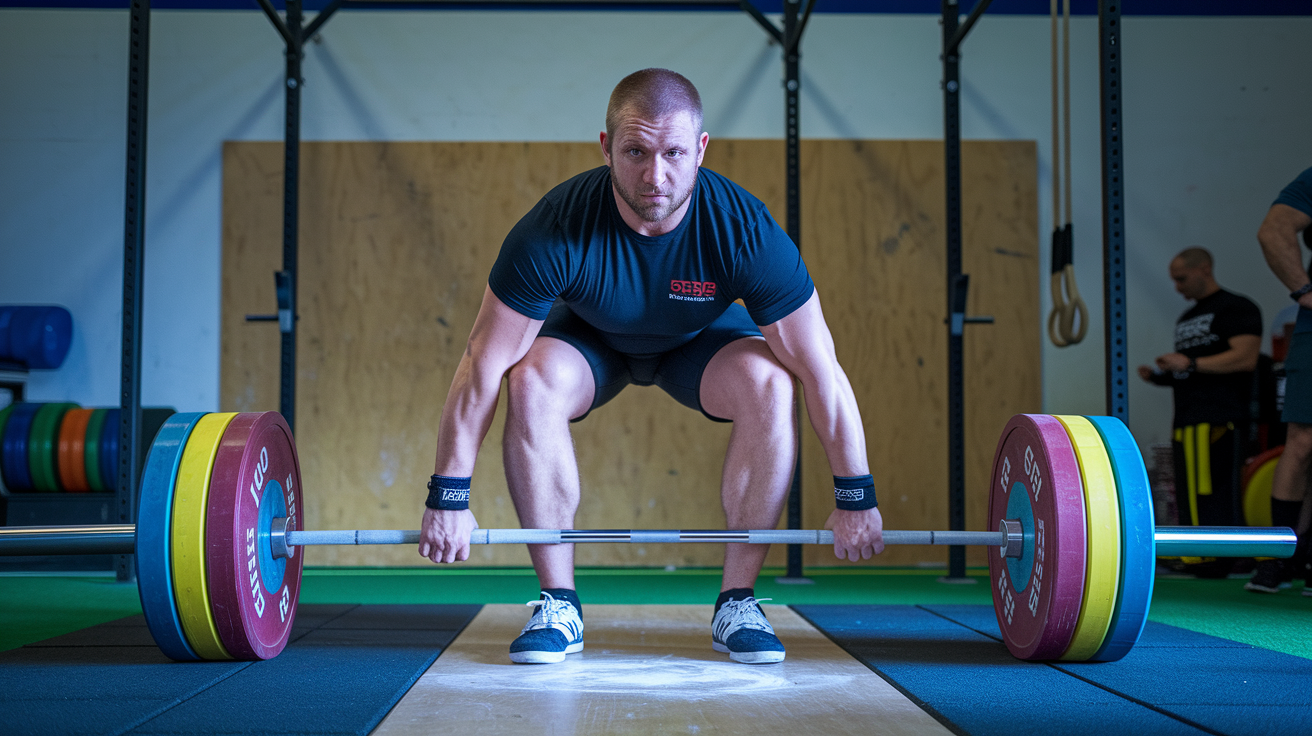

You don’t need to max out every week to add big deadlift numbers.
This 12-week periodization blueprint shows how to add strength with two sessions per week—one heavy main day and one lighter technique or variation day.
It moves from 75% to 95% of your tested 1RM, cycles volume in three-week stress, one-week recovery blocks, and targets accessories to fix weak links.
Follow it, track bar speed, honor deloads, and you’ll test a cleaner, stronger max at week 12.
The Deadlift Strength Program (Full 12‑Week Template)

This 12-week deadlift program builds around two sessions per week: one heavy day and one lighter technique or variation day. The main session moves from 75% of your 1RM up to 95% over the cycle. The secondary session uses moderate loads and deadlift variations to lock in your hip hinge, build positional strength, and keep fatigue in check. You’ll start week 1 with manageable volume and moderate intensity. Weeks 5–8 increase both load and total reps. Weeks 9–11 cut volume but push intensity into the 90–95% zone. Week 12 is a full deload before you test a new max or hit a meet.
Volume follows a high, medium, very high, low pattern across each 4-week block. Weeks 1, 5, and 9 are high-volume sessions. Weeks 2, 6, and 10 drop sets but raise intensity. Weeks 3, 7, and 11 push total reps and percentages hard. Weeks 4, 8, and 12 are recovery weeks with reduced load and lower volume. Three weeks of stress, one week of recovery. Simple.
Percentages come from your actual tested 1RM, not a training max. If your best conventional pull is 405 lb, all loads use 405 as the anchor. Don’t recalculate mid-program even if you feel stronger. The progression is already baked in. Chasing new maxes during the cycle will overshoot your fatigue budget and wreck the final test week.
Use the table below to run the full 12 weeks. Warm up before every main session, track bar speed on the work sets, and follow the secondary lift as written. If the bar moves slowly on week 3 or week 7, that’s expected. Very high volume plus high percentage feels heavy. Trust the deload weeks to reveal the strength you’ve been building.
| Week | Main Deadlift Work | Sets / Reps | % 1RM | Secondary Lift |
|---|---|---|---|---|
| 1 | Conventional Deadlift | 5 × 5 | 75% | Romanian Deadlift 3×8 @60% |
| 2 | Conventional Deadlift | 4 × 3 | 80% | Paused Deadlift 3×3 @70% |
| 3 | Conventional Deadlift | 6 × 3 | 82% | Deficit Deadlift (2″) 4×5 @65% |
| 4 | Conventional Deadlift | 3 × 3 | 70% | Back Extension 3×12 |
| 5 | Conventional Deadlift | 5 × 4 | 80% | Romanian Deadlift 3×6 @65% |
| 6 | Conventional Deadlift | 4 × 2 | 85% | Block Pull (mid-shin) 3×3 @80% |
| 7 | Conventional Deadlift | 5 × 3 | 87% | Paused Deadlift 3×2 @75% |
| 8 | Conventional Deadlift | 3 × 2 | 75% | Hip Thrust 3×10 |
| 9 | Conventional Deadlift | 4 × 3 | 85% | Deficit Deadlift (2″) 3×3 @70% |
| 10 | Conventional Deadlift | 3 × 2 | 90% | Romanian Deadlift 3×5 @65% |
| 11 | Conventional Deadlift | 3 × 1 | 95% | Block Pull (below knee) 2×2 @85% |
| 12 | Rest or Technique Practice | 2 × 3 | 60% | Back Extension 3×10 |
Programming Structure for Maximizing Deadlift Strength
A deadlift strength program works because it cycles intensity and volume across the training week and the training month. You can’t pull heavy singles every session without frying your CNS and lower back, so you split the workload. One day is a primary high-intensity session. The other is a secondary moderate-load day. The primary session uses competition-style pulls at 75–95% with low reps per set (1–5) to practice maximal force production. The secondary session uses variations like Romanian deadlifts, deficits, or paused reps at 60–75% with slightly higher reps (3–8) to build positional strength, reinforce technique, and keep total volume reasonable.
Weekly volume climbs and then drops across a 3 or 4 week block to allow adaptation without overtraining. High-volume weeks create a training stimulus and stack up fatigue. Medium-volume weeks maintain intensity but pull back total work so you don’t dig too deep. Very high-volume weeks push into reserves for a final overload. Low-volume deload weeks let your body catch up and express the strength you’ve built. This rhythm prevents staleness and keeps bar speed high on the days that matter most.
Four core principles govern this program structure:
Intensity cycles upward across the 12 weeks, from 75% in week 1 to 95% in week 11, so your nervous system adapts to handling near-maximal loads.
Volume peaks in weeks 3, 7, and 11 to create overload, then drops in the following deload week to allow recovery.
Bar speed is your real-time feedback loop. If your reps slow down earlier than expected, you’re undersleeping, undereating, or the progression jumped too fast.
Fatigue control comes from planned deloads every fourth week and limiting deadlift frequency to twice per week with one session always lighter or focused on variation work.
Deadlift Progression and Load Increases

Deadlift progression in a 12-week strength program is built into the template percentages, but you still need to know when and how to adjust loads if bar speed drops or recovery lags. The simplest rule: if you complete all prescribed sets and reps at the programmed percentage with controlled bar speed (the bar doesn’t grind or stall mid-shin), stick to the plan. If you miss reps or the bar crawls on week 2 or 3 of a block, your starting 1RM was probably overestimated. Drop it by 5–10 lb and recalculate all percentages before the next block.
Between 12-week cycles, increase your training 1RM by 2.5–5 lb (1–2%) if you’re an intermediate lifter or 5–10 lb if you’re newer to percentage-based programs and made clean jumps in the final test week. Run the same 12-week template again using the new 1RM as your calculation anchor. This small, predictable increase keeps you progressing for multiple cycles without outrunning your recovery or technique.
To adjust loads week to week and cycle to cycle, follow these four steps:
Track bar speed on every main set. If reps move fast and lockout is clean, you’re on track. If reps slow down before week 3 of a block, you’ve overshot and need to shave 2–3% off your working 1RM.
Honor the deload weeks exactly as written. Cutting volume or skipping week 4, 8, or 12 will cost you the recovery that lets strength show up in the next block.
Add load between cycles, not during them. Chasing PRs mid-program disrupts the planned fatigue curve and increases injury risk when volume is still high.
If you miss reps two weeks in a row, take an unplanned deload (drop to 65–70% for 3×3) and resume the program the following week at the same percentage you missed. Don’t push forward into higher intensities on top of accumulated fatigue.
Accessory Movements That Build Deadlift Strength
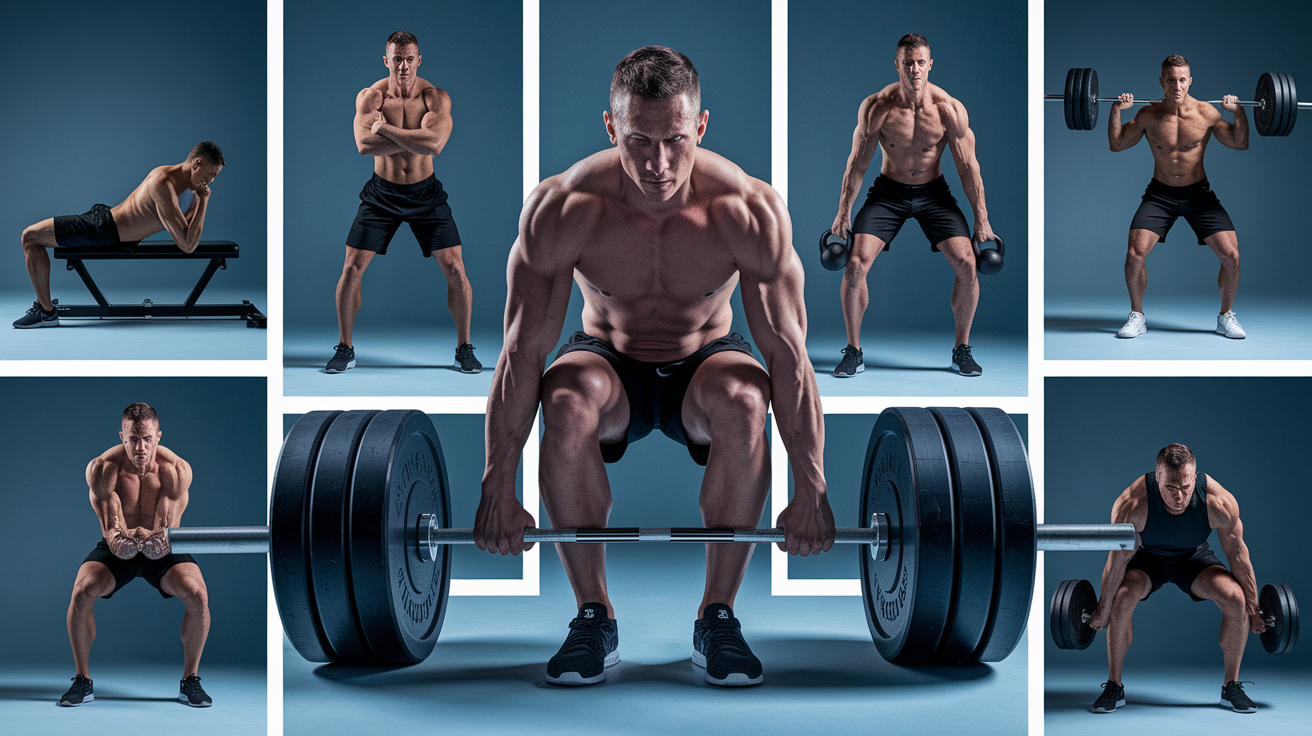
Accessory lifts strengthen the muscles and positions that support your competition deadlift. The goal isn’t to add random exercises or chase a pump. Every accessory should target a weak link in your pull, whether that’s hip extension strength, posterior chain endurance, positional control off the floor, or grip stamina under load. Choose 2–3 accessories per training week and keep total sets low (6–9 working sets across all accessories) so you don’t bury yourself in junk volume that steals recovery from the main deadlift work.
Glute Dominant Accessories
Hip thrusts, Romanian deadlifts, and kettlebell swings build the glute and hamstring power you need to lock out heavy pulls. Hip thrusts let you overload the top half of hip extension with more weight than you can deadlift, training your glutes to fire hard when your hips move from 90 degrees to full lockout. Romanian deadlifts keep you in the hinge pattern and teach tension control through the eccentric, which directly improves your ability to stay tight on the way down if you’re training touch-and-go reps. Use 3–4 sets of 6–10 reps at 60–70% of your deadlift max for RDLs, and go heavier on hip thrusts (sets of 8–12 with a 2 second squeeze at the top).
Back Dominant Accessories
Your spinal erectors, lats, and upper back hold your position under load and transfer force from your legs to the bar. Back extensions (also called hyperextensions) and good mornings train anti-flexion strength through the low and mid back. Weighted back extensions for 3 sets of 12–15 reps build endurance so your back doesn’t round on rep 3 of a heavy set of 5. Good mornings done with a safety-squat bar or straight bar for 3×6–8 at 40–50% of your squat max teach you to brace and hinge under an axial load, which mirrors the demand of a max deadlift. Pendlay rows and chest-supported rows (3×8–10) thicken your upper back and lats, giving you more muscle mass to pull the slack out of the bar and keep it close to your shins.
Deadlift Variations
Deficit deadlifts, paused deadlifts, and block pulls isolate specific ranges of motion where most lifters lose position or speed. Deficit pulls (standing on a 1–3″ platform) extend the range of motion and force better positioning off the floor. If you tend to round your back at the start, deficits will expose that fast and teach you to set your back before you pull. Paused deadlifts (1–2 second pause just below or at the knee) eliminate momentum and build positional strength in the mid-pull, which is where most reps stall. Block pulls (bar set at mid-shin or just below the knee) let you handle supramaximal loads (100–110% of your max) for low reps (2–3 per set), training lockout strength and confidence with heavy weight in your hands. Use deficit and paused work at 65–75% for 3–5 reps. Use block pulls at 85–95% for doubles or triples.
Grip Focused Accessories
Your grip fails before your back or legs on near-maximal pulls if you haven’t trained it directly. Farmer carries, dead hangs, and barbell holds build crushing strength and endurance. Farmer carries with heavy dumbbells or farmer’s walk handles for 3–4 sets of 30–40 meters teach your hands and forearms to hold tension while your body is moving. Dead hangs from a pull-up bar for 3 sets of 20–40 seconds (add weight with a dip belt if bodyweight is easy) build straight static grip endurance. Barbell holds at the top of a deadlift (load the bar to 100–110% of your max, lift it to lockout, and hold for 10–15 seconds) teach your hands to handle supramaximal loads and prepare your nervous system for the weight you’ll see in a few weeks. Do grip work at the end of your session 1–2 times per week, never before main deadlift sets.
Technical Cues for a Stronger Deadlift
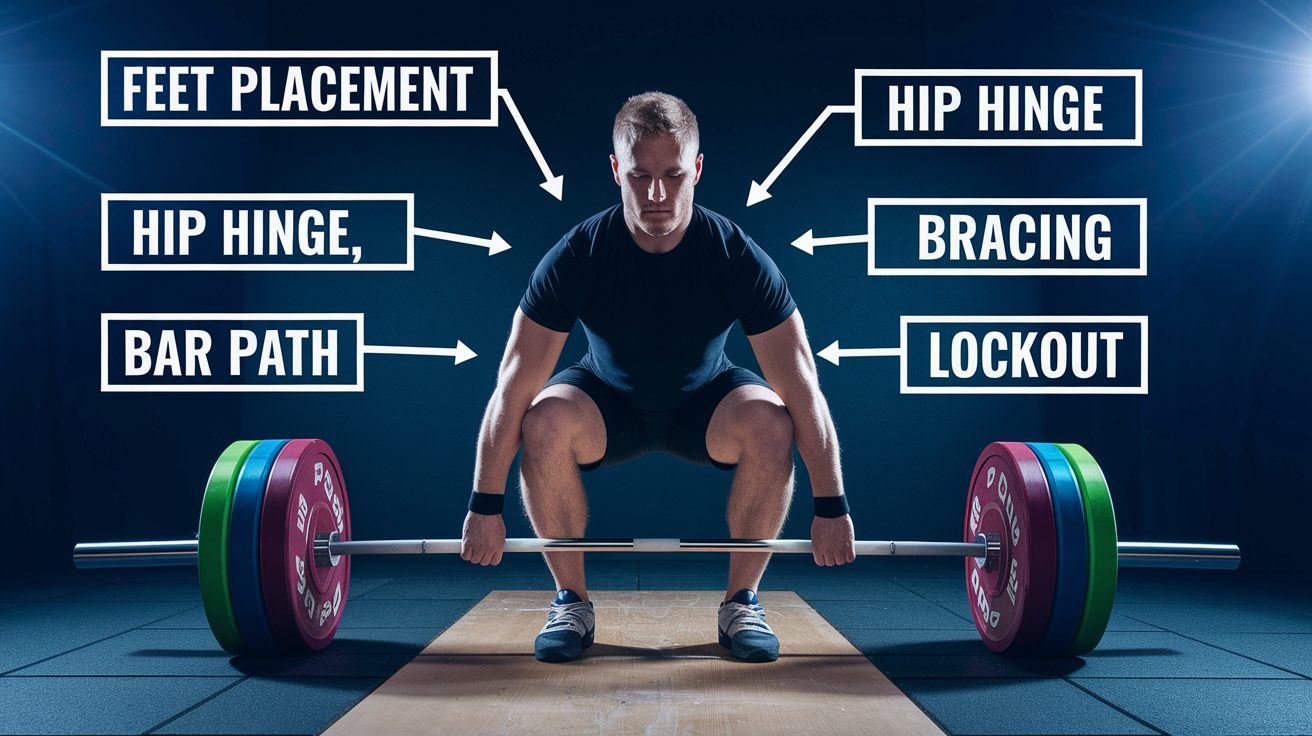
Technique breaks down under fatigue and heavy load unless you have 3–5 go-to cues you can execute on autopilot. Good cues are short, actionable, and tied to a single movement or body position. “Brace like you’re about to take a light punch to the stomach” is better than “keep your core tight.” The best cues feel physical, not abstract, so you can instantly check whether you’re doing them or not.
Start every pull by setting your feet under your hips (not wider), with the bar over mid-foot and your shins about an inch from the bar. Hinge at the hips to grip the bar, then pull your chest up without dropping your hips. This loads your hamstrings and sets your back angle. Before you pull, take a deep breath into your belly, brace hard, and pull the slack out of the bar by applying light upward tension until you hear the plates click against the inside of the sleeves. That click tells you the bar is tight and you’re about to move weight, not just yank loose metal.
As you break the floor, think “push the floor away” instead of “lift the bar up.” This cue keeps your weight centered over mid-foot and prevents your hips from shooting up faster than your chest, which turns the pull into a stiff-legged good morning. Keep the bar glued to your shins and thighs the entire way up. If it drifts forward even two inches, you lose mechanical advantage and the lift gets exponentially harder. At lockout, finish by squeezing your glutes hard and standing tall. Don’t hyperextend your lower back by leaning backward.
Five cues to drill every session:
Brace before you pull, not while you pull. Tension comes first, movement second.
Pull the slack out of the bar until you hear the plates click, then initiate the lift without jerking.
Push the floor away with your legs instead of thinking “lift with your back.”
Drag the bar up your shins and thighs. Any gap between the bar and your body makes the pull harder.
Finish with your glutes, not by overarching your spine. Lockout happens at the hips, not the lower back.
Recovery Strategies to Support Deadlift Strength Gains

Heavy deadlifts tax your central nervous system, lower back, hamstrings, and grip harder than almost any other lift. Recovery isn’t optional. It’s part of the program. If you’re not sleeping 7–9 hours per night and eating enough protein and total calories to support tissue repair and nervous-system recovery, your numbers will stall by week 5 no matter how perfect your technique is. Aim for 0.8–1 g of protein per pound of bodyweight daily, and keep your overall calorie intake at or slightly above maintenance if strength is the primary goal. Undereating during a high-intensity program turns every session into a glycogen-depleted grind, and your body will start breaking down muscle to fuel workouts instead of building it.
Deload weeks (weeks 4, 8, and 12 in this program) aren’t rest weeks. They’re active recovery weeks where you still train but at reduced intensity and volume. Do the prescribed sets, reps, and percentages exactly as written. Skipping deloads or trying to “make up” for lost intensity by adding reps will bury you in fatigue and cost you the strength rebound that’s supposed to show up in week 5 or week 9. Think of deloads as part of the progression, not a week off. Your body supercompensates during low-stress weeks, not high-stress weeks.
Low-intensity movement on non-training days helps manage soreness and maintain mobility without adding fatigue. A 10–15 minute walk, light bike ride, or easy yoga session keeps blood flowing to your legs and back without stressing your tissues. Avoid high-intensity conditioning, long runs, or random CrossFit workouts during a deadlift strength program. Your recovery budget is already allocated to pulling heavy twice a week, and anything that competes for that budget will slow your progress.
Sample Weekly Deadlift Training Templates

Most lifters will run this program alongside squats, bench press, and other compound work, so deadlift sessions need to fit into a 3 or 4 day training week without creating conflicts. The two templates below show how to organize your deadlift work: one uses a traditional heavy/light split, the other uses variations to manage fatigue while keeping pulling frequency at twice per week.
In a heavy/light template, your first deadlift session of the week is the main event. Competition-style pulls at the percentage and set/rep scheme from the 12-week table. Your second session uses lighter loads and variations to practice technique, build positional strength, and accumulate volume without frying your back. This split works well if you squat heavy earlier in the week, because your second deadlift day stays submaximal and won’t interfere with recovery from squats.
| Day | Lift | Sets / Reps |
|---|---|---|
| Monday | Back Squat (heavy) | 4×4 @80% |
| Wednesday | Conventional Deadlift (main session from program table) | Per 12-week template |
| Friday | Romanian Deadlift or Paused Deadlift (secondary lift) | 3×6 @65% |
| Saturday | Bench Press + Upper Back Accessories | Varies |
A variation-focused template uses different deadlift styles or implements across the two weekly sessions to reduce redundancy and manage joint stress. Your main day still follows the 12-week program, but your secondary day rotates between deficit pulls, block pulls, trap bar deadlifts, or snatch-grip deadlifts depending on your weak points. This approach works well for lifters who find that pulling conventional twice a week irritates their lower back or grip, because the variation day trains the same movement pattern with a different stimulus.
| Day | Lift | Sets / Reps |
|---|---|---|
| Tuesday | Conventional Deadlift (main session from program table) | Per 12-week template |
| Thursday | Deficit Deadlift (2″ platform) or Block Pull (mid-shin) | 4×4 @70% |
| Saturday | Front Squat or Safety-Squat Bar Squat | 4×5 @75% |
| Sunday | Upper Body Pressing + Rowing Accessories | Varies |
Final Words
Use the 12-week template: one heavy deadlift day and one lighter variation day each week, set your %1RM targets, and add small, steady increases (2.5–5 lb or ~2–3%) every 1–2 weeks. Pair that with accessory lifts, clear technique cues, and planned recovery so volume and intensity rise without wrecking your form.
Watch bar speed and sleep, and back off when technique falters. Follow the sample weekly templates.
Stick with this deadlift program for strength and you’ll see steady, provable gains. Stay steady.
FAQ
Q: What is the structure of the 12-week deadlift strength program?
A: The 12-week deadlift strength program is arranged as weekly heavy and lighter variation days, with planned volume and intensity progressions across three phases: build, peak, and test.
Q: What sets, reps, and %1RM should I use?
A: Sets, reps, and intensity use low-to-moderate reps (1–5) with sets varying by week; aim 75–95% 1RM for heavy work and lower percentages for technique or variation days.
Q: How do I progress load week to week?
A: To progress week to week, increase load by 2.5–5 pounds or 2–3% every 1–2 weeks, use linear or step-loading, and back off if bar speed or recovery drops.
Q: How often should I deadlift per week?
A: You should deadlift 1–2 times per week: one heavy session for top-end strength and one lighter variation or technique session to manage fatigue and build specific weaknesses.
Q: What secondary lifts and accessories should I include?
A: Secondary lifts and accessories should target glutes, hamstrings, back, and grip—Romanian deadlifts, hip thrusts, rows, back extensions, paused or deficit deadlifts, and farmer carries.
Q: How should I adjust loads based on bar speed and recovery?
A: Adjust loads based on bar speed and recovery by reducing weight or reps when speed slows or soreness increases, and add small increases when speed stays fast and recovery is good.
Q: Why use a heavy/light split?
A: The heavy/light split balances intensity and fatigue by using one high-intensity day and one lower-intensity variation day to keep technique sharp while managing weekly volume.
Q: When should I deload during the program?
A: You should deload every 3–6 weeks or whenever performance, sleep, or bar speed drops; use a lighter week with reduced volume and intensity to recover.
Q: How do I improve grip strength for deadlifts?
A: To improve grip strength for deadlifts, use farmer carries, heavy holds, thick-bar work, and mixed or hook grip practice, added as short accessory sessions twice weekly.
Q: How do I fix common deadlift technique issues?
A: To fix common technique issues, brace the core, keep the bar over mid-foot, pull the bar close, and hinge at the hips; paused or light reps help engrain the pattern.
Q: Can a beginner use this 12-week program and how should they modify it?
A: A beginner can use the 12-week plan by dropping intensity to 60–75% 1RM, doing fewer heavy sets, focusing on form, and progressing slowly each week.
Q: How should I test or estimate my 1RM safely?
A: To test or estimate a 1RM safely, use a submaximal rep test (like a 5RM), warm thoroughly, build to near-max singles, and stop if form breaks down.