
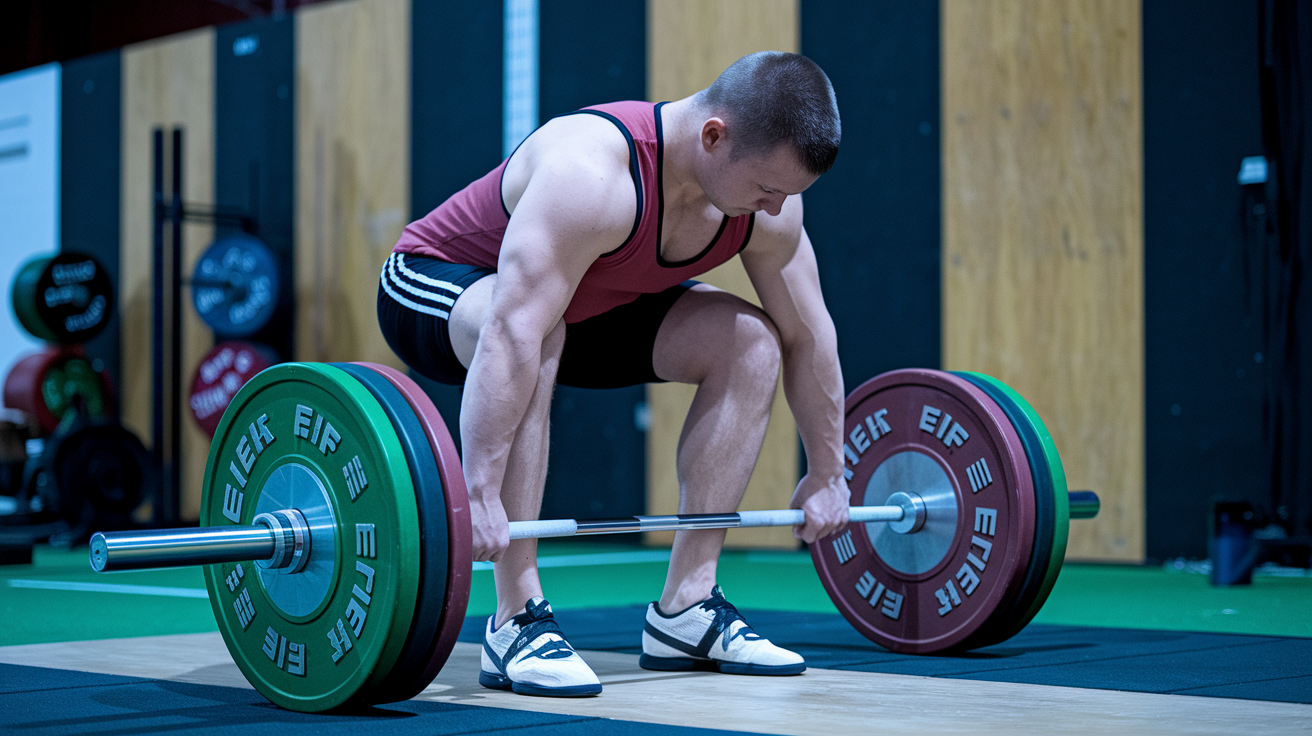

Think faster progress means piling on plates each session?
That’s a fast way to get hurt.
The better move is small, steady jumps that match your form and recovery.
This post shows exactly how much to add each week: 2.5 to 5 pounds for pressing and pulling, 5 to 10 pounds for squats and deadlifts, and the simple signs that tell you to hold or slow down.
Do this and you’ll build strength week after week without derailing progress.
Weekly Weight Increases for Beginners
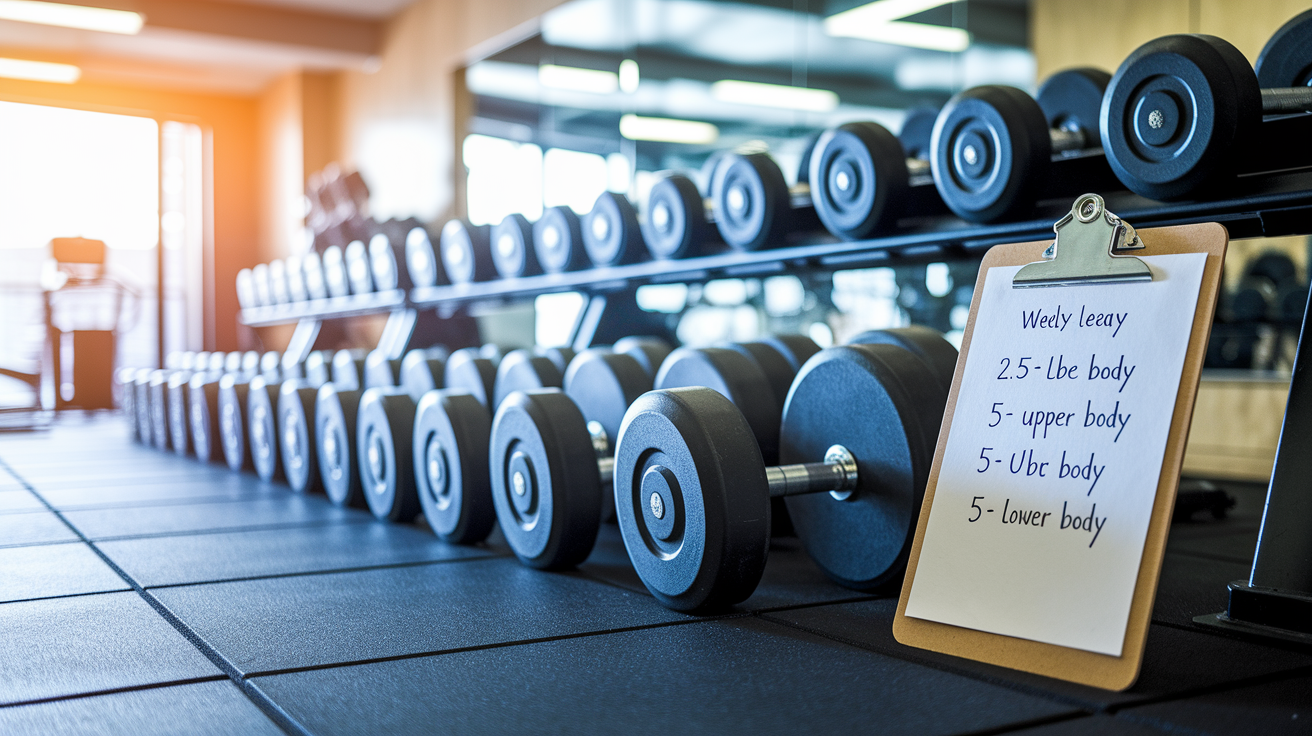
You should add 2.5 to 5 pounds per week for upper body lifts like bench press, overhead press, and rows. For lower body lifts like squats and deadlifts, add 5 to 10 pounds per week. These ranges reflect how fast most beginners adapt when they’re following a structured program with solid form and enough recovery.
Where you land in that range depends on how challenging your current weight feels. If you’re finishing all your reps with clean form and you’ve got two more in the tank, add weight at the higher end. If you’re barely finishing your sets or fighting to keep technique tight, stay at the lower end or hold your current weight another week.
You need to slow down when you notice form breaking, persistent joint discomfort, or stalled performance over two sessions in a row. Those signals mean your body needs more time to adapt before you pile on more load. Slowing down for a week or two prevents setbacks that’ll cost you way more time than patience does.
Upper body pressing movements (bench, overhead press): Add 2.5 to 5 pounds per week.
Upper body pulling movements (rows, pull downs): Add 2.5 to 5 pounds per week.
Lower body squatting movements (back squat, front squat): Add 5 to 10 pounds per week.
Lower body hinge movements (deadlift, Romanian deadlift): Add 5 to 10 pounds per week.
Why Gradual Progression Works

Your body adapts to strength training in two stages. First, your nervous system learns to recruit more muscle fibers at once and coordinate movement more efficiently. That’s why beginners see rapid strength gains in the first few weeks, sometimes without visible muscle growth. Second, your muscles respond by growing slightly larger and rebuilding connective tissue to handle heavier loads. Both processes need consistent, predictable stress.
Adding weight too quickly skips over the nervous system’s learning curve and overloads tissues before they’ve had time to strengthen. When you jump five or ten pounds ahead of your actual capacity, your form breaks down because stabilizer muscles and connective tissue can’t keep up. That breakdown increases injury risk and teaches poor movement patterns that are tough to unlearn.
Gradual increases give every system in your body time to catch up. Tendons, ligaments, and joint capsules adapt more slowly than muscle fibers, so steady weekly jumps let those structures strengthen alongside your muscles. Slow progression also keeps your technique clean, which means you build a foundation of good movement that supports heavier lifts for years.
How to Apply Weekly Weight Increases in Practice

Start every training cycle by identifying the heaviest weight you can lift for the prescribed reps with perfect form. That’s your baseline. Every seven days, increase that weight by the recommended increment for the lift category, assuming you completed all sets and reps with solid technique in the previous session.
- Perform the prescribed sets and reps at your current working weight. Example: three sets of five squats at 135 pounds.
- Evaluate the last set. If you finished all reps with good form and could’ve done one or two more, you’re ready to add weight.
- Add the appropriate increment. For squats, add 5 to 10 pounds. For bench press, add 2.5 to 5 pounds.
- Record the new weight in your training log. Write the date, exercise, sets, reps, and new load.
- Repeat the cycle the following week. If you miss reps or your form slips, hold the same weight for another session before increasing.
Rep Progression Before Weight
If you can’t complete all prescribed reps at your current weight, add reps instead of adding load. For example, if your program calls for three sets of eight reps but you can only complete seven reps on the final set, work toward hitting eight reps on all three sets before increasing weight. Once you reach the target rep count across all sets with clean form, add the smallest available increment and drop back to the lower end of the rep range if needed.
Exercise Specific Progression Guidelines
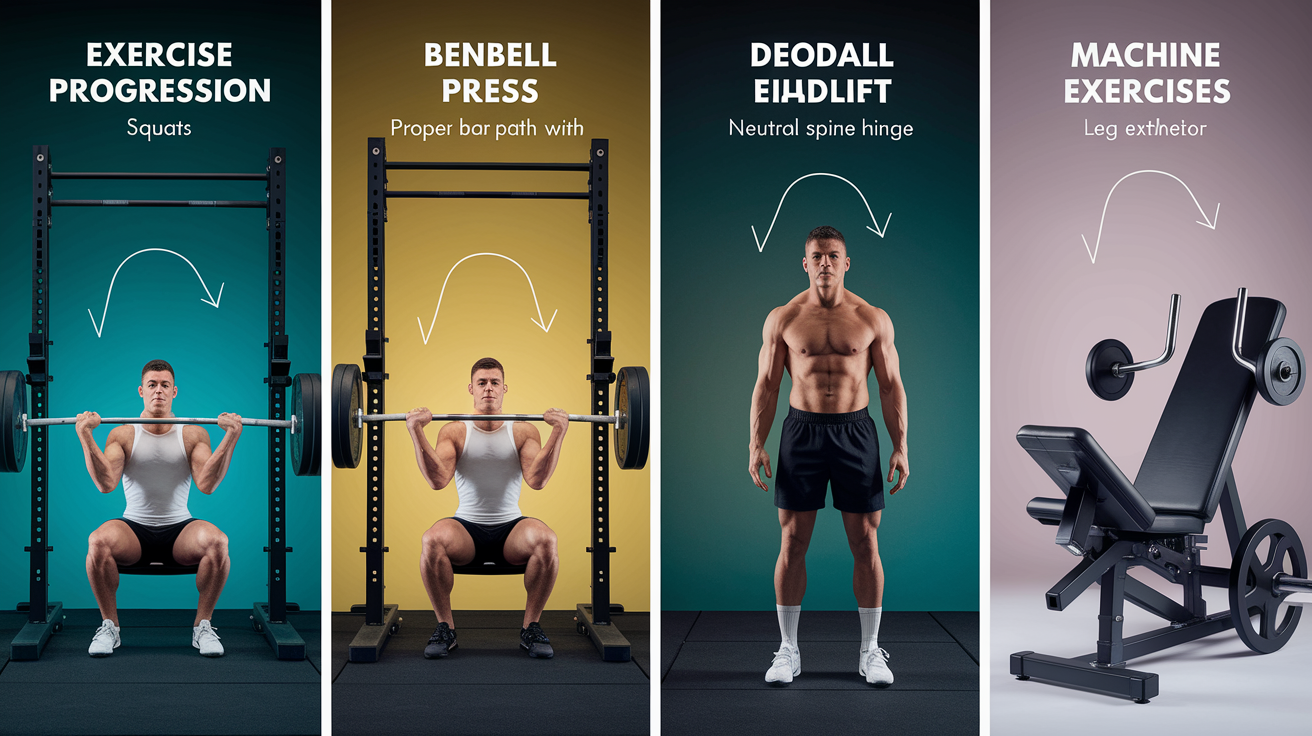
Squats
Add 5 to 10 pounds per week during the first eight to twelve weeks. Most beginners can sustain the higher end of that range early on because squat patterns recruit large muscle groups that adapt quickly. Watch hip depth and knee tracking closely. If your hips rise faster than your chest or your knees cave inward, hold your current weight until you can fix the pattern. Form breaks usually happen before strength plateaus in beginners, so technique quality is the best progression governor.
Bench Press
Add 2.5 to 5 pounds per week. Bench press progression slows faster than squats because the smaller muscle groups in your chest, shoulders, and triceps fatigue more easily and require longer recovery. Stabilization also matters more. If the bar wobbles or your elbows flare past ninety degrees, you’re not ready for more weight. Use fractional plates (1.25 pound or smaller) when five pound jumps feel too aggressive. Microloading keeps progress steady without forcing compromised reps.
Deadlift
Beginners often add 5 to 10 pounds per week for the first several months because the deadlift uses the body’s strongest pulling muscles and allows the heaviest absolute loads. Technique must stay strict. Your lower back should remain neutral from setup to lockout. If your spine rounds at any point during the lift, reduce the weight immediately and drill the hip hinge pattern with lighter loads or Romanian deadlifts. Deadlifts also tax your central nervous system more than other lifts, so if you feel unusually drained after deadlift sessions, consider smaller jumps or longer rest between deadlift workouts.
Machine Exercises
Machines guide the movement path and reduce stabilization demands, which lets beginners add weight more predictably. Increase machine loads by the smallest available increment, typically 5 to 10 pounds, every one to two weeks. Because machines remove balance and coordination variables, you can push closer to muscular failure without the same injury risk as free weights. That said, joint stress still accumulates, so monitor shoulder, elbow, and knee comfort and back off if you feel sharp pain or persistent soreness in connective tissue.
Safety Indicators and Warning Signs of Overloading

Your body will tell you when you’re adding weight too fast. Pain that sharpens during a lift or lingers for days afterward signals tissue stress that exceeds your current capacity. Soreness that lasts beyond seventy two hours or prevents you from training the same muscle group on your next scheduled session means you need more recovery time or a lighter load.
Performance regression is another key sign. If your rep count drops on the same weight you lifted the week before, or if your form deteriorates earlier in the set, you’ve outpaced your adaptation. Elevated fatigue that doesn’t resolve with an extra rest day, trouble sleeping, loss of appetite, or a resting heart rate five to ten beats higher than your normal baseline all indicate systemic overload.
Sharp or persistent joint pain during or after lifting
Muscle soreness lasting more than 72 hours
Declining performance (fewer reps at the same weight over multiple sessions)
Chronic fatigue that doesn’t improve with rest
Sleep disturbances or elevated resting heart rate
Loss of appetite or mood changes (irritability, low motivation)
Recovery Requirements for Weekly Progress

Muscle fibers need forty eight to seventy two hours to repair and strengthen after a training session. Beginners recover faster than advanced lifters because they lift lighter absolute loads and accumulate less total fatigue, but recovery still governs how quickly you can add weight. If you train the same muscle group before it’s fully recovered, performance suffers and injury risk climbs.
Sleep is the single most important recovery factor. Aim for seven to nine hours per night. Growth hormone release peaks during deep sleep, and protein synthesis rates drop when sleep is insufficient. Hydration and nutrition also matter. Drink enough water that your urine stays pale yellow throughout the day, and eat enough protein to support muscle repair. A practical target is 1.6 to 2.2 grams of protein per kilogram of body weight per day, spread across three to four meals.
Stress management supports recovery just as much as sleep and food. High stress raises cortisol, which interferes with tissue repair and strength adaptation. If work, family, or life stress spikes, consider holding your training weights steady or taking an extra rest day instead of forcing weekly increases. Strength progress depends on your body’s total recovery capacity, not just what happens in the gym.
Tracking Methods for Monitoring Progress

Keeping a record of every session lets you see patterns, spot problems early, and prove that you’re getting stronger. Write down the date, exercise name, weight used, number of sets, and number of reps completed. Add a short note about how the session felt (easy, moderate, or hard) so you have context when you review your log later.
Notebook or spreadsheet: Simple, reliable, and works anywhere. Write date, exercise, sets × reps, weight, and any form or energy notes.
Mobile training apps: Automatically calculate volume, track progression graphs, and remind you what weight to use next session.
Percentage based charts: Calculate your working weight as a percentage of a tested one rep max, then increase the percentage weekly.
Rep max estimation tools: Use formulas (like Epley or Brzycki) to estimate your one rep max from a five or eight rep set, then program weights from that estimate.
When and How to Use a Deload Week
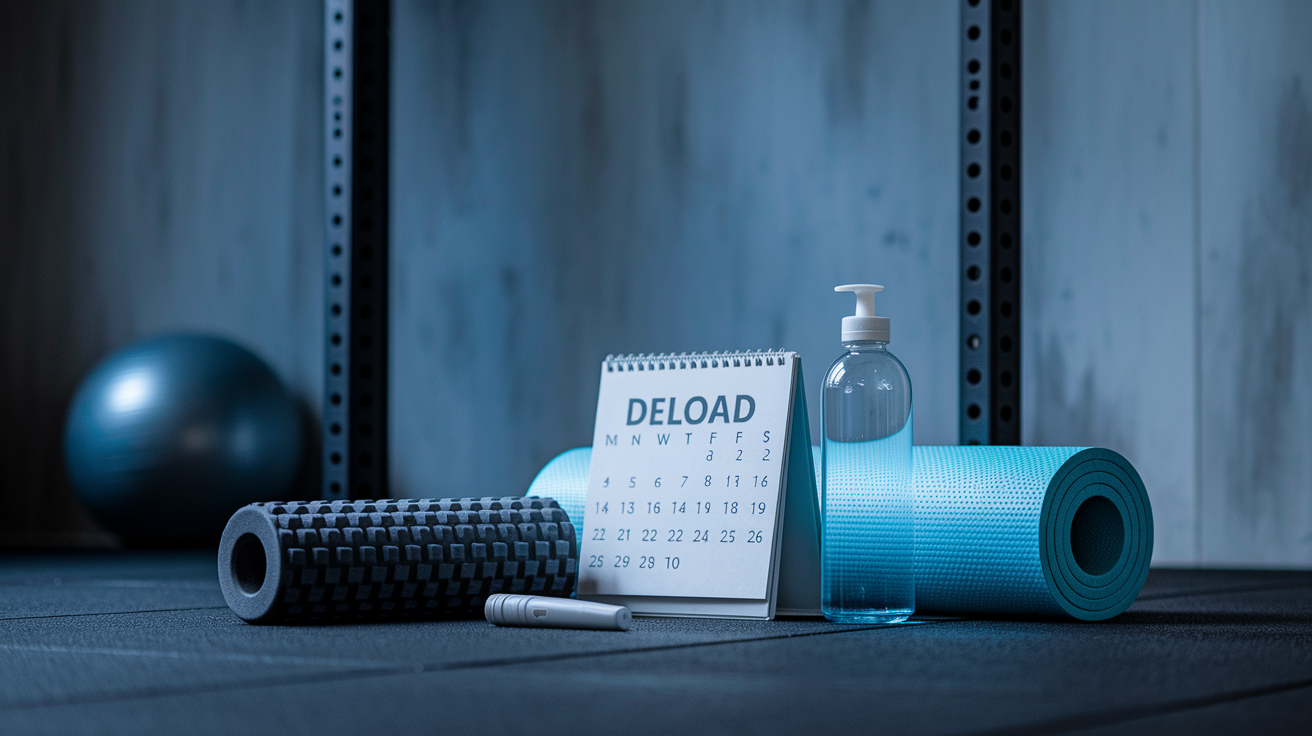
A deload week reduces training stress to let your body catch up with accumulated fatigue. Beginners benefit from scheduling a deload every six to eight weeks, or sooner if progress stalls for two consecutive sessions despite good sleep and nutrition. Deloading prevents plateaus, lowers injury risk, and often leads to a strength rebound the week after you return to normal loads.
You have three main deload options. First, reduce the weight on every lift by 40 to 50 percent and perform your normal sets and reps. Second, keep the weight the same but cut your sets in half. Third, keep weight and sets the same but train only two days that week instead of three or four. All three methods work. Pick the one that fits your schedule and feels most restorative.
- Reduce weight by 40 to 50% and keep sets and reps the same.
- Reduce volume by half (cut sets in half, keep weight and reps the same).
- Reduce frequency (train two days instead of three or four, normal weight and volume on those days).
Sample Beginner Programs With Safe Weight Progression
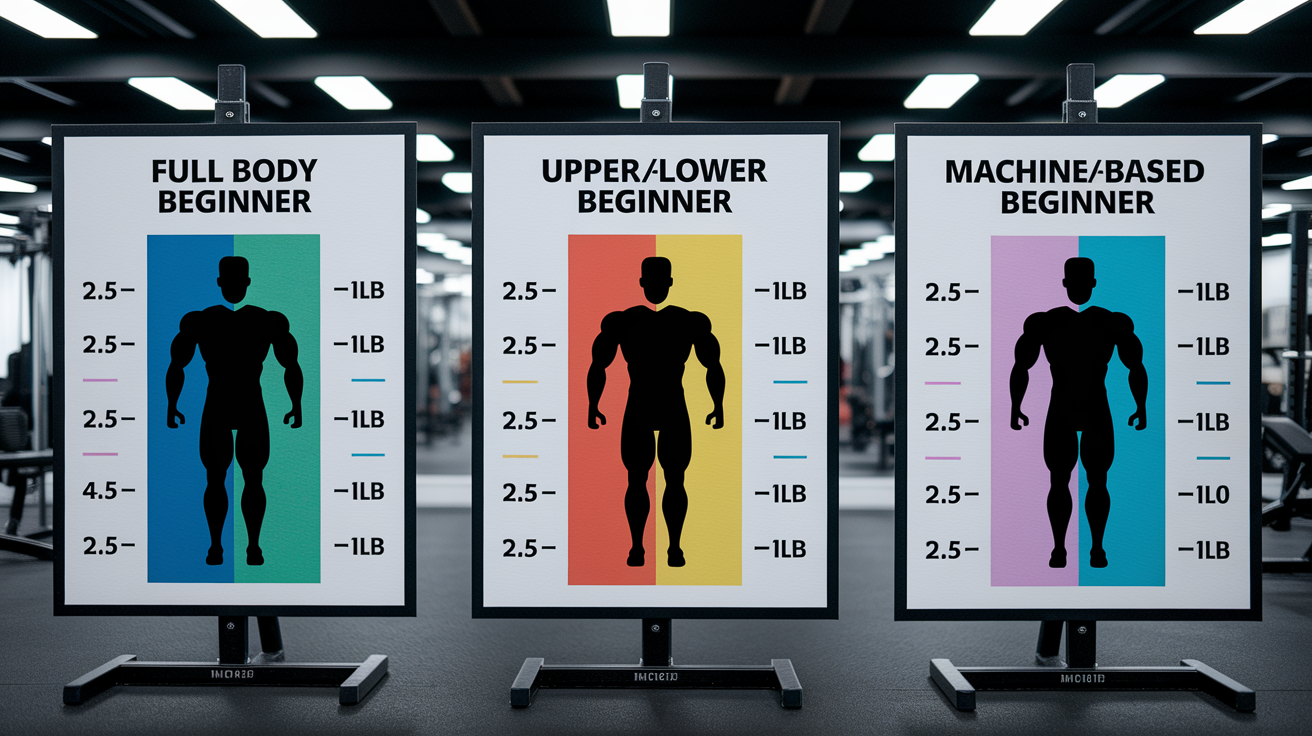
Effective beginner programs use simple structures that make weekly weight increases easy to track and apply. Full body routines train every major movement pattern two to three times per week, which maximizes practice frequency and keeps total weekly volume manageable. Upper/lower splits separate pushing and pulling work from squatting and hinging, allowing slightly more volume per session while still training each pattern twice weekly.
Machine based beginner programs remove the stability and coordination demands of free weights, which can speed early strength gains and build confidence. Regardless of structure, every program should prescribe clear weekly load increases, require you to log every session, and include a scheduled deload every six to eight weeks.
| Program Type | Weekly Progression Model | Notes |
|---|---|---|
| Full body beginner (3 days/week) | Add 2.5–5 lb upper body, 5–10 lb lower body each week | Train Monday/Wednesday/Friday; deload week 7 |
| Upper/Lower beginner (4 days/week) | Add 2.5–5 lb pressing/pulling, 5–10 lb squat/hinge each week | Train Mon/Tue (upper/lower), Thu/Fri (upper/lower); deload week 8 |
| Machine based beginner (3 days/week) | Add smallest machine increment (5–10 lb) every 1–2 weeks | Focus on learning movement quality; transition to free weights after 8–12 weeks |
Final Words
Start with small jumps: 2.5–5 lbs for upper-body lifts and 5–10 lbs for lower-body lifts. Track your reps, keep form clean, and rest well.
Use rep-first progression, log every session, and take a deload when progress stalls or aches show. Watch for joint pain, not just soreness.
Follow these simple rules and you’ve learned how to add weight safely each week for beginners. Keep consistent, trust the process, and enjoy steady gains.
FAQ
Q: What is the quickest way to gain weight in a week?
A: The quickest way to gain weight in a week is to eat a calorie surplus—about 500–1,000 extra calories daily—focus on energy-dense whole foods, add liquid calories, and do resistance training to favor muscle over fat.
Q: What is the 3-3-3 rule for food?
A: The 3-3-3 rule for food is a simple meal pattern: three main meals, three snacks, and aiming for three protein servings spread through the day to raise calories and support recovery and muscle growth.
Q: Can Marfan syndrome people gain weight?
A: People with Marfan syndrome can gain weight, but it may be harder and needs medical oversight; focus on gradual calorie increases, safe resistance training, and regular heart checks with your healthcare team.
Q: Will I gain weight on prednisone 2 weeks?
A: You may gain weight on prednisone in two weeks because steroids cause fluid retention and appetite increases; the amount varies—talk to your prescriber about dose, dietary steps, and monitoring to limit gains.