


More gym time isn’t always better—train too much and you can lose strength.
Full-body workouts are efficient and time-smart, but they also risk piling stress on your whole body every session.
If you don’t plan frequency, weekly sets, exercise choice, and recovery, small mistakes add up into overtraining.
This post gives a simple, practical framework to build balanced full-body sessions: how often to train, how many sets per muscle per week, which compound moves to prioritize, when to deload, and what recovery signs to watch.
Read on and keep getting stronger without burning out.
How to Build a Balanced Workout Routine (The Core Framework)

A balanced full-body workout hits every major muscle group in the same session, 2–4 times per week, with enough recovery so your nervous system can actually rebuild. The goal’s straightforward: stimulate growth and strength across your entire body without digging yourself into a recovery hole. Full-body training works when you manage weekly volume, the total number of hard sets you perform for each muscle group. Push past your body’s repair capacity and you’ll plateau or go backward.
Overtraining doesn’t happen because you worked hard one day. It builds up when you train too often, pile on too many sets, skip rest days, or ignore sleep. Full-body routines carry a higher risk because they tax everything every session. Your central nervous system, hormones, and glycogen stores all need time to bounce back. Most people do well with 10–20 total sets per muscle group each week, spread across 2–4 sessions. Beginners stay closer to 10 sets. Intermediates and advanced lifters can push toward 20 if recovery markers stay solid: sleep, soreness, mood.
Here’s the core framework to keep your routine balanced and sustainable:
-
Train each muscle group 2–3 times per week. Full-body sessions spaced every other day give tissues 48–72 hours to repair.
-
Use 10–20 sets per muscle group per week. Start at the low end and add volume only when performance improves consistently.
-
Include at least one full rest day each week. Active recovery counts (light walking, stretching), but you need complete rest too.
-
Prioritize compound lifts. Squats, hinges, presses, and rows recruit multiple muscles and keep total exercise count manageable.
-
Sleep 7–9 hours per night. Muscle repair, hormone production, and nervous system reset all happen during deep sleep.
-
Monitor resting heart rate and mood. If your morning heart rate climbs 5–10 beats per minute above normal or motivation drops for several days, pull back volume or take an extra rest day.
Exercise Selection for Full Body Workouts

Choose exercises that hit all your major movement patterns in a single session. Compound lifts are the backbone because they recruit multiple muscle groups at once. You accomplish more with fewer exercises and less total training time. When you build a session around 4–6 compound movements, you train your legs, back, chest, shoulders, and core without needing 12 different exercises. That efficiency keeps session length reasonable and reduces wear on joints and connective tissue.
Balance your exercise selection between anterior (front of body) and posterior (back of body) movements. Most people naturally favor pressing and quad work because they’re visible in the mirror and feel powerful. Bench press, squats, shoulder press. But your posterior chain (glutes, hamstrings, back, rear shoulders) protects your spine, stabilizes your knees, and prevents muscle imbalances that lead to injury. A balanced routine includes equal work for both sides of your body. Pair every pressing movement with a pull. Match squat patterns with hip hinge patterns.
Every full-body session should cover these five movement patterns:
- Squat (front loaded leg work): back squat, goblet squat, leg press
- Hinge (posterior chain and hip extension): deadlift, Romanian deadlift, kettlebell swing
- Horizontal push (chest and front shoulders): bench press, push-up, dumbbell press
- Vertical or horizontal pull (back and rear shoulders): pull-up, row, lat pulldown
- Core stabilization (bracing under load): plank, dead bug, pallof press
Sample Weekly Full Body Training Schedules
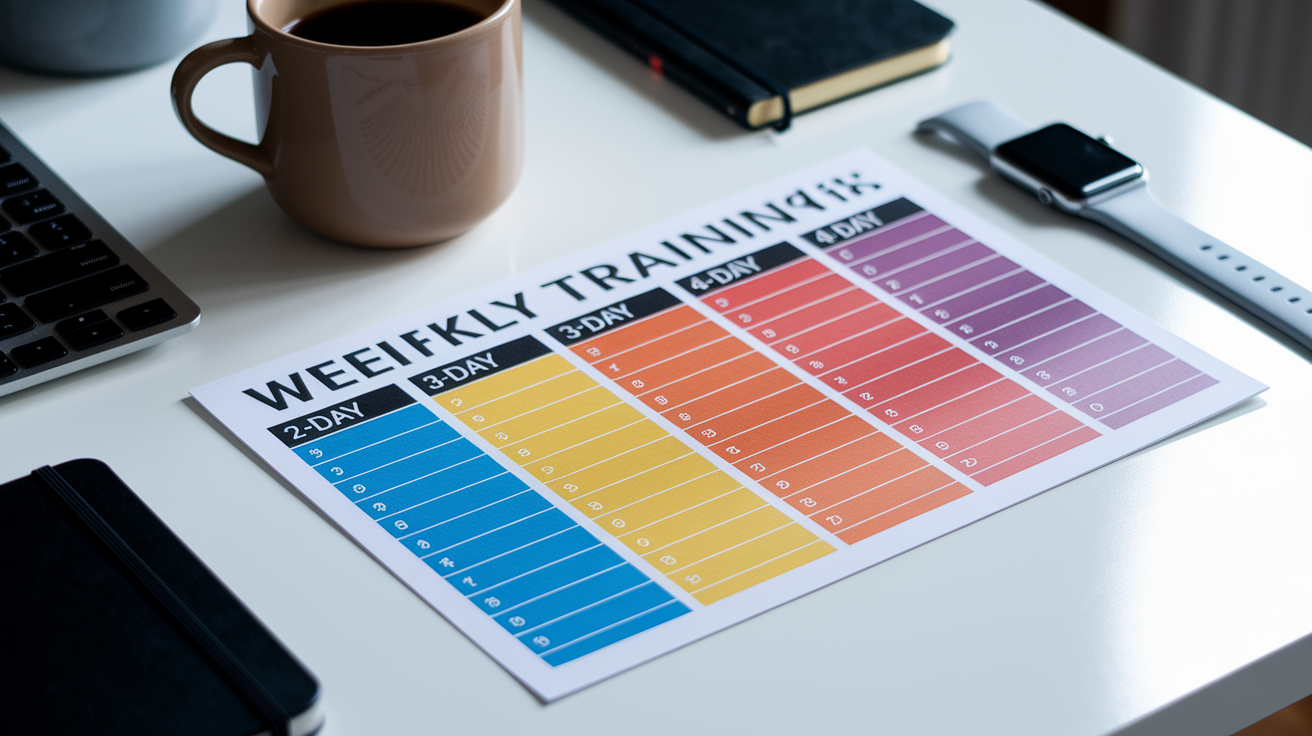
Full-body routines work across a range of weekly frequencies. Your schedule depends on your training experience, recovery capacity, and how much time you have each week. Beginners and anyone returning after a break should start with two sessions per week to give tissues time to adapt. Intermediate lifters usually handle three sessions comfortably. Advanced lifters can push to four sessions if they manage intensity carefully and monitor recovery markers daily.
| Schedule Type | Weekly Frequency | Volume Range (sets per muscle) | Ideal For |
|---|---|---|---|
| 2-Day Full Body | 2 sessions per week | 10–12 sets | Beginners, busy schedules, or active recovery phases |
| 3-Day Full Body | 3 sessions per week | 12–18 sets | Intermediate lifters, most sustainable long-term option |
| 4-Day Full Body | 4 sessions per week | 16–20 sets | Advanced lifters with strong recovery habits and sleep |
Choose your schedule by asking how you felt after your last hard training week. If you needed three days to stop feeling sore and your motivation stayed high, you can handle more frequency. If soreness lingered past 72 hours or you dreaded the next session, stick with fewer weekly sessions and focus on consistency. Training age matters less than honest self-assessment.
A 3-day schedule gives most people the best balance between stimulus and recovery, and it fits around work, family, and life stress without taking over your calendar.
Alternative Splits That Still Prevent Overtraining
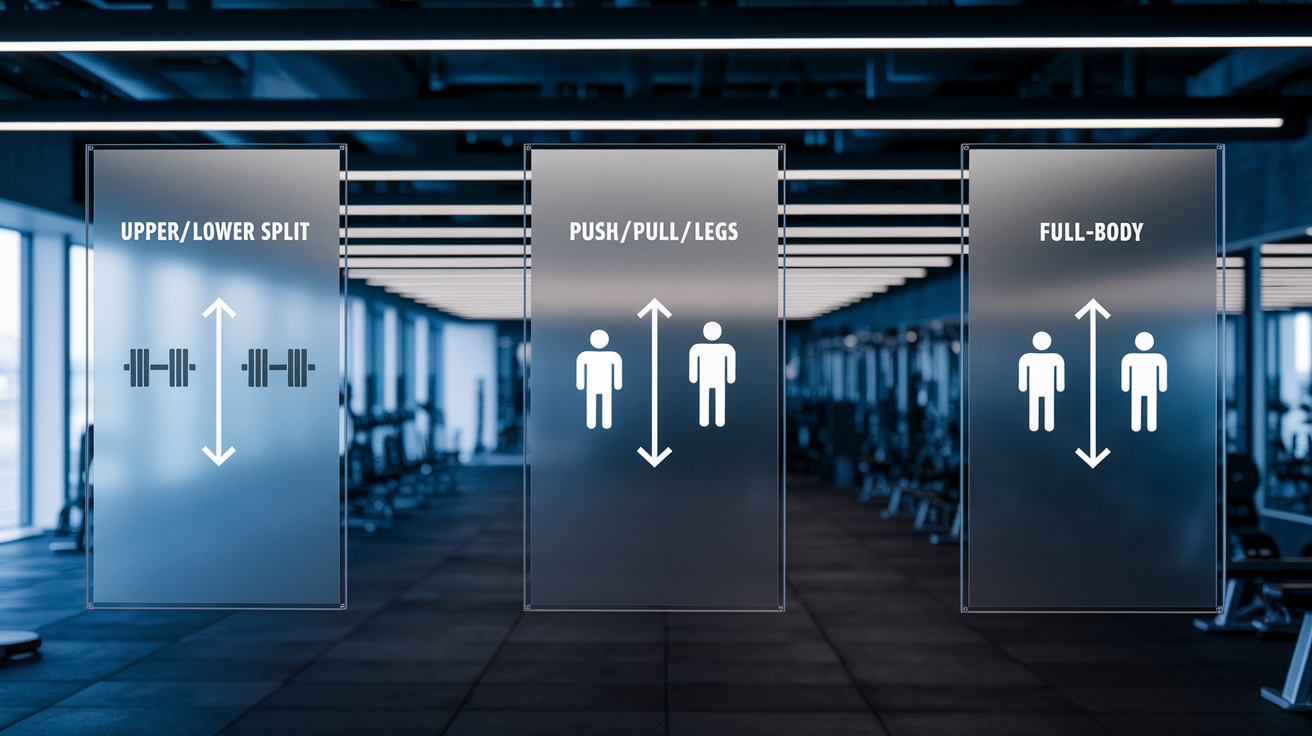
Upper/lower and push/pull/legs splits spread your weekly volume across more sessions, which reduces the systemic fatigue that full-body routines create. In an upper/lower split, you train your chest, back, and shoulders one day, then legs and core the next. A push/pull/legs split breaks it into three patterns: one day for all pressing movements, one day for all pulling movements, and one day for legs. Both approaches let you add more total sets per week without overloading your nervous system in a single session.
These splits work well when full-body training starts to feel too draining or when you want to increase training frequency to 4–6 days per week. Because you’re only taxing half your body (or one movement pattern) at a time, your heart rate and metabolic demand stay lower than in a full-body session. Recovery becomes more targeted: your upper body rests while your lower body trains. That separation lets you maintain higher training intensity without the deep, whole-body fatigue that comes from squatting and deadlifting in the same workout.
The main trade-off is complexity and time commitment. Full-body routines need 2–3 days per week. Splits need 4–6. If your schedule or recovery can’t support that, a split will backfire. But if you’re sleeping well, managing stress, and love being in the gym, a split gives you room to add volume in a controlled way. Just remember: more days in the gym only helps if each muscle group still gets 48 hours between hard sessions. Training chest and shoulders Monday, then doing heavy pressing again Tuesday defeats the purpose.
Here’s a quick comparison to guide your choice:
-
Upper/Lower Split: Best for 4-day schedules. Separates pushing/pulling from leg work. Moderate systemic fatigue. Good for strength and hypertrophy focus.
-
Push/Pull/Legs: Best for 5–6-day schedules. Isolates movement patterns. Lowest per-session fatigue. Requires strong recovery habits and time availability.
-
Full-Body Routine: Best for 2–3-day schedules. Highest per-session demand. Simplest to program. Ideal for beginners and time-limited schedules.
-
Choosing Between Them: Pick based on weekly availability and how you feel 48 hours after hard sessions. If you’re ready to train again, you can handle splits. If not, stick with full-body.
Progressive Overload Without Overtraining
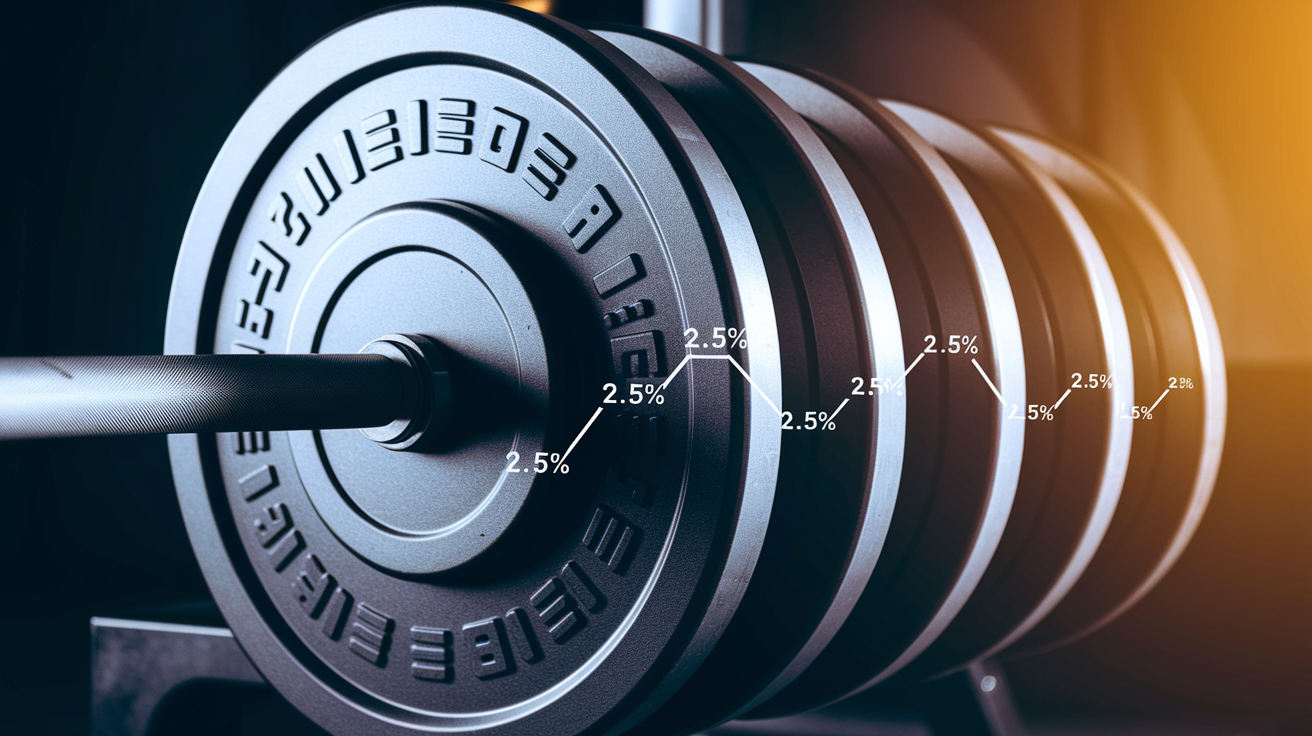
Progressive overload means adding a small, measurable challenge every week or two. More weight, more reps, or better control of the movement. The key word is small. Jumping your squat by 20 pounds or adding three extra sets in one week floods your system with more stress than it can adapt to. Real progress comes from 2.5–5% load increases or 1–2 extra reps per set, repeated consistently across weeks. That pace feels slow, but it’s the only pace that sticks without breaking you down.
Track one variable at a time. If you add weight this week, keep reps and sets the same. If you add a rep, don’t also add a set or shorten your rest. Your body adapts to one stressor at a time. Piling changes on top of each other makes it impossible to know what’s working or what’s causing fatigue. Write down your lifts. Compare this week to last week. If your performance stayed flat or dropped, you haven’t recovered enough to progress yet. That’s not failure. It’s information. Take an extra rest day or drop volume by 10–15%, then try the progression again next week.
Plan deload weeks every 4–6 weeks where you cut volume or intensity by 30–40% for one week. Deloads let your nervous system catch up, clear out lingering muscle soreness, and reset your motivation. Most people resist deloads because they feel like a step backward. But your body doesn’t improve in a straight line. You push for several weeks, then you pull back and let the adaptation finish. When you come back from a deload, your lifts will often jump higher than before because your system finally had time to rebuild.
Recognizing Early Signs of Overtraining

Overtraining doesn’t announce itself with one dramatic symptom. It creeps in through small changes that add up over days or weeks. Fatigue that doesn’t clear after a rest day. Workouts that feel harder than they should. A general sense that training has become a slog instead of a challenge. Your body will tell you when recovery isn’t keeping pace with training stress, but you have to pay attention before the signals turn into setbacks.
Watch for changes in baseline markers you can measure or feel daily. Resting heart rate is one of the clearest. If your normal morning pulse is 60 beats per minute and it climbs to 65–70 for three days in a row, your nervous system is working overtime to manage fatigue. Mood shifts matter too. If you used to look forward to the gym and now you’re dragging yourself there, or if small annoyances feel bigger than usual, your stress load is too high.
Here are the six most reliable early signs that training load is outpacing recovery:
- Persistent fatigue that doesn’t improve with one or two rest days. You wake up tired and stay tired all day.
- Elevated resting heart rate. Your morning pulse climbs 5–10 beats per minute above your normal baseline for several consecutive days.
- Performance decline or plateau. Weights that felt manageable last week now feel heavy, or your reps drop without explanation.
- Sleep disruption. Trouble falling asleep, waking up during the night, or feeling unrested even after 7–8 hours.
- Increased irritability or loss of motivation. Training feels like an obligation instead of something you want to do.
- Frequent minor illnesses or lingering soreness. Colds, sore throats, or muscle soreness that lasts longer than 72 hours after a session.
Warm-Up and Cool-Down Protocols to Support Recovery
A proper warm-up prepares your nervous system, raises core temperature, and lubricates joints before you ask them to handle heavy loads. Skipping it doesn’t save time. It increases injury risk and reduces performance because your muscles and brain aren’t ready to produce force efficiently. A good warm-up takes 5–10 minutes and leaves you feeling loose and focused, not tired.
Cool-downs help your body transition out of high-stress output and back toward a rest-and-repair state. Light movement after your last set clears metabolic waste from muscles faster than sitting still. Stretching or foam rolling reduces acute stiffness. You don’t need a long, complicated routine. Five minutes of deliberate movement and breathing is enough to start the recovery process before you leave the gym.
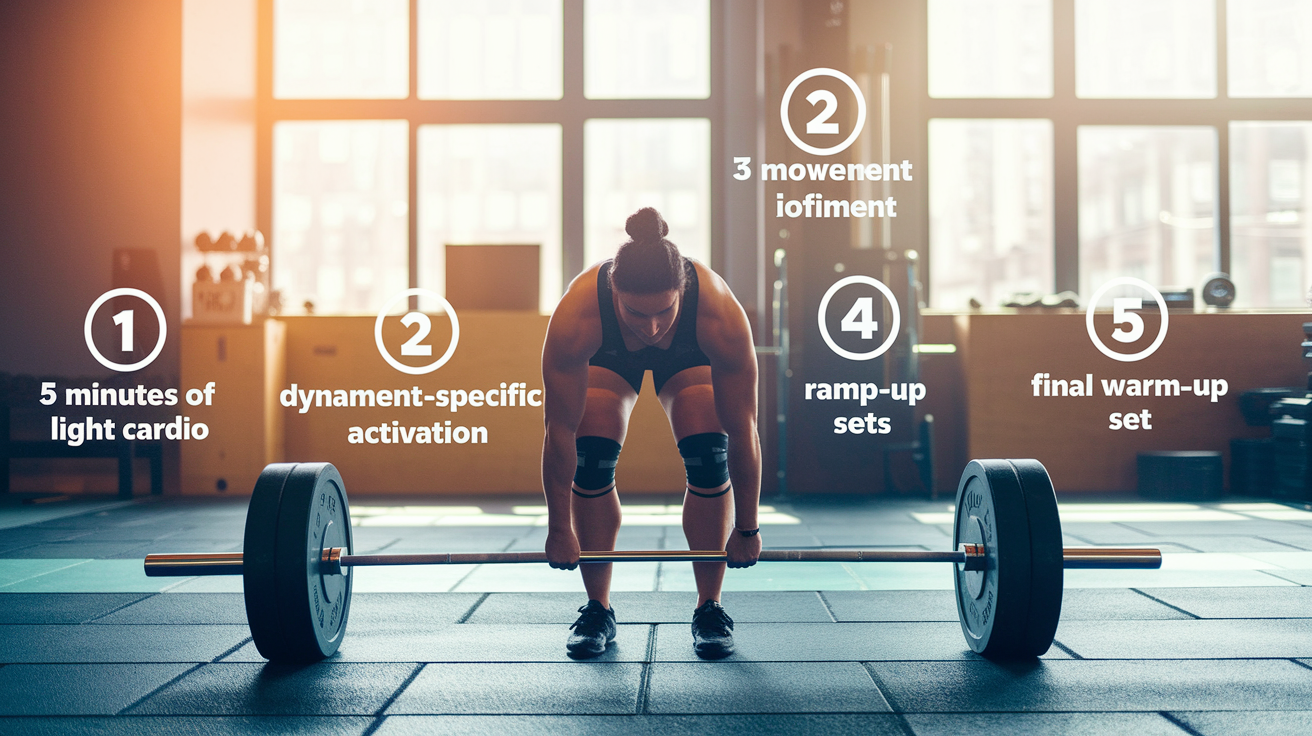
Here’s a practical five-step warm-up sequence that works before any full-body session:
-
5 minutes of light aerobic work. Walk, bike, or row at a conversational pace to raise your heart rate and body temperature.
-
Dynamic stretching for major joints. Leg swings, arm circles, hip openers, and spinal rotations. 10 reps each direction.
-
Movement-specific activation. Bodyweight squats, glute bridges, or band pull-aparts that match the session’s main lifts.
-
Ramp-up sets with the bar or light load. Perform 1–2 sets of 5–8 reps at 40–50% of your working weight to rehearse the movement pattern.
-
One final set at 70% of working weight. This primes your nervous system and confirms you’re ready for full intensity.
Final Words
Build a simple, balanced routine: 2–4 sessions per week, 10–20 weekly sets per muscle, and rest days between hard efforts. Choose compound lifts that cover squat, hinge, push, pull, and core.
Use 2-, 3-, or 4-day templates—or an upper/lower or push/pull/legs split—to spread volume. Progress slowly (small weight or rep increases) and watch symptoms like lingering fatigue or a rising resting heart rate.
This wraps up how to design balanced full body workouts to avoid overtraining. Stick with the plan, track it, and you’ll get stronger without burning out.
FAQ
Q: What is the 3-3-3 rule for workout?
A: The 3-3-3 rule for workouts means doing three sets of three reps across three main lifts, focusing on heavy weight, full recovery between sets, and steady progress to build raw strength.
Q: What is the 5 5 5 30 rule?
A: The 5-5-5-30 rule typically means five reps, five sets, and about 30 seconds rest, used for compact hypertrophy or conditioning sessions—adjust load or rest to match goals and recovery.
Q: What is the 5-3-1 rule in gym?
A: The 5-3-1 rule is a cycling strength plan: a week of 5 reps, a week of 3 reps, then a heavy top set, using planned percentages and small weekly load increases for steady progress.
Q: Can you build muscle with multiple sclerosis?
A: You can build muscle with multiple sclerosis by following adapted resistance training, pacing sessions, prioritizing recovery, and working with healthcare providers to manage fatigue and symptoms safely.