


Want to add weight every week without getting hurt?
Most beginners can, but only if they follow simple rules.
Progressing safely means small jumps, clean form, and enough rest.
This guide shows when to add the smallest plate, how to judge your last set, and when to hold off or take a deload.
You’ll get practical cues, exact weekly increases for different lifts, and a default plan to follow so you stop guessing and start building steady, long‑term strength.
Safe Weekly Weight Progression for Beginners

Progressive overload means you’re gradually making things harder for your muscles. For beginners, that’s usually just adding a bit of weight once you can nail your reps with good form. Most people do fine adding 2.5–5% of their current load each week, or just the smallest plate your gym has.
But don’t add weight until your form is clean. If your last set looked shaky or you couldn’t keep your positioning tight, you’re not ready. Form beats heavier weight every time. Adding load with broken technique just builds bad habits or gets you hurt.
Here’s how to progress week to week:
- Finish all your sets and reps with solid form and controlled speed.
- Your last set should feel tough, but not like you’re dying. Leave 1–3 reps in the tank.
- If both of those are true, add the smallest plate you’ve got next session (usually 2.5 lb per side for upper body, 5 lb per side for lower).
- Warm up before your working sets, then hit your first set at the new weight.
- If form stays tight across all sets, keep that weight next time and repeat. If it falls apart, drop back and build reps or sets before trying again.
Core Principles Behind Progressive Overload

Your body adapts to stress. You lift something challenging, and your muscles get stronger so it’s easier next time. You can create that stress a few ways: more weight, more reps, more sets, slower tempo, or hitting a muscle group more often.
Beginners progress fast because a lot of early strength isn’t even muscle growth. It’s your nervous system learning to recruit fibers better. Your brain gets more efficient at coordinating the movement. That neural boost means you can often add weight weekly in your first few months, while advanced lifters might only squeeze out a few pounds per month.
Small, steady jumps prevent plateaus and keep your joints healthy. Big weight spikes overwhelm your tendons before they can catch up, and they force you to cheat the movement. Slow progress builds a base that sticks around.
Choosing Appropriate Weight Increases

How much you add depends on the lift and the muscles involved. Bigger muscle groups can handle bigger jumps. Smaller muscles need lighter touches. Upper body pushing and pulling usually progress in 2.5 lb to 5 lb increments per week. Lower body lifts can handle 5 lb to 10 lb.
When you’re not sure, go smaller. Adding 2.5 lb might feel like nothing, but over eight weeks that’s 20 lb of progress with way less injury risk than forcing 10 lb jumps every time.
| Exercise Type | Recommended Weekly Increase | Notes |
|---|---|---|
| Upper Body Push (bench press, overhead press) | 2.5–5 lb total (1.25–2.5 lb per side) | Smaller muscles; grab micro-plates if 5 lb feels like too much |
| Upper Body Pull (rows, pull-ups, lat pulldown) | 2.5–5 lb total | For pull-ups, add reps before adding weight |
| Lower Body Push (squat, leg press) | 5–10 lb total (2.5–5 lb per side) | Bigger muscles can take bigger jumps |
| Lower Body Pull (deadlift, Romanian deadlift) | 5–10 lb total | Deadlifts often move fast early on; watch for lower back fatigue |
Technique and Form Checks Before Adding Weight

You’re ready to go heavier when you can finish every set with the same bar speed, full range of motion, and no technical breakdown. Your reps should look the same on set one and set three. If your hips shoot up early on your last squat or your shoulders round forward on your final deadlift, hold off.
Don’t increase weight if you’re seeing: compensatory movement (shifting to one side, cutting depth short, using momentum), joint pain or sharp discomfort during or after, can’t hit your target reps across all sets, or your bar speed crashes on the last few reps. Any of those show up, repeat the same weight next week and clean up your technique. You’ll progress faster once your movement is dialed.
Safety Practices to Prevent Injury

Injury rates drop when you follow basic safety rules and respect the fact that your body adapts on a timeline. Your muscles, tendons, and ligaments all strengthen at different speeds. Muscles adapt quick. Connective tissue takes longer. Rushing load stresses tendons and joints before they’re ready.
Six pre-lift checks that keep you healthy:
- Warm up with lighter sets before your working weight. Start with the empty bar, then add load in 2–3 jumps until you hit your programmed weight.
- Use safety bars, spotter arms, or a training partner when you’re lifting close to your max, especially on squats and bench.
- Stop immediately if you feel sharp pain, not normal muscle burn. Sharp pain is a warning, not a test.
- Keep your movements controlled both on the way up and the way down. Dropping or bouncing the weight increases injury risk.
- Record a video of your lifts every few weeks or ask someone experienced to watch your form and catch what you can’t feel.
- Don’t try to make up for a missed session by doubling your workload the next day. Missed workouts happen. Consistency over months beats perfecting every single week.
Recovery, Sleep, and Rest Days

Strength doesn’t build in the gym. It builds during recovery. When you lift, you create small damage in your muscle fibers. Your body repairs that and adds a little extra to handle the stress next time, but that takes at least 48 hours for most muscle groups. Training the same muscles again before they’ve recovered just piles on fatigue without progress.
Beginners should plan at least one full rest day between sessions that train the same patterns. You squat on Monday? Wait until Thursday to squat again. Hydration, nutrition, and sleep all affect how well you recover. Aim for 7–9 hours of sleep per night and get enough protein (around 1.6–2.2 g per kg of body weight) to support muscle repair. Show up under-slept, dehydrated, or under-fueled and your performance suffers. Don’t force a weight increase that week.
When to Use Deloads or Maintain Current Weight
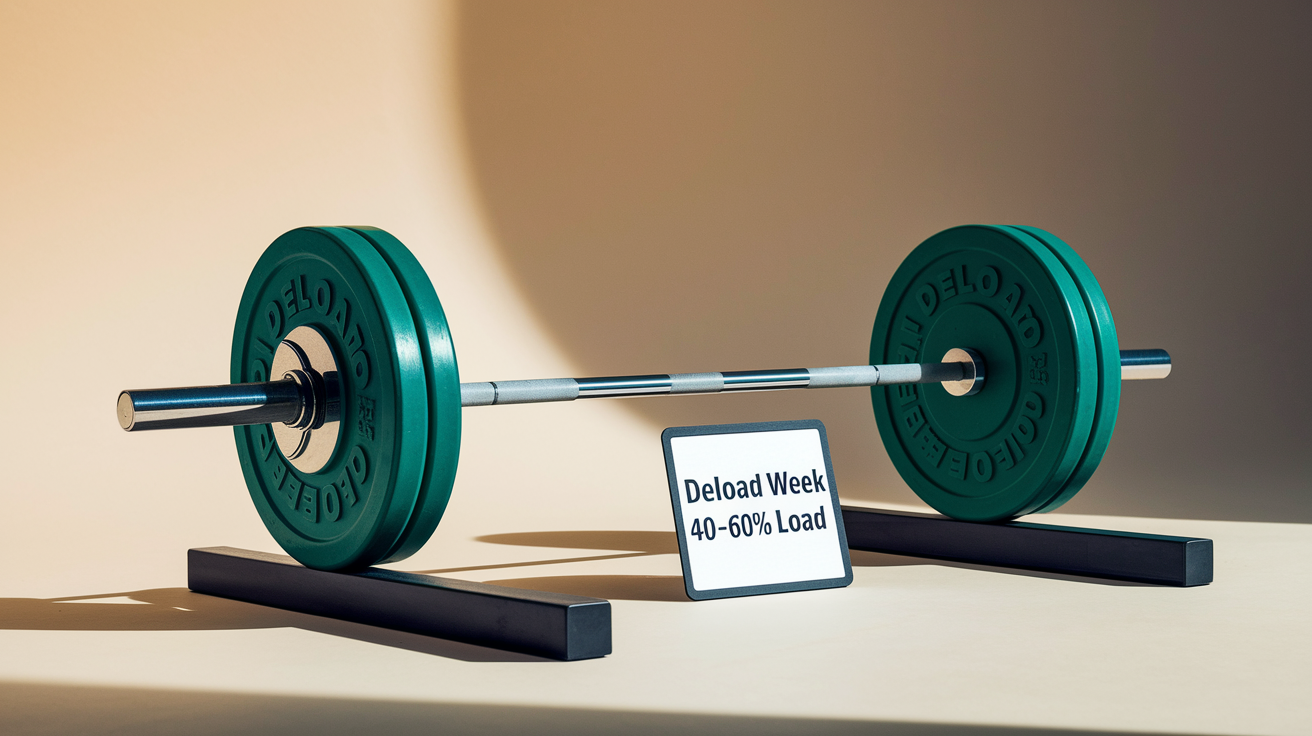
A deload is a planned week where you drop training volume or load to let your body catch up. Most beginners benefit from scheduling one every 4–8 weeks, depending on how fast fatigue piles up. Signs you’re overreaching: consistently failing to complete your programmed reps even though you hit them last week, persistent soreness lasting beyond 72 hours, trouble sleeping, irritability, or just feeling worn down.
During a deload week, drop your working weights by 40–50% or cut your total sets in half while keeping the same exercises. You want active recovery, not complete rest. A deload gives your central nervous system and connective tissues time to recover without losing the movement patterns you’ve been practicing. After a deload, most people come back stronger and ready to progress again.
Frequency of Progression Across Different Exercises

Not every exercise progresses at the same rate. Compound lifts like squats, deadlifts, bench presses, and rows involve multiple joints and big muscle groups, so they can handle more frequent and larger jumps early on. Isolation exercises like bicep curls, triceps extensions, and lateral raises work smaller muscles and should progress slower, often every 2–3 weeks instead of weekly.
Here’s how progression frequency usually breaks down:
Compound lower body lifts (squat, deadlift): Weekly increases of 5–10 lb are common for the first 8–12 weeks.
Compound upper body lifts (bench press, overhead press, row): Weekly increases of 2.5–5 lb, sometimes needing micro-loading after the first few months.
Accessory compound movements (lunges, Romanian deadlifts, dumbbell presses): Progress every 1–2 weeks depending on how quickly form and capacity improve.
Isolation exercises (curls, extensions, raises): Progress every 2–3 weeks, often by adding reps before adding weight.
Long-Term Progress Tracking for Beginners

Tracking your lifts is one of the easiest ways to keep progressing and catch problems early. A basic training log should have the date, exercise name, weight used, sets, reps completed, and a quick note on how the session felt. Maybe a perceived exertion rating from 1 to 10 or whether your form held up.
Over time, your log shows patterns. You’ll see when progress stalls, spot exercises that consistently feel harder than they should, and identify whether fatigue is building week over week. That tells you when to add weight, when to hold steady, and when to schedule a deload. Beginners who track consistently progress faster because they’re making informed decisions instead of guessing. And they can look back at where they started to see how far they’ve come when motivation dips.
Final Words
You learned clear steps: what progressive overload means, safe weekly increases (2.5–5% or the smallest plates), how to check form before adding load, when to deload, and simple ways to track progress.
Follow the 5-step weekly progression, prioritize technique over heavier plates, rest properly, and use tracking to spot stalls. If you feel joint pain or compensations, pause and fix the movement.
Use these habits and you’ll know how to safely add weight each week for beginners. Small, steady gains add up — keep at it.
FAQ
Q: What is the 3 3 3 rule at the gym?
A: The 3-3-3 rule at the gym is a simple progression cue: once you can do three sets of three clean reps across three workouts, increase load slightly the next session.
Q: Can I lift weights with fibromyalgia?
A: You can lift weights with fibromyalgia, but start very light, prioritize technique, progress slowly, manage pain and fatigue, and check with your healthcare team before beginning or changing your program.
Q: How often should a beginner increase weight?
A: A beginner should increase weight when they complete all target reps and sets with good form, typically every 1–2 weeks, using 2.5–5% or the smallest plate available.
Q: Can you lift weights with osteoporosis?
A: You can lift weights with osteoporosis when programs focus on controlled, weight-bearing resistance, good technique, and gradual load; avoid high-impact twisting movements and consult a doctor or physical therapist.