


Think kettlebells are only for athletes and show-offs?
Think again.
This post gives free kettlebell workout routines PDF downloads you can print and use today.
You’ll find beginner 4‑week plans, full‑body strength templates, and advanced complexes—each with step‑by‑step cues, warm‑ups, and tracking fields.
No scrolling mid‑set, no guesswork.
The PDFs scale for every level and map your session from buy‑in to cooldown.
Read on to pick the program that fits your time and gear, and start training with clear progress and safer technique.
Instant Access to Downloadable Kettlebell Workout Routine PDFs

Sample ready-to-download PDF options:
- Beginner 4‑Week Plan – 16 structured workouts with full-body circuits, printable tracking fields, and clear progression guidance
- Full‑Body Strength Program – Complete session templates with sets, reps, rest timers, and exercise images for strength and conditioning
- Advanced Complexes Pack – Multi‑page PDF featuring double‑kettlebell sequences, AMRAP formats, and scaling options for experienced lifters
A solid kettlebell workout PDF puts everything you need on paper. No hunting through apps mid-set or scrolling past ads to find your next exercise. You’ll get weekly schedules that tell you exactly which workout to do each day, exercise breakdowns with step-by-step form cues, and tracking sheets where you write down weights, reps, and quick notes session by session. The best ones are designed to print clean on letter-size pages with enough white space to scribble your numbers without squinting.
Workout flow is mapped out ahead of time. Each circuit or block shows up in order: exercise name, sets, reps or time, rest intervals, tempo notes if they matter. Many PDFs stick modification suggestions right next to the main prescription, so you can scale up or down without flipping to another page.
Most downloadable programs break things into clear sections. One page handles your warm-up. Another walks through the main working sets. A final page covers cooldown stretches or mobility. Print the whole thing and keep it in a binder, or just print today’s session and bring it to the gym.
Standard PDF components:
- Exercise name and image reference – Usually links to step-by-step instructions or includes small diagrams on the same page
- Sets, reps, and time – Clear numbers showing exactly what to complete (e.g., 3 sets × 8 reps, or 12 minutes AMRAP)
- Rest intervals – Prescribed breaks between sets or rounds (commonly 60–90 seconds between circuits)
- Weekly training schedule – Calendar layout showing which workout to perform on which day, plus rest days
- Tracking fields – Blank boxes or lines where you write weights used, reps achieved, and any form notes for next time
Essential Components of High‑Quality Kettlebell Workout Routine PDFs

A professional kettlebell PDF does more than list exercises. It includes step-by-step cueing that teaches you exactly how to set up and execute each movement safely. A goblet squat entry might remind you to pause for 3 seconds at the bottom while actively driving your knees outward. A bent-over row section will specify soft knees, flat back, and completing all reps on one side before switching. These details keep technique sharp and prevent the drift that happens when you’re guessing at form mid-workout.
Tempo and safety cues actually matter here. PDFs often call out breathing patterns (inhale on the way down, exhale on the drive), alignment checkpoints (elbow slightly tucked under your shoulder on a floor press), and common mistakes to watch for (rounding your low back during swings). Some programs include a “what you should feel” note like “This should load your glutes and hamstrings, not your lower back” so you can self-correct in real time.
The layout itself supports safe training. Good PDFs start with a warm-up section that primes the hips, shoulders, and core before you touch a heavy kettlebell. They finish with a cooldown or stretching protocol. Equipment checklists and weight-selection guidance appear up front. Any advanced techniques (like half snatches or overhead deadlifts) come with extra detail or a link to video demonstrations.
Technique essentials commonly included:
- Setup and alignment – Foot stance, hip‑hinge depth, shoulder position, and wrist/elbow angles
- Movement pattern – Direction of travel, joints that move first, and how to initiate the lift
- Breathing cues – When to inhale, when to brace, when to exhale for stability and power
- Modification options – Lighter weight, shorter range of motion, or slower tempo if you’re still building skill
Beginner-Friendly Kettlebell PDF Routines for Home or Gym

Beginner PDFs focus on foundational movements you can perform safely in a small space. A typical starter routine uses five core exercises: reverse lunge, bent-over row, goblet squat, single-arm floor press, and kettlebell swing. You perform them back-to-back in a 15-minute circuit. Each exercise gets simple setup cues, and rest periods (usually 60–90 seconds after the final exercise) are clearly marked. These circuits require just one or two kettlebells and enough floor space to lie down and swing. Perfect for home setups or crowded gym corners.
Weight selection for beginners starts conservative. Most programs recommend an 8 kg (18 lb) kettlebell for overhead and mobility work, a 12 kg (26 lb) bell for upper-body single-arm moves and lighter swings, and a 16 kg (35 lb) bell for lower-body squats, deadlifts, and two-handed swings. Plenty of people start their first full circuit with a single 20-pound kettlebell and add a second weight once form is dialed in. PDFs typically include a “start here” equipment list and notes on when to progress to the next weight.
| Category | Recommended Starting Point |
|---|---|
| Kettlebell weights | Light: 8 kg / 18 lbs Medium: 12 kg / 26 lbs Heavy: 16 kg / 35 lbs |
| Session duration | 15 minutes per circuit |
| Training frequency | 2–3 sessions per week with rest days between |
Full‑Body Kettlebell Workout PDFs for Strength and Conditioning

Full-body PDFs combine strength blocks with conditioning intervals to build muscle, power, and work capacity in the same session. A complete program might open with a power and activation block (ballistic swings or light explosive work), move into a strength block (heavier squats, presses, or rows), then finish with accessory exercises targeting stabilizers and an optional conditioning finisher. Each block is printed on its own section of the PDF, so you can see the entire flow at a glance and know exactly what’s coming next.
Session length typically runs 30–45 minutes depending on experience and rest intervals. Many PDFs prescribe timed protocols like EMOM (every minute on the minute) or AMRAP (as many rounds as possible) to keep intensity high and rest structured. A 12-minute swing session might be programmed as an EMOM with 15 swings at the top of each minute. A 30-minute AMRAP might cycle through military press, hang clean, and squat with two kettlebells until the clock runs out.
These routines put real emphasis on posterior-chain power and unilateral strength. You’ll see exercises that load one side at a time (single-arm rows, single-leg deadlifts, offset carries) and movements that demand hip extension and glute drive (swings, snatches, cleans). The mix builds athletic capacity that transfers to real-world movement, not just gym performance.
Common full-body workout styles in PDFs:
- Power + Strength blocks – Start with explosive swings or snatches, then move to controlled presses, squats, or rows
- EMOM circuits – Set a timer and complete a fixed number of reps at the start of each minute; rest whatever time remains
- AMRAP sessions – Work continuously for a set duration (12, 20, or 30 minutes) cycling through a short list of exercises
- Buy‑in + timed blocks – Complete a fixed task (like 100 swings) before starting an AMRAP or timed interval
- Conditioning finishers – Short, high-intensity bursts (burpees, swings, or complexes) after main strength work
- Accessory circuits – Lower-intensity movements targeting smaller muscle groups or movement patterns not covered in the main block
Advanced Kettlebell PDF Routines for Skill, Power, and Complexes

Advanced PDFs layer technical skill on top of strength and conditioning. These programs include double-kettlebell complexes (sequences where you perform multiple exercises without setting the bells down), snatch ladders (ascending or descending rep schemes), half-snatch progressions, overhead deadlifts, and multi-round skill circuits. Each movement demands coordination, timing, and control. The PDF breaks down the sequence step by step so you know which exercise flows into the next.
Heavy pairs are standard equipment here. You’ll often see prescriptions calling for 2 × 16 kg, 2 × 20 kg, or 2 × 24 kg depending on your strength level and the exercise. A typical advanced session might open with a 4-minute AMRAP block of strict presses and overhead reverse lunges using heavy doubles, rest 2 minutes, then move into another 4-minute AMRAP of half snatches into racked squats. Two full rounds of that structure deliver serious volume and metabolic demand in under 20 minutes of working time.
Programming follows a clear sequence. Power work (ballistic swings, snatches, or cleans) primes the nervous system. Skill drills (Turkish get-ups, windmills, or controlled complexes) build movement quality. Strength blocks load the body with heavy bilateral or unilateral lifts. Accessory work addresses any gaps. Conditioning finishers test your capacity under fatigue. Each phase is printed in order, often with rest notes and scaling options if you need to dial back intensity mid-session.
Common advanced formats:
- Double-kettlebell complexes – Seamless chains of 3–5 exercises performed without rest (e.g., clean → press → squat → swing)
- Snatch ladders and progressions – Ascending rep schemes (1, 2, 3, 4…) or fixed-rep rounds with increasing intensity
- EMOM power protocols – Short, explosive sets every minute (snatches, cleans, or swings) with strict rest discipline
- 10‑round skill circuits – Moderate-rep skill drills repeated for volume and refinement (e.g., 10 rounds of 6 half snatches + 3 overhead deadlifts per side)
- Timed heavy AMRAP blocks – 4–8 minute windows of maximum-effort work with prescribed rest between rounds
Weekly Schedules and Periodization Inside Kettlebell Workout PDFs
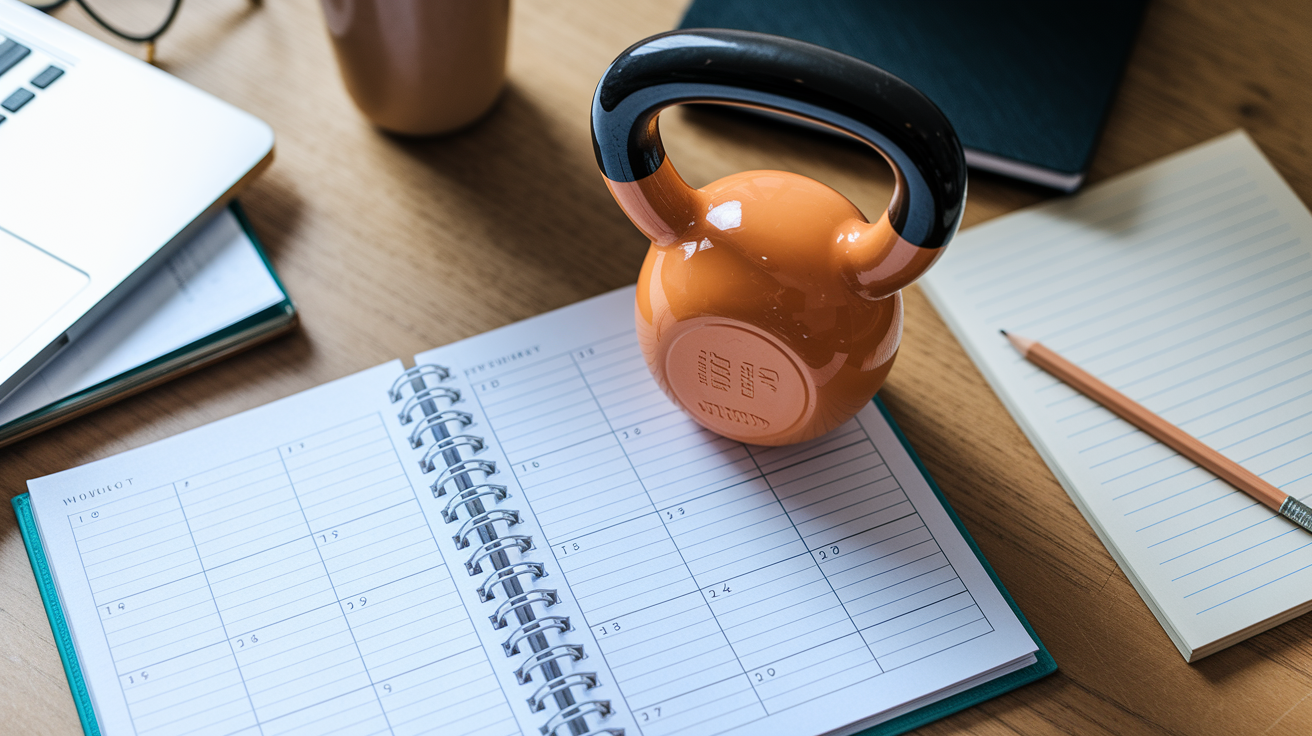
A complete PDF program maps out your training week in a simple calendar format. You’ll see which workout to complete on which day, where rest days fall, and how the four weekly sessions build on one another. A 4-week plan might prescribe Workout 1 (power and strength) on Monday, Workout 2 (conditioning and skill) on Wednesday, Workout 3 (power, skill, and accessory) on Friday, and Workout 4 (conditioning, core, and complexes) on Saturday. Active recovery or full rest fills the other days.
Session duration is predictable. Most structured programs land in the 30–45 minute range, including warm-up and cooldown. Beginners working through circuits with longer rest periods will trend toward the shorter end. Advanced lifters tackling heavy double-kettlebell AMRAPs or multi-round complexes will use the full 45 minutes. The PDF tells you up front how much time to block off, so you can plan your day around training instead of guessing mid-session.
Progression frameworks are built into the schedule. Early weeks might use lighter weights, higher reps, and more generous rest to establish technique and work capacity. Later weeks increase load, reduce rest intervals, or add extra rounds. Common cues include “add one round this week,” “use the next heavier kettlebell if form stays clean,” or “shorten rest to 60 seconds instead of 90.” Small, measurable steps that keep you moving forward without overwhelming your recovery.
Printable Tracking Sheets and Progress Templates in Kettlebell PDFs

Every good PDF includes space to write down what you actually did. Tracking sheets provide fields for kettlebell weight, reps completed, rounds finished, and quick notes on how the session felt or any form adjustments you made. Writing these numbers down session by session builds a clear record of progressive overload. You can flip back two weeks and see that you completed three rounds with a 16 kg bell. This week you finished four rounds with the same weight. That’s measurable progress.
Multi-page PDFs go deeper. Some programs include an 11-page printable covering scaling options for every exercise, suggested starting weights for different experience levels, and detailed breakdowns of complex movements like snatches or Turkish get-ups. Others provide separate warm-up and cooldown pages you can print individually, plus a master tracking sheet that summarizes an entire training block on one page. This modular design lets you print exactly what you need for today’s workout or the full program if you want everything in a binder.
Common tracking fields:
- Date and session number – Keeps your training log chronological and easy to reference
- Kettlebell weight(s) used – Lets you see when you progressed to a heavier bell
- Reps or rounds completed – Shows volume improvements week over week
- Rest intervals taken – Tracks whether you’re recovering faster or holding shorter breaks under fatigue
Warm‑Ups, Cool‑Downs, and Mobility Pages Included in Kettlebell PDFs

Most PDFs start with an 8–10 minute warm-up sequence designed to prepare your hips, shoulders, and core for loaded movement. You’ll see exercises like hip-hinge drills, glute bridges, bird dogs, and light kettlebell halos or around-the-worlds. These movements wake up the posterior chain, mobilize the thoracic spine, and activate stabilizers before you pick up a heavy bell. The warm-up is printed as its own section, often with a suggested rep range or time target for each drill.
Cooldown and stretching protocols appear at the end of the PDF. Some programs prescribe static stretches targeting the hips, hamstrings, lats, and shoulders (the muscle groups that just worked hardest). Others suggest using rest periods between rounds for active mobility, like deep squats, hip openers, or shoulder stretches. This approach keeps you limber without adding extra time at the end of the session.
Injury prevention is the quiet goal here. A proper warm-up reduces the risk of strains and tweaks. A thoughtful cooldown helps manage soreness and supports recovery. PDFs that include these pages signal a program designed for long-term training, not just a quick workout dump.
Common warm-up elements:
- Hip-hinge prep and glute activation – Deadlift variations, bridges, or banded lateral walks
- Shoulder mobility drills – Light halos, arm circles, or wall slides
- Core engagement sequences – Planks, bird dogs, or dead bugs to wake up trunk stability
Choosing the Right Kettlebell Weight for Your PDF Routine
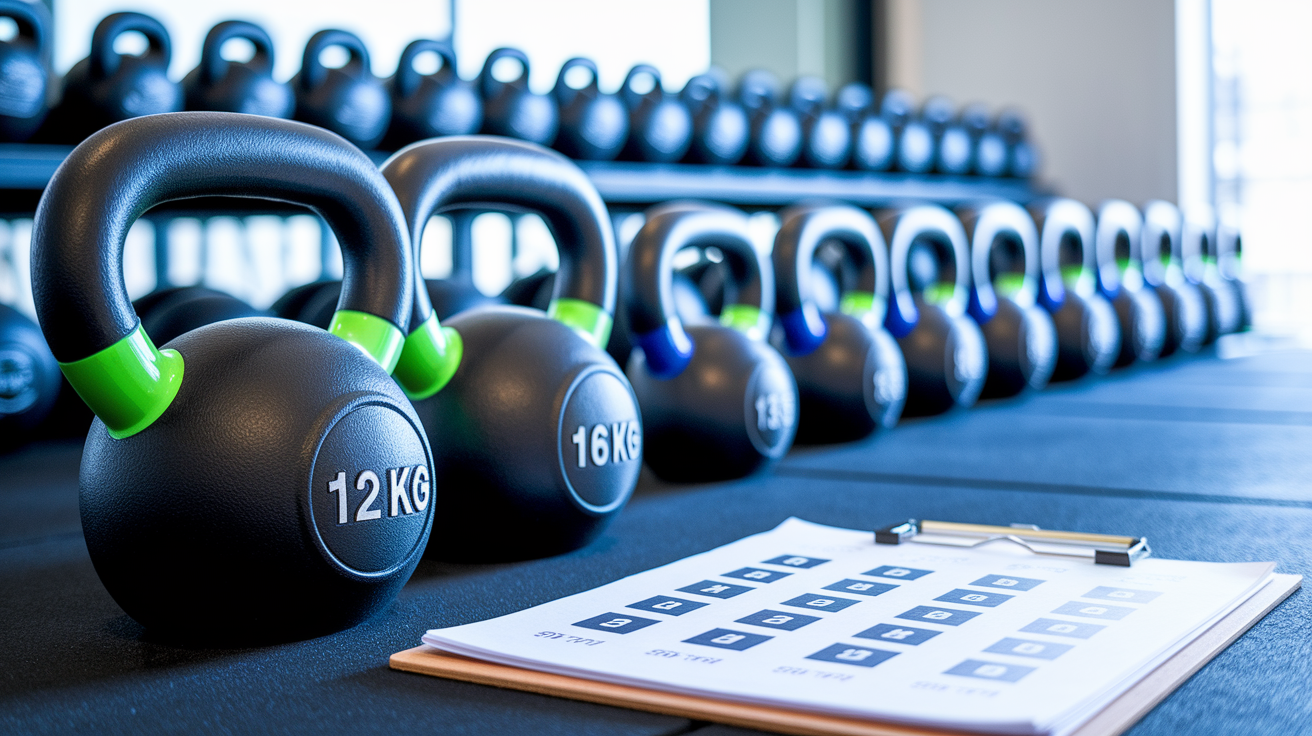
Weight selection depends on your experience level and the exercise. Beginners typically start with three bells: 8 kg for overhead work and skill practice, 12 kg for single-arm upper-body movements and moderate swings, and 16 kg for lower-body squats, deadlifts, and two-handed swings. This range covers most foundational exercises without forcing you to use a weight that’s too light for your legs or too heavy for your shoulders.
Advanced lifters shift the entire range upward. A common setup includes 12 kg for technical warm-ups and overhead presses, 16 kg for single-arm work and moderate ballistics, and 20–24 kg for heavy squats, deadlifts, and power swings. Many advanced programs also call for pairs of heavy kettlebells (2 × 16 kg, 2 × 20 kg, or 2 × 24 kg) to support double-kettlebell complexes and high-volume conditioning blocks.
| Experience Level | Recommended Weight Range | Best Uses |
|---|---|---|
| Beginner | 8 kg / 18 lbs (Light) 12 kg / 26 lbs (Medium) 16 kg / 35 lbs (Heavy) |
Light: overhead, mobility, skill Medium: single‑arm swings, upper‑body Heavy: squats, deadlifts, two‑hand swings |
| Advanced | 12 kg / 26 lbs (Light) 16 kg / 35 lbs (Medium) 20–24 kg / 44–53 lbs (Heavy) |
Light: warm‑up, overhead presses Medium: single‑arm ballistics, complexes Heavy: lower‑body, double‑bell work |
Example Kettlebell Workout Templates Featured in PDFs
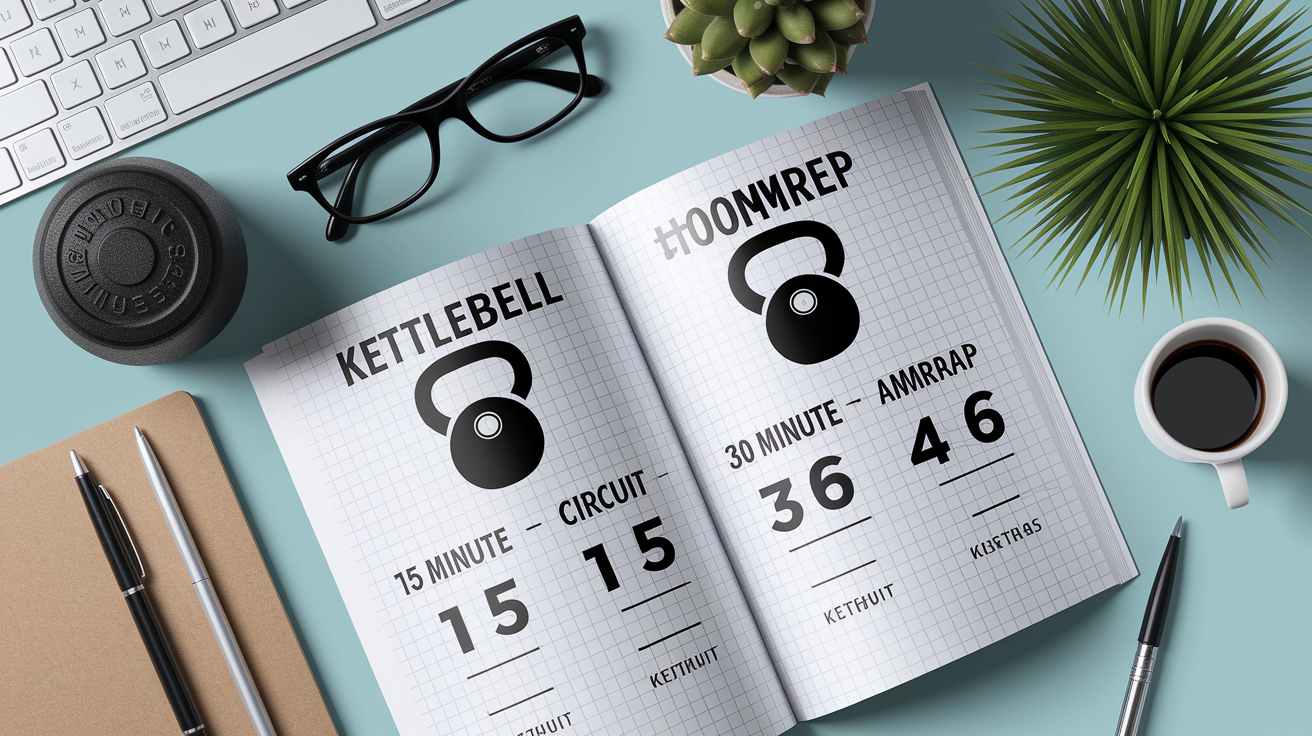
PDFs include a wide variety of workout templates to keep training interesting and progressive. A 15-minute full-body circuit cycles through five foundational exercises: reverse lunge, bent-over row, goblet squat with a 3-second pause, single-arm floor press, and kettlebell swing. Performed back-to-back with 60–90 seconds of rest after the final movement. You repeat the circuit until time runs out, tracking rounds completed for future reference.
Longer sessions use AMRAP formats. A 30-minute AMRAP might start with a 100-swing buy-in, then cycle continuously through military press, hang clean, and squat using two kettlebells. You work at a sustainable pace, rest when needed, and log total rounds at the end. This structure builds endurance and mental toughness while keeping the exercise selection simple enough to maintain good form under fatigue.
Shorter, high-intensity templates focus on skill and power. A 12-minute HIIT swing session delivers explosive hip extension and cardiovascular conditioning in a compact window. A 14-minute AMRAP might pair double kettlebell half snatches with overhead deadlifts, challenging coordination and strength simultaneously. These templates work when you’re short on time but want a complete training stimulus.
Common templates:
- 15-minute full-body circuit – 5 exercises, continuous work, short rest between rounds
- 12-minute HIIT swings – Timed intervals of ballistic swings with structured rest or EMOM format
- 30-minute AMRAP with buy-in – Fixed task (like 100 swings) before entering a long AMRAP block
- 14-minute skill AMRAP – Technical movements (snatches, cleans, overhead work) for moderate duration
- Double-kettlebell complexes – Seamless exercise chains using two bells, often programmed as timed rounds or fixed-rep tasks
Tips for Maximizing Results with Kettlebell Workout Routines PDFs
Consistency and progressive overload drive results. Aim for 2–4 kettlebell sessions per week, spread across your schedule with at least one rest day between harder workouts. Track your weights, reps, and rounds every session using the PDF’s tracking sheets. When you can complete the prescribed work cleanly, apply one progression method: shorten rest intervals by 10–15 seconds, add one extra rep per set, slow down the tempo to increase time under tension, or tack on an additional round.
Nutrition supports the training stimulus. Kettlebell work is metabolically demanding. Swings, snatches, and high-rep circuits burn calories during the session and keep your metabolism elevated for hours afterward. To build strength and muscle, eat adequate protein and carbohydrates around your workouts. To support fat loss, maintain a moderate calorie deficit while keeping protein high. The kettlebell creates the demand. Food and recovery determine whether your body adapts.
Progression strategies:
- Reduce rest periods – Move from 90 seconds between rounds down to 60 seconds as conditioning improves
- Increase reps per set – Add one or two reps to each exercise when the current number feels manageable
- Slow the tempo – Lower the kettlebell over 3–4 seconds instead of 1–2 to increase time under tension
- Add rounds – Complete one extra circuit or AMRAP round once you can finish the base prescription without form breakdown
Final Words
Grab one of the downloadable plans and start the first session. These PDFs give ready-to-use workouts, warm-ups, and tracking fields so you can finish a focused 30–45 minute session.
You saw beginner to advanced templates, clear technique cues, periodized weekly plans, and printable tracking sheets—everything to keep progress steady.
Pick a kettlebell workout routines pdf that fits your time and equipment, follow the cues, track your sets and weights, and add a little more each week. Small, steady steps add up. You’ve got this.
FAQ
Q: What downloadable kettlebell PDFs are available?
A: Downloadable kettlebell PDFs are usually ready-to-download packs like a Beginner 4‑Week Plan, a Full‑Body Strength Program, and an Advanced Complexes Pack, each with session templates, tracking sheets, and images.
Q: What should a high-quality kettlebell PDF contain?
A: A high-quality kettlebell PDF contains clear step-by-step cues, photos or diagrams, tempo instructions, safety and breathing tips, common mistakes, and printable tracking fields for sets, reps, weight, and notes.
Q: Are there beginner-friendly kettlebell PDF routines for home or gym?
A: Beginner-friendly kettlebell PDFs for home or gym offer short circuits (15–30 minutes), light weight recommendations (8–16 kg), simple progressions, and modification options for space and skill level.
Q: How do I choose the right kettlebell weight for my routine?
A: To choose kettlebell weight, pick 8–12–16 kg for beginners and 12–20+ kg for advanced; use lighter bells for overhead, medium for single-arm work, and heavier for two-hand swings.
Q: What do full-body kettlebell workout PDFs include?
A: Full‑body kettlebell PDFs include circuits, EMOMs, AMRAPs, complexes, 12–30 minute timed blocks, and sessions mixing power, unilateral strength, conditioning, and posterior chain focus.
Q: What do advanced kettlebell PDF routines cover?
A: Advanced kettlebell PDFs cover double‑bell complexes, snatch ladders, Turkish get-up progressions, heavy EMOMs, and skill-to-strength sequencing with load and tempo guidance for safe progression.
Q: How are weekly schedules and periodization shown in kettlebell PDFs?
A: Weekly schedules in kettlebell PDFs usually range 2–4 sessions per week, 30–45 minute sessions, with periodized blocks for power, skill, strength, accessory work, and clear progression cues.
Q: Do kettlebell PDFs include printable tracking sheets and progress templates?
A: Kettlebell PDFs include printable tracking sheets with fields for weight, sets, reps, rounds, rest, and notes—helping track progressive overload and technique changes across weeks.
Q: Are warm-ups, cool-downs, and mobility included in kettlebell PDFs?
A: Warm-ups and cool-downs in kettlebell PDFs typically provide 8–10 minute mobility sequences, hip-hinge prep, glute activation, shoulder mobility, and post-session stretches or mid-session mobility options.
Q: What example workout templates appear in kettlebell PDFs?
A: Example templates in kettlebell PDFs include 15‑minute five‑exercise circuits, 12‑minute HIIT swings, 30‑minute AMRAPs, double‑kettlebell complexes, and short skill or core blocks.
Q: How can I maximize results using kettlebell workout PDFs?
A: To maximize results with kettlebell PDFs, train 2–4 times weekly, use progressive overload (more rounds, heavier weight, less rest), track sessions, and support training with protein and proper recovery.