
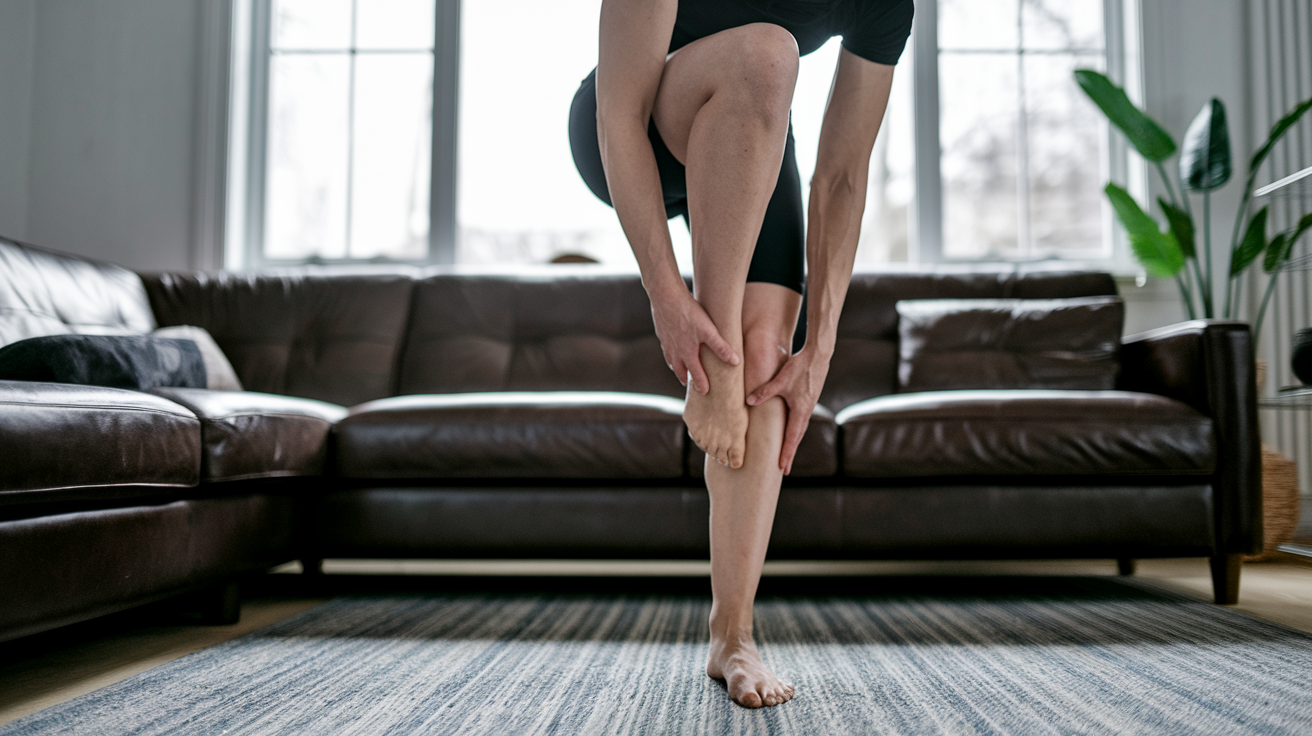

Think stiff knees are just part of getting older? Think again.
Short, daily mobility drills can restore real flexibility and smooth movement without pain or fancy gear, because they loosen the joint capsule, boost synovial fluid flow, and reset tight muscles and tendons that lock your knee into limited patterns.
This post gives six easy drills you can do in about five minutes to regain range of motion, cut stiffness, and move more confidently in daily life and in the gym.
Immediate Knee Mobility Drills for Fast Range-of-Motion Improvement
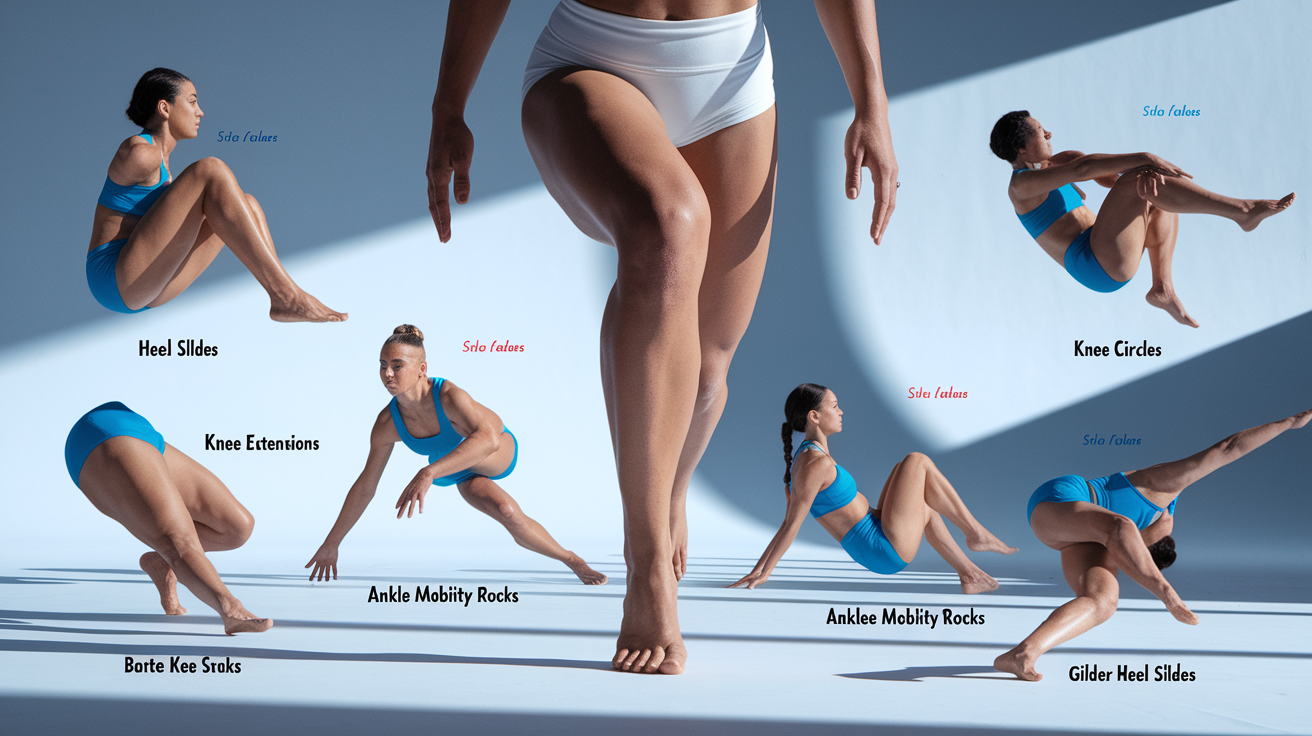
These drills work because they get your knee moving through its full safe range without overloading tight muscles or stiff capsules. Restricted knee mobility usually comes from sitting too long, old injuries that never fully healed, tight quads or hamstrings that stayed short after training, or low-grade inflammation from doing the same thing over and over. The drills below don’t need fancy equipment or a long warm-up. They target the joint capsule, synovial fluid circulation, and muscle-tendon tension patterns that lock your knee into a limited range.
Start slow. Stop immediately if you feel sharp pain, new swelling, joint warmth that wasn’t there before, or a sense that your knee might give out. You should feel gentle tension and maybe a mild stretch, but never a deep ache or instability. Keep your movements smooth and controlled. Let your joint tell you when to ease off. If you’re unsure, start with the lower rep count and work up as your knee responds.
Heel Slides: Lie on your back with legs straight. Slide one heel toward your glutes, bending the knee as far as it’ll go without forcing it. Pause at the end, then slide your heel back out to full extension. Do 10–15 reps per leg. You should feel this in the back of your knee and in your hamstring.
Seated Knee Extensions: Sit upright on a chair or bench with your feet flat. Extend one leg until it’s straight, squeeze your quad at the top, hold for one second, and lower with control. Do 10–15 reps per leg. This drill wakes up your stabilizers and quad activation.
Knee Circles: Stand with your feet together and knees slightly bent. Place your hands on your knees and circle them slowly, first clockwise, then counterclockwise. Do 10 reps in each direction. This helps restore joint lubrication and multi-plane movement.
Ankle Mobility Rocks: Kneel on one knee with your front knee at 90 degrees. Shift your weight forward, driving your front knee past your toes while keeping your heel on the floor. Pause, then return. The ankle unlocks knee flexion. Do 10 reps per side.
Banded Knee Extension: Anchor a resistance band to a stable post behind you. Step one leg into the band so it sits behind your knee. Face the anchor, start with a soft bend, then press the leg to full extension against the band’s resistance. This teaches your quad to control knee tracking under load. Do 10–15 reps per leg.
Glider Heel Slides: Sit on the floor with a towel or slider under one heel. Slide the heel away from you into full leg extension, then pull it back toward your glutes, bending the knee. Do 10–15 reps per leg. The reduced friction lets you focus on smooth motion without grinding.
You can do these drills every day when rebuilding mobility after injury or a long period of stiffness. For general maintenance, three to five times per week is plenty. A full set of all six drills takes about five minutes, so it’s easy to stack onto your warm-up or do before bed.
Understanding Knee Mobility Limitations and How They Affect Movement
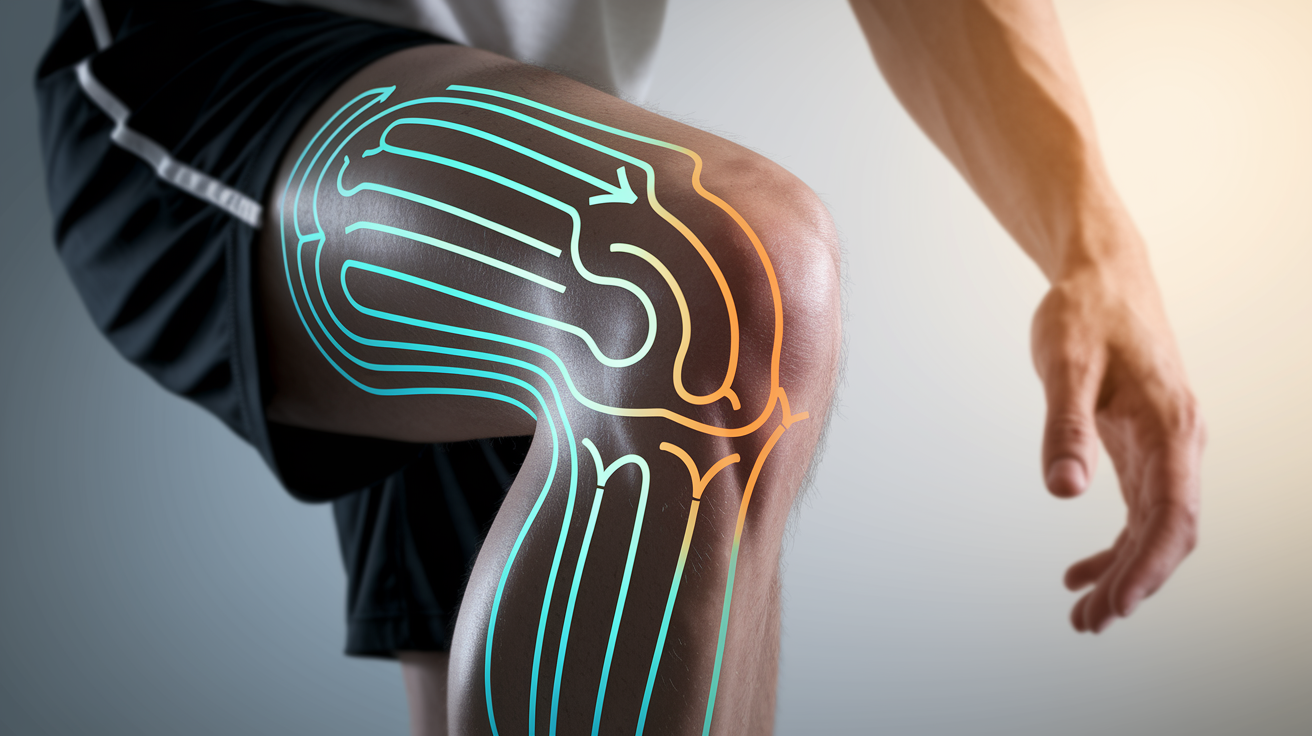
Your knee doesn’t move in isolation. It relies on hip mobility above and ankle mobility below. When your hips are tight, your knee compensates by twisting or collapsing inward. When your ankle can’t dorsiflex, your knee shoots forward past your toes and your weight shifts onto your quad instead of your glutes. Over time, these compensations create stiffness in the knee capsule itself, reduce synovial fluid circulation, and lock your joint into whatever limited pattern you repeat most often, like sitting at 90 degrees all day.
Poor knee mobility changes the way you walk, squat, climb stairs, and push off during running or jumping. You lose the ability to load your leg evenly, so you shift weight to one side or overuse your low back. Your gait shortens. Your stride loses power. Your balance suffers because your brain can’t trust a joint that won’t move predictably. Athletic movements like cutting, landing, and deep squatting become stiff, inefficient, or painful because your knee can’t flex and extend smoothly under load.
| Limitation | What It Indicates |
|---|---|
| Can’t fully straighten the knee | Tight hamstrings, capsule adhesions, or quad weakness preventing terminal extension |
| Can’t bend knee past 90 degrees | Tight quads, ankle restrictions, or joint swelling limiting flexion |
| Knee drifts inward during squats or lunges | Weak hip abductors or tight hip internal rotators altering knee tracking |
| Stiffness after sitting for 30+ minutes | Reduced synovial fluid movement or chronic low-grade inflammation from inactivity |
| Pain at end range of flexion or extension | Meniscal irritation, ligament tightness, or bone-on-bone contact in advanced arthritis |
Flexibility-Focused Knee Mobility Exercises
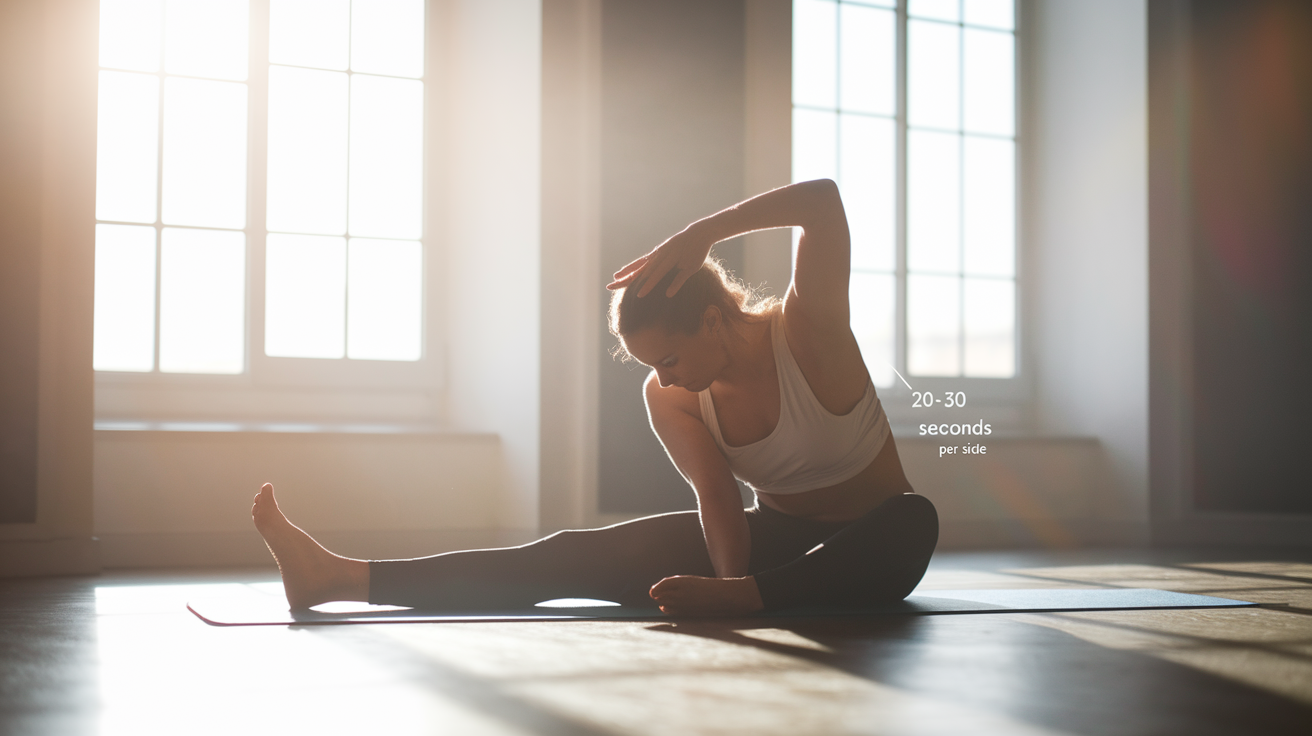
Flexibility work around the knee doesn’t just lengthen muscles. It also restores joint space, reduces tendon pull on the kneecap, and improves the ability of your knee to track smoothly through full flexion and extension. Tight quads pull your kneecap upward and compress the joint. Tight hamstrings limit how far your knee can straighten. Tight calves restrict ankle dorsiflexion, which forces your knee forward and changes the angle at which your femur and tibia meet. All of these restrictions stack up and limit how your knee moves.
Start with a pain-free range and hold each stretch for 20 to 30 seconds. Don’t bounce or force the position. You should feel a gentle pull, not a sharp tug or deep ache. Progress by holding slightly longer (up to 45 seconds) or moving deeper into the stretch as your tolerance improves. Do these stretches after your mobility drills or at the end of your workout when your muscles are warm.
Quadriceps Stretch: Stand on one leg, pull the opposite foot toward your glutes, and keep your knees close together. Hold for 20–30 seconds. If balance is an issue, hold onto a wall or chair.
Hamstring Stretch: Place one foot on a low step or bench. Keep that leg straight and hinge at your hips, leaning forward until you feel a stretch down the back of your thigh. Hold for 20–30 seconds per leg.
Calf Stretch at Wall: Stand facing a wall with one foot back and heel down. Keep your back leg straight and lean into the wall until you feel a stretch in your calf. Hold for 20–30 seconds, then switch legs.
Kneeling Flexion Stretch: Kneel on both knees, then sit your hips back toward your heels. Go as far as your knee flexion allows without pain. Hold for 20–30 seconds. If you can’t reach your heels, place a cushion or folded towel behind your knees to reduce the range.
Iliotibial Band Roll: Lie on your side with a foam roller under the outside of your thigh, just above the knee. Roll slowly from your hip to just above your knee, pausing on tender spots for 10–15 seconds. This isn’t a traditional stretch, but it releases lateral knee tension that limits tracking.
| Stretch Name | Target Area |
|---|---|
| Quadriceps Stretch | Front of thigh, hip flexors, knee capsule |
| Hamstring Stretch | Back of thigh, calf connection, knee flexion |
| Calf Stretch at Wall | Lower leg, Achilles, ankle dorsiflexion that supports knee mechanics |
Control and Stability Knee Mobility Drills for Better Mechanics

Mobility without control creates instability. Your knee needs to move through a full range and stay centered over your foot at the same time. These drills teach your brain to coordinate quad activation, hamstring tension, glute engagement, and foot pressure so your knee tracks in a straight line instead of wobbling or collapsing. Better control reduces wear on cartilage, protects ligaments, and helps you generate more power without compensating at your hip or ankle.
Start each drill slowly. Focus on smooth motion and alignment. Your knee should travel in the same direction as your toes, and you should feel balanced and stable at every point in the movement. If you notice your knee drifting inward, pause and reset. That wobble is a sign your stabilizers aren’t firing yet. Use a wall or chair for balance if needed, and reduce the range of motion until you can hold good form.
To progress, remove external support, increase the depth of the movement, hold positions longer, or switch to single-leg variations. For example, start a step-through lunge with your hands on a wall, then try it freestanding. Or hold the bottom of a wall-assisted deep knee bend for 30 seconds instead of 15. Single-leg variations like a single-leg balance or a single-leg wall sit force each knee to stabilize independently, which builds proprioception fast.
Step-Through Lunges: Stand tall, step forward into a lunge, then swing the same leg back into a reverse lunge without pausing. Alternate legs for 8–10 reps. This teaches your knee to transition smoothly between flexion angles and challenges balance and coordination.
Wall-Assisted Deep Knee Bends: Stand with your back against a wall and your feet about one foot in front of you. Slide down into a deep squat, keeping your back in contact with the wall, and hold for 15–30 seconds. Repeat 2–3 times. This drill loads the knee in deep flexion while the wall supports your torso and reduces balance demands.
Single-Leg Balance Progressions: Stand on one leg with a soft knee bend. Hold for 20–30 seconds. Progress by closing your eyes, standing on an unstable surface like a folded towel, or adding small knee bends while balancing.
Reverse Lunge Isometric Hold: Step back into a reverse lunge with both knees at about 90 degrees. Hold the bottom position for 15–30 seconds, keeping your front knee stacked over your ankle and your torso upright. Repeat 2–3 times per leg.
Bosu Ball Squats: Stand on a Bosu ball (dome side up) with feet hip-width apart. Squat slowly, keeping your knees tracking over your toes and your torso upright. The unstable surface forces your knee stabilizers and proprioceptors to work overtime. Do 8–10 controlled reps.
Lateral Step-Downs: Stand on a low step or box with one foot hanging off the side. Lower the hanging foot toward the floor with control, keeping your standing knee aligned over your toes. Tap the floor lightly, then press back up. Do 8–10 reps per leg.
Rotational Control Drills: Stand on one leg and slowly rotate your torso left and right while keeping your standing knee stable and aligned. Do 10 rotations per leg. This challenges your knee to resist unwanted rotation, which is critical for cutting and pivoting movements.
Strength-Building Exercises That Improve Knee Mobility Over Time

Strength and mobility aren’t separate goals. Stronger muscles create the tension and control needed to access and stabilize a full range of motion. Weak quads can’t hold your knee straight at lockout. Weak glutes let your knee collapse inward during a squat. Weak hamstrings can’t decelerate your leg during a lunge or step-down. Over time, your brain starts avoiding positions your muscles can’t support, and you lose mobility simply because your body won’t let you go there.
These exercises build the muscle groups that surround and stabilize the knee joint. They’re not mobility drills in the traditional sense, but they let you own the range of motion you gain from flexibility and control work. Do them with slow, controlled reps. Focus on full range and proper alignment. Start with bodyweight or light resistance, and add load only when you can complete every rep with clean form and no compensations.
Glute Bridges: Lie on your back with knees bent and feet flat, hip-width apart. Press through your heels to lift your hips until your body forms a straight line from shoulders to knees. Squeeze your glutes hard at the top, hold for one second, then lower with control. Do 10–15 reps. This strengthens your glutes and hamstrings, which take pressure off your knees during squatting and walking.
Spanish Squats: Anchor a resistance band behind both knees at knee height. Step back until there’s tension in the band, then sit into a squat with your torso upright. The band pulls your knees forward, forcing your quads to work hard to keep you stable. Do 8–10 reps. This drill builds quad strength in a way that directly supports knee extension and tracking.
Straight Leg Raises: Lie on your back with one leg bent and the other straight. Lift the straight leg until it’s level with the bent knee, hold for one second, then lower slowly. Do 10–15 reps per leg. This isolates your quad and hip flexors and teaches terminal knee extension, the last few degrees of straightening that many people lose first.
Wall Sits: Stand with your back against a wall and slide down until your knees are at 90 degrees. Hold for 20–45 seconds, keeping your weight in your heels and your knees aligned over your toes. This isometric drill builds quad endurance and teaches your knee to handle sustained load in a bent position.
Reverse Lunge with Pause: Step back into a reverse lunge, pause at the bottom for two seconds, then press through your front heel to return to standing. The pause increases time under tension and forces your quad and glute to stabilize. Do 8–10 reps per leg.
Eccentric Strength for Long-Term Joint Health
Eccentric training, the slow lowering phase of an exercise, builds tendon capacity and teaches your muscles to absorb force instead of just producing it. Slowly lowering yourself into a squat, stepping down from a box, or controlling the descent in a lunge all load your knee in lengthened positions and improve your ability to handle impact and deceleration. Over time, eccentric strength reduces tendon irritation, protects cartilage, and lets you train harder without flare-ups. Add a three to five second eccentric tempo to any of the exercises above to multiply their long-term benefit.
Knee Mobility Routines for Runners, Cyclists, and Active Lifestyles
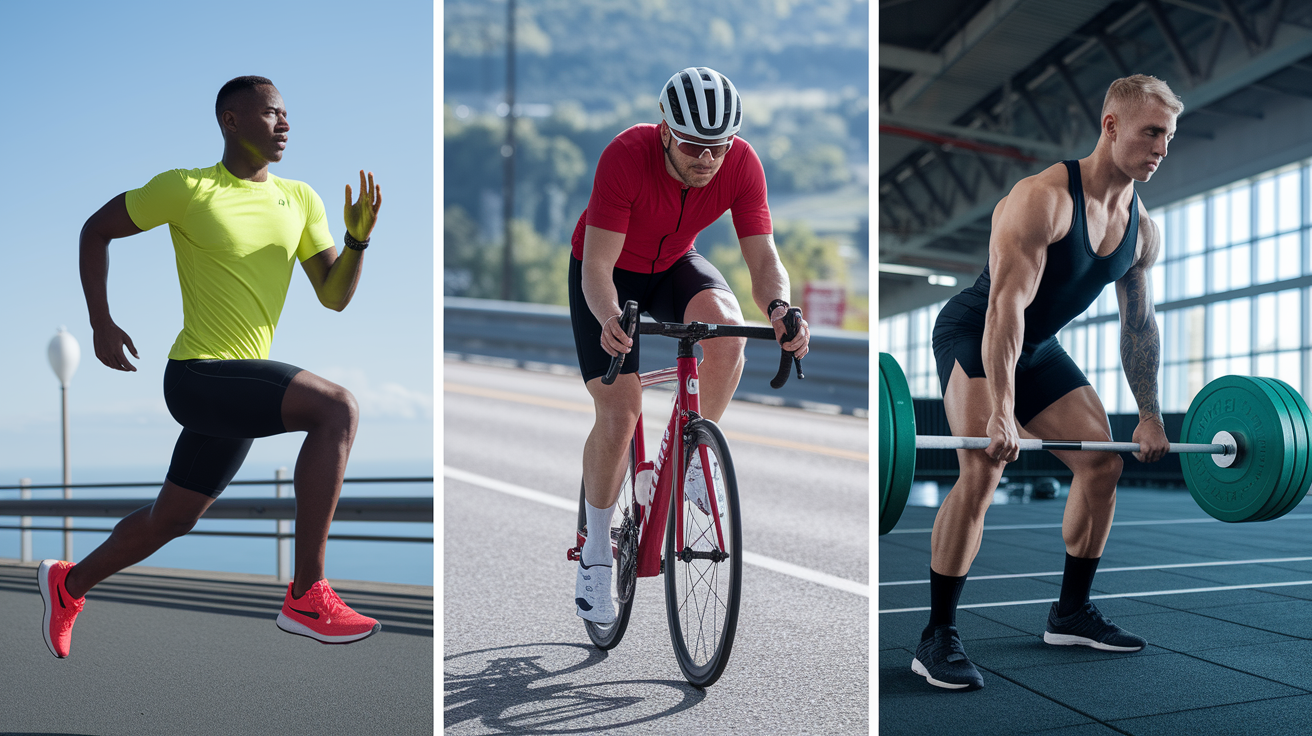
Runners need full knee extension to generate power during push-off and full flexion to recover the leg efficiently during the swing phase. Limited extension shortens your stride and shifts load to your hip flexors and low back. Limited flexion forces your hamstring to work overtime and increases ground contact time, which slows you down and raises injury risk. A simple pre-run routine of heel slides, seated knee extensions, and ankle mobility rocks restores both ranges and primes your nervous system for smooth, efficient movement.
Cyclists spend hours in a fixed knee angle, usually between 90 and 120 degrees of flexion, which can lock the joint into that range and make full extension stiff. After long rides, do seated knee extensions and glute bridges to remind your knee how to straighten and activate the muscles that extend the hip and knee together. Add a quad stretch and a calf stretch to release the tension that builds up from repetitive pedaling. Twice a week, include wall-assisted deep knee bends to maintain the deep flexion you need for powerful pedal strokes and off-bike squatting.
Squatting and lunging athletes, like basketball players, weightlifters, or CrossFit athletes, need both deep flexion and rock-solid stability. Poor ankle mobility, tight hips, or weak glutes will all show up as knee wobble or forward drift during a squat. Use ankle mobility rocks, step-through lunges, and Spanish squats before training to prepare your knees for loaded positions. After training, foam roll your quads, hamstrings, and calves, then do a kneeling flexion stretch to restore the range you just worked.
Runners: Heel slides, seated knee extensions, ankle mobility rocks, hamstring stretch. Do before every run, 5 minutes total.
Cyclists: Seated knee extensions, glute bridges, quad stretch, calf stretch. Do after rides and twice weekly for maintenance.
Squatting Athletes: Ankle mobility rocks, step-through lunges, Spanish squats, kneeling flexion stretch, foam rolling. Do before heavy lower-body sessions, 8–10 minutes total.
General Active Lifestyle: Knee circles, wall-assisted deep knee bends, single-leg balance, reverse lunge holds. Do 2–3 times per week as a standalone mobility session or warm-up.
At‑Home Knee Mobility Tools, Safety Tips, and When to Seek Professional Help
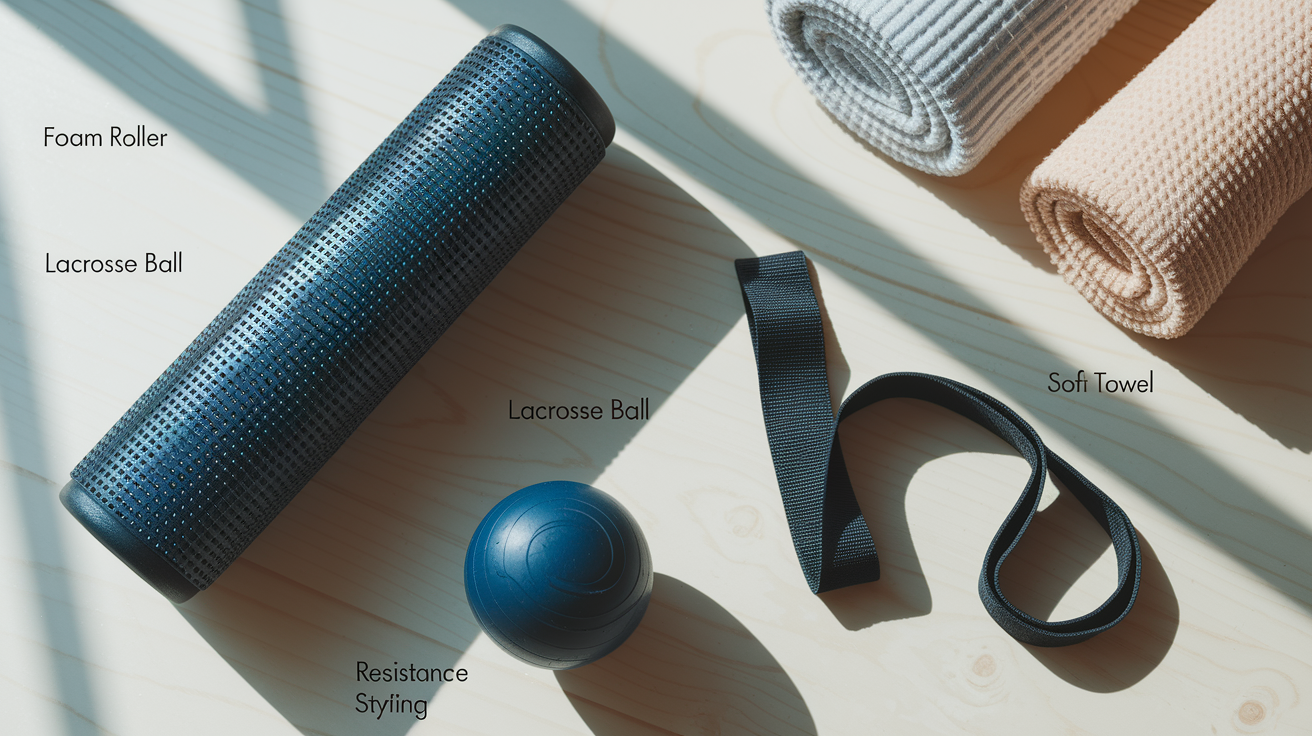
You don’t need much to improve knee mobility at home. A sturdy chair provides balance support for standing drills and a stable surface for seated work. A resistance band adds controlled load to knee extensions and Spanish squats. A foam roller or lacrosse ball lets you release tight quads, hamstrings, and calves that restrict knee movement. A towel or furniture slider reduces friction during heel slides and glider drills. That’s it. Most of the work happens through your own movement, not through gear.
Stop immediately if you feel sharp, localized pain inside the knee joint, new swelling that appears during or after a session, warmth or redness around the joint, or a sense that your knee might buckle or give out. These are signs of irritation, inflammation, or structural damage that won’t improve with more movement. Reduce your range of motion, lower your rep count, or skip the drill entirely and try again the next day. If symptoms persist for more than a few days or worsen with rest, consult a physical therapist or healthcare provider before continuing.
Use a foam roller on your quads, hamstrings, and calves for 30–60 seconds per muscle group to reduce tension and improve circulation before mobility work.
Do patellar mobilization by gently pushing your kneecap up, down, left, and right while your leg is relaxed and straight. This restores capsule mobility and reduces stiffness around the kneecap itself.
Modify drills by reducing range, slowing tempo, or adding external support (wall, chair, or band) when pain or instability limits movement.
Track your sessions in a simple journal or app, noting reps, holds, and any pain or discomfort, so you can identify patterns and adjust your routine accordingly.
Seek professional help if you have persistent pain lasting more than two weeks, significant swelling, a recent acute injury, suspected ligament or meniscus damage, or post-surgical restrictions you’re unsure how to navigate.
Remember that these drills are for mobility maintenance, early rehab, and general movement quality. They’re not a replacement for structured rehabilitation after major injury or surgery.
Sample 10‑Minute Knee Mobility Flow for Busy Schedules

This routine hits all the key mobility, control, and flexibility targets in a single short session. Do it 2–3 times per week as a standalone mobility workout, or use it as a warm-up before lower-body training. You’ll need a chair, a towel or slider, and a resistance band. No other equipment required.
Knee Circles: Stand with feet together, hands on knees, and circle slowly in both directions. Do 10 reps each way. This primes synovial fluid and warms up the joint.
Heel Slides: Lie on your back and slide one heel toward your glutes, then extend. Do 10–15 reps per leg. This restores flexion and extension range quickly.
Seated Knee Extensions: Sit upright, extend one leg fully, squeeze the quad, and lower with control. Do 10–15 reps per leg. This activates your stabilizers and quads.
Ankle Mobility Rocks: Half-kneel and shift your front knee forward past your toes, keeping your heel down. Do 10 reps per side. This unlocks knee flexion by improving ankle dorsiflexion.
Banded Knee Extension: Anchor a band behind you, step into the loop, and press your leg to full extension. Do 10–15 reps per leg. This teaches quad control under resistance.
Wall-Assisted Deep Knee Bends: Stand with your back against a wall, slide into a deep squat, and hold for 15–30 seconds. Repeat 2–3 times. This loads deep flexion safely.
Quadriceps Stretch: Stand and pull one foot toward your glutes. Hold for 20–30 seconds per leg. This releases quad tension and restores knee flexion.
Hamstring Stretch: Place one foot on a low step and hinge at the hips. Hold for 20–30 seconds per leg. This improves extension and reduces posterior chain tightness.
Final Words
In the action, we walked through fast, at-home drills to restore knee range of motion, heel slides, seated knee extensions, knee circles, and why stiffness shows up (sedentary habits, past injuries, tight surrounding muscles). We also covered safety cues: stop for sharp pain, watch swelling, and modify when needed.
You got flexibility work, control and stability drills, strength options, sport-specific routines, tools, and a 10-minute flow for busy days.
Use these knee mobility exercises daily or a few times a week. Small, steady practice brings real progress. Keep it simple and keep moving.
FAQ
Q: How do I increase mobility in my knees? Can you regain knee flexibility?
A: Increasing mobility in your knees and regaining flexibility is possible by doing daily dynamic drills (heel slides, seated knee extensions, knee circles), gentle strength work, and avoiding sharp pain. Practice consistently for measurable gains.
Q: What is the #1 mistake that makes bad knees worse?
A: The number one mistake that makes bad knees worse is resting too much and avoiding gentle movement, which causes stiffness, muscle weakness, and a longer, slower recovery.
Q: Which oil is best for knee pain relief?
A: The best oil for knee pain relief depends: fish oil (omega-3) taken orally can reduce inflammation; topical options like arnica or CBD oil may ease pain, but evidence is limited. Ask your clinician.