


Think strength training has to wreck your knees and shoulders?
It doesn’t.
Low-impact strength training builds muscle, steadies joints, and keeps you moving without the jarring landings or heavy barbell loads.
This post walks you through safe, practical moves and simple progressions you can do two to three times a week, with cues, joint-friendly swaps, and routines for beginners through recovery.
You’ll get clear steps: what to do, how it should feel, and when to progress.
Best Low‑Impact Strength Exercises for Beginners and Joint Protection
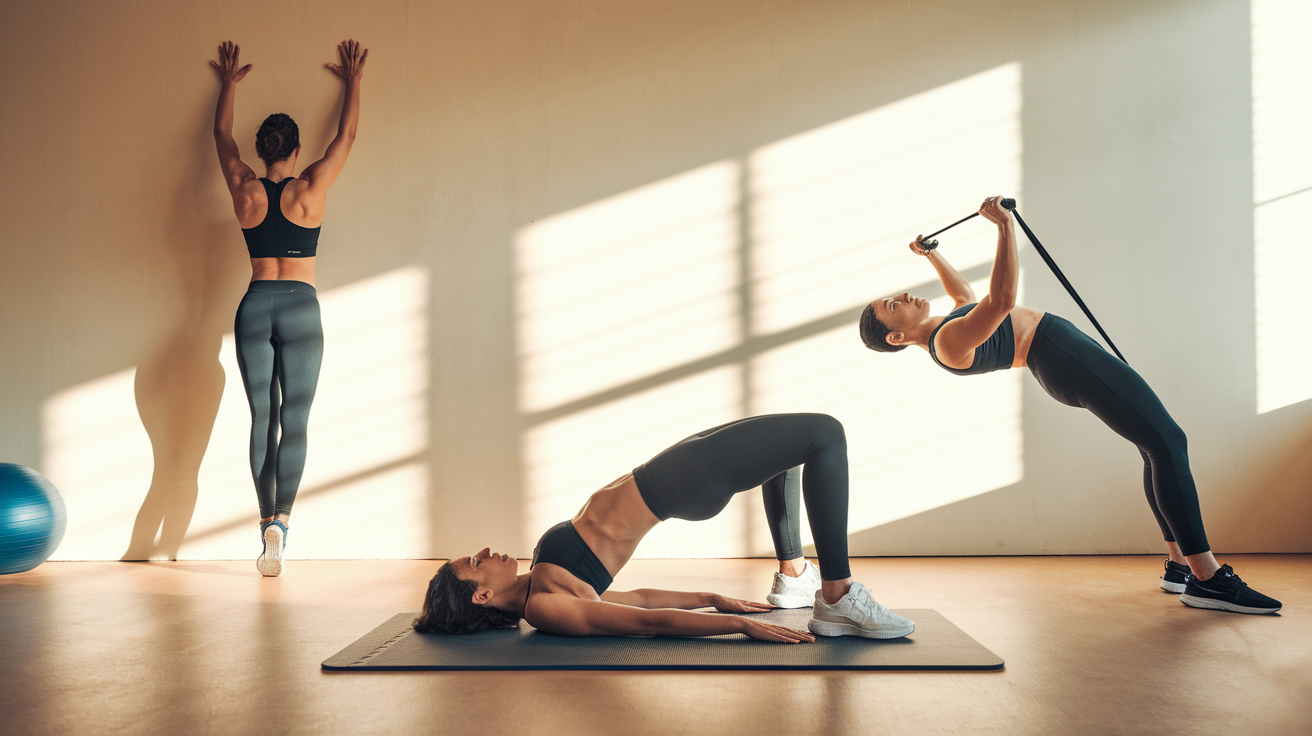
Low-impact strength training builds muscle and endurance without beating up your joints. You keep one foot on the ground, move with control, and skip the jarring landings. If you’re new to lifting, dealing with joint pain, or just getting back into it after time off, these exercises let you get stronger without the soreness that usually comes from jumping around or loading up a heavy barbell.
The moves below hit all the major muscle groups while keeping your knees, hips, shoulders, and wrists safe. You can do them with basic equipment or just your bodyweight.
Wall push-ups Stand facing a wall, hands flat at shoulder height. Push yourself away. You’ll feel it in your chest and triceps, not your wrists. Keep your core tight and back straight the whole time.
Resistance band rows Loop a band at chest height, grab the handles, pull toward your ribs. Elbows stay close. This builds your upper back and helps your posture without loading your spine.
Glute bridges Lie on your back, knees bent, feet flat. Press through your heels and lift your hips until your body’s in a straight line from shoulders to knees. Squeeze your glutes at the top, lower slowly. Should feel this in your glutes and hamstrings. Not your lower back.
Modified planks Drop to your knees instead of your toes. Hold a straight line from head to knees, engage your core, breathe normal. Builds strength without wrecking your wrists or back.
Seated leg extensions Sit in a sturdy chair. Extend one leg straight out, hold a second, lower with control. Strengthens quads without pounding your knee.
Do these two or three times a week with at least a full day between sessions. Start with 8 to 12 reps per exercise, aim for two or three sets. If 12 feels easy and your form’s clean, add a light band or slow the tempo down. Three seconds to lower, two to lift. Sharp pain means pull back the range or skip it for a few days.
Key Form Cues for Safe Low-Impact Strength Training
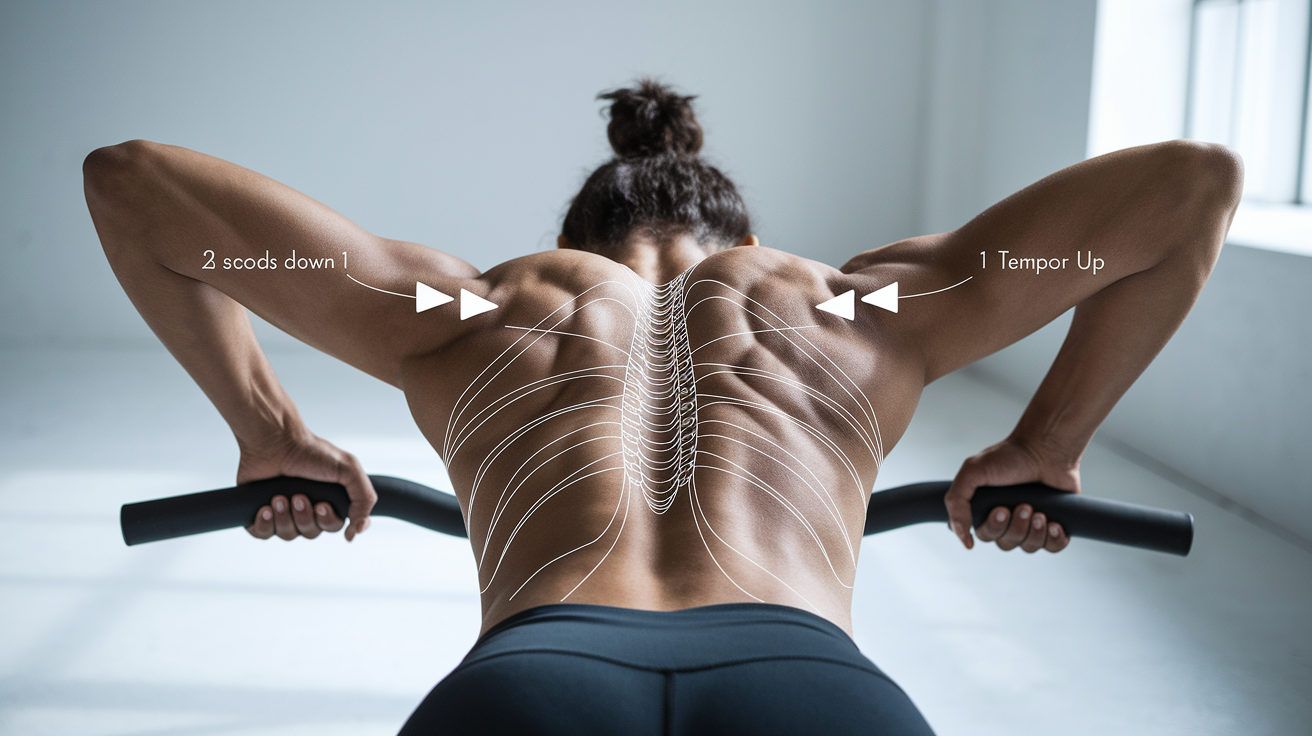
Good form keeps your joints safe. Even with low-impact stuff, sloppy technique puts stress where you don’t want it. Knees, lower back, shoulders. The goal is control, stable alignment, and letting the right muscles do the work. When your form’s clean, you feel the burn where you should.
Start every rep with a neutral spine. Head, shoulders, hips, knees all lined up naturally. Don’t arch or round your back. Brace your core like someone’s about to poke you in the stomach. Firm, not stiff. This supports your lower back and helps you generate force safely. On rows, squats, bridges, keep your shoulders pulled back and down. Not hunched up by your ears.
Breathing matters. Exhale on the hard part, inhale on the return. Glute bridge? Breathe out as you press up, breathe in as you lower. This keeps your core engaged and your blood pressure steady.
Tempo’s just as important. Two or three seconds on the way down, one or two on the way up. Rushing through reps kills muscle activation and makes movements jerky. On anything involving your knees, make sure they track with your toes. Not caving in or drifting too far forward. On upper body moves, keep a slight bend in your elbows. Don’t lock out at the top.
Modifications for Common Joint Limitations
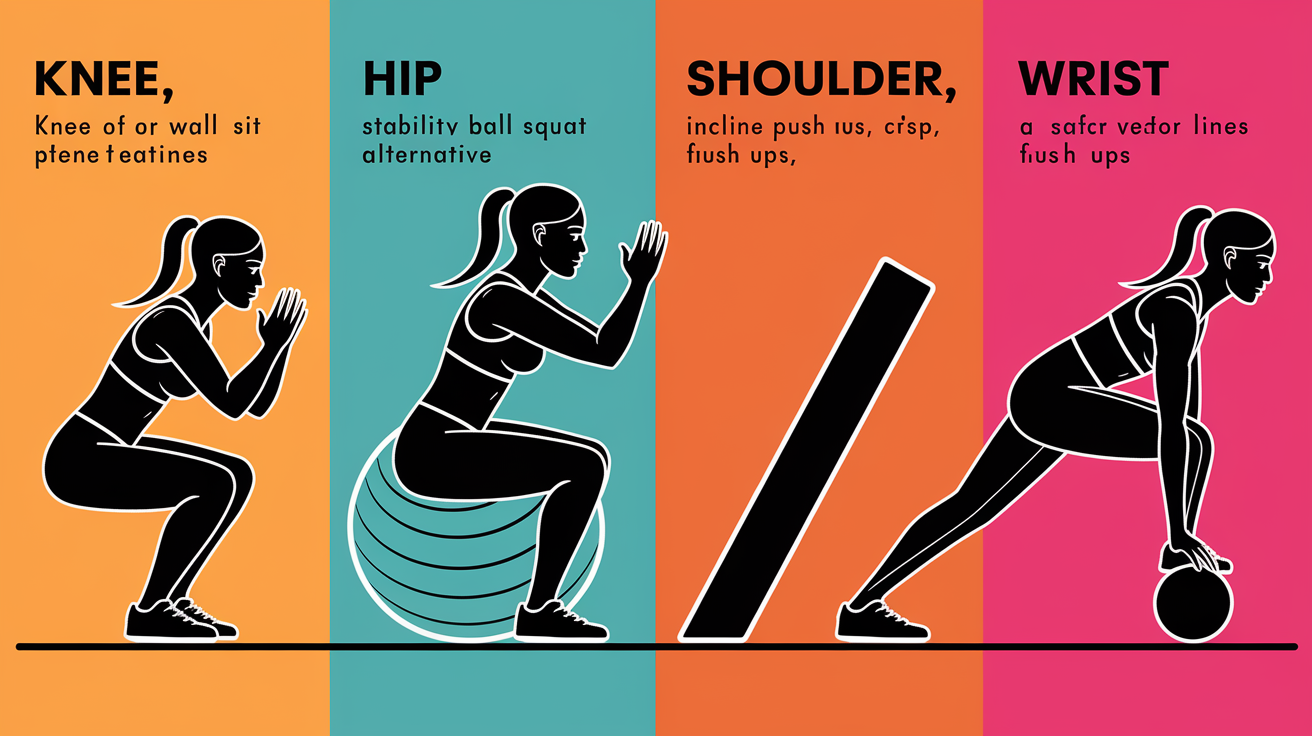
Joint pain doesn’t mean you quit strength training. It means you adjust the movement to fit what your body can handle right now. Modifications let you train the same muscles while reducing load, changing position, or shortening range around a sensitive spot. The right swap turns a painful exercise into a productive one.
Test small changes first. Full squat bothers your knees? Try a partial squat or wall sit. Overhead pressing hurts your shoulder? Lower the range to shoulder height or use a lighter band. Find a version that challenges the muscle but doesn’t grind the joint.
Knee-friendly swaps Reverse lunges instead of forward lunges (less stress on the kneecap). Goblet squats with shorter range. Wall sits for isometric quad work. Glute bridges and single-leg bridges strengthen muscles around the knee without loading the joint directly.
Hip-friendly swaps Stability ball against the wall for supported squats. Lying leg lifts or clamshells with a mini-band to hit hip stabilizers. Seated cable rows and seated leg presses that reduce hip flexion demands.
Shoulder-friendly swaps Landmine presses or band presses at chest height instead of overhead. Incline push-ups instead of floor push-ups. Face pulls or band external rotations for rotator cuff strength. Keep elbows from flaring too wide on any pressing movement.
Wrist-friendly swaps Push-ups on your fists or use push-up bars to keep wrists neutral. Hold dumbbells instead of placing palms flat during planks. Resistance bands for rows and presses instead of gripping heavy handles. Wall push-ups cut wrist load entirely.
Progress modifications slowly. Start with the gentlest version and add small increases in range, load, or volume every week or two. If a movement feels pain-free for three sessions straight, test a slightly harder variation. Pain returns? Back off and stick with what worked. Your joints tell you what they can handle. Listen, adjust, keep moving forward at a pace that doesn’t set you back.
Low-Impact Strength Routines for Different Fitness Levels
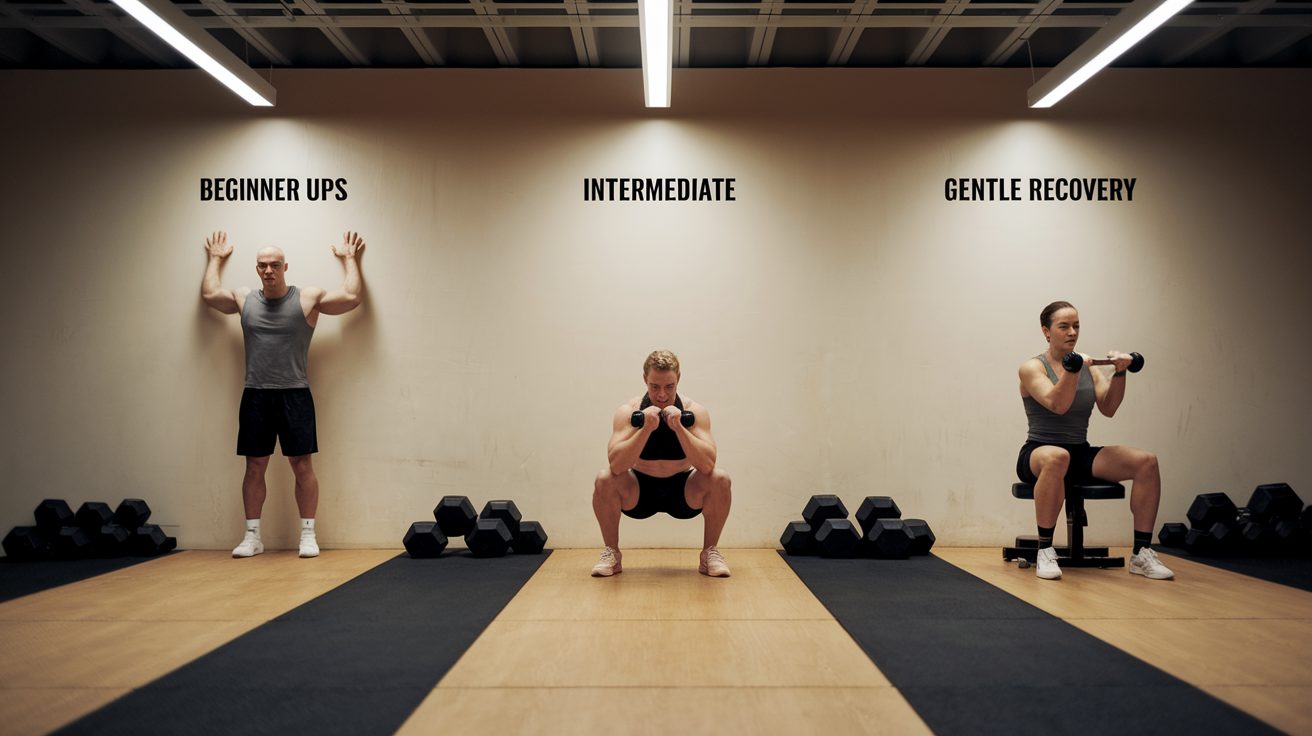
A structured routine removes guesswork. You get a repeatable plan you can track and improve. Whether you’re brand new, rebuilding after a break, or managing ongoing joint issues, having clear sets and reps helps you stay consistent without overdoing it.
| Level | Exercises | Sets/Reps | Rest |
|---|---|---|---|
| Beginner | Wall push-ups, resistance band rows, glute bridges, modified planks (on knees), seated leg extensions | 2 sets of 8–10 reps (30-sec holds for planks) | 60–90 seconds between sets |
| Intermediate | Incline push-ups, goblet squats, resistance band shoulder press, bent-over band rows, wall sits | 3 sets of 10–12 reps (45-sec holds for wall sits) | 45–60 seconds between sets |
| Gentle Recovery | Seated band chest press, mini-band clamshells, supported squats (stability ball), supermans, standing band external rotations | 2 sets of 10–12 reps | 90 seconds or as needed between sets |
Pick your level based on how you feel during and after the session. If you finish a beginner routine and feel energized with minimal soreness the next day, try intermediate volume. Dealing with recent soreness, recovering from injury, or managing chronic joint pain? Stick with gentle recovery until your tolerance improves. The right level is the one you can repeat twice a week without needing three days to bounce back.
Track your reps, hold times, and how the exercises feel in your joints. When a routine becomes easy, add one set, bump reps by two or three, or move to the next level.
How to Progress Low-Impact Strength Training Safely
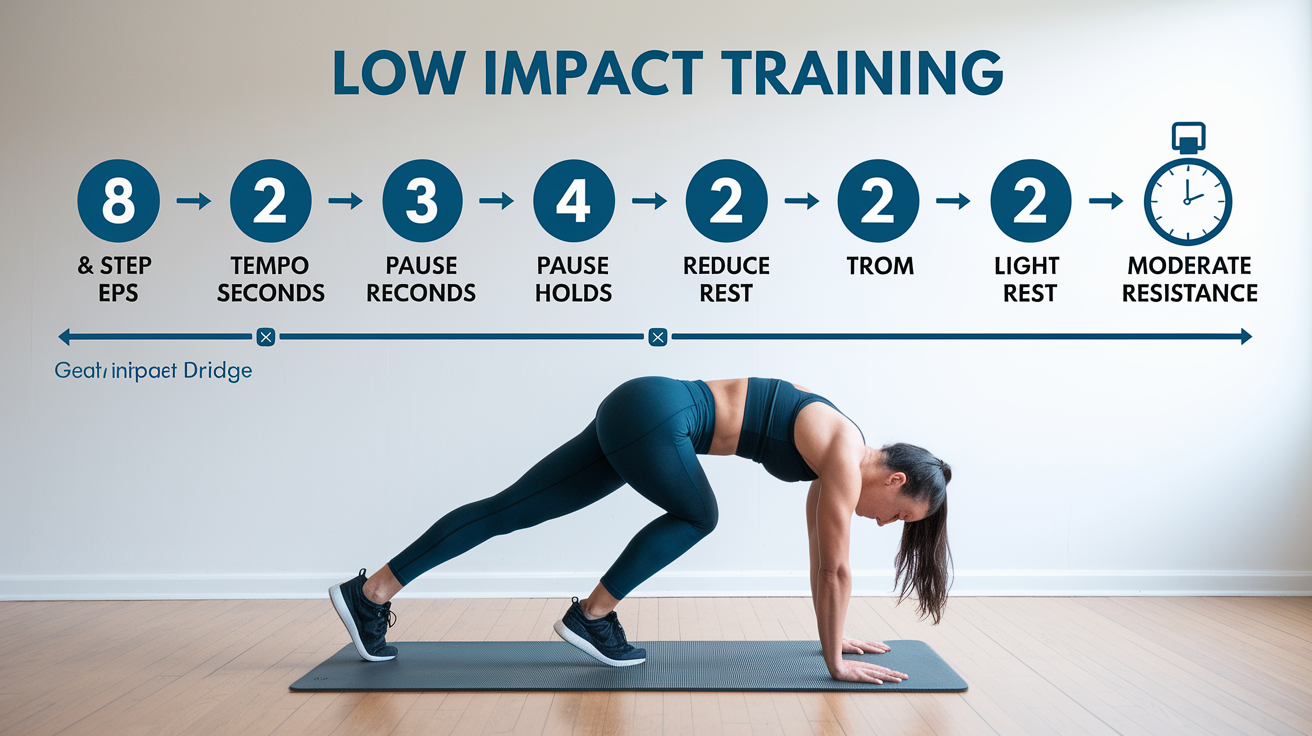
Low-impact doesn’t mean no progression. You can get stronger, build muscle, and improve endurance without adding impact or heavy loads. The key is applying progressive overload in small steps. Enough to challenge your muscles, not so much that your joints can’t keep up.
Start with rep volume. If you’re hitting 8 reps comfortably, add one or two each week until you reach 12. Once you can do 12 reps with clean form, increase resistance slightly. Resistance bands? Move from a lighter color to a heavier one. Dumbbells? Add two to five pounds. Bodyweight moves like wall push-ups? Progress to incline push-ups on a bench, then eventually to floor push-ups. Each small step builds strength and confidence without overloading vulnerable joints.
Time under tension is another tool. Slow down the lowering phase to three or four seconds. On a glute bridge, take four seconds to lower your hips instead of dropping quickly. This increases the challenge without adding weight or impact.
You can also add pauses. Hold the top of a bridge for two seconds. Pause halfway through a squat for a three-second count. These isometric holds build strength in stable positions and teach your body to control load at different ranges.
Another method? Reduce rest between sets. Resting 90 seconds? Try 60. Shorter recovery ups the cardiovascular and muscular demand without changing the exercise itself. Just make sure your form stays clean. If technique starts to break down, add the rest time back and focus on building endurance before cutting it again.
Equipment Recommendations for Low-Impact Strength Training
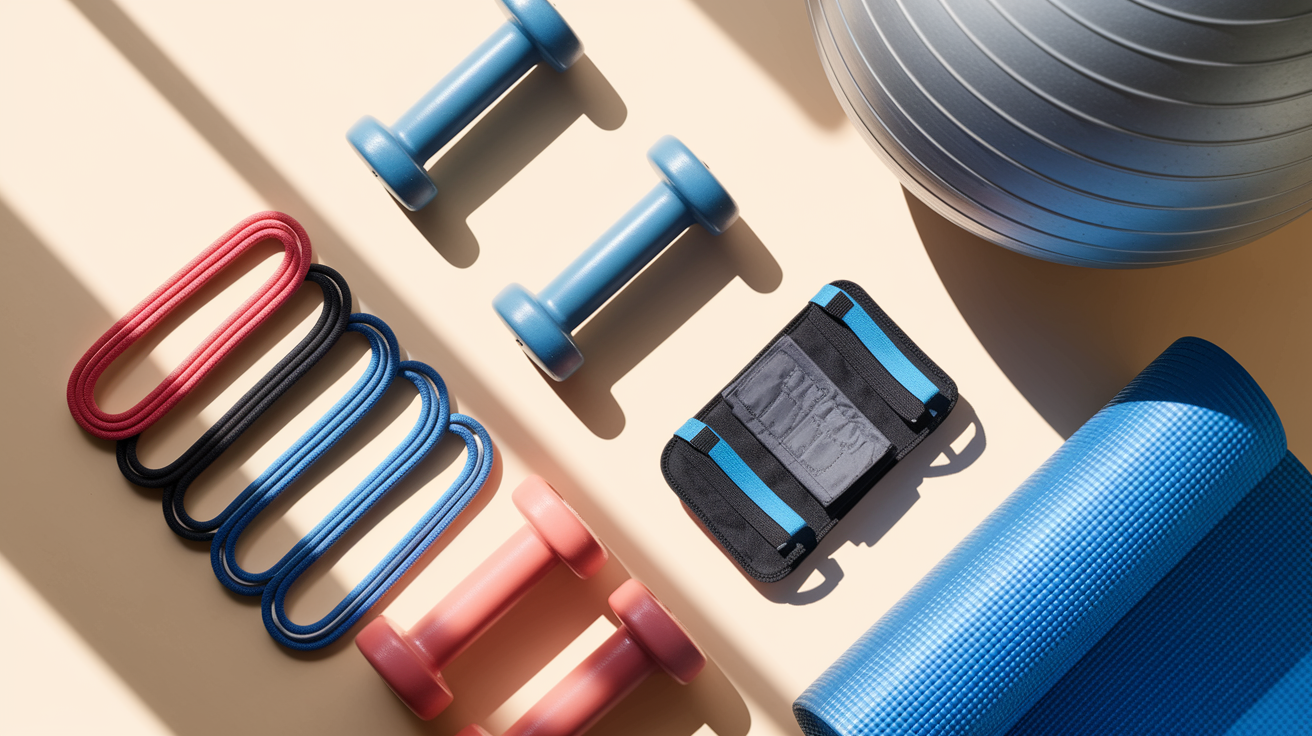
You don’t need a fully loaded gym. A few simple, affordable tools give you enough variety to strengthen every major muscle group while keeping joint stress low.
Resistance bands A set with multiple tension levels (light, medium, heavy) costs around $15 to $30 and fits in a drawer. Bands let you adjust resistance smoothly, work in multiple directions, and do rows, presses, and external rotations without loading your spine or wrists.
Light dumbbells (2–5 lbs) Perfect for lateral raises, bicep curls, goblet squats. Cost $10 to $25 and add just enough load to challenge muscles without stressing joints. Want more flexibility? An adjustable dumbbell set (5–25 lbs) runs $50 to $100 and grows with you.
Stability ball Supports your back during wall squats, adds instability to planks and bridges. Costs $15 to $30. Especially useful if you need extra support around your hips or lower back.
Mini-bands Small loop bands (usually sold in packs of three for $10 to $20) are perfect for hip and glute activation, clamshells, lateral walks, shoulder stabilization drills. Lightweight, portable, gentle on joints.
Cushioned exercise mat A thick mat ($20 to $40) protects your knees, elbows, and spine during floor work like planks, bridges, supermans. Also gives you a stable, non-slip surface that cuts down on awkward movements.
Most people can build a complete low-impact strength training setup for under $100. Tight on space or budget? Start with a resistance band set and a mat. Those two alone cover dozens of exercises. Add dumbbells or a stability ball later as your strength and confidence grow. The best equipment is the kind you’ll actually use. Choose tools that fit your space, your budget, and the movements that feel good in your body.
Final Words
You now have a short toolbox: five joint-friendly moves, clear form cues, handy modifications, levelled routines, progress tips, and simple gear picks.
Start with the easier variations, focus on bracing, tempo, and pain-free ranges. Practice twice or three times weekly and track one change at a time.
Aim for small increases: more reps, tougher bands, a slower tempo. low impact strength training helps you build strength without added joint stress. Keep going. Small, steady wins.
FAQ
Q: What is the best low impact strength training? Can you build muscle with low impact workouts?
A: The best low-impact strength training is joint-friendly moves like wall push-ups, resistance band rows, glute bridges, modified planks, and seated leg extensions; yes, you can build muscle with them using progressive overload.
Q: Can I lift weights while taking Zepbound?
A: You can often lift weights while taking Zepbound, but check with your prescriber first; monitor energy, hydration, blood sugar, start lighter, and stop or adjust if you feel dizziness or extreme fatigue.
Q: What is the 3 3 3 rule for weight lifting?
A: The 3 3 3 rule for weight lifting is doing three sets of three reps (heavy, low-rep strength work) with full rest between sets; it’s a simple template for building maximal strength.