


Think one big, protein-packed dinner will protect your muscles?
Think again.
As we age, muscles need bigger, regular protein signals to keep and rebuild strength.
Research shows older adults do best with about 25–40 g of protein at each main meal—roughly 30–35 g for most people—spread across the day instead of loaded at night.
This post lays out simple meal-timing strategies and easy portion examples so you can hit those per-meal targets, stay stronger, and slow sarcopenia without drastic diets.
Optimal Per‑Meal Protein Targets for Older Adults

Research shows older adults need roughly 25–40 g of protein at each main meal to fight the natural drop in muscle-building response that comes with age. That range sounds wide, but hitting 30–35 g per meal works for most people. When you sit down to lunch, you want enough protein on your plate to flip the muscle synthesis switch. And that switch gets harder to flip after your mid-fifties.
As we age, muscle cells become less sensitive to amino acids. Scientists call this anabolic resistance. Essentially, your muscles need a bigger signal to start building or repairing tissue. A younger adult might see a strong response from 15–20 g of protein, but an older adult needs 25–40 g to get the same effect. To build muscle at sixty‑five, you need to send a louder signal than you did at twenty‑five. This resistance is one of the main reasons sarcopenia sneaks up on people: the old portions simply don’t cut it anymore.
Meeting these per‑meal targets directly supports muscle protein synthesis, the process that maintains and repairs muscle tissue. When every meal delivers enough protein, you keep synthesis running throughout the day rather than relying on one big dinner to do all the work. Over weeks and months, that steady stimulus helps preserve strength, balance, and independence.
Daily Protein Requirements for Healthy Aging
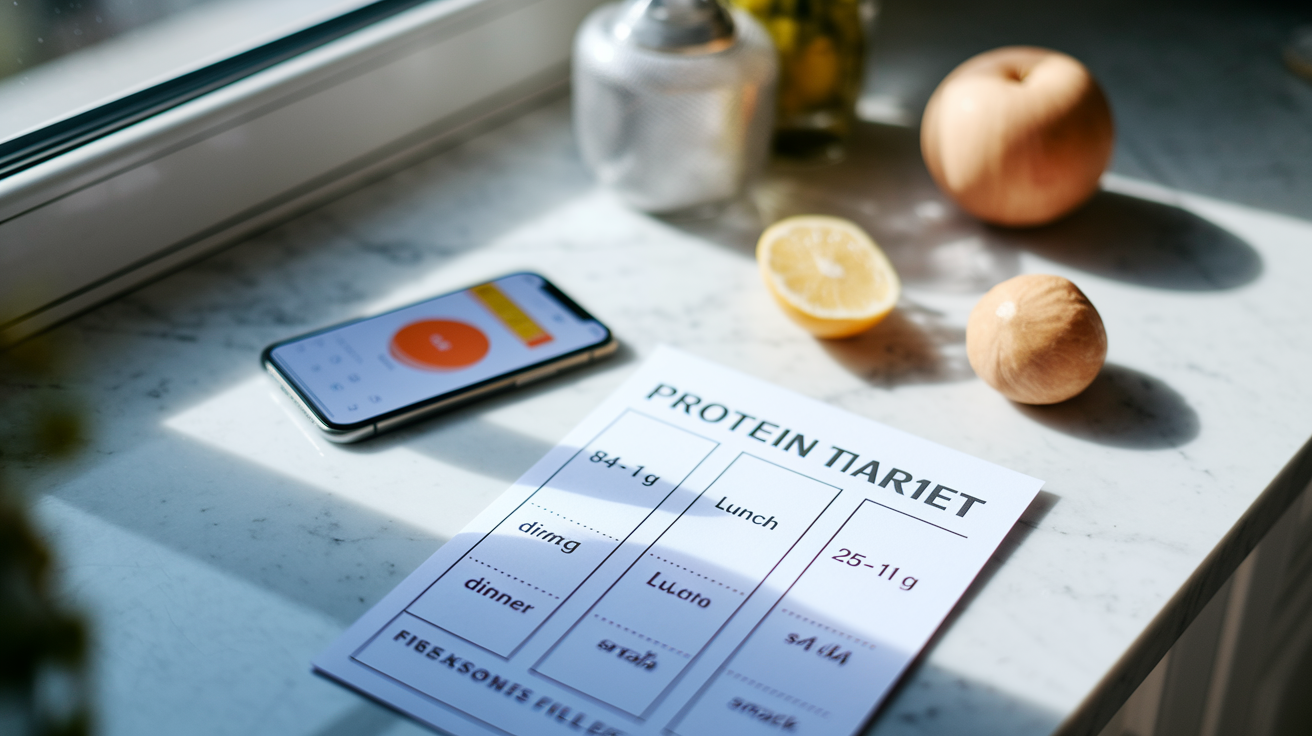
Total daily protein needs go up with age. Many experts now recommend 1.2–1.6 g of protein per kilogram of body weight per day for older adults who want to maintain muscle mass and function. That’s a meaningful step up from the general adult RDA of 0.8 g/kg, which was designed to prevent deficiency but not necessarily muscle loss. For a 70 kg (154 lb) person, 1.2–1.6 g/kg translates to 84–112 g of protein per day, compared with the RDA baseline of 56 g.
These daily totals matter most when they’re spread out. Hitting 100 g of protein in a single evening meal won’t produce the same muscle-building effect as dividing that same amount across three or four eating occasions. Your muscles respond to each protein dose individually, so consistent delivery across the day keeps synthesis elevated from morning until sleep.
Body weight drives your personal target. Use 1.2 g/kg as a starting point if you’re generally healthy and active. Move toward 1.5–1.6 g/kg if you’re recovering from illness, under‑muscled, or training with weights. Multiplying your weight in kilograms by that factor gives you a clear daily number, and dividing by three or four meals shows you what each meal should deliver.
Effective Protein Distribution Across the Day
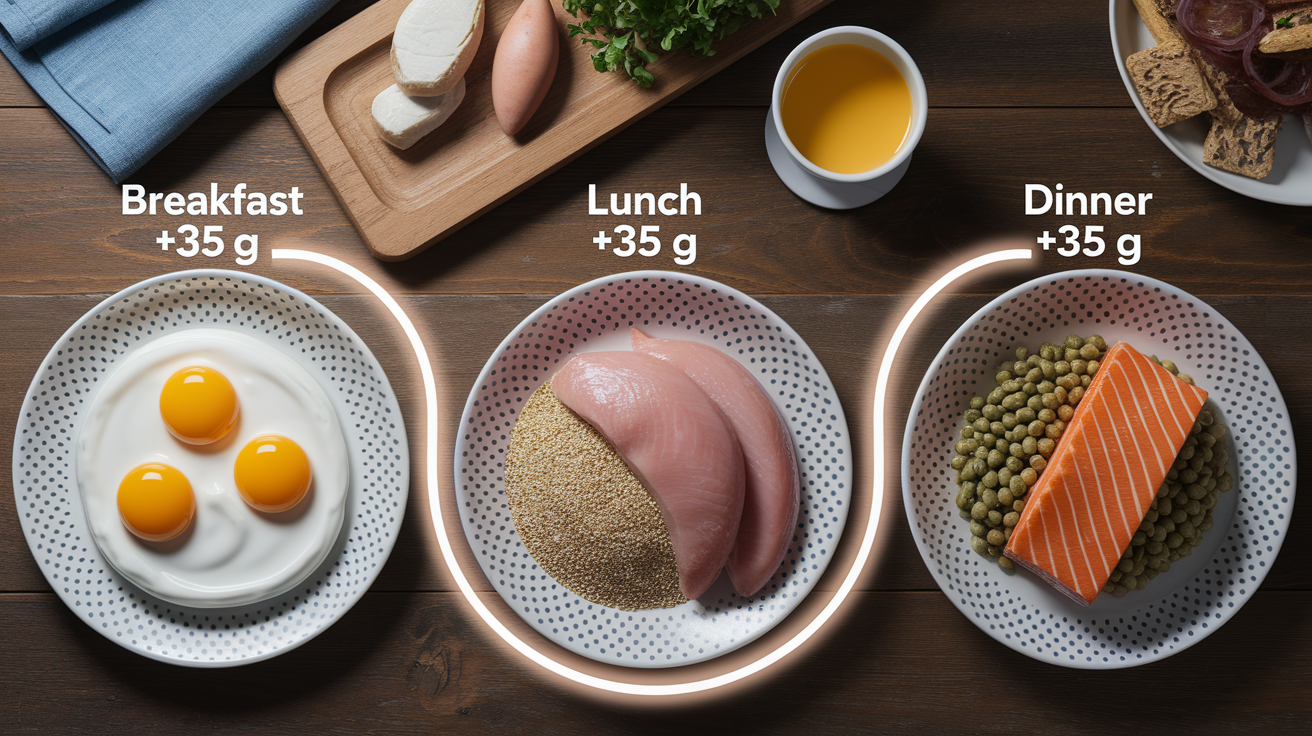
Spreading protein evenly across the day improves muscle protein synthesis compared with loading most of your intake into one or two meals. Older muscles respond best to repeated moderate‑to‑high doses rather than infrequent large amounts. When you skip protein at breakfast and eat lightly at lunch, you miss two opportunities to stimulate synthesis. A big dinner can’t make up for those lost signals. Even distribution keeps the muscle-building machinery running all day.
Research comparing even versus skewed intake patterns consistently favors balanced meals. In one common skewed pattern (light breakfast, modest lunch, heavy dinner), total protein might be adequate, but the morning and midday doses fall below the 25–30 g threshold needed to overcome anabolic resistance. The result is that synthesis stays low for most of the day and only spikes once at night. Even when total grams match, the uneven approach leaves muscle under‑stimulated for long stretches.
Here’s how to space protein practically:
Breakfast: 30–40 g from eggs, Greek yogurt, cottage cheese, or a protein shake. Start the day with a strong signal.
Lunch: 30–40 g from lean meat, fish, tofu, tempeh, or a large serving of legumes plus grains. Anchor the middle of the day.
Dinner: 30–40 g from your preferred protein source. Keep it consistent with other meals rather than doubling up.
Snack (if needed): 10–20 g from a small portion of dairy, nuts, a half shake, or canned fish. Use this to close any gap between meals and your daily target.
Evidence from controlled feeding studies in older adults shows that evenly distributed intake produces a more sustained muscle protein synthesis response over 24 hours. Treat every meal as a muscle-building opportunity, not just dinner.
How Aging Affects Protein Absorption and Muscle Response

Anabolic resistance is the central challenge. As you age, muscle cells become less responsive to the amino acids circulating in your blood after a meal. The signaling pathways that trigger protein synthesis (primarily driven by the amino acid leucine) require a higher concentration to activate fully. What worked at thirty doesn’t work at sixty‑five, so you need more protein per sitting to achieve the same muscle-building response.
Digestion and absorption change with age, but not as much as most people assume. Your gut still breaks down protein and absorbs amino acids efficiently. The limiting factor is what happens once those amino acids reach muscle tissue. Hormonal shifts also play a role: lower levels of growth hormone, testosterone (in men), and estrogen (in women) reduce the anabolic environment, meaning muscles are primed to break down more easily and build back more slowly. These changes are gradual but cumulative, which is why sarcopenia accelerates after age fifty if protein intake stays static.
Leucine is the key amino acid that flips the muscle‑synthesis switch. Research suggests older adults need roughly 2.5–3.0 g of leucine per meal to maximize the anabolic response. Think of leucine as the ignition key: without enough of it, the engine won’t start. High‑quality animal proteins (whey, eggs, beef, chicken, fish) deliver leucine efficiently. Plant proteins typically contain less leucine per gram, so vegetarians and vegans need larger portions or strategic combinations to hit the threshold. This leucine requirement is one reason the 25–40 g per‑meal guideline exists: that amount of high‑quality protein naturally delivers the leucine you need.
Best Protein Sources for Older Adults
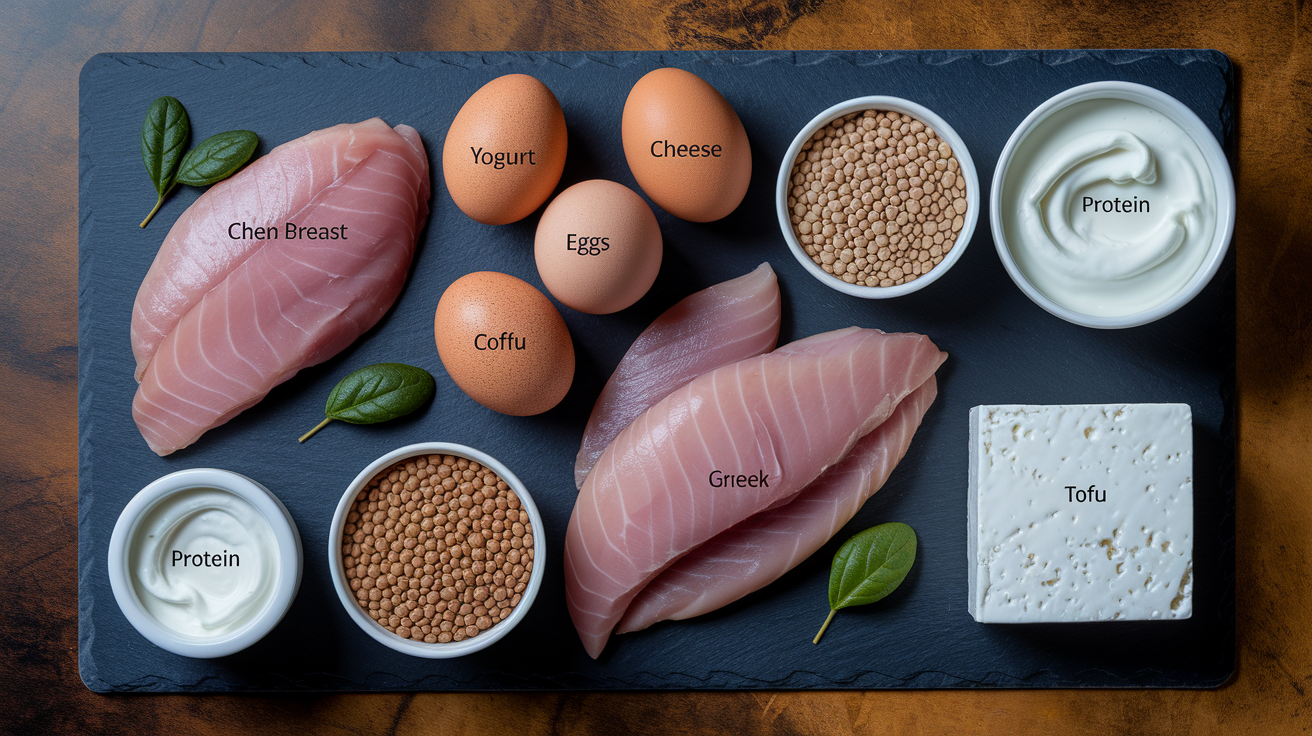
High‑quality protein sources pack plenty of leucine and essential amino acids into moderate portions. Lean meats (chicken breast, turkey, lean beef) deliver around 25–30 g of protein per 3–4 oz cooked serving and are simple to portion. Dairy products, especially Greek yogurt and cottage cheese, provide both protein and calcium, supporting bone health alongside muscle. Whey protein, whether in a shake or as an ingredient, digests quickly and is rich in leucine, making it practical post-workout or at breakfast. Eggs are versatile, inexpensive, and leucine‑dense. Three large eggs give you roughly 18 g of protein. Soy‑based foods like tofu, tempeh, and edamame are the best plant options for leucine content, though portions need to be slightly larger than animal equivalents.
Plant proteins can absolutely meet older adults’ needs, but they require intentional planning. Most plant foods contain less leucine and lower overall protein density than animal products, so hitting 30–40 g per meal means combining sources or eating larger portions. Pairing legumes with whole grains (beans and rice, lentils and quinoa) creates a complete amino‑acid profile. Adding nuts, seeds, or a scoop of plant‑based protein powder boosts totals without excessive volume.
Here are six practical options with approximate protein amounts:
4 oz cooked chicken breast: ~31 g protein
6 oz (170 g) plain Greek yogurt: ~17 g protein
3 large eggs: ~18 g protein
1 cup cottage cheese: ~25 g protein
1 cup cooked lentils + 1 cup cooked quinoa: ~26 g protein combined
1 scoop whey protein powder: ~20–25 g protein (varies by brand)
Sample Daily Meal Patterns for Stronger Muscles
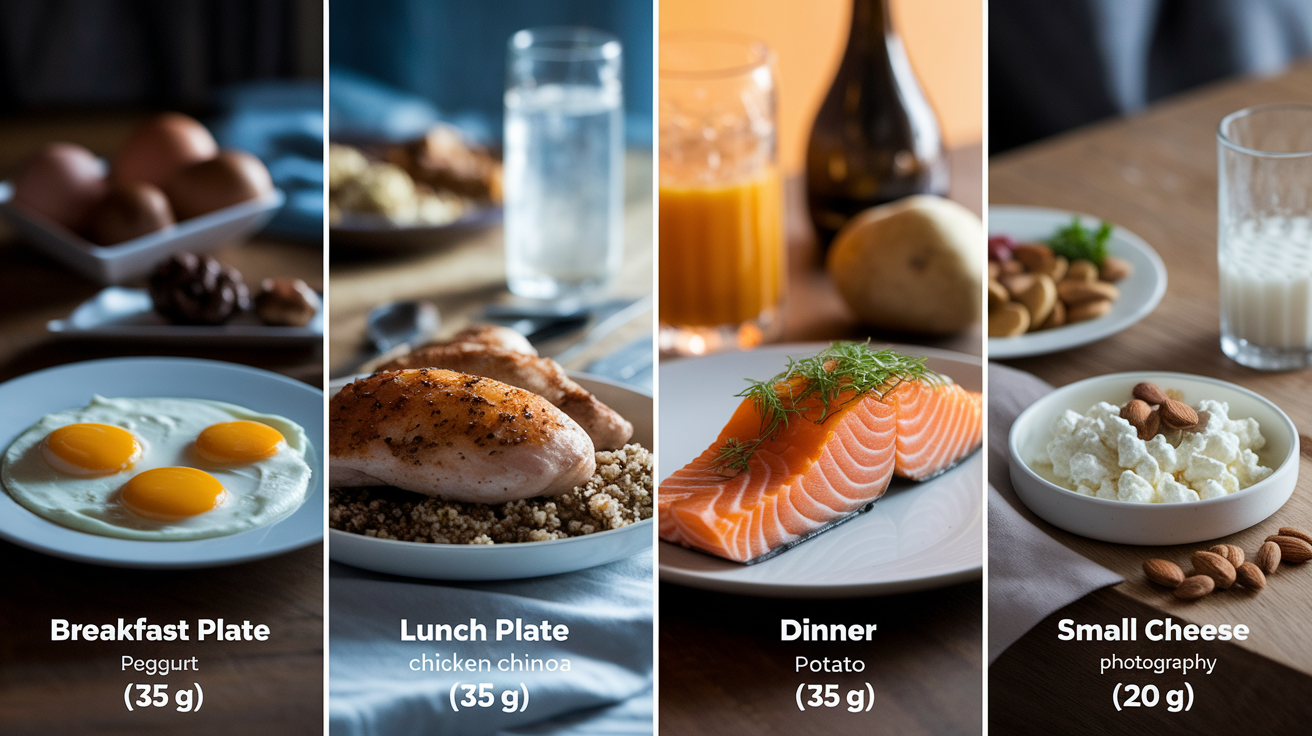
Seeing realistic meal examples makes the numbers easier to apply. The goal is to show how different foods and portion sizes add up to 25–40 g of protein per meal without requiring a nutrition degree or constant mental math.
| Meal | Example | Approx. Protein |
|---|---|---|
| Breakfast | 3 scrambled eggs + 6 oz Greek yogurt + 1 slice whole‑grain toast | ~35 g |
| Lunch | 4 oz grilled chicken breast + mixed greens + 1/2 cup quinoa | ~35 g |
| Dinner | 5 oz baked salmon + steamed broccoli + small baked potato | ~35 g |
| Snack | 1/2 cup cottage cheese + 1 oz almonds | ~20 g |
Flexibility is built into these patterns. If you prefer plant‑based meals, swap the chicken for 1 cup of cooked lentils plus 1 cup of brown rice and add 2 tablespoons of peanut butter to reach a similar total. If breakfast feels too heavy, move the yogurt to a mid‑morning snack and add a protein shake instead. The structure stays the same: three main meals delivering 30–40 g each, plus one optional snack if your daily target is on the higher end or if meal portions run slightly short. Track your intake for a week or two to learn portion sizes, then adjust based on what feels sustainable and what the scale and your strength tell you.
Final Words
We laid out clear per‑meal targets: 25–40 g of protein to trigger muscle-building in older adults.
Then we tied those targets to daily needs (about 1.2–1.6 g/kg) and showed why spreading protein across 3–4 meals helps. We also explained anabolic resistance, digestion changes, and the power of leucine.
Practical picks and sample meal patterns make this doable: lean meats, dairy, eggs, and smart plant options.
Use protein portioning for older adults to prevent sarcopenia as your simple rule—hit the per‑meal range, spread it out, and stay consistent. You’ll keep muscle and keep moving stronger.
FAQ
Q: How much protein should older adults eat per meal to prevent muscle loss?
A: Older adults should eat about 25–40 grams of protein per meal to counter age-related muscle loss and trigger a strong muscle protein synthesis response.
Q: Why do older adults need more protein per meal than younger people?
A: Older adults need more protein each meal because anabolic resistance reduces muscle response to amino acids, digestion and hormonal signals slow, and higher protein plus leucine jumpstarts muscle rebuilding.
Q: What are daily protein targets for healthy aging and how do they relate to per‑meal goals?
A: Daily targets are roughly 1.2–1.6 g/kg/day; splitting that total across meals helps reach the 25–40 g per meal goal and supports steady muscle protein synthesis.
Q: How should protein be distributed across the day for best results?
A: Protein should be spread evenly across 3–4 meals, spaced about every 3–5 hours, so each eating occasion delivers a meaningful 25–40 g dose to maximize muscle-building signals.
Q: Which protein sources are best for older adults, and what about plant proteins?
A: Lean meats, dairy (whey, Greek yogurt), eggs, and soy are high quality and leucine-rich; plant proteins work, but often need slightly larger portions to match amino-acid and leucine content.
Q: What are quick meal examples that reach 25–40 grams of protein per eating occasion?
A: To reach 25–40 g per meal try: breakfast — 3 eggs plus Greek yogurt; lunch — chicken salad with quinoa; dinner — salmon with lentils; snack — cottage cheese or a whey shake.