
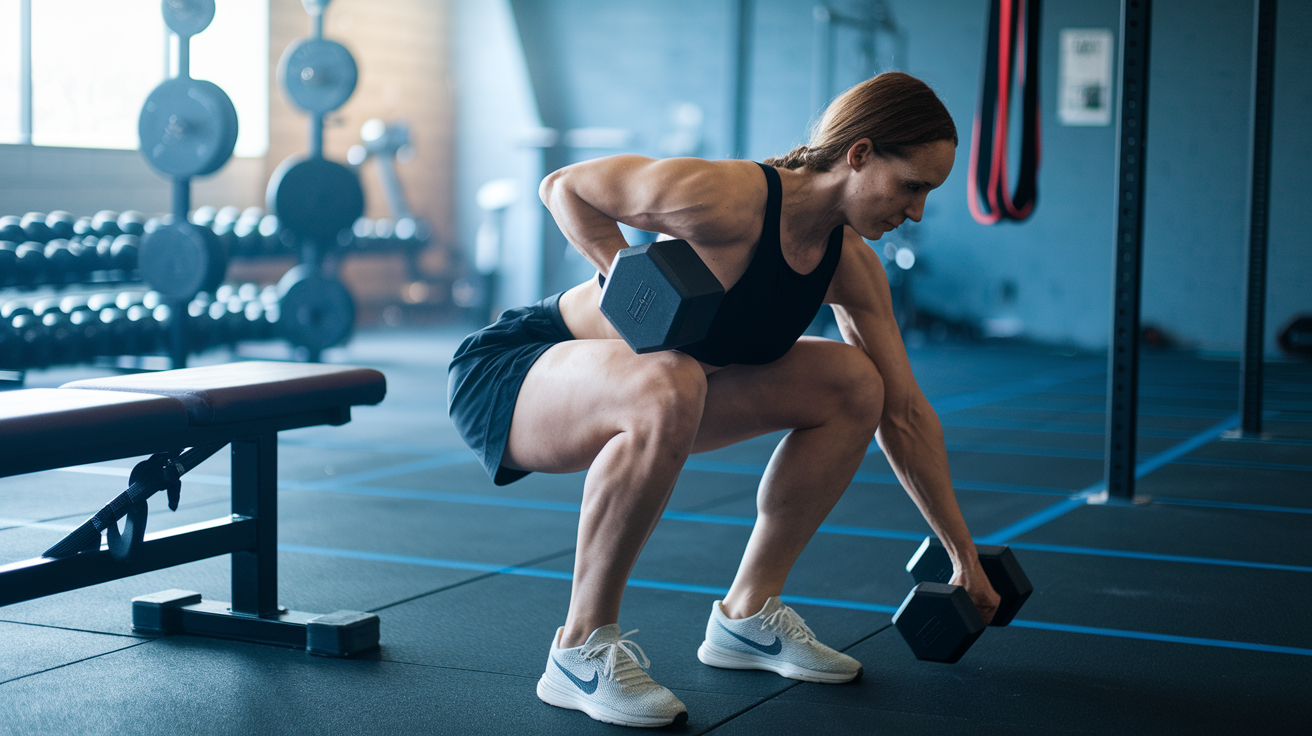

Think heavy barbell squats will fix both legs? Think again.
Single-leg work finds hidden weak spots and forces each side to pull its weight.
This routine starts every set on your weaker leg, matches reps on the strong side, and slows the lowering phase so you rebuild balanced strength, not just bigger numbers.
You’ll need dumbbells, a bench or chair, and a band, and each session takes about 45 minutes.
Follow it two to three times a week and you’ll see coordination and strength even out in weeks, not months.
Quick Start: The Best Unilateral Workout to Correct Muscle Imbalances
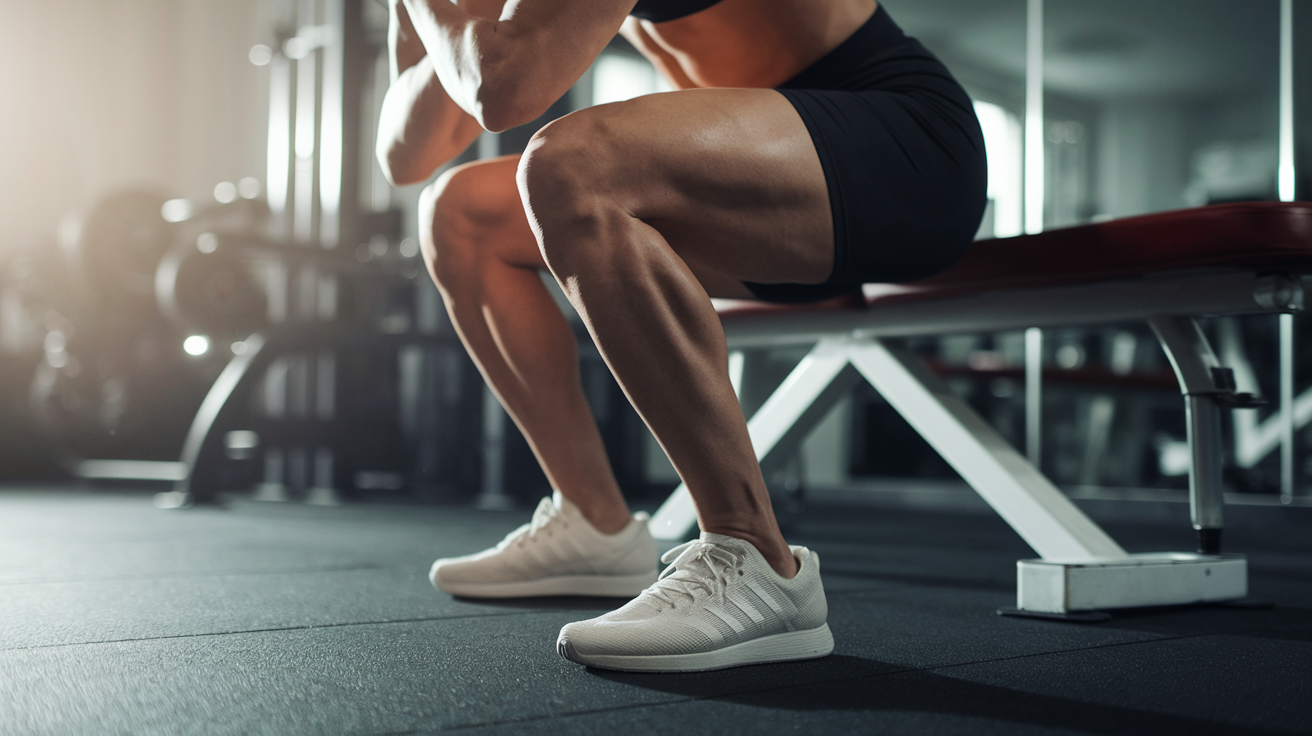
This routine targets each leg independently to expose and fix strength differences that bilateral lifts often hide. You’ll train the weaker side first, match reps on the stronger side, and control the lowering phase to rebuild balanced strength from scratch.
Run this 2–3 times per week on non-consecutive days. You need dumbbells, a bench or sturdy chair, and a resistance band. Each session takes about 45 minutes.
The Routine:
-
Bulgarian Split Squat – Start with your weaker leg. Place rear foot on bench, front foot about 60 cm forward. Lower until front thigh reaches parallel, drive through the heel.
-
Single-Leg Romanian Deadlift – Hold a dumbbell opposite your working leg. Hinge at the hip, keep your spine neutral, extend the non-working leg behind you. Feel the stretch in your hamstring, not your lower back.
-
Weighted Step-Up – Use a platform at knee height. Lead with the weaker leg, drive through the heel, don’t push off hard with the trailing foot.
-
Single-Leg Leg Press – Drop to 90 degrees at the knee, press through the heel. Track weight and reps separately for each leg.
-
Single-Leg Calf Raise – Full range, pause one second at the top, control the descent for three seconds.
-
Side Plank Hold – Static hold, both sides, to address trunk stability asymmetries.
| Exercise | Sets | Reps (per side) | Tempo (sec) | Rest (sec) |
|---|---|---|---|---|
| Bulgarian Split Squat | 3–4 | 8–12 | 3 down, 1 up | 90 |
| Single-Leg RDL | 3 | 8–10 | 3 down, 1 up | 75 |
| Weighted Step-Up | 3 | 10–12 | 2 down, 1 up | 60 |
| Single-Leg Leg Press | 3 | 10–12 | 2 down, 1 up | 75 |
| Single-Leg Calf Raise | 3 | 12–15 | 3 down, pause 1 | 45 |
Always start every set on the weaker side and cap the stronger side at the same rep count your weaker leg completed.
How to Identify Left–Right Strength Imbalances

Before you start, run a quick five-minute screen to see where you stand. Imbalances above 10–15 percent show up as visible differences in control, depth, or reps between sides.
Four Simple Tests:
-
Single-Leg Squat to Chair – Sit and stand three times per leg. Watch for knee collapse, hip drop, or excessive wobble. If one side struggles noticeably, that’s your weaker leg.
-
Single-Leg Glute Bridge – Lie on your back, one foot flat, other leg extended. Press through the heel for eight reps per side. If one side cramps, rotates, or feels way harder, note it.
-
Single-Leg Wall Sit – Hold a partial squat against a wall on one leg for 20–30 seconds. Compare endurance and form side to side.
-
Step-Up Stability Test – Use a 20–40 cm step. Do eight controlled step-ups per leg, driving through the heel. Flag excessive wobble or compensatory trunk lean.
Record which side shows weaker performance on each test. That side gets priority in your training. You’ll start every set there, and you’ll add one extra set for key movements during weeks three through six.
Retest every four weeks. When both sides complete the same reps with clean form and your single-leg holds match within a few seconds, you’ve closed the gap.
Why Unilateral Training Works for Strength Symmetry

Single-leg work forces each limb to carry the full load without help from the other side. Bilateral squats and presses let your stronger leg do extra work while your weaker leg coasts. Unilateral exercises remove that option.
Stabilizer muscles around the hip, knee, and ankle fire harder during single-leg loading because they control rotation and lateral drift. Over time, that extra demand builds the small muscles that keep your knee tracking straight and your pelvis level.
There’s also a cross-education effect. Training one leg can produce measurable strength gains in the opposite, untrained leg through nervous-system adaptations. Controlled studies show contralateral strength increases within about six weeks of consistent unilateral work. Focusing on your weaker side helps both legs improve, even when volume isn’t perfectly matched.
Progression Guidelines for Correcting Imbalances
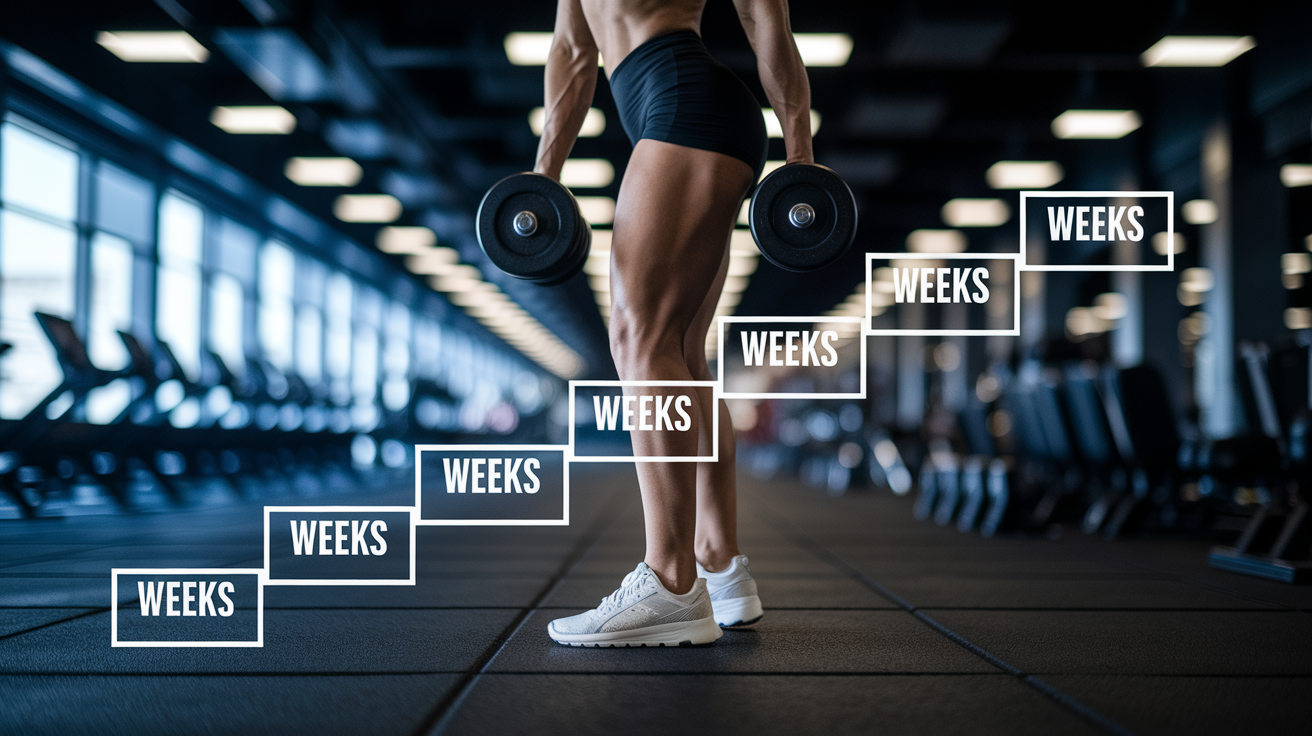
Start with a load that allows perfect form for the target rep range on your weaker side. When that side completes all prescribed reps and sets with controlled tempo and clean alignment, bump the load by the smallest increment available, usually 5–10 percent or the next dumbbell pair.
Five Progression Rules:
-
Always begin sets on the weaker leg. Complete all reps, then match that exact count on the stronger side.
-
Add one extra set for the weaker leg on your primary lifts (Bulgarian split squat, single-leg RDL) during weeks three through six.
-
Increase load only when form is clean. If your weaker side can’t maintain neutral alignment or tempo under a heavier weight, back off until both sides move well.
-
Use a slower eccentric on the weaker side if strength lags significantly. Extend the lowering phase to four seconds instead of three.
-
Remove the extra volume when both sides equalize. Once your weaker leg matches the stronger leg’s reps and load for two consecutive sessions, drop the bonus set and train both sides equally.
Most people see measurable coordination improvements within two to four weeks. Noticeable strength symmetry usually shows up by weeks six to eight. Patience matters more than speed.
Form Cues to Maximize Single-Leg Strength Gains

Proper alignment protects your joints and makes sure the target muscles do the work. Stand in front of a mirror for your first few sessions to catch compensations early.
Four Essential Cues:
-
Maintain a neutral spine. Don’t round your lower back or hyperextend. Brace like you’re about to take a light punch to the stomach. Firm, not stiff.
-
Track your knee over your mid-foot. Your knee should travel directly forward, aligned with your second or third toe. No caving inward, no drifting outward.
-
Keep your pelvis level. One hip shouldn’t drop or rotate during single-leg movements. If it does, reduce the load or depth until you can control it.
-
Distribute pressure through your full foot. You should feel contact at your heel, the ball of your foot, and the outside edge. If you shift onto your toes or roll inward, reset and try again.
Film yourself from the side and front if you train alone. Compare depth, knee tracking, and hip alignment between legs. The weaker side often shows more drift or rotation. Those are the patterns you’re working to correct.
Common Mistakes That Worsen Muscle Imbalances
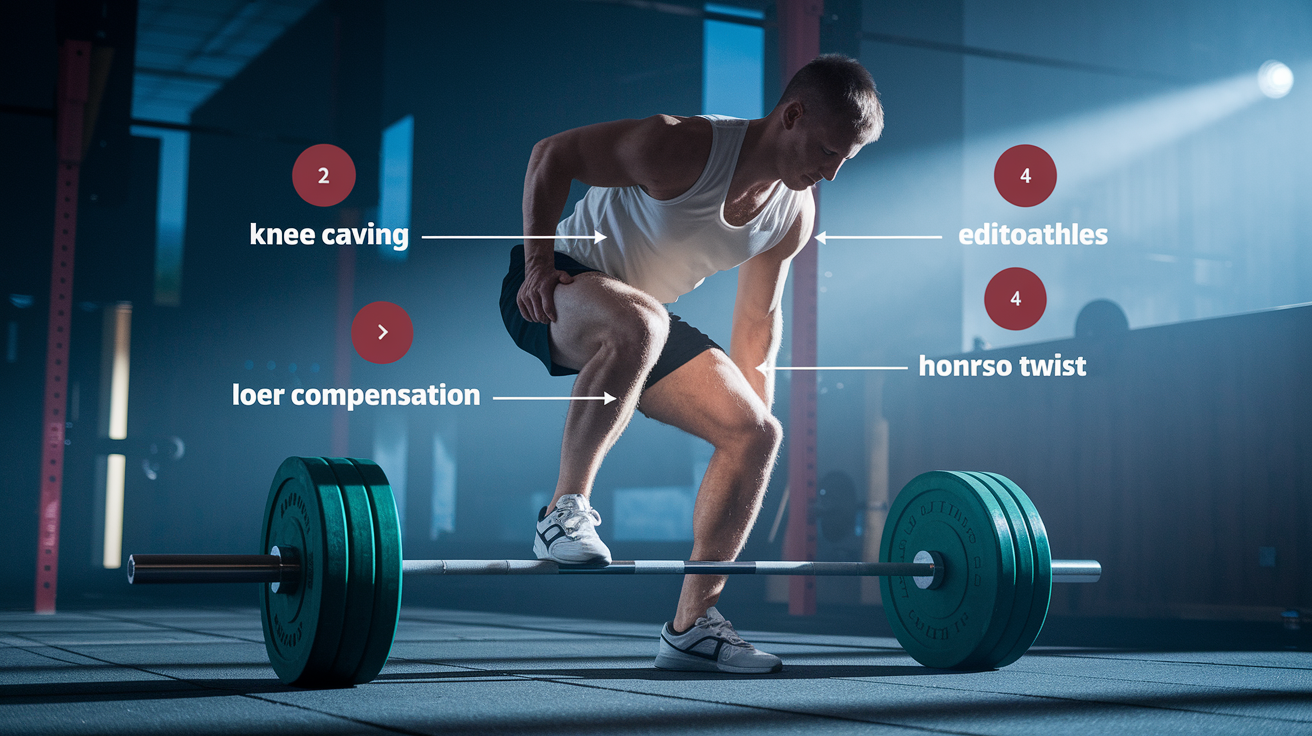
Rushing reps is the biggest error. When you move fast through the lowering phase, you lose the time under tension that builds control and strength in the weaker limb. Slow down. Aim for a three-second lowering phase on every rep.
Compensating with your hips or trunk is another frequent issue. If your torso leans heavily to one side during a step-up or your hips rotate during a single-leg RDL, you’re offloading work from the target leg onto other muscles. That defeats the purpose of unilateral training.
Four Mistakes to Avoid:
-
Giving the stronger side extra reps. Match the weaker side’s count exactly, even if the strong side feels easy.
-
Training both sides with equal volume from day one. Add that bonus set for the weaker leg. It’s the simplest way to speed up symmetry.
-
Skipping the controlled eccentric. The lowering phase is where most strength gets built. Don’t cheat it.
-
Inconsistent frequency. Two sessions per week is the minimum. One session won’t create enough stimulus to drive adaptation.
If pain shows up on one side, stop and reassess. Sharp or persistent discomfort during single-leg work may signal a structural issue or old injury that needs professional evaluation before you continue.
Final Words
In the action, you got a done-for-you unilateral routine with six single-leg moves, sets, reps, tempo, and a clear 2–3x per week frequency plus a short equipment list.
You also saw simple tests to spot left–right gaps, the why behind unilateral work, progression rules, form cues to protect joints, and common mistakes to skip.
Stick with the plan, give the weaker side a little extra work, then pull back as balance improves. This single-leg strength routine to fix muscle imbalances is practical, steady, and worth the effort.
FAQ
Q: How often should I do unilateral workouts and what equipment do I need?
A: You should do unilateral workouts 2–3 times per week and use dumbbells, a bench, and a resistance band to cover strength, balance, and stability without overloading recovery.
Q: What does a complete unilateral routine look like to start right away?
A: The complete unilateral routine includes single-leg Romanian deadlift, Bulgarian split squat, split squat, step-up, single-leg glute bridge, and lateral lunge—3 sets of 8–12 reps, tempo 2-1-2, rest 60–90s.
Q: How do I test left–right strength imbalances before I begin?
A: Testing left–right strength imbalances uses single-leg sit-to-stand, unilateral wall sit duration, split-squat depth comparison, and single-leg hop distance—record both sides and compare results.
Q: What does a 10–15% imbalance mean and when should I retest?
A: A 10–15% imbalance means a meaningful functional deficit that needs targeted work; retest every 4–6 weeks to check progress and adjust training volume or load.
Q: How does unilateral training correct strength symmetry?
A: Unilateral training corrects strength symmetry by improving neuromuscular recruitment, increasing stabilizer activation, redistributing force evenly, and using cross-education to help the weaker side improve.
Q: How should I progress unilateral exercises over 4–8 weeks?
A: Progress unilateral exercises by increasing load 5–10%, slowing tempo on the weaker side, adding 1–2 extra sets for the weak limb, and removing extras once balance is within about 5%.
Q: What form cues should I use to maximize single-leg strength gains?
A: Key form cues are a neutral spine, knee tracking over the mid-foot, a level pelvis, and full-foot pressure; use a mirror for alignment and focus on steady control.
Q: What common mistakes make muscle imbalances worse and how do I fix them?
A: Common mistakes that worsen imbalances are rushing reps, compensating with hips or trunk, training both sides equally despite gaps, and inconsistent frequency; fix with slower reps and targeted extra volume.
Q: How long until I notice balance improvements from unilateral work?
A: You should notice balance improvements in about 4–8 weeks with consistent 2–3 weekly sessions and progressive overload; small gains may appear sooner with steady tracking.