

Think you need a gym to build muscle?
You don’t.
Bodyweight workouts can create real strength and size if you follow the same rules as lifting: make the work harder over time, do enough volume, and train consistently.
They fit into tight schedules, need no gear, and scale by changing tempo, leverage, or switching to single-leg or single-arm versions.
This post shows the best no-equipment moves, simple progressions, and short workouts you can start today to build muscle and get stronger without a gym.
Strength Workflow No Equipment: Build Muscle with These Bodyweight Exercises
Are No-Equipment Workouts Effective?
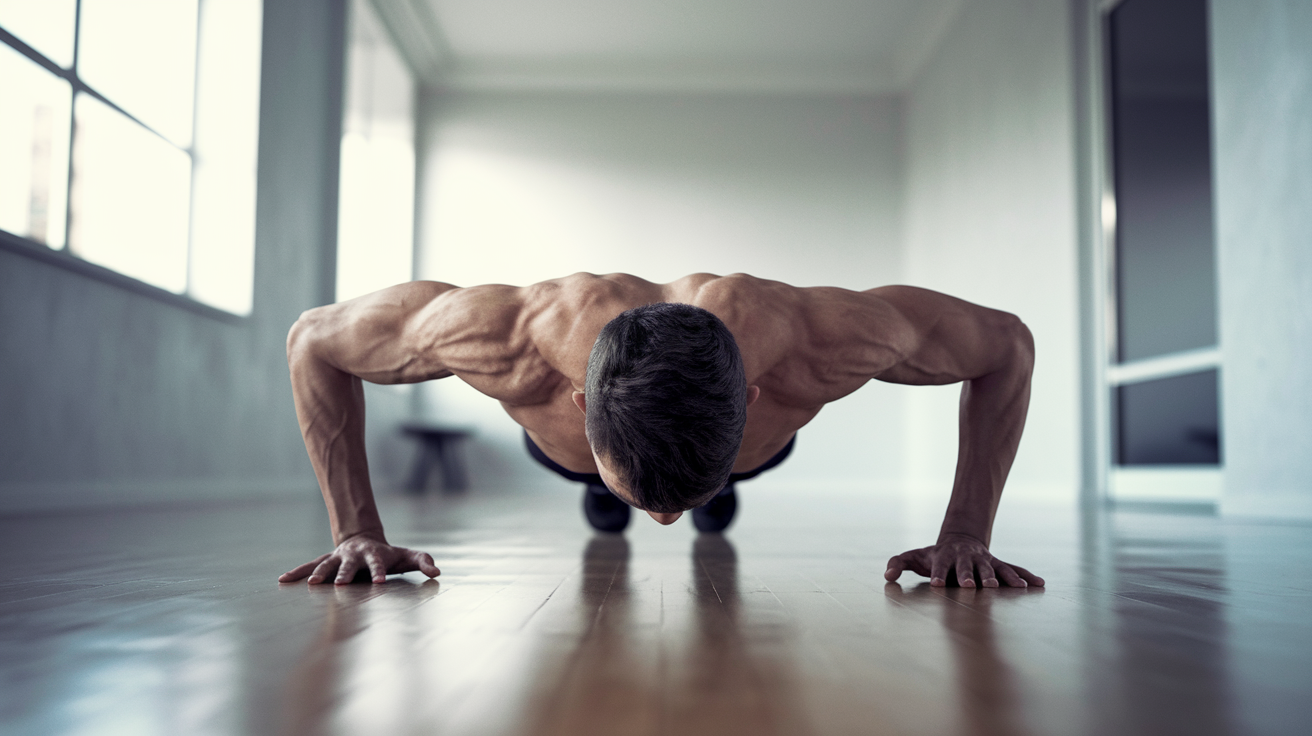
Bodyweight training delivers real strength and muscle gains. Especially if you’re just starting or coming back after a break.
Research backs this up. Progressive bodyweight resistance triggers the same basic muscle response as lifting weights. Your muscle fibers recruit more motor units, connective tissue gets stronger, and hypertrophy happens when you pile on enough volume and intensity.
For beginners, bodyweight moves often provide more than enough stimulus. A standard push-up loads you with about 65% of your body mass. A full squat? That’s 100% of your weight on your legs. That kind of tension can drive strength gains for months before you plateau.
And you can keep progressing without touching a weight. Slow down the tempo. Pause at the hardest spot. Shift to single-leg or single-arm versions. Add more sets. A one-arm push-up or pistol squat demands way more strength than the basic variations, proving you don’t need a barbell to get stronger.
Does bodyweight training build as much absolute strength as heavy lifting? Not always, especially for max one-rep loads. But it absolutely builds practical, measurable strength and lean muscle when you stick to the same principles: make the work progressively harder, do enough volume, and train consistently over weeks and months.
Benefits of No-Equipment Strength Training
Accessibility
You can train anywhere with a few square feet of floor space. No gym membership, no commute, no waiting for equipment. Whether you’re traveling for work, stuck at home with a sick kid, or just prefer privacy, bodyweight work fits into tight schedules and unpredictable routines.
Practical Everyday Strength
Bodyweight movements mirror real-life tasks. Squats teach you to stand up from a low chair without using your hands. Push-ups translate to getting off the floor or shoving a heavy door open. Lunges mimic picking something off the ground with a split stance. The strength you build shows up when you’re carrying groceries, lifting a toddler, or moving furniture.
Increased Bone Density
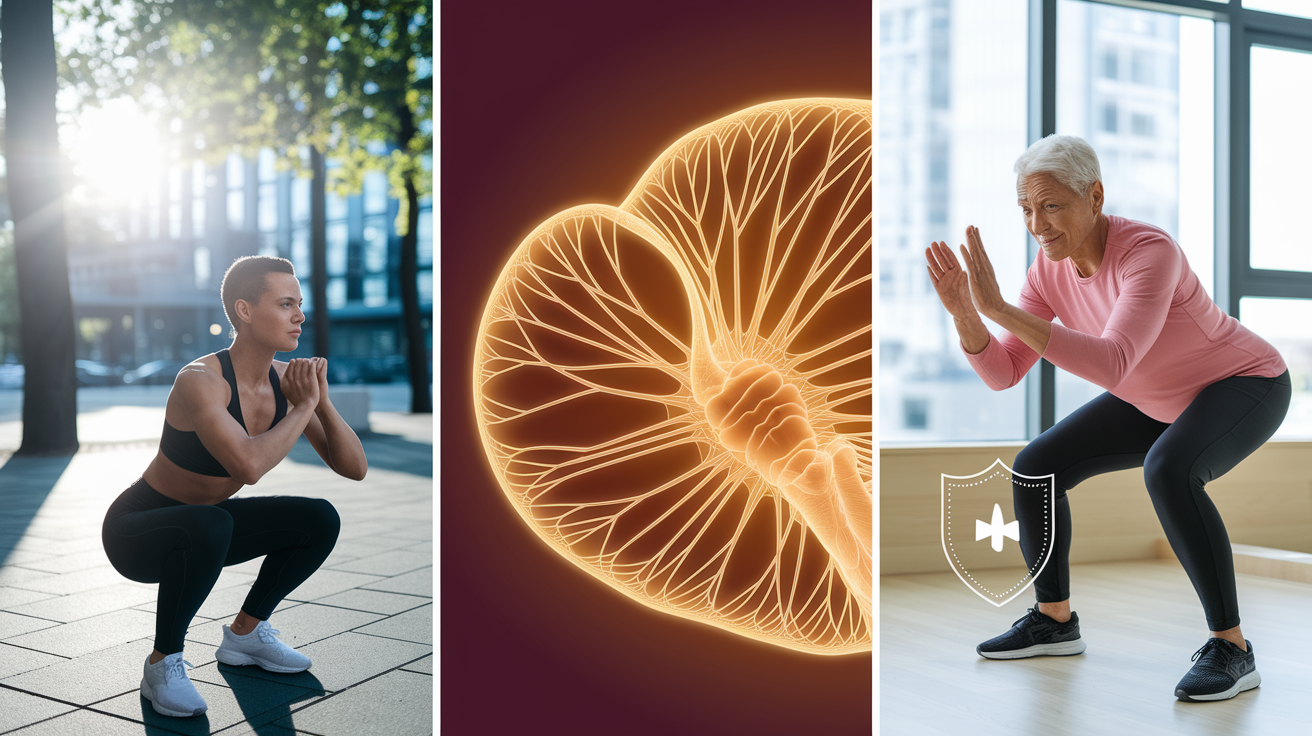
Resistance training (including bodyweight exercises) places mechanical stress on bones, signaling them to lay down more mineral. That stress reduces osteoporosis risk and keeps bones resilient as you age. Squats, lunges, and plyometric moves like jump lunges are especially effective because they load the hips and spine.
Improved Muscle Mass
Muscle mass naturally declines after age 30 if you don’t use it. Bodyweight training counters that atrophy by creating the tension and metabolic demand muscles need to grow or maintain size. Even moderate-volume circuits performed a few times per week preserve lean tissue and keep metabolism higher.
Lowered Risk of Chronic Diseases
Regular strength work reduces several chronic-disease markers. It helps lower high blood pressure by improving vascular function. It supports better insulin sensitivity, cutting risk factors for type 2 diabetes. Some research links resistance training to reduced risk of certain cancers and improved outcomes in people already managing chronic conditions. The combination of muscle work and elevated heart rate during circuit-style bodyweight sessions amplifies these benefits.
Protection Against Age-Related Mobility and Fall Risk
Strength in your legs, hips, and core directly protects against falls and loss of independence. Exercises like single-leg glute bridges, lunges, and wall sits improve balance, coordination, and the ability to recover if you stumble. Stronger muscles mean more margin for error when navigating stairs, uneven ground, or quick direction changes.
Best No-Equipment Strength Exercises

Squats
Primary Muscles Worked: quadriceps, hamstrings, glutes, calves, core
Stand with feet roughly shoulder-width apart, toes slightly turned out. Lower your hips back and down like you’re sitting into a chair, keeping your chest tall and weight centered over mid-foot. Descend until your thighs are parallel to the floor (or as low as your mobility allows without rounding your lower back), then drive through your heels to stand.
You should feel this in the front and back of your thighs and across your glutes. If your knees cave inward or your heels lift, narrow your stance slightly or reduce depth until you build the mobility and control to go lower.
Variations:
• Single-leg squats (pistols) dramatically increase difficulty by removing one leg’s support.
• Squat jumps add a plyometric element, spiking intensity and cardiovascular demand.
• Pulse squats keep constant tension by moving through short, controlled reps at the bottom of the range.
Lunges
Primary Muscles Worked: quadriceps, glutes, hamstrings, plus stabilizers for balance
Step one foot forward into a split stance. Lower your back knee toward the floor until both knees form roughly 90-degree angles, then push through the front heel to return to standing. You can alternate legs each rep or complete all reps on one side before switching.
Land softly on each step. Keep your torso upright and front knee tracking over your toes, not diving inward. You should feel this across the front leg’s quads and glutes, with a stretch in the back leg’s hip flexor.
Variations:
• Lateral lunges shift the load to the inner and outer thigh.
• Reverse lunges reduce knee stress by stepping backward instead of forward.
• Curtsy lunges (stepping diagonally behind) target the glutes and outer hip more intensely.
Push-Ups
Primary Muscles Worked: chest (pectorals), triceps, shoulders, core
Start in a high plank: hands slightly wider than shoulders, body in a straight line from head to heels. Lower your chest toward the floor by bending your elbows, keeping them at roughly 45 degrees from your torso (not flared straight out). Push back up to the starting position.
Brace your core so your hips don’t sag or pike upward. You should feel this across your chest and the back of your arms, with secondary work in your shoulders and abs.
Modifications:
• Knee push-ups reduce the load by roughly 50%, making them ideal if you can’t yet control a full push-up.
• Incline push-ups (hands on a bench or chair) lower intensity further and let you focus on form.
Progressions:
• Decline push-ups (feet elevated) shift more weight onto your upper body.
• Diamond push-ups (hands close together forming a diamond) emphasize triceps.
• Archer push-ups and eventually one-arm push-ups build serious unilateral pressing strength.
Y Raises
Primary Muscles Worked: shoulders (rear deltoids), upper back, mid-back (rhomboids, lower traps)
Lie face-down on the floor or hinge at the hips to a 45-degree angle. Extend your arms overhead in a Y shape, thumbs pointing up. Lift your arms a few inches off the ground by squeezing your shoulder blades together and engaging your upper back. Hold briefly, then lower with control.
You should feel this between your shoulder blades and across the back of your shoulders. If you feel it in your lower back, reduce the range or keep your chest slightly lower.
Calf Raises
Primary Muscles Worked: calves (gastrocnemius, soleus), balance
Stand with feet hip-width apart. Rise onto the balls of your feet as high as you can, pause at the top, then lower slowly back to the floor. For more challenge, perform these on a step or curb so your heels drop below the level of your toes at the bottom.
You should feel a strong contraction through the back of your lower legs. To increase difficulty, try single-leg calf raises or add a longer pause at the top of each rep.
Planks
Primary Muscles Worked: core (rectus abdominis, obliques, transverse abdominis), shoulders, glutes
Start in a forearm plank: elbows directly under shoulders, body in a straight line from head to heels. Engage your abs, squeeze your glutes, and hold that position without letting your hips sag or pike.
Breathe steadily. You should feel tension across your entire core and mild work in your shoulders. Common mistakes include holding your breath, letting your lower back arch, or letting your shoulder blades spread apart.
Add Difficulty:
• Shoulder taps: from a high plank (hands instead of forearms), lift one hand to tap the opposite shoulder, alternating sides while keeping your hips level.
Tricep Dips
Primary Muscles Worked: triceps, shoulders (anterior deltoid), chest (upper pectorals)
Sit on the edge of a sturdy chair or low table, hands gripping the edge next to your hips. Slide your hips forward off the seat, supporting your weight on your hands and heels. Bend your elbows to lower your body until your upper arms are roughly parallel to the floor, then press back up.
Keep your elbows pointing straight back, not flaring out to the sides. You should feel this along the back of your upper arms. If the full range hurts your shoulders, reduce the depth or keep your knees bent to lighten the load.
Burpees
Primary Muscles Worked: full body (shoulders, arms, chest, core, quads, glutes, hamstrings), plus significant cardiovascular demand
Stand tall. Drop into a squat, place your hands on the floor, and jump or step your feet back into a high plank. Perform a push-up (optional but recommended), then jump or step your feet back to your hands and explode upward into a jump, reaching your arms overhead. That’s one rep.
Burpees spike your heart rate fast and demand strength, power, and conditioning all at once. Land softly on each jump to protect your knees, and scale the intensity by removing the push-up or the jump if needed.
Inverted Rows
Primary Muscles Worked: upper back (lats, rhomboids, rear deltoids), biceps
Find a sturdy table, low bar, or the edge of a heavy desk. Lie underneath it and grip the edge with both hands, body straight from heels to head. Pull your chest up toward the edge by squeezing your shoulder blades together, then lower with control.
Keep your body rigid like a plank. You should feel this across your mid-back and into your biceps. If the full range is too hard, bend your knees to reduce the load or elevate your hands on a higher surface.
Superman
Primary Muscles Worked: posterior chain (upper back, lower back, glutes, hamstrings)
Lie face-down on the floor, arms extended overhead. Simultaneously lift your arms, chest, and legs a few inches off the ground, squeezing your glutes and lower back. Hold for a second or two, then lower everything back down.
You should feel this along your entire back and into your glutes. If your lower back cramps, reduce the range or try lifting only your upper body (arms and chest) while keeping your legs down.
Glute Bridge
Primary Muscles Worked: glutes, hamstrings, core
Lie on your back, knees bent, feet flat on the floor roughly hip-width apart. Press through your heels to lift your hips until your body forms a straight line from shoulders to knees. Squeeze your glutes hard at the top, then lower with control.
You should feel this primarily in your glutes and the back of your thighs. Avoid overarching your lower back by keeping your ribs down and core engaged.
Progression:
• Single-leg glute bridges dramatically increase difficulty and address any left-right strength imbalances.
Techniques to Increase Difficulty

Increase Volume
Add more reps, more sets, or more circuits. If you’re doing 3 sets of 10 push-ups, try 3 sets of 12, then 15, then add a fourth set. More total work equals more stimulus for strength and muscle growth.
Increase Time Under Tension
Slow down the hardest part of each rep (the eccentric or lowering phase). For example, take three full seconds to lower yourself in a push-up, pause for one second at the bottom, then push up in one second. That 3–1–1 tempo keeps your muscles under tension longer, forcing them to work harder without adding weight.
Pauses at the most challenging point (bottom of a squat, chest near the floor in a push-up) eliminate momentum and increase difficulty. Pulses (short, controlled movements through a limited range) keep constant tension and build muscular endurance.
Increase Range of Motion
Elevate your feet during push-ups or place your hands on books to let your chest drop deeper. Use a step or box to allow your heel to sink below your toes during calf raises. Greater range means more muscle lengthening and more work to move through it.
Use Harder Variations
Single-leg or single-arm exercises force one limb to handle the entire load. Pistol squats, single-leg Romanian deadlifts, and one-arm push-up progressions all fall into this category. Unilateral work builds serious strength and reveals (and fixes) imbalances between sides.
Inclines and declines shift leverage. Decline push-ups (feet elevated) load your upper body more. Incline push-ups make the move easier, which is useful when ramping back up after a break.
Focus on Mind–Muscle Connection
Consciously squeeze the target muscle through each rep. During a glute bridge, actively contract your glutes at the top instead of just going through the motion. Better muscle activation means better stimulus and cleaner form, both of which drive progress.
Full-Body No-Equipment Workout
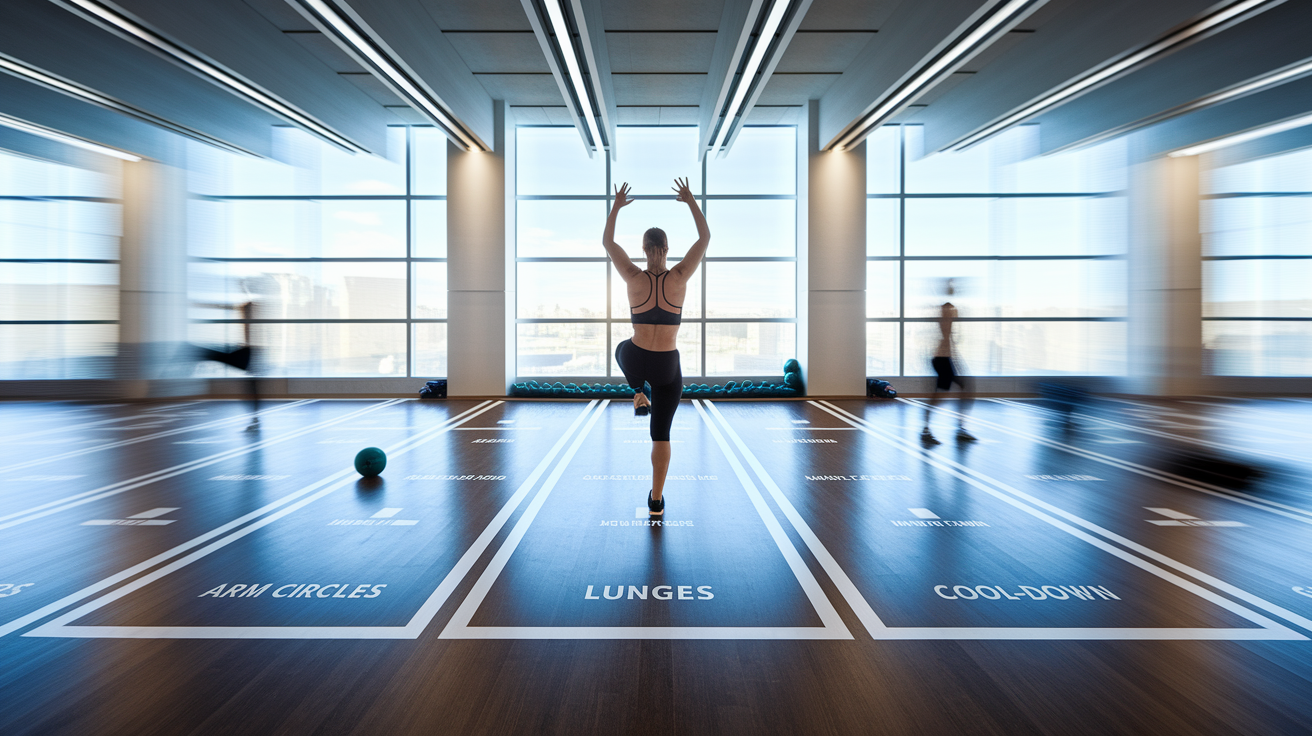
Warm-Up
Arm Circles, 30 seconds each direction
Stand tall and extend your arms out to the sides. Make small circles, gradually increasing size. Reverse direction after 30 seconds. This preps your shoulders and gets blood flowing.
Leg Swings, 30 seconds each leg
Hold onto a wall or chair for balance. Swing one leg forward and back in a controlled arc, loosening your hips and hamstrings. Switch legs after 30 seconds.
Plank Walk-Out, 30 seconds
Stand tall, hinge at the hips, and walk your hands out into a high plank. Hold briefly, then walk your hands back to your feet and stand. Repeat for 30 seconds. This activates your core, shoulders, and hamstrings.
Main Circuit
Perform each exercise, rest 15 seconds, then move to the next. After completing all exercises, rest 1 minute, then repeat the circuit. Aim for 3–4 total rounds.
| Exercise | Reps/Time | Rest |
|---|---|---|
| Squats | 30 seconds | 15 seconds |
| Push-Ups | 10 reps | 15 seconds |
| Reverse Lunges | 10 reps (total, 5 per leg) | 15 seconds |
| Inverted Rows | 10 reps | 15 seconds |
| Plank Shoulder Taps | 10 reps (5 per side) | 15 seconds |
| Single-Leg Glute Bridge | 10 reps per leg | 15 seconds |
| Burpees | 10 reps | 15 seconds |
| Supermans | 10 reps | 15 seconds |
Notes:
• If 10 reps feels too easy by round three, add 2–5 reps or slow the tempo to 3–1–1.
• If you can’t complete 10 clean reps, scale to knee push-ups, reduce burpee intensity (remove the jump or push-up), or substitute standard glute bridges instead of single-leg.
• Prioritize form over speed. If your push-up form breaks, drop to your knees or reduce reps.
Cool-Down
Hold each stretch for 30 seconds per side or position. Breathe deeply and relax into each stretch without bouncing.
Hamstring Stretch
Sit on the floor, one leg extended, the other bent with the sole of your foot against your inner thigh. Hinge at the hips and reach toward your extended foot. You should feel a gentle pull along the back of your thigh.
Quad Stretch
Stand on one leg (hold a wall for balance if needed). Bend the other knee and pull your heel toward your glutes. Keep your knees together and hips neutral. You should feel a stretch down the front of your thigh.
Chest Stretch
Stand in a doorway or near a wall. Place one forearm against the frame, elbow at shoulder height, and gently turn your body away. You should feel a stretch across your chest and front shoulder.
Glute Stretch
Lie on your back, cross one ankle over the opposite knee (figure-4 position), then pull the bottom leg’s thigh toward your chest. You should feel a deep stretch in the glute of the crossed leg.
Frequency Recommendations
General Guidance:
Perform full-body no-equipment sessions 2–3 times per week with at least one rest or active-recovery day between sessions. This frequency supports strength gains and muscle maintenance without overtraining.
This Specific Circuit:
Run this 8-exercise circuit 2–4 times per week. If you have access to a gym some days, alternate this bodyweight session with your gym workouts to maintain strength during travel or busy weeks. If this is your only training, aim for 3–4 sessions per week and gradually increase rounds or reps each week to keep progressing.
A) Use no hyperlinks.
FAQ
Q: What is the 3 3 3 rule for working out?
A: The 3 3 3 rule for working out is a simple template: three exercises, three sets each, three workouts per week, focusing on compound lifts to build strength and consistency.
Q: Is it possible to strength train without equipment?
A: Yes — strength train without equipment by using bodyweight moves like squats, push-ups, lunges and progressions (single-leg, tempo, added reps) to increase load and track progression.
Q: What is 5 4 3 2 1 strength training?
A: The 5 4 3 2 1 strength training is a descending-rep scheme: do five, then four, three, two, one reps across sets, usually raising weight each set to build maximal strength.
Q: What is the 5 5 5 30 rule?
A: The 5 5 5 30 rule is a rep-and-rest pattern: perform five reps for three sets (or five sets of five), using roughly 30 seconds rest between sets for strength-endurance work.
Choice: A) Use no hyperlinks.