
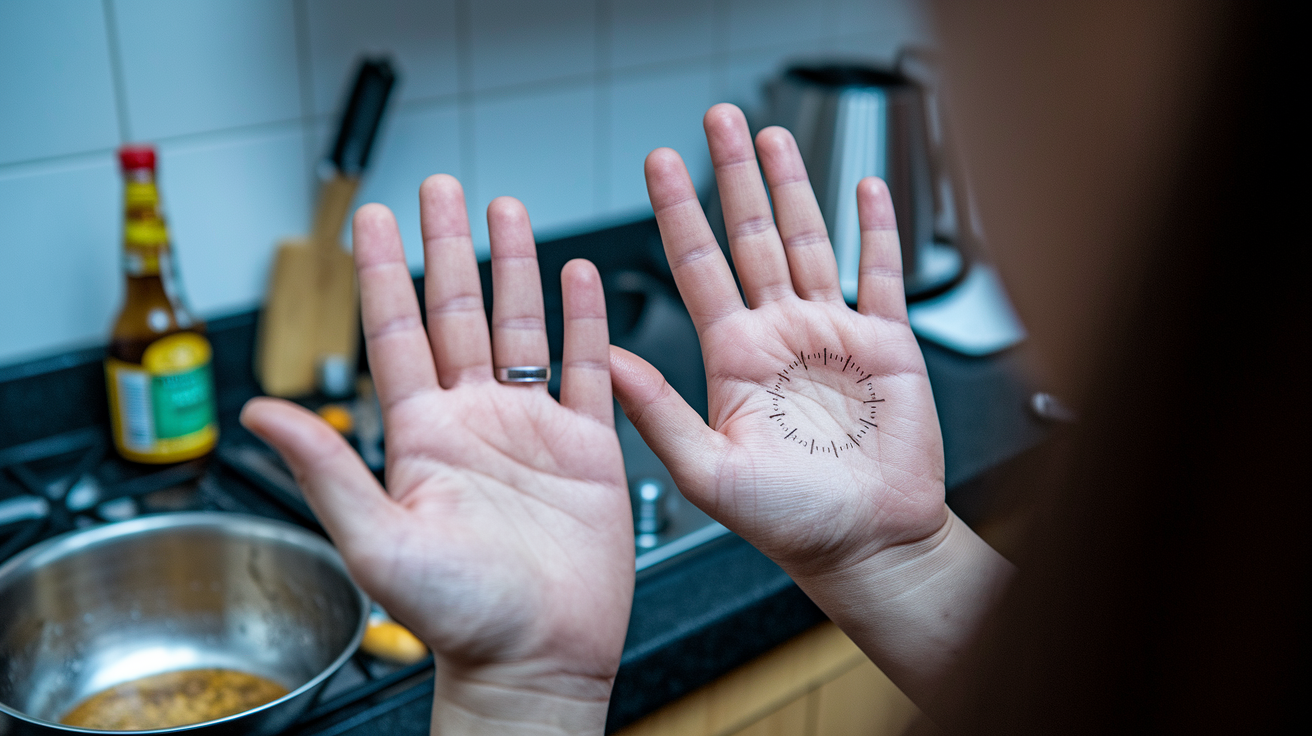

Stop weighing raw meat—your palm tells the real story.
Cooked protein shrinks about 25%, so raw numbers lie.
Your palm (fingers don’t count) is a fast, built-in portion guide: one palm of cooked protein is roughly 3 to 4 ounces, about 20 to 30 grams of protein.
This post gives simple visual cues to match palm-sized servings to different foods, shows why thickness matters, and when to add an extra palm for athletes or older adults.
Read on for quick rules you can use at home, at a restaurant, or on the go.
How to Measure Protein Portions Using Your Palm
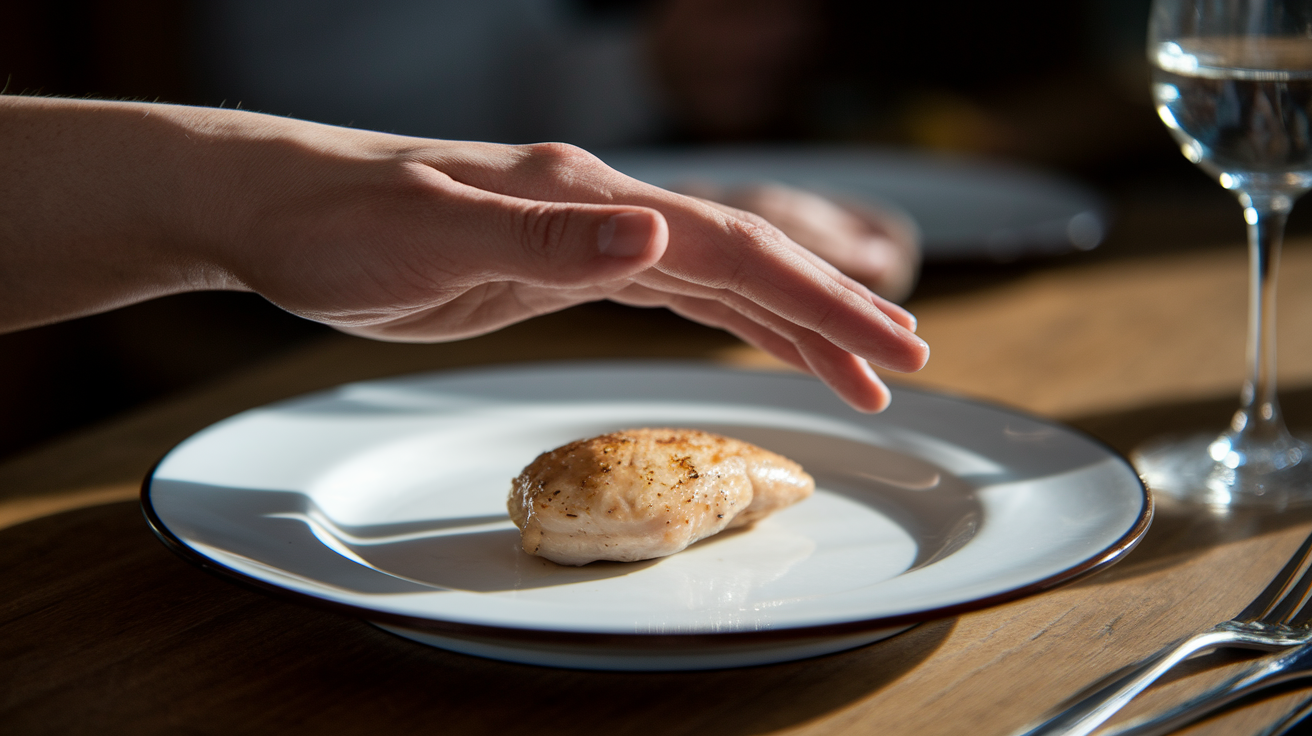
Your palm (fingers don’t count) works as a built-in measuring tool for a 3 to 4 ounce cooked protein serving. That gets you somewhere between 20 and 30 grams of protein, give or take depending on what you’re eating. It’s surprisingly practical because your hand scales with your body. Bigger person, bigger palm, bigger portion that actually matches higher needs.
Here’s where people mess up: they weigh the raw meat and expect the same numbers after cooking. Meat shrinks about 25% when you cook it because moisture leaves. So that 4-ounce raw chicken breast? About 3 ounces once it hits the pan. Always estimate your palm portion after cooking.
Quick palm rules:
- Lay your palm flat, fingers together but not part of the measurement
- Match the cooked protein’s footprint to your palm’s area and check the thickness
- One palm per meal works for most people aiming for general health or steady weight
- If the protein’s thin or flaky (some fish does this), stack or fold it to match your palm’s thickness
How Palm Size Varies Across Protein Sources
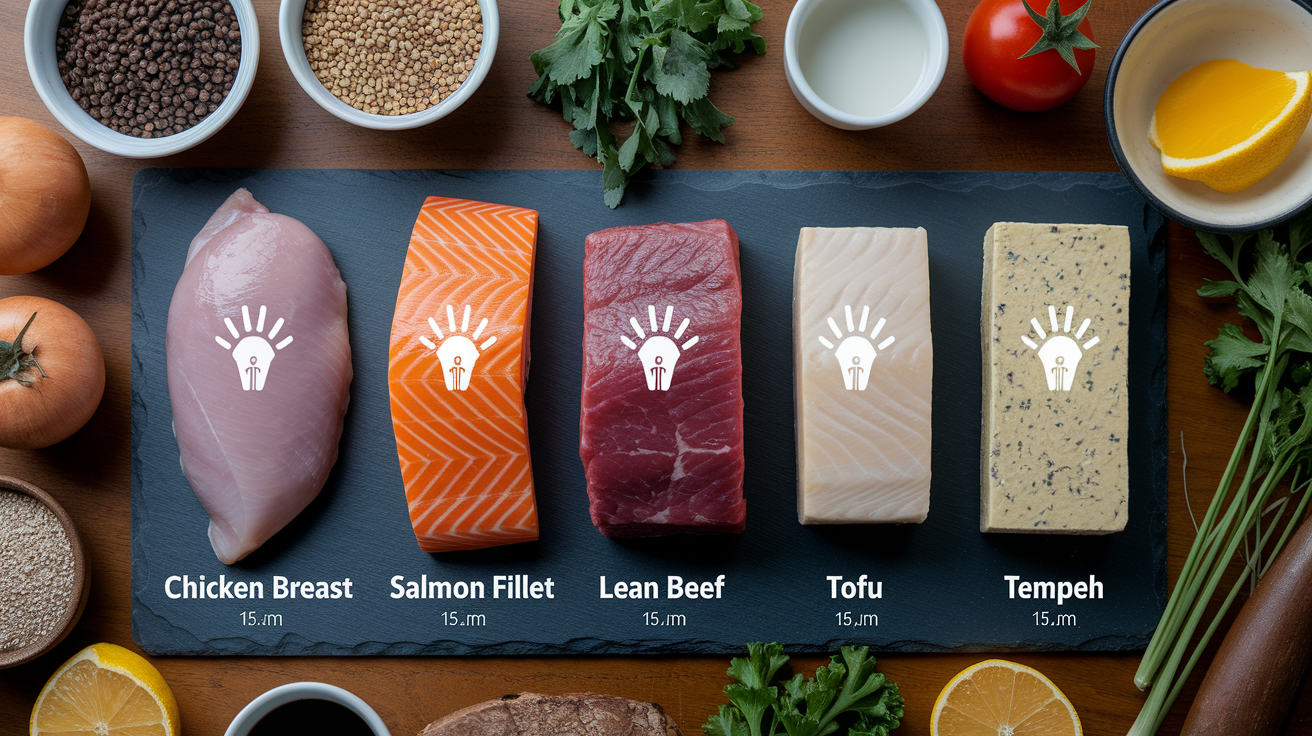
Not every protein delivers the same grams per ounce. A palm of chicken won’t give you identical protein to a palm of tofu. Chicken breast and lean beef are dense, hitting around 7 grams of protein per cooked ounce. Salmon and fatty fish land a bit lower because fat takes up space, but a palm-sized fillet still gets you 22 to 25 grams. Plant proteins like tofu and tempeh? Less concentrated at about 4 to 6 grams per ounce. You might need a slightly larger visual portion or an extra palm at another meal to hit daily targets.
Density changes the visual too. A palm of chicken feels compact and firm. Tempeh looks blockier but weighs about the same. Salmon tends to be flatter and longer than chicken, so you’ll see more area but less thickness. That’s normal. Focus on matching overall volume to your palm, adjusting thickness as needed.
Here’s a quick reference:
| Protein Type | Palm-Sized Approx. Weight (oz) | Approx. Protein (g) |
|---|---|---|
| Chicken Breast (cooked) | 3–4 | 21–28 |
| Salmon Fillet (cooked) | 3–4 | 22–25 |
| Lean Beef (cooked) | 3–4 | 21–28 |
| Tofu (firm, cooked) | 3–4 | 12–16 |
| Tempeh (cooked) | 3–4 | 15–20 |
Use these as starting points. If you’re eating mostly plant proteins, consider bumping up to 1.5 palms per meal or adding a second protein snack during the day.
Palm Thickness vs. Palm Area: Why Both Matter
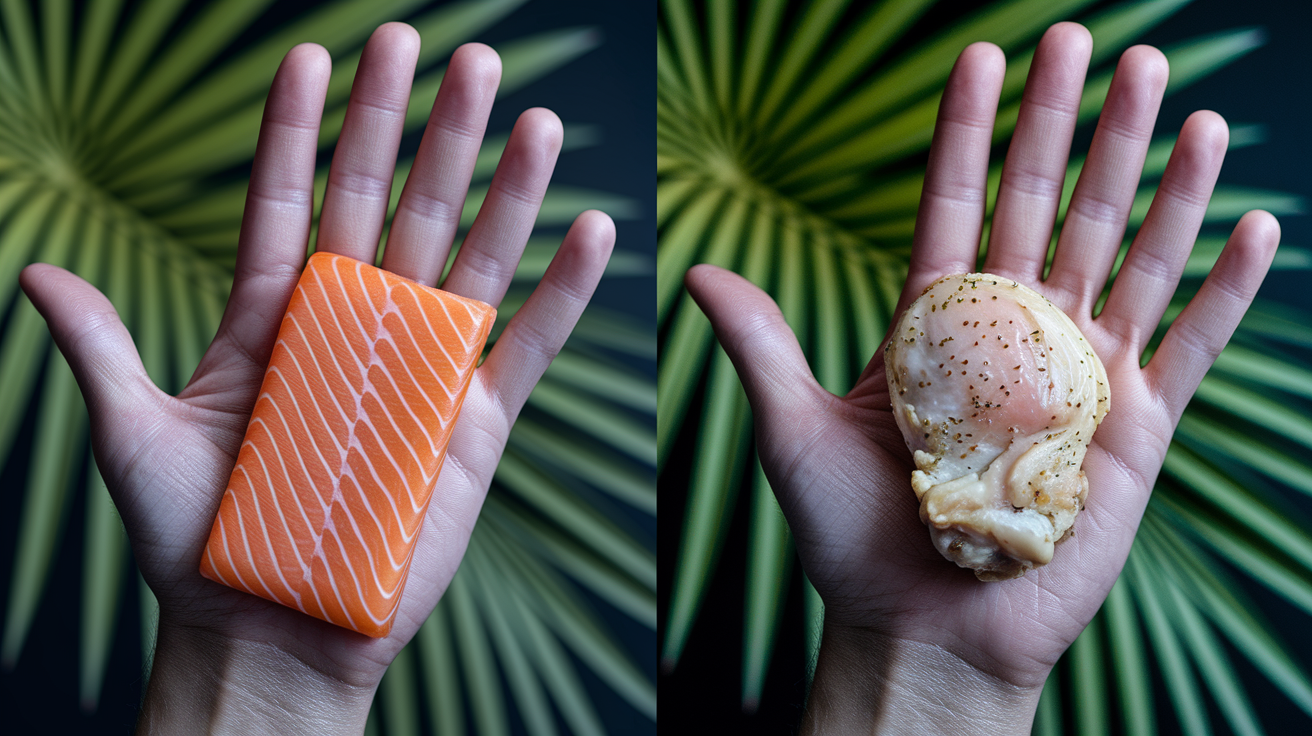
A flat, wide piece of fish might cover your entire palm but weigh less than a thick, compact chicken thigh that only covers half the area. Thickness matters because denser, thicker proteins pack more grams into a smaller footprint. When you estimate, place the protein on your palm and check both dimensions. Does it roughly match your palm’s outline? Does it stack up to about the same height as your palm’s natural thickness when your hand’s relaxed?
If your protein’s unusually thin (butterflied chicken breast, delicate sole fillet), fold it or stack two thinner pieces until the combined thickness feels similar to your palm. For ground proteins or crumbled tofu, press gently into a loose patty shape that approximates your palm’s depth. This double check prevents underestimating portions of flat proteins and overestimating thick cuts.
Adjusting Palm Portions for Age, Activity, and Goals
One palm per meal is a solid baseline, but your actual protein needs shift based on activity level, age, and what you’re working toward. General guidelines land around 0.8 to 1.6 grams of protein per kilogram of body weight daily. Higher intakes support muscle retention, recovery, and body composition goals.
When to adjust beyond one palm:
Athletes or very active people: Aim for 1.5 to 2 palm portions per meal, or add a protein snack between meals. Training demand increases protein turnover. Spreading intake across the day helps with muscle repair and growth.
Older adults (50+): Consider one full palm at every meal, even if total daily calories stay moderate. Aging reduces the body’s efficiency at using dietary protein, so higher per-meal doses (around 25 to 30 grams) help maintain muscle mass and strength.
Weight loss or muscle gain: For fat loss, stick with one palm per meal to preserve lean tissue while cutting calories elsewhere. For muscle gain, bump up to 1.5 palms per meal or add a fourth protein-rich meal or snack to hit higher daily totals without uncomfortable single servings.
Visual Cues for Common Proteins

Shape and texture give quick confirmation that your palm estimate’s on track. Here’s what to look for:
Chicken breast: Matches your palm outline closely when trimmed. Thickness should feel similar to your relaxed palm’s depth (about half an inch to an inch depending on hand size).
Fish fillet (salmon, cod, tilapia): Often longer and flatter than chicken. Fold thinner fillets in half or stack to match palm thickness.
Lean beef or pork: Denser and more compact. A palm-sized piece may look smaller in area but feels heavier and thicker.
Tofu block: Rectangular and uniform. A palm portion’s roughly a quarter to a third of a standard 14-ounce block, sliced about an inch thick.
Tempeh: Firmer and grainier than tofu. A palm portion looks like a rectangular slab about the size of a small smartphone screen, roughly half an inch thick.
These cues help you cross-check your portion without second-guessing. If the protein’s shape doesn’t naturally match your palm, reshape it mentally or physically (folding, stacking, trimming) until it does.
Using Palm Portions for Simple Meal Planning
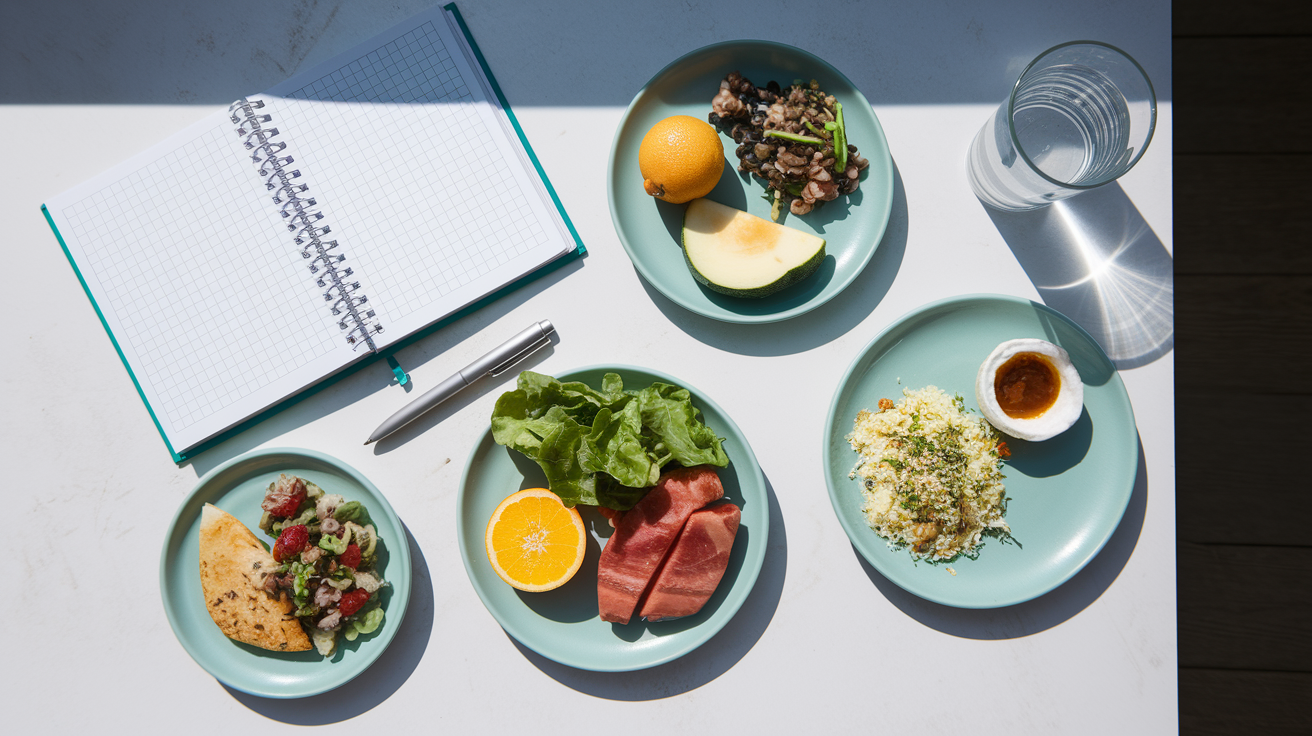
Most people do well with 2 to 4 palm-sized protein portions spread across the day, depending on total calorie needs and activity level. Spreading protein evenly (rather than loading it all at dinner) improves absorption and keeps you fuller and more focused between meals. A typical pattern might be one palm at breakfast, one at lunch, and one at dinner, with an optional half-palm snack if training demands are high or hunger signals suggest more.
Three simple day templates using palm portions:
Moderate activity, maintenance: Breakfast = 1 palm scrambled eggs. Lunch = 1 palm grilled chicken over greens. Dinner = 1 palm baked salmon with vegetables. Total around 60 to 90 g protein per day.
Active adult, muscle gain: Breakfast = 1.5 palms Greek yogurt with nuts. Lunch = 1.5 palms lean beef in a grain bowl. Snack = 1 palm turkey slices. Dinner = 1 palm tempeh stir-fry. Total around 100 to 120 g protein per day.
Older adult, muscle preservation: Breakfast = 1 palm cottage cheese with fruit. Lunch = 1 palm tuna salad. Dinner = 1 palm pork tenderloin with roasted veg. Total around 75 to 90 g protein per day, evenly distributed for better muscle protein synthesis.
Your hands travel with you everywhere. This method stays consistent whether you’re at home, at a restaurant, or packing a work lunch. Adjust palm counts based on hunger, recovery needs, and how your body responds over a few weeks.
Final Words
Use your palm as a fast, reliable way to estimate a 3–4 oz cooked protein serving. This post showed how to measure palm-size protein, compare sources, account for thickness, tweak portions for age or activity, and use visual cues in meal planning.
Practice the simple shape cues for chicken, fish, beef, tofu, and tempeh so your plate matches the estimate.
Keep it realistic: aim for 2–4 palm portions a day, spread them out. Visual cues for protein portions (palm) help you stay consistent and reach your goals.
FAQ
Q: What is the portion size of a palm of protein?
A: The portion size of a palm of protein is about 3–4 ounces cooked, which provides roughly 20–30 grams of protein for meats, fish, or plant-based options.
Q: What do protein portions look like and how do you visualize your portion size?
A: Protein portions look like a piece roughly the size and thickness of your palm (excluding fingers); visualize covering the food with your palm to estimate one serving of about 3–4 ounces cooked.
Q: How to measure food portions with your hand?
A: To measure food portions with your hand, use your palm (no fingers) for protein (~3–4 oz cooked), a fist for veggies/carbs, a cupped hand for snacks, and thumb for fats; adjust for cooked vs raw shrinkage.